

Giubileo 2025. La Porta Santa di San Pietro: origine, arte e tradizione
Il 24 dicembre 2024 avrà inizio l’anno giubilare con l’apertura della Porta Santa della Basilica di San Pietro in Vaticano.
Conoscete la storia di questa porta e la sua funzione di un tempo e quella di oggi?
Sedetevi comodi, ve la racconto per filo e per segno.
L’attuale porta Porta Santa ha una storia abbastanza recente che ebbe inizio nel 1949, momento in cui papa Pio XII Pacelli, la aprì alla vigilia di Natale del 1949. La porta in questione è ubicata all’estrema destra della facciata della basilica e fu realizzata dallo scultore senese Vico Consorti per il Giubileo straordinario del 1950.

Esisteva già una Porta Santa nella vecchia basilica Costantiniana e fu fatta realizzare per volere di papa Sisto IV della Rovere per il Giubileo del 1475.
Per la realizzazione dell’attuale porta fu indetto un concorso aperto alla realizzazione di tre porte della facciata. La commissione però non riuscì a scegliere un progetto valido fra i tanti proposti da artisti più o meno noti. Premiò dodici proposte con una medaglia d’oro ma senza scegliere i tre vincitori.
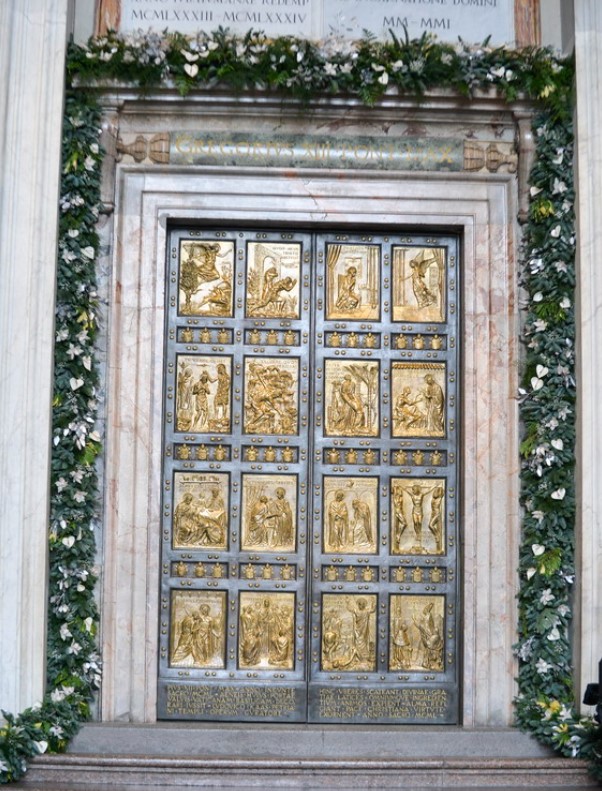
Monsignore Ludovico Kaas, segretario della commissione del concorso e segretario della Fabbrica di San Pietro, fuori concorso affidò la realizzazione della nuova Porta Santa a Vico Consorti.
Sempre Kaas si fece carico di scegliere il tema dei due battenti in bronzo e gli episodi che l’artista avrebbe dovuto raffigurare nelle 16 formelle, spirate dalla preghiera di Pio XII: “Concedimi, o Signore, che questo Anno Santo sia l’anno del gran ritorno e del gran perdono“.

Consorti impiegò nove mesi di lavoro per portare a termine il suo lavoro, facendo fondere poi i battenti presso la Fonderia Fernando Marinelli. Le formelle in bronzo dorato hanno come tema centrale episodi del Vecchio e del nuovo Testamento accompagnate da iscrizioni mentre 12 pannelli mostrano gli stemmi papali dei pontefici che hanno aperto e chiuso la Porta Santa: da Bonifacio VIII fino a Papa Benedetto XVI.
Dovete sapere che nel momento in cui vennero commissionati i nuovi battenti, avrebbero dovuto servire per chiudere il varco che portava all’interno della Basilica in orario notturno durante l’anno giubilare.
La Porta Santa infatti era formata da un muro di mattoni che veniva abbattuto simbolicamente dal papa con il martello lasciando l’accesso libero a tutti anche in orario notturno.
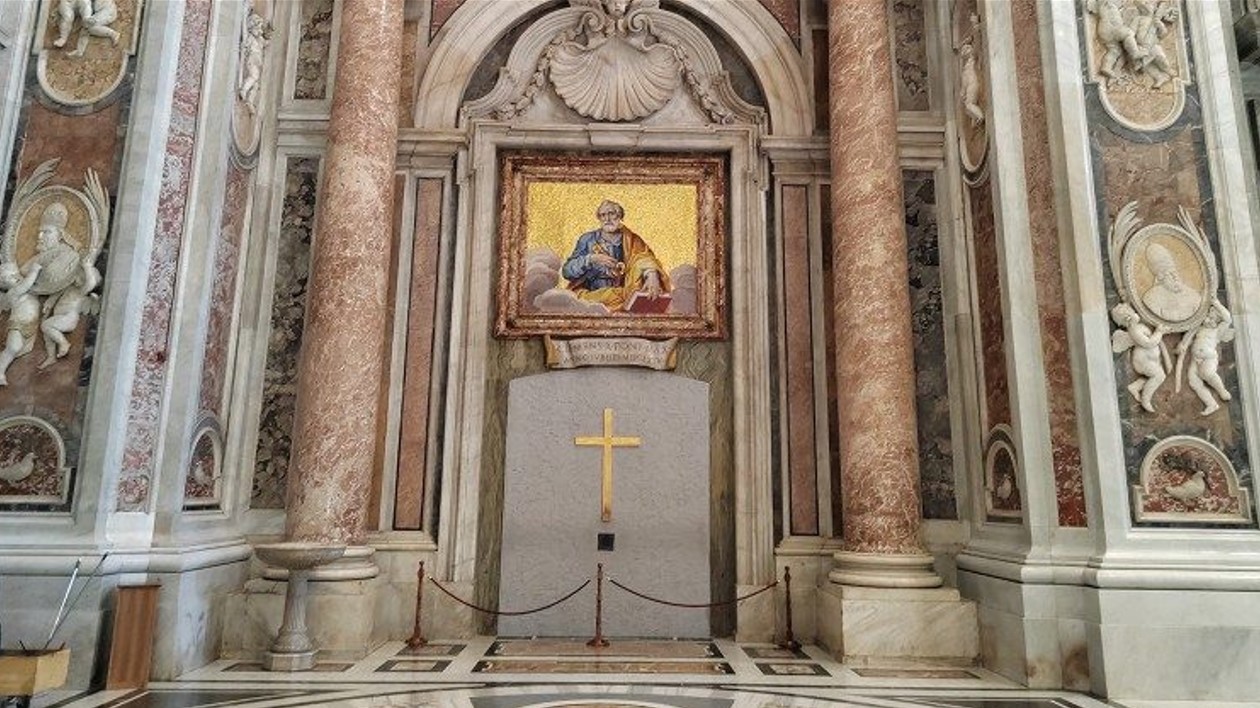
In pratica il muro di mattoni, dopo i tre colpi dati con il martello dal pontefice, veniva calato sopra una sorta di macchinario e i sanpietrini lo allontanavano per liberare l’accesso alla basilica.
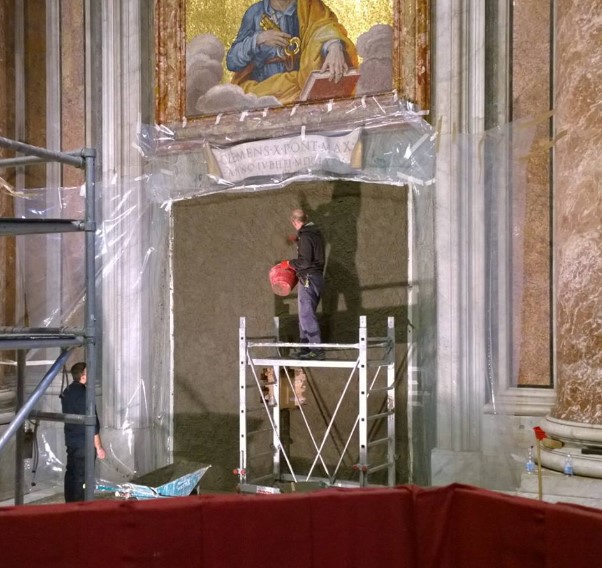
Il rito dell’abbattimento simbolico del muro fu cambiato sotto il pontificato di papa Paolo VI. Il muro di mattoni che sigilla l’ingresso viene rimosso nei giorni precedenti dai sanpietrini dopodiché viene estratta la cassetta rimasta nel muro dall’ultimo Anno Giubilare che custodisce la chiave che consente l’apertura del portone.
Il pontefice in carica si limita ad aprire i battenti in bronzo, proprio come farà anche papa Francesco durante la vigilia del Natale 2024. Da allora in poi il portone rimarrà aperto fino al 2 gennaio 2026, chiudendo l’accesso alla basilica per motivi di sicurezza solo in orario notturno.
“Entrate per la porta stretta, perché larga è la porta e spaziosa la via che conduce alla perdizione (…)” dal vangelo di Matteo.
Per il momento il sempre vostro Michelangelo Buonarroti vi saluta dandovi appuntamento ai prossimi post e sui social.
© Riproduzione riservata
Jubilee 2025: the Holy Door of St. Peter’s Basilica
The Jubilee Year will begin on December 24, 2024 with the opening of the Holy Door of St. Peter’s Basilica in the Vatican. Do you know the history of this door and its function in the past and today? Sit back and relax.
The current Porta Santa door has a fairly recent history that began in 1949, when Pope Pius XII Pacelli opened it on Christmas Eve 1949. It is the one located on the far right of the facade of the basilica and was created by the Sienese sculptor Vico Consorti for the extraordinary Jubilee of 1950.
There was already a Holy Door in the old Constantinian basilica and it was built at the behest of Pope Sixtus IV della Rovere for the Jubilee of 1475.
For the creation of the current door, an open competition was announced for the creation of three doors for the facade. The commission, however, was unable to choose a valid project among the many proposed by more or less well-known artists. It awarded twelve proposals with a gold medal but without choosing the three winners.
Monsignor Ludovico Kaas, secretary of the competition commission and secretary of the Fabbrica di San Pietro, out of competition entrusted the creation of the new Holy Door to Vico Consorti. Kaas also took charge of choosing the theme of the two bronze doors and the episodes that the artist would have to depict in the 16 panels, inspired by the prayer of Pius XII: “Grant me, O Lord, that this Holy Year be the year of the great return and of the great forgiveness2.
Consorti spent nine months of work to complete his work, then having the doors cast at the Fernando Marinelli Foundry. The gilded bronze panels have as their central theme episodes from the Old and New Testaments accompanied by inscriptions while 12 panels show the papal coats of arms of the pontiffs who opened and closed the Holy Door: from Boniface VIII to Pope Francis.
You should know that when the new doors were commissioned, they were supposed to serve to close the passage that led to the inside of the Basilica at night during the Jubilee Year. The Holy Door was in fact made up of a brick wall that was symbolically knocked down by the Pope with a hammer, leaving free access to everyone even at night.
In practice, the brick wall, after the three blows given with the hammer by the pontiff, was lowered onto a sort of machine and the cobblestones moved it away to free access to the Basilica.
The ritual of the symbolic knocking down of the wall was changed under the pontificate of Pope Paul VI. The brick wall that seals the entrance is removed in the days before by the cobblestones, after which the box left in the wall from the last Jubilee Year is extracted, which holds the key that allows the door to be opened.
The current pontiff simply opens the bronze doors, just as Pope Francis will do on Christmas Eve 2024. From then on, the door will remain open until January 2, 2026, closing access to the basilica for security reasons only at night.
2Enter through the narrow gate, because wide is the gate and broad is the road that leads to destruction (…)” from the Gospel of Matthew.
For the moment, your ever Michelangelo Buonarroti bids you farewell, making an appointment with you in the next posts and on social media.
© All rights reserved

Sostienici – Support Us
Se questo blog ti piace e ti appassiona, puoi aiutarci a farlo crescere sempre più sostenendoci in modo concreto condividendo i post, seguendo le pagine social e con un contributo che ci aiuta ad andare avanti con il nostro lavoro di divulgazione. . ENGLISH: If you like and are passionate about this blog, you can help us make it grow more and more by supporting us in a concrete way by sharing posts, following social pages and with a contribution that helps us to move forward with our dissemination work.
10,00 €
-
Il Compianto sul Cristo morto di Correggio: pathos e devozione
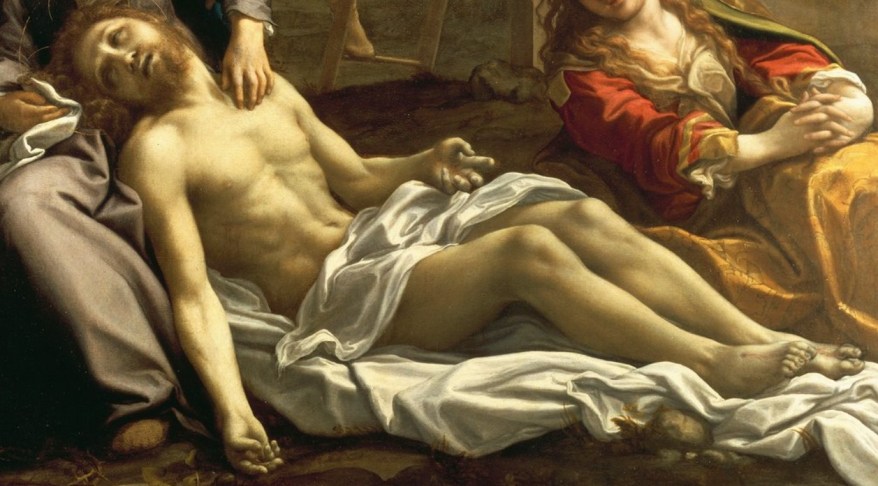
🇮🇹Con l’inizio della Settimana Santa, vi propongo il Compianto sul Cristo morto di Antonio Allegri, più noto come il Correggio: uno dei vertici assoluti della pittura emiliana del Cinquecento… 🇬🇧With the beginning of Holy Week, I propose the Lamentation over the Dead Christ by Antonio Allegri, better known as Correggio: one of the absolute peaks…
-
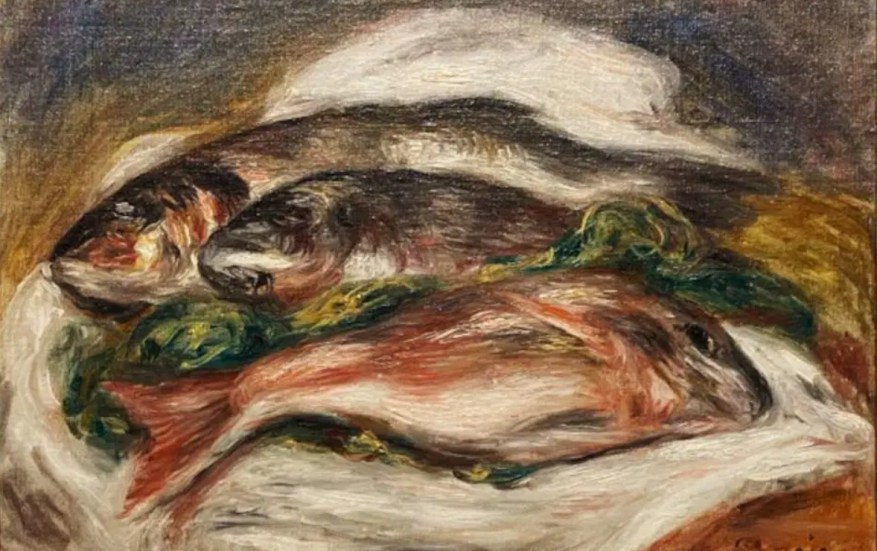
Furto milionario alla Magnani Rocca: rubati Renoir, Cézanne e Matisse
🇮🇹‼Tre capolavori storici spariti in meno di tre minuti: Les Poissons di Renoir, Tasse et plat de cerises di Cézanne e Odalisque sur la terrasse di Matisse sono stati rubati nella dalla Fondazione Magnani Rocca a Mamiano di Traversetolo, nel Parmense… 🇬🇧‼Three historic masterpieces disappeared in less than three minutes: Renoir’s Les Poissons, Cézanne’s Tasse…
-
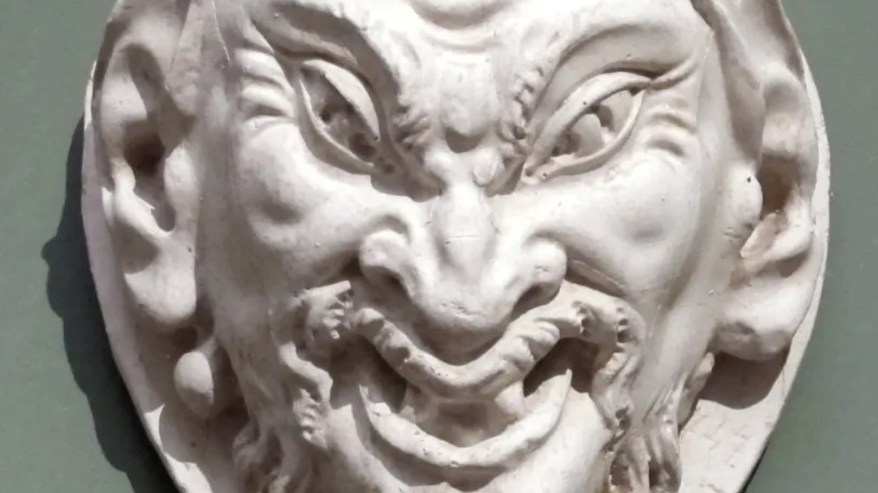
Fauno rubato: 15.000$ per ritrovarlo dopo 80 anni
🇮🇹Ero un ragazzino quando scolpii il Mascherone del Fauno sdentato. Oggi quel volto è perduto, rubato nella notte della guerra e da oltre 80 anni nessuno sa dove sia. Ora una ricompensa di 15.000$ riaccende la ricerca… 🇬🇧I was a boy when I sculpted the Toothless Faun Mask. Today that face is lost, stolen on…
Condividi:


Questo sono io





sostienici

Sostienici – Support Us
Se questo blog ti piace e ti appassiona, puoi aiutarci a farlo crescere sempre più sostenendoci in modo concreto condividendo i post, seguendo le pagine social e con un contributo che ci aiuta ad andare avanti con il nostro lavoro di divulgazione. . ENGLISH: If you like and are passionate about this blog, you can help us make it grow more and more by supporting us in a concrete way by sharing posts, following social pages and with a contribution that helps us to move forward with our dissemination work.
€10,00


1 commento »