

Il lapislazzuli perduto del Giudizio Universale
C’è una storia che riguarda il Giudizio Universale di cui forse ancora non vi ho raccontato e che in pochi conoscono. Il protagonista di questa vicenda è il lapislazzuli che adoperai per creare il cielo blu in cui si muovono vorticosamente anime salve e dannate.
Nella parte più alta dell’affresco non esiste più il lapislazzuli che avevo steso a secco per rendere più intensa la colorazione.
Proprio così, avete letto bene.
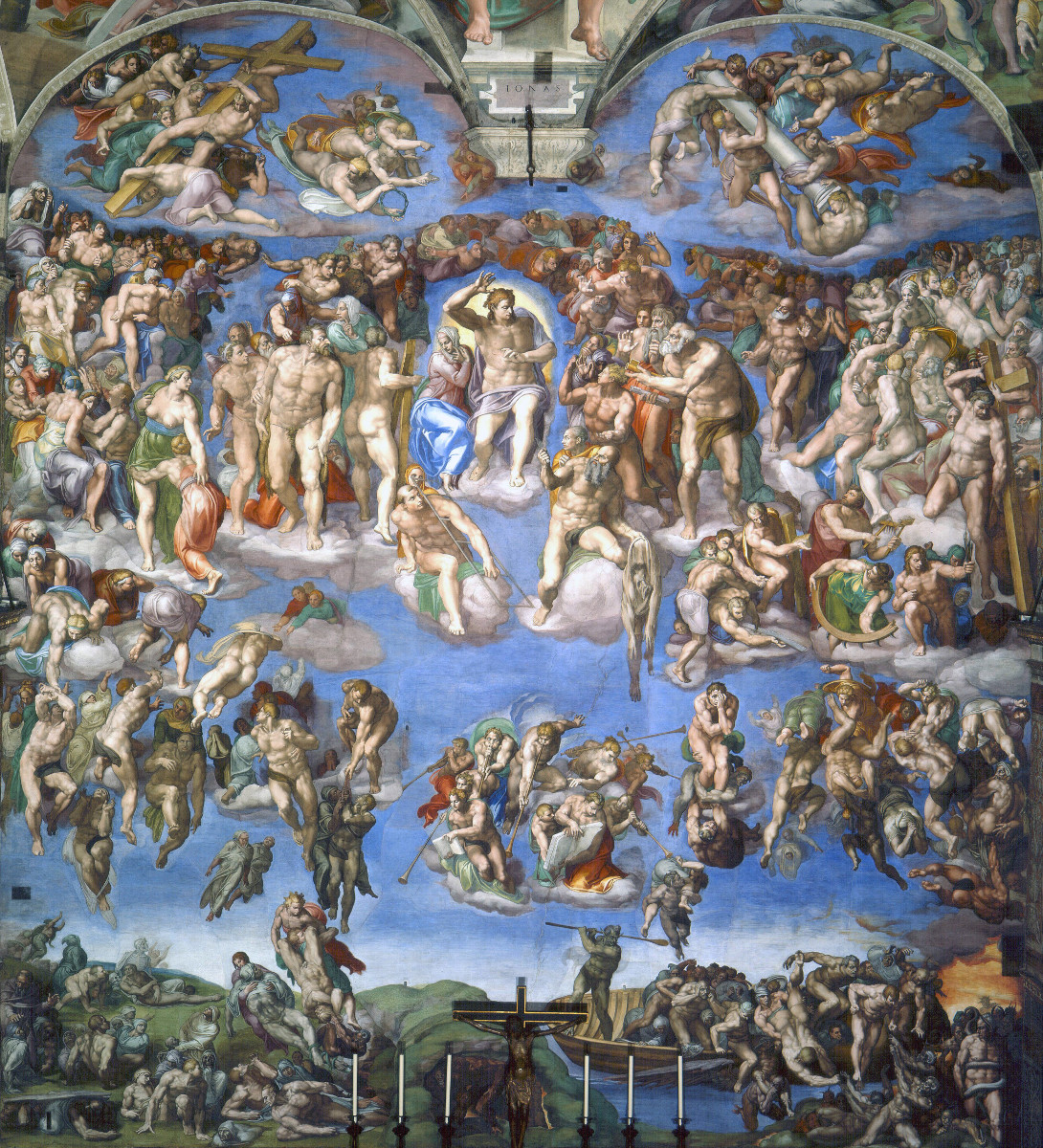
Il blu che si vede oggi non è altro la preparazione della base stesa in affresco, mescolata al bianco Sangiovanni.
In quel periodo la preparazione del fondo a buon fresco per la successiva dipintura a secco del lapislazzuli, veniva abitualmente realizzata con tonalità rosse o nere. Se avessi fatto in quel modo, oggi il Giudizio avrebbe una cromia totalmente diversa.
Invece, per ottenere un effetto più vibrante, feci di testa mia, usando come vi ho già detto lapislazzuli macinato assieme al bianco.
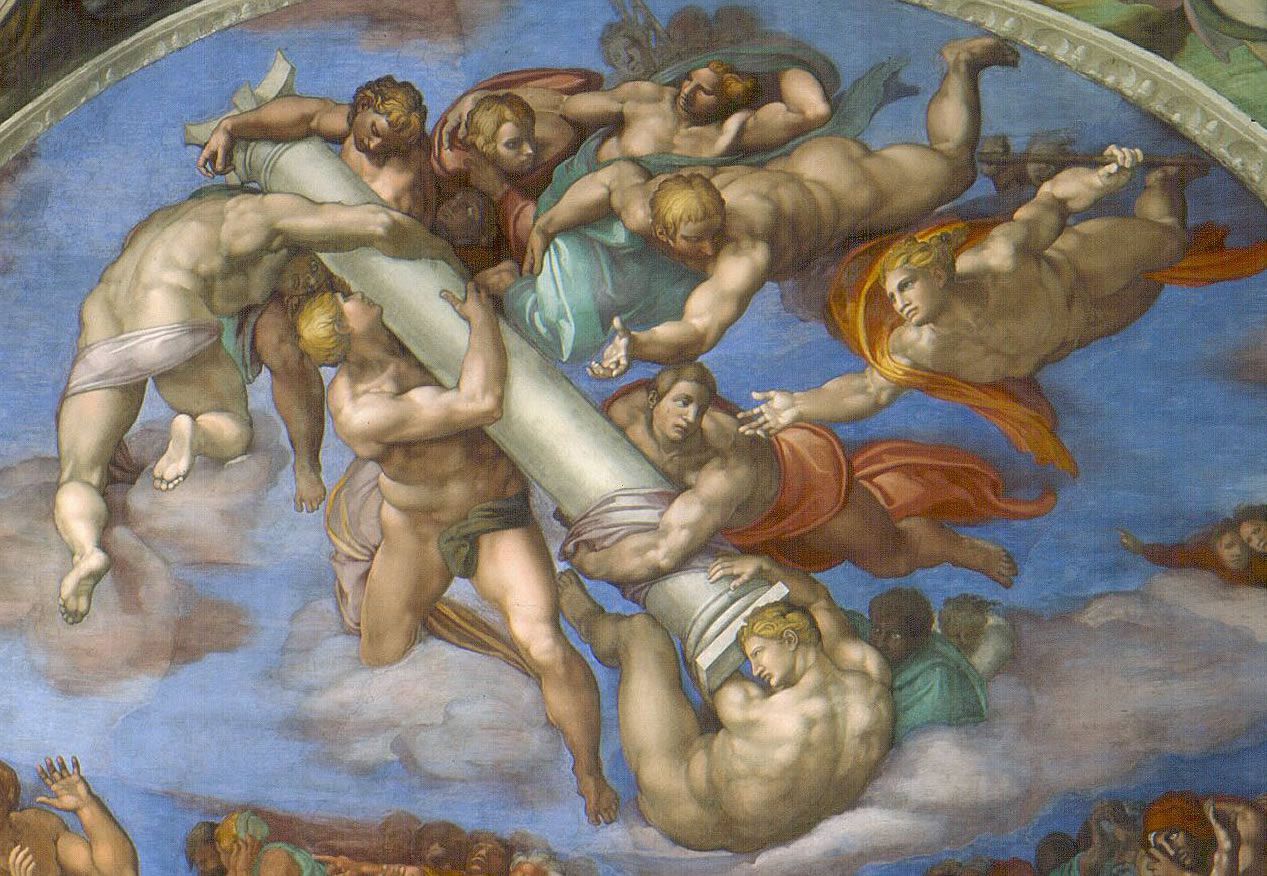
Ora dovete sapere che questa pietra semipreziosa proveniente dall’Afghanistan, se macinata troppo sottilmente tende a virare verso il grigio mentre quando viene macinata grossolanamente, mantiene quel bel colore blu intenso. Insomma, meno si macina meglio è.
Quindi per stendere a secco il pigmento, preferii farlo macinare poco dal mio assistente Urbino, miscelandolo a una colla animale per farlo ben aderire alla superficie sottostante.
Purtroppo le colle animali con il tempo si degradano. Inoltre, con l’esecuzione di pulizie aggressive fatte nel corso dei secoli, soprattutto nel Settecento, l’adesione di quella pellicola pittorica è venuta meno e i cristalli di lapislazzuli superficiali si sono staccati perdendosi per sempre.
Per il momento il sempre vostro Michelangelo Buonarroti vi saluta dandovi appuntamento ai prossimi post e sui social.
© Riproduzione riservata

The Lost Lapis Lazuli of the Last Judgement
There is a story about the Last Judgement that perhaps I have not yet told you and that few people know. It concerns the lapis lazuli used to create the blue sky in which saved and damned souls move in a whirlwind.
In the highest part of the fresco, the lapis lazuli that I had spread dry to make the color more intense no longer exists.
That’s right, you read it right.
The blue that you see today is nothing other than the preparation of the base spread in fresco, mixed with Sangiovanni white. In that period, the preparation of the buon fresco base for the subsequent dry painting of the lapis lazuli was usually done with red or black tones. If I had done it that way, today the Judgement would have a totally different color.
Instead, to obtain a more vibrant effect, I did my own thing, using, as I have already told you, ground lapis lazuli together with the white.
Now you should know that this semi-precious stone from Afghanistan, if ground too finely, tends to turn gray, while when it is ground coarsely, it maintains that beautiful intense blue color. In short, the less you grind, the better.
So to spread the pigment dry, I preferred to have my assistant Urbino grind it a little, mixing it with an animal glue to make it adhere well to the underlying surface.
Unfortunately, animal glues degrade over time. Furthermore, with the execution of aggressive cleaning done over the centuries, especially in the eighteenth century, the adhesion of that pictorial film came and the superficial lapis lazuli crystals came off, losing themselves forever.
For the moment, yours truly Michelangelo Buonarroti bids you farewell, making an appointment with you in the next posts and on social media.
© All rights reserved

Sostienici – Support Us
Se questo blog ti piace e ti appassiona, puoi aiutarci a farlo crescere sempre più sostenendoci in modo concreto condividendo i post, seguendo le pagine social e con un contributo che ci aiuta ad andare avanti con il nostro lavoro di divulgazione. . ENGLISH: If you like and are passionate about this blog, you can help us make it grow more and more by supporting us in a concrete way by sharing posts, following social pages and with a contribution that helps us to move forward with our dissemination work.
10,00 €
-
Giovedì Santo: l’Ultima Cena di Allori che pochi conoscono a Firenze
🇮🇹Nel cuore di Museo di Santa Maria Novella, a Firenze, si conserva una delle interpretazioni più affascinanti e meno note dell’Ultima Cena: quella realizzata da Alessandro Allori nel 1584… 🇬🇧In the heart of the Santa Maria Novella Museum in Florence, one of the most fascinating and least-known interpretations of the Last Supper is preserved: the…
-
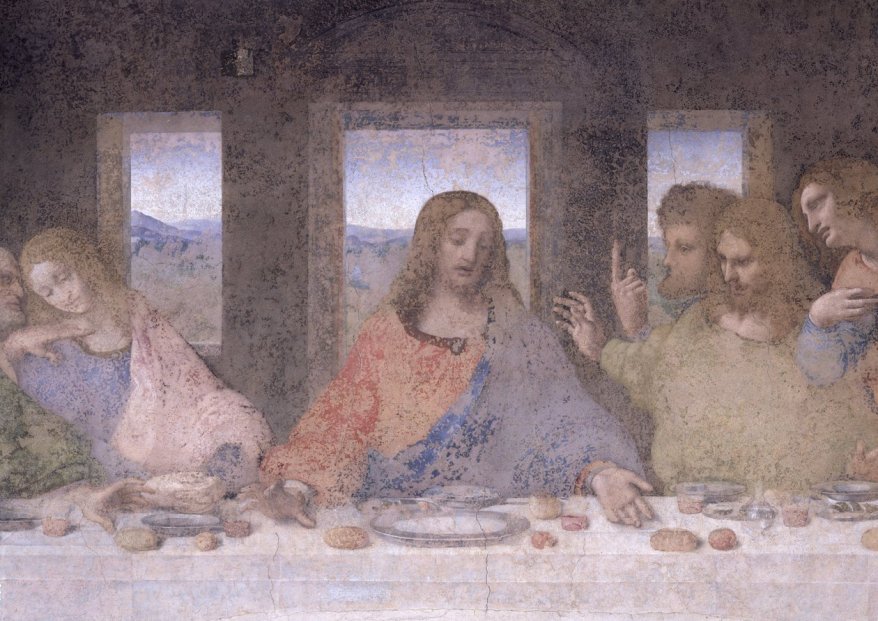
Cenacolo di Leonardo: i dettagli che raccontano il tradimento
🇮🇹Nel Cenacolo di Leonardo da Vinci, custodito a Santa Maria delle Grazie, Cristo annuncia il tradimento e il tempo si ferma… 🇬🇧In Leonardo da Vinci’s Last Supper, housed in Santa Maria delle Grazie, Christ announces the betrayal and time stands still…
-
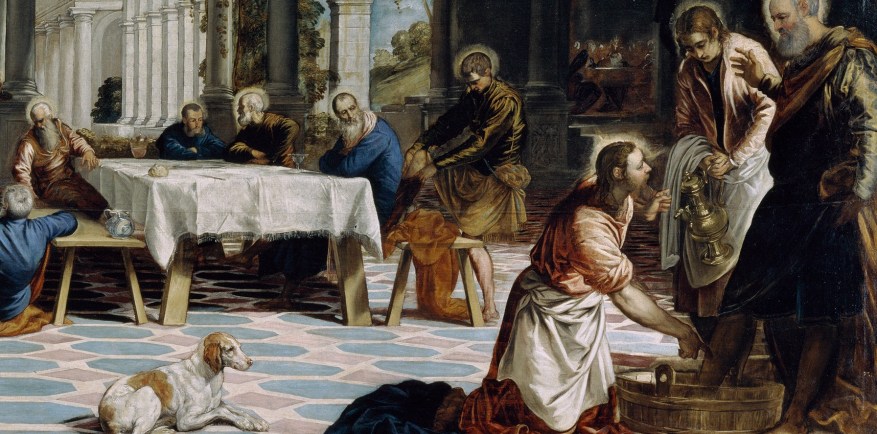
La Lavanda dei Piedi di Tintoretto: Il Capolavoro Veneziano al Prado
🇮🇹Tra i capolavori più affascinanti del Rinascimento veneziano, “La Lavanda dei Piedi” di Jacopo Tintoretto rappresenta un perfetto equilibrio tra spiritualità, innovazione compositiva e straordinaria forza narrativa… 🇬🇧Among the most fascinating masterpieces of the Venetian Renaissance, Jacopo Tintoretto’s “The Washing of the Feet” represents a perfect balance between spirituality, compositional innovation, and extraordinary narrative force…
Condividi:


Questo sono io





sostienici

Sostienici – Support Us
Se questo blog ti piace e ti appassiona, puoi aiutarci a farlo crescere sempre più sostenendoci in modo concreto condividendo i post, seguendo le pagine social e con un contributo che ci aiuta ad andare avanti con il nostro lavoro di divulgazione. . ENGLISH: If you like and are passionate about this blog, you can help us make it grow more and more by supporting us in a concrete way by sharing posts, following social pages and with a contribution that helps us to move forward with our dissemination work.
€10,00


