

La scultura del giorno: Ganimede e l’Aquila di Pierre Julien
La scultura del giorno che vi propongo oggi è Ganimede che versa il nettare a Giove dopo che ha assunto le sembianze di un’aquila: un’opera realizzata dallo scultore francese Pierre Julien nel 1776, oggi custodita presso il Museo del Louvre, a Parigi.

Ganimede nella mitologia era un giovane talmente bello da far invaghire prima Minosse, re di creta, poi Tantalo e addirittura Zeus, re degli dei.
Zeus, rimasto abbagliato dal fascino del giovane, lo rapiì vicino a Troia offrendo in compenso a suo padre un tralcio di vite d’oro e una coppia di cavalli di natura divina.

Lo portò sull’Olimpo e lo fece diventare immortale. Ganimede non solo divenne l’amante di Zeus ma anche il coppiere degli Dei, ecco perché in quest’opera lo scultore lo rappresentò con la coppa in mano e con l’aquila che lo cinge con un’ala da tergo.
Lo scultore Pierre Julien aveva avuto modo in giovinezza di approfondire i suoi studi di scultura a Roma vincendo nel 1765 il Prix de Rome con un bassorilievo che proponeva un soggetto ripreso dall’antichità classica. Rimase nel pensionato dell’Accademia di Francia a Roma dal 1768 fino al 1773 dove subì l’irresistibile fascino del neoclassicismo che lo influenzò per il resto della vita.
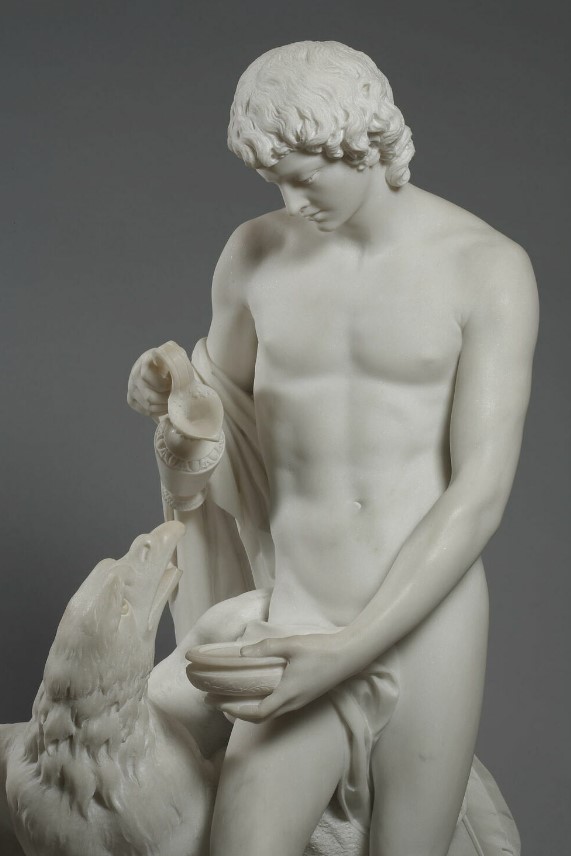
Guardate con attenzione lo sguardo di amorevole intesa che si scambiano i due protagonisto dell’opera. E’ tangibile il loro legame che l’artista ha voluto scolpire nel marmo.
Osservate anche il diverso trattamento delle superfici: mentre il corpo di Ganimede è perfettamente levigato, le piume dell’aquila hanno una superficie un po’ meno lavorata mentre è scabra quella della nuvola sulla quale i due appoggiano piedi e zampe.

Per il momento il sempre vostro Michelangelo Buonarroti vi saluta dandovi appuntamento ai prossimi post e sui social.
Sculpture of the day: Ganymede and the Eagle by Pierre Julien
The sculpture of the day that I propose to you today is Ganymede pouring nectar to Jupiter after it took on the appearance of an eagle: a work created by the French sculptor Pierre Julien in 1776, now kept at the Louvre Museum in Paris.
Ganymede, in mythology, was such a beautiful young man that he first fell in love with Minos, king of clay, then Tantalus and even Zeus, king of the gods. Zeus, dazzled by the young man’s charm, kidnapped him near Troy, offering his father a golden vine branch and a pair of divine horses as compensation.
He took him to Olympus and became immortal, Ganymede not only became the lover of Zeus but also the cupbearer of the Gods, which is why in this work the sculptor represented him with the cup in his hand and with the eagle encircling him with an ‘wing from behind.
The sculptor Pierre Julien had the opportunity in his youth to deepen his sculpture studies in Rome, winning the Prix de Rome in 1765 with a bas-relief that proposed a subject taken from classical antiquity. He remained in the pension of the French Academy in Rome from 1768 until 1773 where he underwent the irresistible charm of neoclassicism which influenced him for the rest of his life.
Look carefully at the look of loving understanding that the two protagonists of the work exchange. Their bond that the artist wanted to sculpt in marble is tangible.
Also observe the different treatment of the surfaces: while Ganymede’s body is perfectly smooth, the eagle’s feathers have a slightly less worked surface while that of the cloud on which the two rest their feet and paws is rough.
For the moment, your always Michelangelo Buonarroti greets you and will meet you in the next posts and on social media.

Sostienici – Support Us
Se questo blog ti piace e ti appassiona, puoi aiutarci a farlo crescere sempre più sostenendoci in modo concreto condividendo i post, seguendo le pagine social e con un contributo che ci aiuta ad andare avanti con il nostro lavoro di divulgazione. . ENGLISH: If you like and are passionate about this blog, you can help us make it grow more and more by supporting us in a concrete way by sharing posts, following social pages and with a contribution that helps us to move forward with our dissemination work.
8,00 €
-
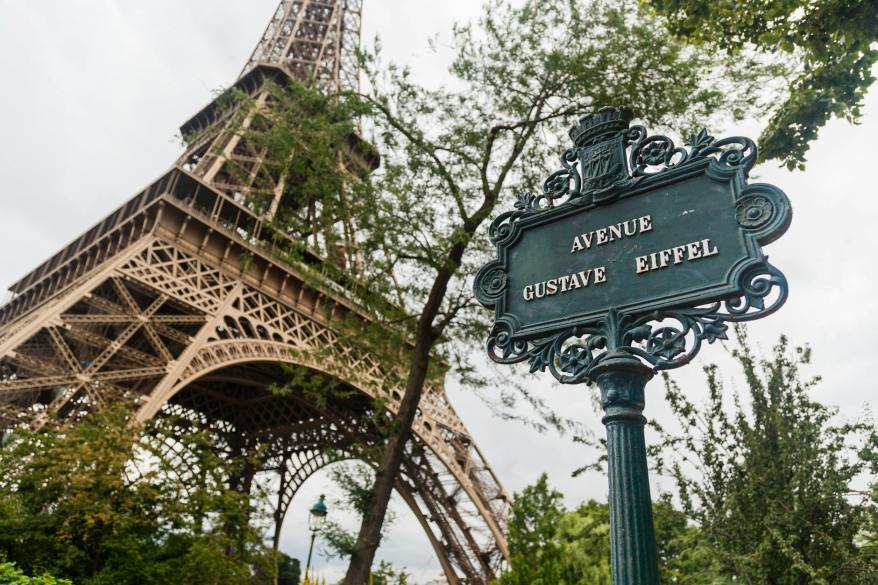
31 marzo 1889: inaugurata la Torre Eiffel tra critiche feroci e un destino inaspettato
🇮🇹Il 31 marzo 1889 segna una data destinata a cambiare per sempre il volto di Parigi e dell’immaginario collettivo globale: viene inaugurata la Torre Eiffel, l’opera più audace e discussa del suo tempo… 🇬🇧March 31, 1889 marks a date destined to change the face of Paris and the global collective imagination forever: the Eiffel Tower,…
-
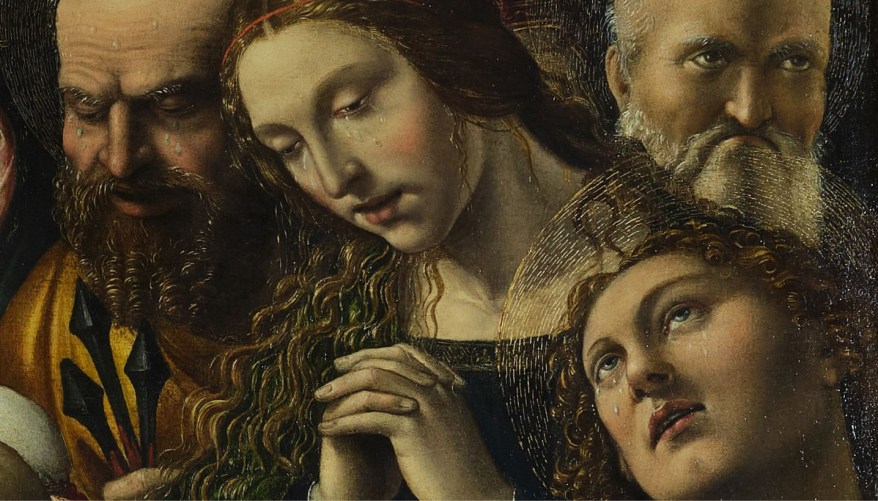
Sodoma in mostra a Torino: il Rinascimento al Museo Accorsi-Ometto
🇮🇹Al Museo di Arti Decorative Accorsi-Ometto arriva una mostra dedicata al Sodoma: oltre 50 opere, alcune mai viste prima, raccontano la formazione dell’artista e il suo dialogo con maestri come Pinturicchio… 🇬🇧An exhibition dedicated to Sodoma arrives at the Accorsi-Ometto Museum of Decorative Arts: over 50 works, some never before seen, recount the artist’s development…
-
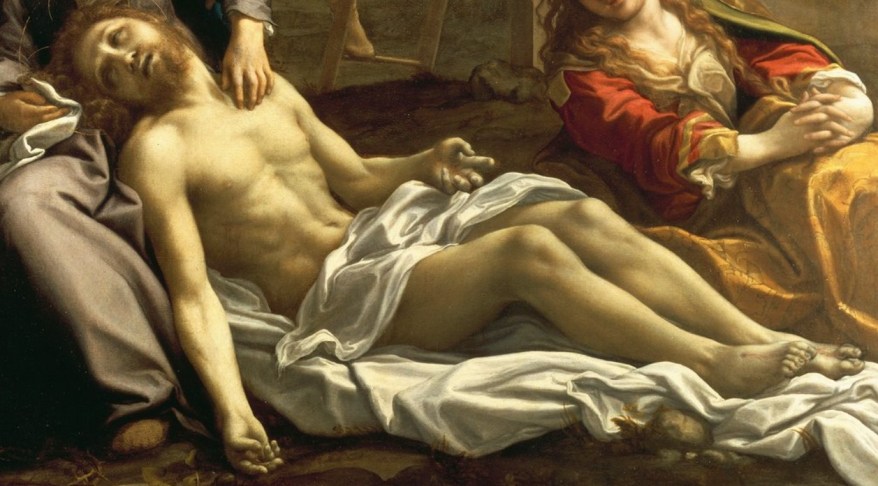
Il Compianto sul Cristo morto di Correggio: pathos e devozione
🇮🇹Con l’inizio della Settimana Santa, vi propongo il Compianto sul Cristo morto di Antonio Allegri, più noto come il Correggio: uno dei vertici assoluti della pittura emiliana del Cinquecento… 🇬🇧With the beginning of Holy Week, I propose the Lamentation over the Dead Christ by Antonio Allegri, better known as Correggio: one of the absolute peaks…
Condividi:


Questo sono io





sostienici

Sostienici - Support Us
Se questo blog ti piace e ti appassiona, puoi aiutarci a farlo crescere sempre più sostenendoci in modo concreto condividendo i post, seguendo le pagine social e con un contributo che ci aiuta ad andare avanti con il nostro lavoro di divulgazione. . ENGLISH: If you like and are passionate about this blog, you can help us make it grow more and more by supporting us in a concrete way by sharing posts, following social pages and with a contribution that helps us to move forward with our dissemination work.
€10,00


