
Pompei: ritrovati nella Regio preziosi affreschi che rimandano alla guerra di Troia
Durante le attività di scavo in corso nell’insula 10 della Regio IX del Parco Archeologico di Pompei, è tornato alla luce un raffinato ambiente caratterizzato dalle pareti nere, dipinte con soggetti mitologici direttamente relazionabili alla guerra di Troia.
I lavori in corso fanno parte di un progetto di messa in sicurezza del fronte perimetrale e del miglioramento dell’assetto idrologico del pianoro.

Gli scavi già alla fine dell’800 avevano permesso di mettere in luce le facciate di due abitazioni su via di Nola che erano collegate fra di loro.
L’impianto planimetrico comprensivo della casa con panificio e lavanderia potrebbe essere stato il frutto di varie modifiche volute dal proprietario Aulo Rustio Vero al quale appartenevano le macine poi rinvenute nel pistrinum.
Proprio dietro queste due abitazioni stanno tornando alla luce i raffinati ambienti che custodiscono affreschi e mosaici riconducibili al III stile.

L’eccezionale qualità delle pitture e la loro raffinatezza così come la scelta dei soggetti rappresentati, è testimonianza dell’elevato tenore di vita di chi quegli ambienti abitava quotidianamente.
Il salone misura circa 15 metri di lunghezza per 6 di larghezza e il tema prevalente delle pitture è l’eroismo con la raffigurazioni di coppie di eroi e divinità della guerra di Troia.
Sono presenti Elena e Paride indicati con un’iscrizione greca tra le due figure “Alexandros”, e Cassandra e Apollo.
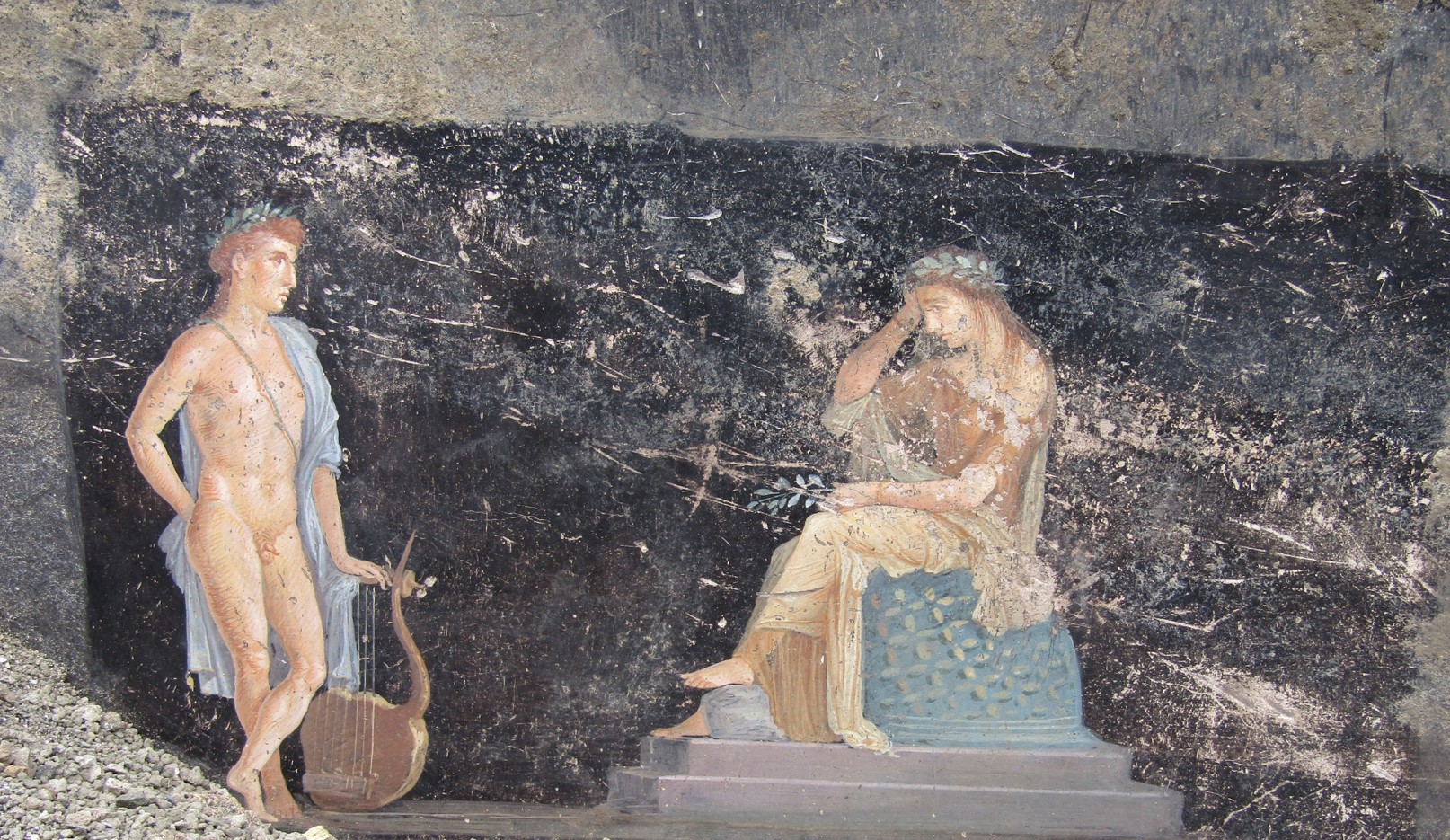
“Le coppie mitiche erano spunti per parlare del passato e della vita, solo apparentemente di carattere meramente amoroso. In realtà, parlano del rapporto tra individuo e destino: Cassandra che può vedere il futuro ma nessuno le crede, Apollo che si schiera con i Troiani contro gli invasori greci, ma pur essendo un dio non riesce ad assicurare la vittoria, Elena e Paride che con il loro amore politicamente scorretto sono la causa della guerra, o forse solo un pretesto“.
direttore del Parco Archeologico di Pompei, Gabriel Zuchtriegel

“Pompei è davvero uno scrigno di tesori che non finisce mai di sorprenderci e di destare stupore perché, ogni volta che scaviamo, troviamo qualcosa di bello e di significativo. Noi crediamo in questo unicum mondiale che rappresenta Pompei e per questo in legge di Bilancio abbiamo finanziato nuovi scavi. Bisogna andare avanti nella tutela di questo importante sito ma anche nella sua valorizzazione”
Ministro della Cultura, Gennaro Sangiuliano.
Per il momento il sempre vostro Michelangelo Buonarroti vi saluta dandovi appuntamento ai prossimi post e sui social.

Pompeii: precious frescoes that refer to the Trojan War have been found in the Regio
During the excavation activities underway in insula 10 of Regio IX of the Archaeological Park of Pompeii, a refined environment characterized by black walls, painted with mythological subjects directly related to the Trojan War, came to light.
The works in progress are part of a project to secure the perimeter front and improve the hydrological structure of the plateau.
Excavations already at the end of the 19th century had brought to light the facades of two houses on Via di Nola which were connected to each other.
The planimetric system including the house with bakery and laundry may have been the result of various modifications desired by the owner Aulo Rustio Vero to whom the millstones later found in the pistrinum belonged.
Right behind these two houses, the refined rooms containing frescoes and mosaics attributable to the III style are coming back to light.
The exceptional quality of the paintings and their refinement, as well as the choice of subjects represented, is testimony to the high standard of living of those who lived in those environments on a daily basis.
The hall measures approximately 15 meters long and 6 meters wide and the prevailing theme of the paintings is heroism with depictions of pairs of heroes and divinities from the Trojan War.
Helen and Paris are present, indicated with a Greek inscription between the two figures “Alexandros”, and Cassandra and Apollo.
“The mythical couples were ideas for talking about the past and life, only apparently of a purely amorous nature. In reality, they talk about the relationship between the individual and destiny: Cassandra who can see the future but no one believes her, Apollo who sides with the Trojans against the Greek invaders, but despite being a god he is unable to ensure victory, Helen and Paris who with their politically incorrect love they are the cause of the war, or perhaps just a pretext.”
director of the Archaeological Park of Pompeii, Gabriel Zuchtriegel
“Pompeii is truly a treasure chest that never ceases to surprise us and arouse amazement because, every time we dig, we find something beautiful and significant. We believe in this global unicum that Pompeii represents and for this reason we have financed new excavations in the budget law. We must move forward in the protection of this important site but also in its valorization”
Minister of Culture, Gennaro Sangiuliano.
For the moment, your always Michelangelo Buonarroti greets you and will meet you in the next posts and on social media.

Sostienici – Support Us
Se questo blog ti piace e ti appassiona, puoi aiutarci a farlo crescere sempre più sostenendoci in modo concreto condividendo i post, seguendo le pagine social e con un contributo che ci aiuta ad andare avanti con il nostro lavoro di divulgazione. . ENGLISH: If you like and are passionate about this blog, you can help us make it grow more and more by supporting us in a concrete way by sharing posts, following social pages and with a contribution that helps us to move forward with our dissemination work.
8,00 €
-
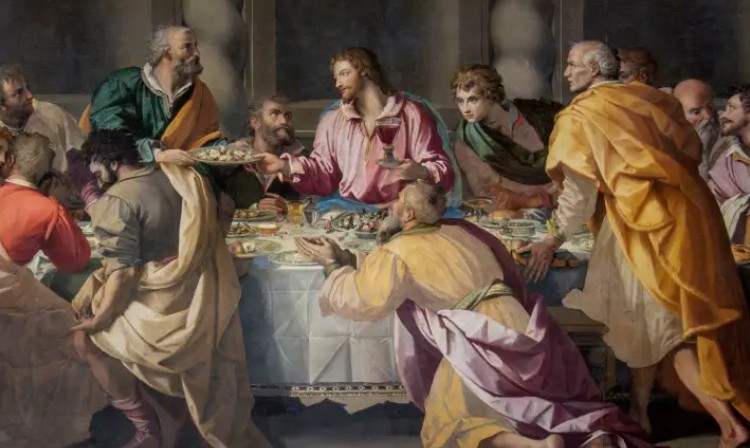
Giovedì Santo: l’Ultima Cena di Allori che pochi conoscono a Firenze
🇮🇹Nel cuore di Museo di Santa Maria Novella, a Firenze, si conserva una delle interpretazioni più affascinanti e meno note dell’Ultima Cena: quella realizzata da Alessandro Allori nel 1584… 🇬🇧In the heart of the Santa Maria Novella Museum in Florence, one of the most fascinating and least-known interpretations of the Last Supper is preserved: the…
-
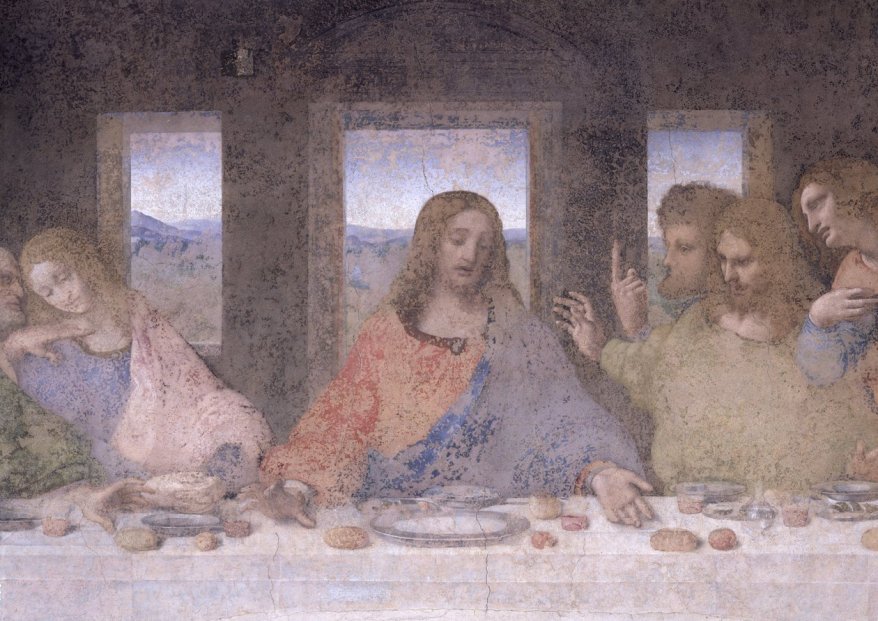
Cenacolo di Leonardo: i dettagli che raccontano il tradimento
🇮🇹Nel Cenacolo di Leonardo da Vinci, custodito a Santa Maria delle Grazie, Cristo annuncia il tradimento e il tempo si ferma… 🇬🇧In Leonardo da Vinci’s Last Supper, housed in Santa Maria delle Grazie, Christ announces the betrayal and time stands still…
-
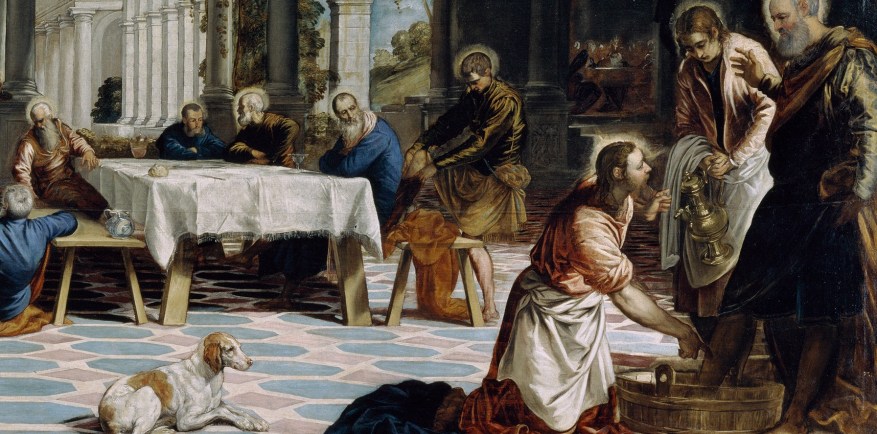
La Lavanda dei Piedi di Tintoretto: Il Capolavoro Veneziano al Prado
🇮🇹Tra i capolavori più affascinanti del Rinascimento veneziano, “La Lavanda dei Piedi” di Jacopo Tintoretto rappresenta un perfetto equilibrio tra spiritualità, innovazione compositiva e straordinaria forza narrativa… 🇬🇧Among the most fascinating masterpieces of the Venetian Renaissance, Jacopo Tintoretto’s “The Washing of the Feet” represents a perfect balance between spirituality, compositional innovation, and extraordinary narrative force…
Condividi:


Questo sono io





sostienici

Sostienici - Support Us
Se questo blog ti piace e ti appassiona, puoi aiutarci a farlo crescere sempre più sostenendoci in modo concreto condividendo i post, seguendo le pagine social e con un contributo che ci aiuta ad andare avanti con il nostro lavoro di divulgazione. . ENGLISH: If you like and are passionate about this blog, you can help us make it grow more and more by supporting us in a concrete way by sharing posts, following social pages and with a contribution that helps us to move forward with our dissemination work.
€10,00


