

Venerdì Santo: il Cristo Morto del Mantegna e quell’incredibile scorcio prospettico
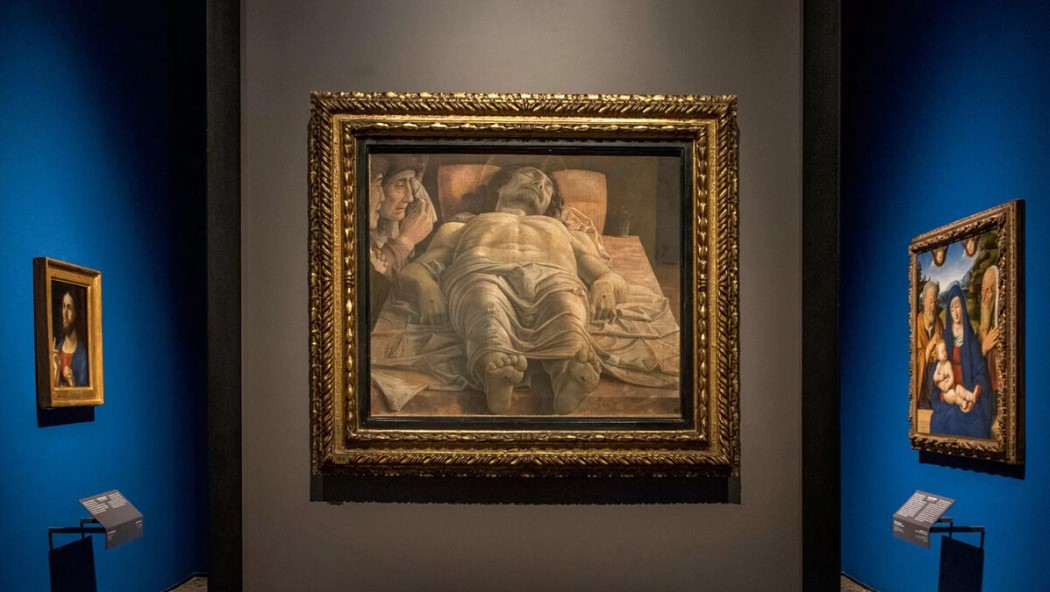
Il Cristo Morto dipinto da Andrea Mantegna a tempera su tela attorno al 1480, è una delle opere più suggestive e commoventi del Rinascimento.
Celebre per lo scorcio prospettico del Cristo disteso sulla pietra dell’unzione, è considerato a ragione l’opera massima dell’artista, con una forza espressiva straordinaria.

Probabilmente Mantegna realizzò l’opera per decorare la propria cappella funeraria. Il dipinto infatti venne ritrovato dai suoi figli nella bottega dopo la sua morte e lo vendettero al cardinale Sigismondo Gonzaga. Avevano debiti da risanare e pensarono di vendere quel capolavoro per riuscire a pagare almeno parte di quei soldi dovuti.
Il Cristo Morto finì poi nelle mani di re Carlo I d’Inghilterra per essere ceduto poi al cardinale Mazzarino, in Francia. Dopo essere stato ceduta al mercato dell’antiquariato, l’opera infine donata nel 1824 alla Pinacoteca di Brera dove tutt’oggi è possibile ammirarla.
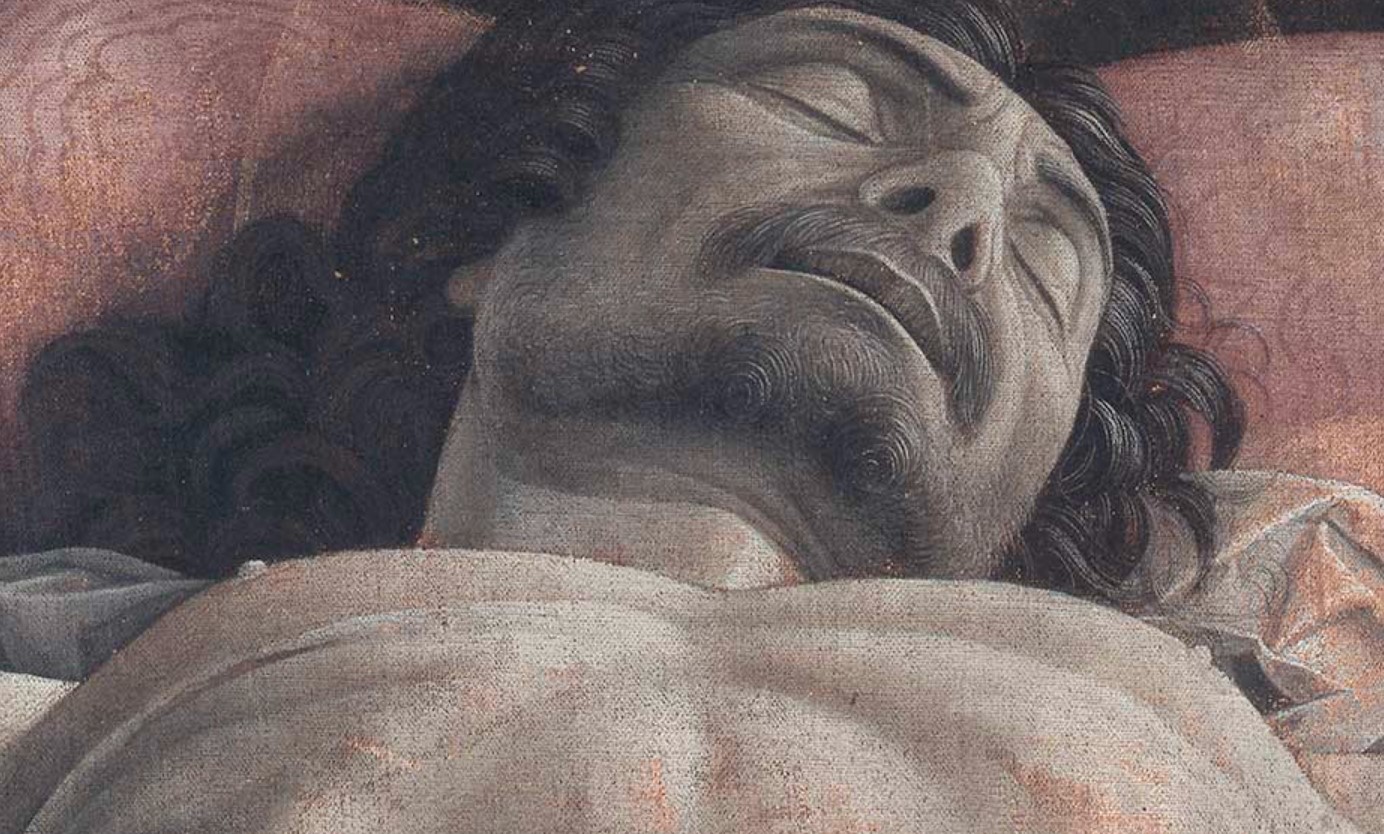
Disteso sopra una lastra di pietra e già cosparso con gli oli profumati come testimonia il vasetto degli unguenti in alto a destra, il Corpo di Cristo viene mostrato come se già fosse un’ostia consacrata. Lui stesso con l’ultima cena istituì l’Eucarestia spezzando il pane e versando il vino. Cristo è il pane della vita.
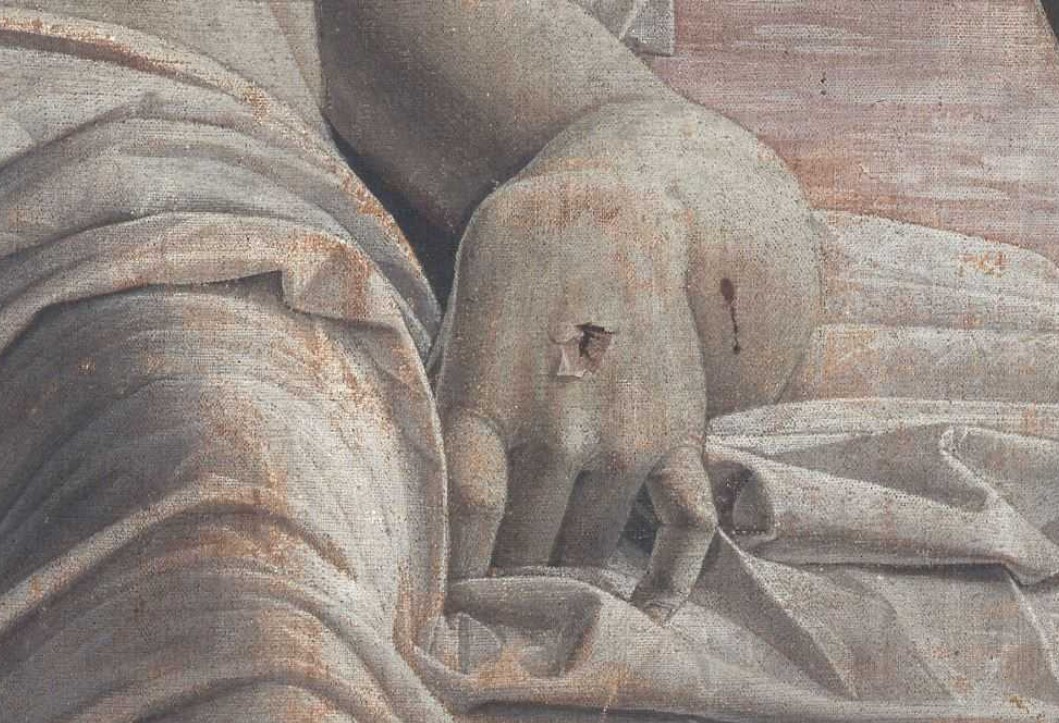
Le ferite lasciate dai chiodi sulle mani e sui piedi sono tutte ben visibili e riprodotte in modo accurato.
La luce è usata in modo molto drammatico per sottolineare la tragicità della scena. Il corpo del Cristo è illuminato da una forte luce, in netto contrasto con il buio che sta attorno.
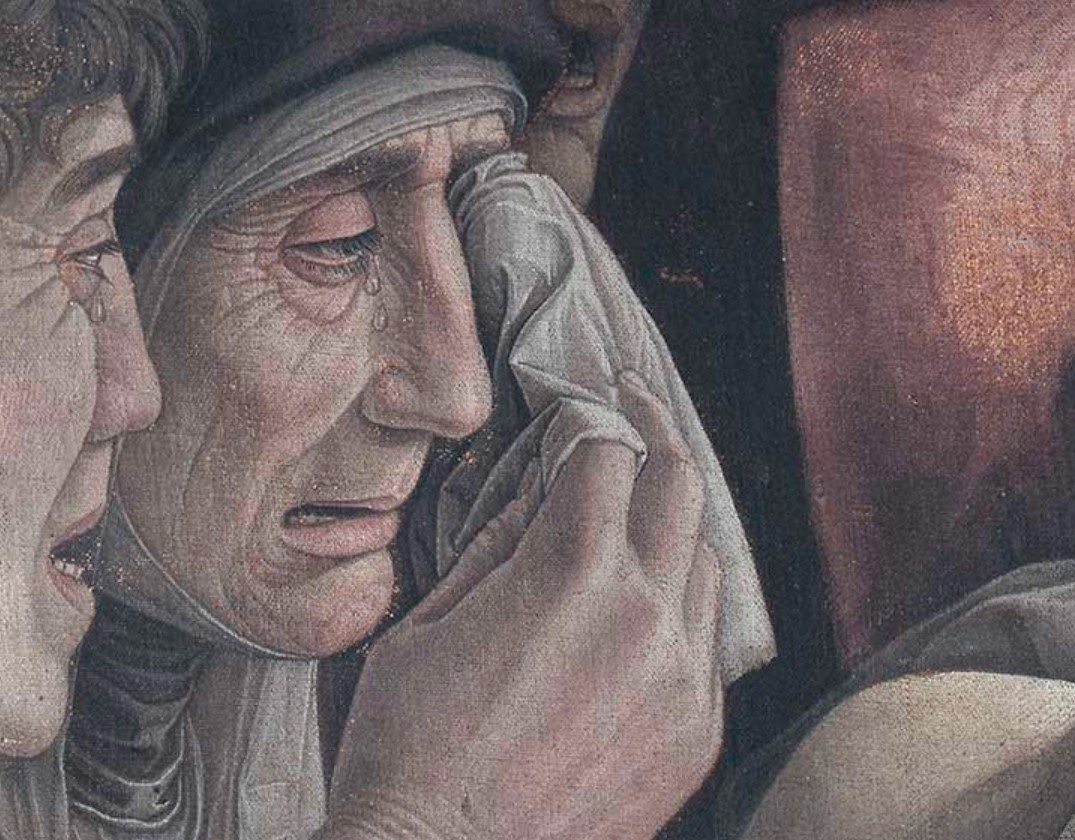
In alto a sinistra si intravedono tre figure di donne disperate.
La Madre si asciuga le lacrime che gli sgorgano copiose dagli occhi con un fazzoletto, San Giovanni in primo piano che tiene le mani giunte mentre piange e dietro, in obra, fa la comparsa una donna disperata che molto probabilmente è Maria Maddalena.
Bene fece Mantegna a dipingere il Cristo morto inquadrandolo dai piedi. […] Da quella posizione, l’immobilità della morte emana una vibrazione mistica singolare, quella del sabato santo. Gesù non aveva più l’entelechia che animava il suo corpo, eppure tutto il sepolcro era pervaso da un’aura dorata, indubbio segno di gloria. […] Dov’era il suo spirito che gli aveva dato sinora la vita? […] Il Signore era disceso tra i morti per visitare i giusti dell’antico patto”
Piergiorgio Mariotti
Non sono pochi gli artisti che dopo Mantegna si isiprarono a questo suo capolavoro: Basta pensare al Cristo morto e gli strumenti della Passione del Caracci o al Cristo Morto di Lelio Orsi giusto per citare un paio di esempi.
Anche la fotografia e la cinematografia, secoli dopo, hanno più di una volta ripreso questo straordinario dipinto e il suo scorcio prospettico per creare immagini nuove.
Per il momento il sempre vostro Michelangelo Buonarroti vi saluta dandovi appuntamento ai prossimi post e sui social.
Good Friday: Mantegna’s Dead Christ and that incredible perspective view
The Dead Christ painted by Andrea Mantegna in tempera on canvas around 1480 is one of the most evocative and moving works of the Renaissance.
Famous for the perspective view of Christ lying on the stone of anointing, it is rightly considered the artist’s greatest work, with an extraordinary expressive power.
Mantegna probably created the work to decorate his own funerary chapel. In fact, the painting was found by his children in the workshop after his death and they sold it to Cardinal Sigismondo Gonzaga. They had debts to repay and thought of selling that masterpiece to be able to pay at least part of that money owed.
The Dead Christ then ended up in the hands of King Charles I of England and was then sold to Cardinal Mazarin in France. After being sold to the antiques market, the work was finally donated in 1824 to the Pinacoteca di Brera where it can still be admired today.
Lying on a stone slab and already sprinkled with perfumed oils as evidenced by the jar of ointments at the top right, the Body of Christ is shown as if it were already a consecrated host. He himself instituted the Eucharist at the Last Supper by breaking the bread and pouring the wine. Christ is the bread of life.
The wounds left by the nails on the hands and feet are all clearly visible and accurately reproduced.
Light is used very dramatically to underline the tragedy of the scene. The body of Christ is illuminated by a strong light, in stark contrast to the darkness around it.
At the top left we can see three figures of desperate women.
The Mother wipes the tears that flow copiously from her eyes with a handkerchief, Saint John in the foreground has his hands clasped as he cries and behind, in the shadow, a desperate woman appears who is most likely Mary Magdalene.
Mantegna did well to paint the dead Christ by framing him from the feet. […] From that position, the immobility of death emanates a singular mystical vibration, that of Holy Saturday. Jesus no longer had the entelechy that animated his body, yet the entire tomb was pervaded by a golden aura, an undoubted sign of glory. […] Where was the spirit of him that had given him life up until now? […] The Lord had descended among the dead to visit the righteous of the ancient covenant”
Piergiorgio Mariotti
There are quite a few artists who, after Mantegna, were inspired by this masterpiece of his: Just think of the Dead Christ and the instruments of the Passion by Caracci or the Dead Christ by Lelio Orsi just to name a couple of examples.
Even photography and cinema, centuries later, have more than once taken up this extraordinary painting and its perspective to create new images.
For the moment, your always Michelangelo Buonarroti greets you and will meet you in the next posts and on social media.

Sostienici – Support Us
Se questo blog ti piace e ti appassiona, puoi aiutarci a farlo crescere sempre più sostenendoci in modo concreto condividendo i post, seguendo le pagine social e con un contributo che ci aiuta ad andare avanti con il nostro lavoro di divulgazione. . ENGLISH: If you like and are passionate about this blog, you can help us make it grow more and more by supporting us in a concrete way by sharing posts, following social pages and with a contribution that helps us to move forward with our dissemination work.
10,00 €
-
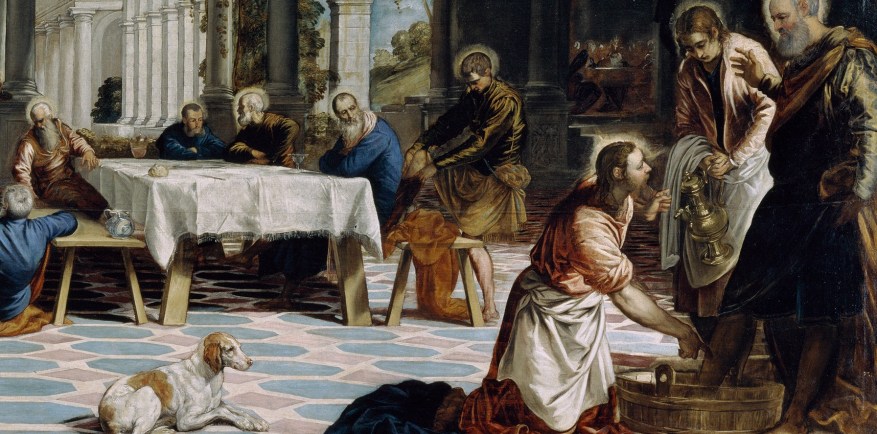
La Lavanda dei Piedi di Tintoretto: Il Capolavoro Veneziano al Prado
🇮🇹Tra i capolavori più affascinanti del Rinascimento veneziano, “La Lavanda dei Piedi” di Jacopo Tintoretto rappresenta un perfetto equilibrio tra spiritualità, innovazione compositiva e straordinaria forza narrativa… 🇬🇧Among the most fascinating masterpieces of the Venetian Renaissance, Jacopo Tintoretto’s “The Washing of the Feet” represents a perfect balance between spirituality, compositional innovation, and extraordinary narrative force…
-
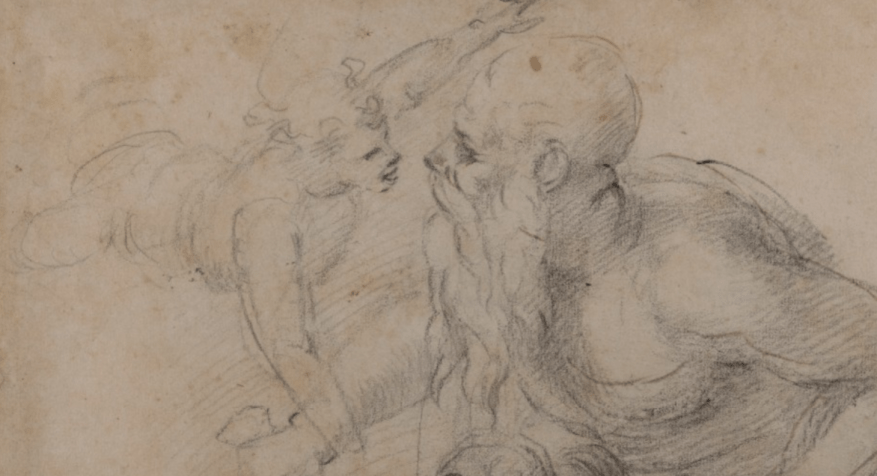
Il Sacrificio di Isacco e quel momento tra la vita e la morte
🇮🇹Oggi voglio raccontarvi alcuni dettagli sul mio disegno del Sacrificio di Isacco, conservato oggi a Casa Buonarroti. Su quel foglio volli tracciare il momento preciso in cui la paura fa spazio al miracolo… 🇬🇧Today I want to tell you some details about my drawing of the Sacrifice of Isaac, now preserved at Casa Buonarroti. On…
-
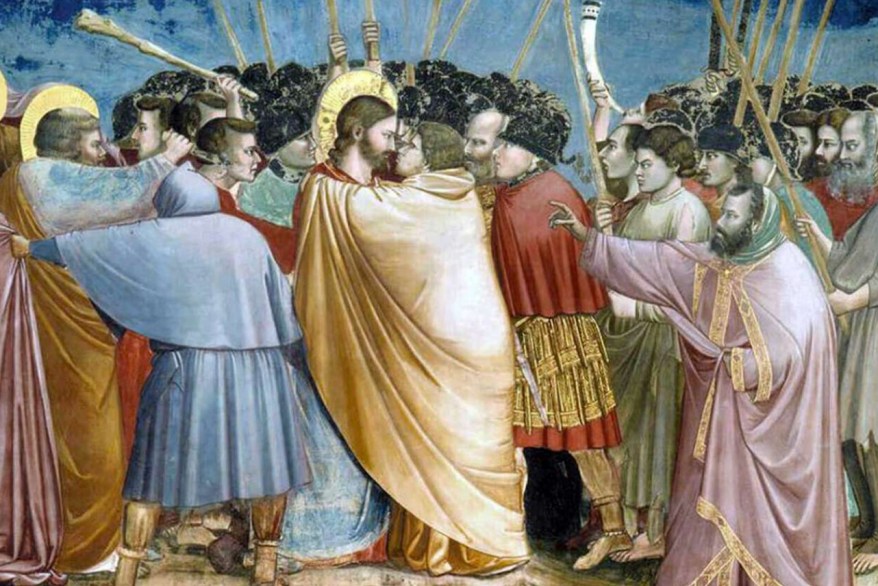
Mercoledì Santo: il giorno del tradimento di Giuda affrescato da Giotto
🇮🇹Il Mercoledì Santo è il giorno del silenzio, della riflessione e del tradimento. È il momento in cui Giuda sceglie di vendere Gesù per trenta denari, segnando uno dei passaggi più dolorosi della Settimana Santa…. 🇬🇧Holy Wednesday is a day of silence, reflection, and betrayal. ✝It is the moment when Judas chooses to sell Jesus…
Condividi:


Questo sono io





sostienici

Sostienici - Support Us
Se questo blog ti piace e ti appassiona, puoi aiutarci a farlo crescere sempre più sostenendoci in modo concreto condividendo i post, seguendo le pagine social e con un contributo che ci aiuta ad andare avanti con il nostro lavoro di divulgazione. . ENGLISH: If you like and are passionate about this blog, you can help us make it grow more and more by supporting us in a concrete way by sharing posts, following social pages and with a contribution that helps us to move forward with our dissemination work.
€10,00


