

Il dipinto del giorno: Michelangelo che assiste il suo servo morente del Preraffaellita Leighton
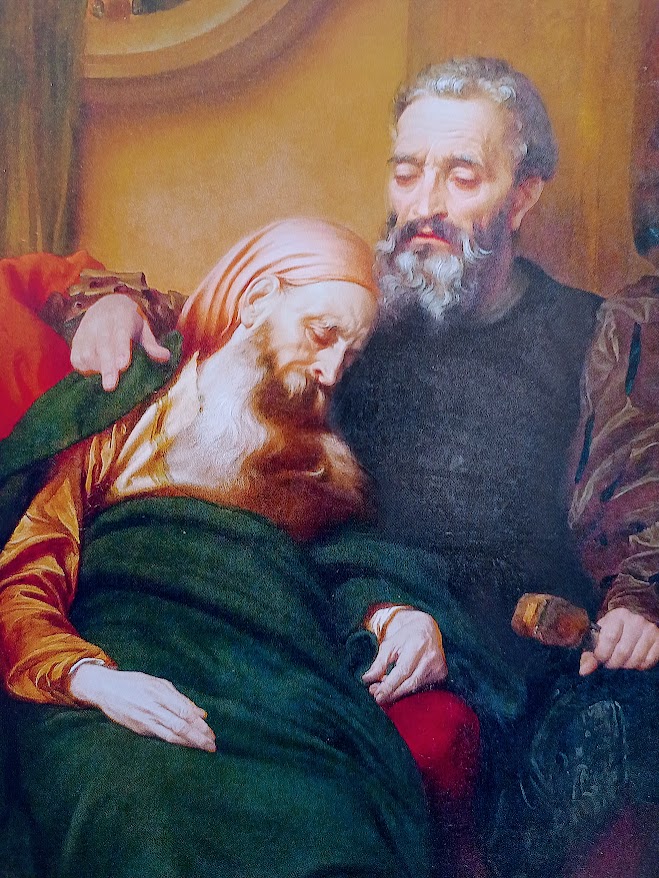
Il dipinto del giorno che vi propongo oggi mi vede come protagonista mentre assisto il mio servo che sta morendo. Il titolo originale dell’opera è “Micheal Angelo Nursing his Dying Servant” e fu realizzata nel 1862 dall’artista preraffaellita Frederic Leighton.
Il soggetto del dipinto a olio su tela fu tratto da Leighton dalle Vite narrate dal mio caro amico Giorgio Vasari in cui racconta mi fossi preso cura fino all’ultimo respiro del mio assistente Francesco Amadori, più noto come l’Urbino.

Era rimasto al mio fianco per ben 26 anni e aveva vissuto a casa mia a Macel de’ Corvi come se fosse un figlio. Viveva con me assieme alla moglie Cornelia e il primogenito nacque fra le mura di casa. Lo battezzò col nome di Michelangelo.
Quando in quel fatidico 3 gennaio del 1556 morì, divenni il suo esecutore testamentario. Cornelia era incinta del secondo figlio e io mi presi cura di tutta la famiglia pensando a sostenere ogni loro spesa.
Ebbene, Leighton rimase particolarmente colpito da questo episodio tanto da voler dipingere gli ultimi istanti di vita dell’Urbino.
Di quest’opera esiste uno studio eseguito dall’artista a matita su carta da lucido appartenente alla Royal Academy di Londra.
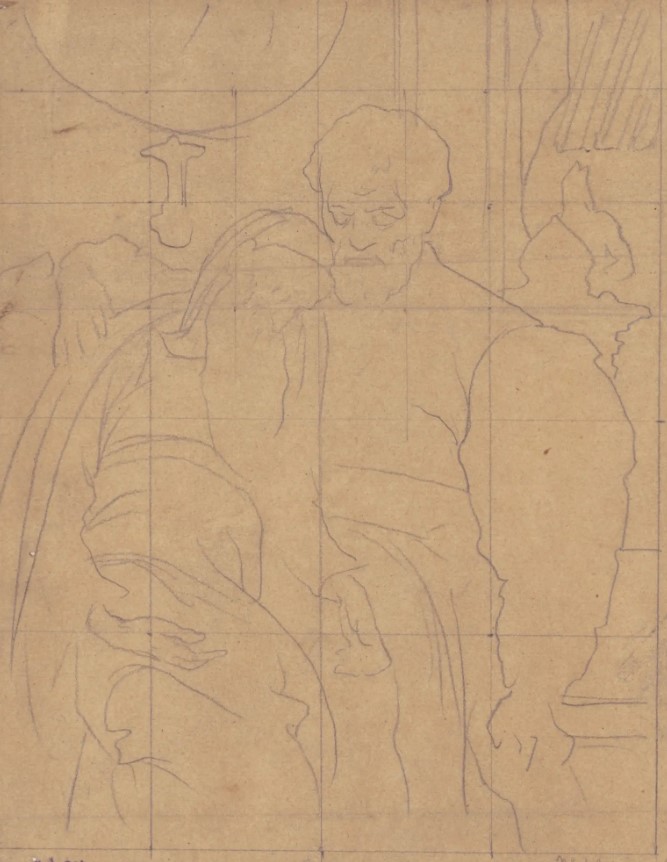
L’artista probabilmente vide un dipinto che ha lo stesso tema che fu proposto da Joseph Nicolas RObert Fleury al Salon del 1841 e lo reinterpretò secondo la sua sensibilità.
Leighton ambientò la scena di notte, mentre abbigliato in modo sobrio ma dignitoso, sostengo l’Urbino che appare molto anziano anche se in realtà era più giovane di me.
Con la mano sinistra stringo il mazzuolo con il quale sembra che stavo lavorando prima di accorrere al capezzale del mio amico e servitore. Per dipingere il mio volto, Leighton fece riferimento a ritratti precedenti cinquecenteschi che mi fecero Jacopino del Conte e Daniele da Volterra.
Il dipinto in questione appartiene a una collezione privata ma è esposto presso la Royal Borugh di Kengsinton. Al momento avete la straordinaria opportunità di vederlo esposto nella undicesima sezione della mostra sui Preraffaelliti, dedicata proprio a Leighton fra me e il classicismo.
Se ancora non avete visitato la grande esposizione allestita presso i Musei di San Domenico a Forlì dal titolo “Preraffaelliti. Rinascimento moderno” vi consiglio di farlo: è stupenda.
Per il momento il sempre vostro Michelangelo Buonarroti vi saluta dandovi appuntamento ai prossimi post e sui social.


Sostienici – Support Us
Se questo blog ti piace e ti appassiona, puoi aiutarci a farlo crescere sempre più sostenendoci in modo concreto condividendo i post, seguendo le pagine social e con un contributo che ci aiuta ad andare avanti con il nostro lavoro di divulgazione. . ENGLISH: If you like and are passionate about this blog, you can help us make it grow more and more by supporting us in a concrete way by sharing posts, following social pages and with a contribution that helps us to move forward with our dissemination work.
8,00 €
Painting of the Day: Michelangelo Attending His Dying Servant by Pre-Raphaelite Leighton
The painting of the day that I propose to you today sees me as the protagonist while I assist my servant who is dying. The original title of the work is “Micheal Angelo Nursing his Dying Servant” and was created in 1862 by the Pre-Raphaelite artist Frederic Leighton.
The subject of the oil painting on canvas was taken by Leighton from the Lives narrated by my dear friend Giorgio Vasari in which he says I took care of my assistant Francesco Amadori, better known as Urbino, until his last breath.
He had remained by my side for 26 years and had lived in my house in Macel de ‘Corvi as if he were a son. He lived with me together with his wife Cornelia and his firstborn was born within the walls of the house. He baptized it with the name Michelangelo. When he died on that fateful January 3, 1556, I became his executor. Cornelia was pregnant with her second child and I took care of the whole family, covering all their expenses.
Well, Leighton was particularly struck by this episode, so much so that he wanted to paint the last moments of Urbino’s life.
There is a study of this work carried out by the artist in pencil on tracing paper belonging to the Royal Academy in London.
The artist probably saw a painting that has the same theme that was proposed by Joseph Nicolas RObert Fleury at the Salon of 1841 and reinterpreted it according to his sensitivity.
Leighton set the scene at night, while dressed in a sober but dignified way, I supported Urbino. In reality he didn’t die as an old man but he was younger than me.
With my left hand I grasp the mallet with which it seems I was working before rushing to the bedside of my friend and servant. To paint my face, Leighton referred to previous sixteenth-century portraits of me by Jacopino del Conte and Daniele da Volterra.
The painting in question belongs to a private collection but is exhibited at the Royal Borugh of Kengsinton. At the moment you have the extraordinary opportunity to see it exhibited in the eleventh section of the exhibition on the Pre-Raphaelites, dedicated precisely to Leighton between me and classicism.
If you have not yet visited the large exhibition set up at the San Domenico Museums in Forlì entitled “Pre-Raphaelites. Modern Renaissance” I recommend you do it: it’s wonderful.
For the moment, your always Michelangelo Buonarroti greets you and will meet you in the next posts and on social media.
Sostienici – Support Us
Se questo blog ti piace e ti appassiona, puoi aiutarci a farlo crescere sempre più sostenendoci in modo concreto condividendo i post, seguendo le pagine social e con un contributo che ci aiuta ad andare avanti con il nostro lavoro di divulgazione. . ENGLISH: If you like and are passionate about this blog, you can help us make it grow more and more by supporting us in a concrete way by sharing posts, following social pages and with a contribution that helps us to move forward with our dissemination work.
8,00 €
-
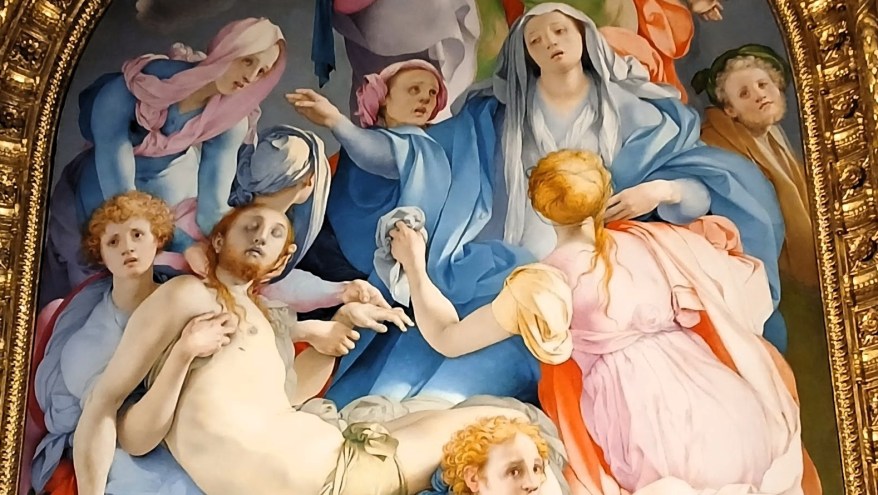
La Deposizione del Pontormo: il capolavoro dell’artista
🇮🇹Ti coinvolge. Ti mette a disagio. Ti costringe a sentire. E’ la Deposizione dalla Croce, dipinta da Jacopo Pontormo tra il 1525 e il 1528 per la Cappella Capponi… 🇬🇧It draws you in. It makes you uncomfortable. It forces you to feel. It’s the Deposition from the Cross, painted by Jacopo Pontormo between 1525 and…
-
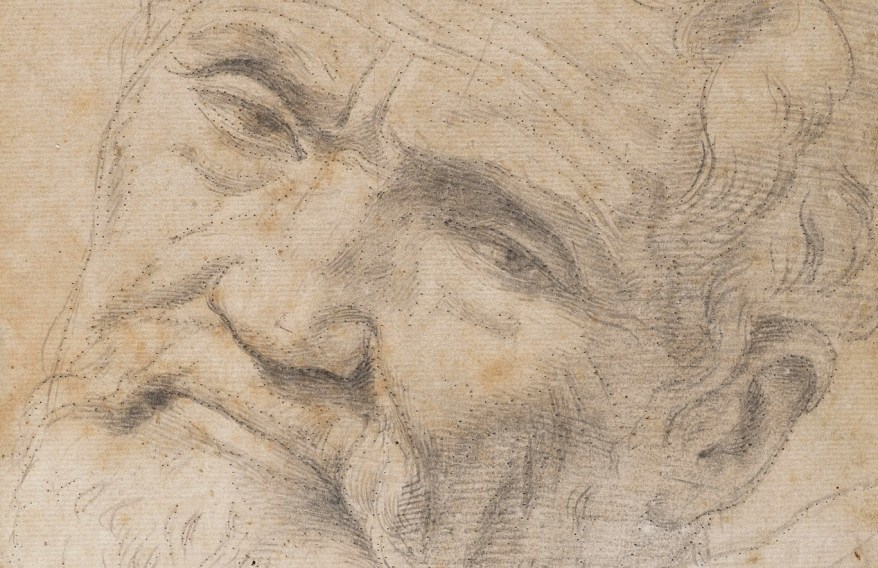
Non chiamatelo Braghettone: il 4 aprile del 1566 muore Daniele da Volterra, l’artista che salvò il Giudizio Universale
🇮🇹Braghettone? No, molto di più. Il 4 aprile 1566 moriva Daniele da Volterra, il mio allievo più fedele, l’uomo che mi rimase accanto fino all’ultimo respiro e che salvò il mio Giudizio Universale dalla distruzione… 🇬🇧Braghettone? No, much more. On April 4, 1566, Daniele da Volterra died, my most faithful student, the man who remained…
-
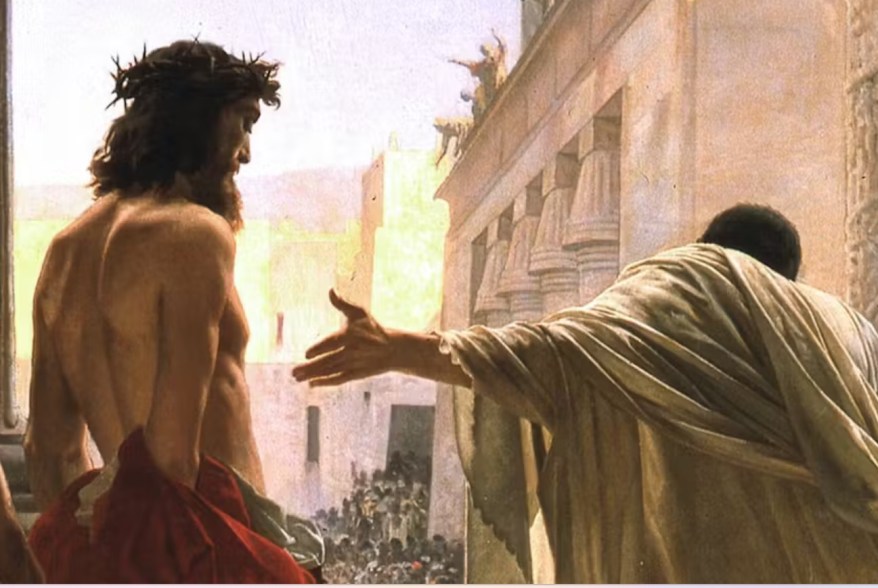
Venerdì Santo: gli “Ecce Homo” più intensi della storia dell’arte
🇮🇹Ecce Homo. Da Antonello da Messina a Tintoretto, fino al sorprendente capolavoro di Antonio Ciseri, questo soggetto ha attraversato i secoli raccontando dolore, umanità e coscienza… 🇬🇧Ecce Homo. From Antonello da Messina to Tintoretto, to Antonio Ciseri’s astonishing masterpiece, this subject has spanned the centuries, recounting pain, humanity, and conscience…
Condividi:


Questo sono io





sostienici

Sostienici - Support Us
Se questo blog ti piace e ti appassiona, puoi aiutarci a farlo crescere sempre più sostenendoci in modo concreto condividendo i post, seguendo le pagine social e con un contributo che ci aiuta ad andare avanti con il nostro lavoro di divulgazione. . ENGLISH: If you like and are passionate about this blog, you can help us make it grow more and more by supporting us in a concrete way by sharing posts, following social pages and with a contribution that helps us to move forward with our dissemination work.
€10,00


1 commento »