

Fonte Gaia a Siena di Tito Sarocchi: terminato il lungo restauro
Nella Fonte Gaia in Piazza del Campo a Siena tornano a sgorgare le acque dopo il lungo restauro durato oltre mille ore: da ottobre 2023 fino a questo febbraio 2024.
Un lavoro non stop che ha visto impegnati il restauratore Stefano Landi e il suo staff per venti settimane consecutive e strumentazioni di ultima generazione come il Laser Thunder Compact abbinato a tecniche avanzate.
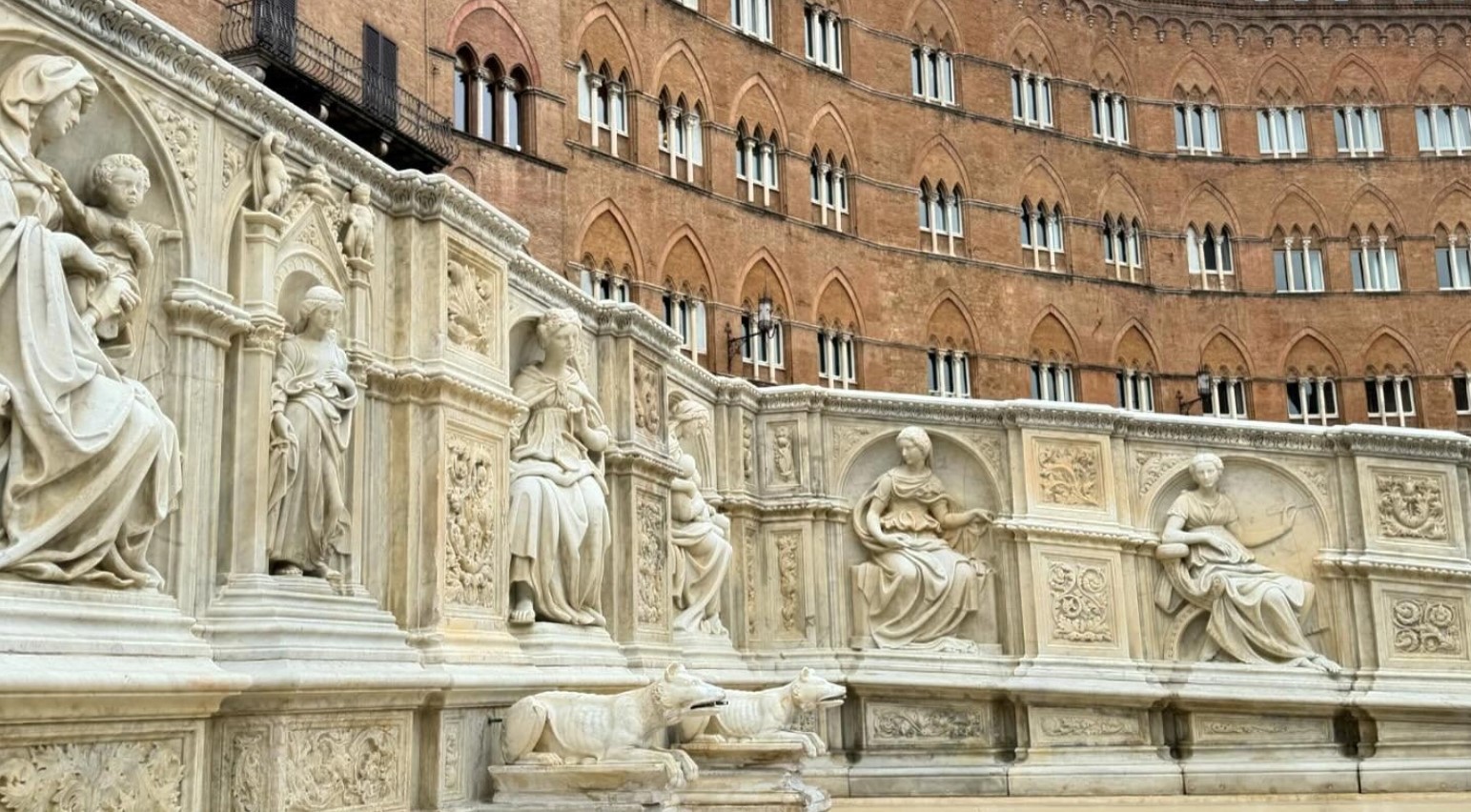
Il recupero dell’opera di Tito Sarrocchi in Piazza del Campo è stata resa possibile mediante i contributi della Fondazione Monte dei Paschi di Siena, del Comune di Siena e la partecipazione di imprese specializzate.
Fonte gaia è la più grande e importante fontana pubblica di Siena e si trova nel cuore pulsante della città. Tanto fu grande la gioia con cui venne accolta lo sgorgare delle fresche acque dagli abitanti nel momento della sua inaugurazione nel 1346 che venne rinominata appunto Fonte Gaia.
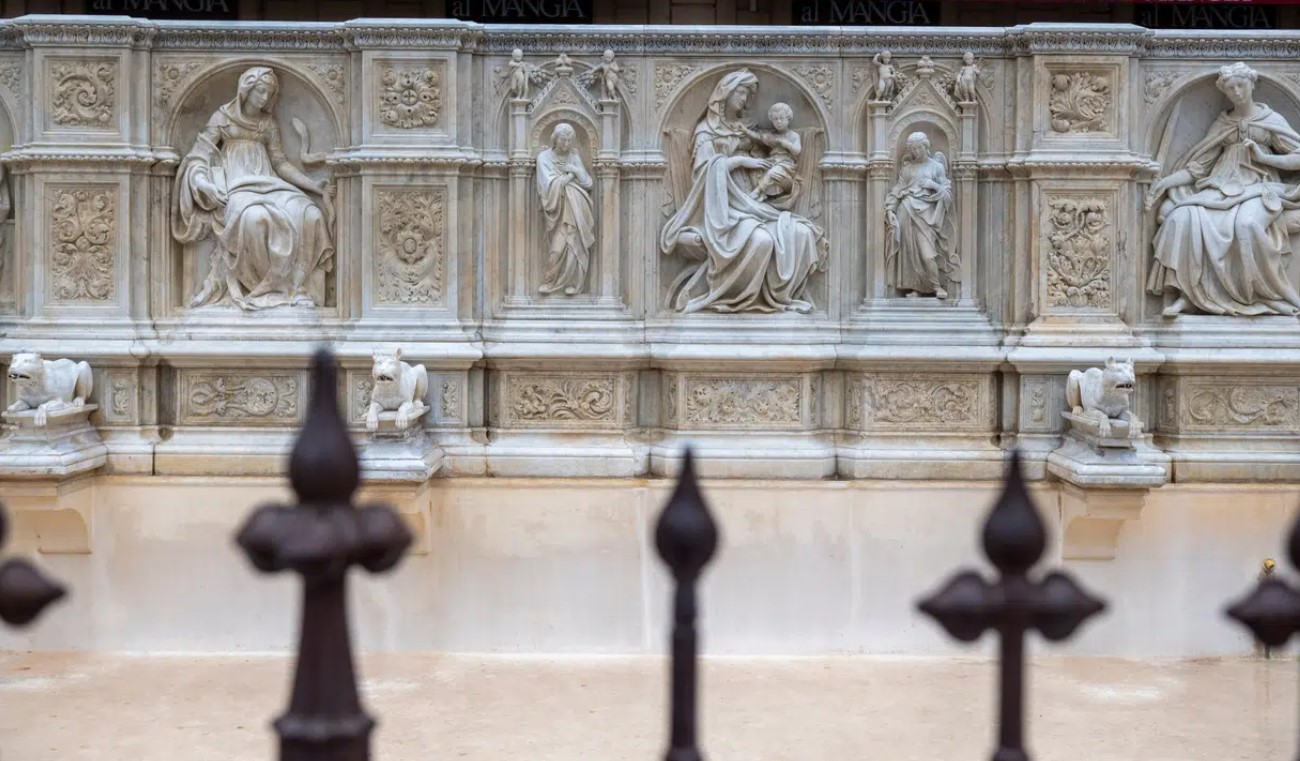
Fu progettata da Jacopo della Quercia e per alimentarla fu costruita un’opera idraulica laboriosa che richiese la realizzazione di trenta chilometri di galleria sotterranea per fare arrivare l’acqua fino alla Fonte.
Jacopo della Quercia però aveva scelto un marmo non appropriatissimo per questo tipo di lavori, ovvero quello della Montagnola senese. Poco resistente alle intemperie e al passare degli anni, le sculture cominciarono a cedere allo scorrere del tempo.
Tanto era il degrado del materiale che nel 1859 fu deciso di sostituire la fonte di Jacopo con una copia in marmo di Carrara a opera di Tito Sarocchi, quella per l’appunto appena ultimata di restaurare.

«Consegniamo alla città, ai suoi cittadini e a tutti, un’opera valorizzata nei suoi princìpi essenziali, chiedendo ai posteri di seguire in modo scrupoloso il piano di manutenzione, fondamentale per conservare nel tempo la magnifica Fonte Gaia di Piazza del Campo.
I lavori preliminari d’indagine, lo studio dei materiali costitutivi e degli elementi di degrado, i test preliminari di pulitura, la campagna di documentazione fotografica e grafica 3D, sono stati fondamentali per le linee guida della metodologia d’intervento.
Ai metodi tradizionali chimici e meccanici si sono affiancati altri innovativi, come l’impiego di strumentazione laser del gruppo El.En: ha permesso di asportare le concrezioni più tenaci salvaguardando gli strati d’ossalato, la ‘patina del tempo’, secondo Cesare Brandi ‘il segno della vita di un’opera d’arte’.
Per aggregare le superfici dilavate ed erose, sono state impiegate tecnologie a base di nano-calci; eseguiti gli incollaggi delle fratture, delle porzioni distaccate e delle integrazioni; stuccature e iniezioni nei giunti per compattare ed evitare l’accesso delle acque meteoriche. Sono stati applicati un trattamento protettivo e un biocida, per preservare i risultati dell’intervento e limitare l’aggressione degli agenti atmosferici».
Dice il restauratore Stefano Landi che ha seguito il progetto di recupero del complesso architettonico e scultoreo della Fonte Gaia –
Dalla realizzazione della Fonte Gaia di Tito Sarrocchi, nel 1900 gli interventi sono stati sporadici. Nel 1970 l’Opificio delle Pietre Dure eseguì un consolidamento con fluosilicati e da allora non si hanno più notizie di restauri successivi completi.
Le indagini preliminari e l’approfondito studio dei materiali costitutivi e degli elementi di degrado co come i test preliminari di pulitura e la campagna di documentazione fotografica sono stati fondamentali per tracciare le linee guida della metodologia d’intervento, avviata con il cantiere a inizio ottobre 2023.

Ai metodi tradizionali chimici fatti di impacchi e reagenti abbinati a quelli meccanici quali la spolveratura, lavaggi, impiego di micro-frese e bisturi, si sono affiancati metodi innovativi come l’impiego di strumentazione Laser, messa a disposizione dal gruppo El.En.
Il Laser di ultima generazione ha permesso di asportare le concrezioni più resistenti e sedimentate, salvaguardando gli strati d’ossalato ovvero quella che viene chiamata in gergo patina del tempo, la stessa che l’illustre Cesare Brandi, padre del restauro moderno, definiva come il segno della vita di un’opera d’arte.
Per aggregare le superfici dilavate, sono state impiegate tecnologie a base di nano-calci compatibili con la natura del marmo. Sono stati inoltre eseguiti incollaggi delle fratture, delle porzioni distaccate e delle integrazioni degli intarsi in marmo nero.
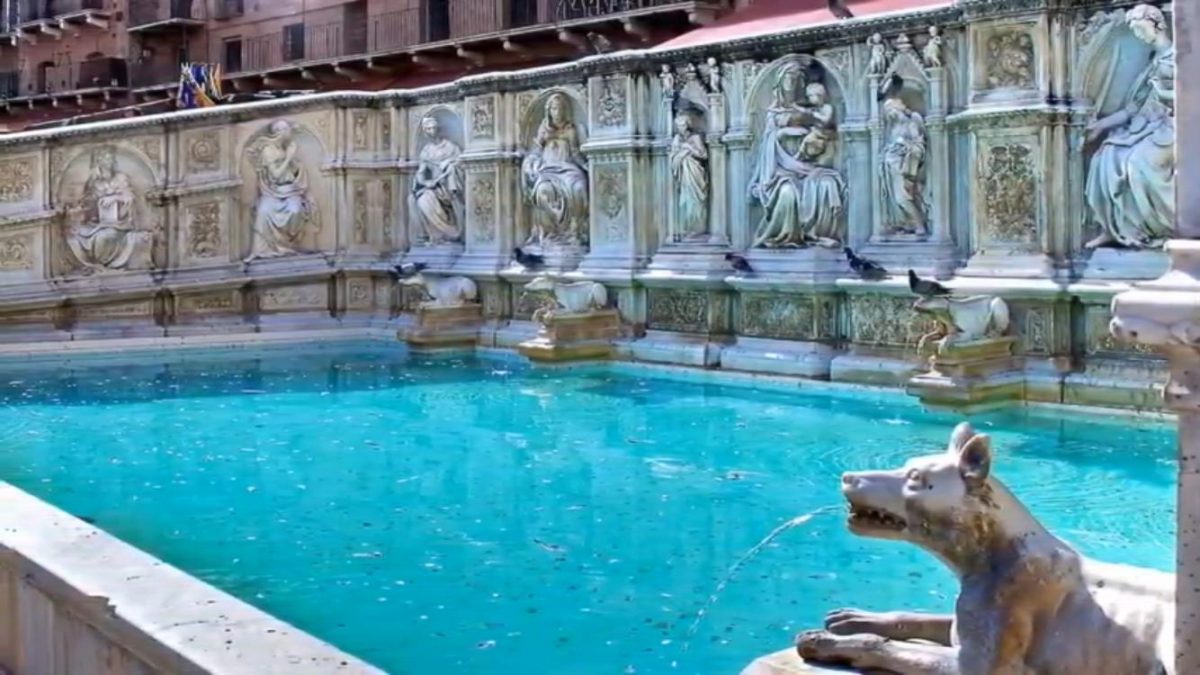
Successivamente sono state fatte stuccature e iniezioni nei giunti per compattare gli elementi ed evitare di conseguenza l’accesso delle acque meteoriche all’interno della materia.
A conclusione dell’intervento è stato applicato un trattamento protettivo, abbinato ad un biocida, al fine di preservare i risultati dell’intervento e limitare l’aggressione degli agenti atmosferici.
Per il momento il sempre vostro Michelangelo Buonarroti vi saluta dandovi appuntamento ai prossimi post e sui social.
Fonte Gaia in Siena by Tito Sarocchi: the long restoration completed
In the Fonte Gaia in Piazza del Campo in Siena the waters flow again after the long restoration which lasted over a thousand hours: from October 2023 until this February 2024.
A non-stop job that involved the restorer Stefano Landi and his staff for twenty consecutive weeks and the latest generation instruments such as the Laser Thunder Compact combined with advanced techniques.
The recovery of Tito Sarrocchi’s work in Piazza del Campo was made possible through the contributions of the Monte dei Paschi di Siena Foundation, the Municipality of Siena and the participation of specialized companies.
Fonte gaia is the largest and most important public fountain in Siena and is located in the beating heart of the city. So great was the joy with which the gushing of fresh water was welcomed by the inhabitants at the moment of its inauguration in 1346 that it was renamed Fonte Gaia.
It was designed by Jacopo della Quercia and to feed it a laborious hydraulic work was built which required the construction of thirty kilometers of underground tunnel to bring the water to the source.
Jacopo della Quercia, however, had chosen a marble that was not very appropriate for this type of work, namely that of the Sienese Montagnola. Not very resistant to bad weather and as the years passed, the sculptures began to give in to the passage of time.
The deterioration of the material was so great that in 1859 it was decided to replace Jacopo’s source with a copy in Carrara marble by Tito Sarocchi, the one which had just been restored.
«We are handing over to the city, its citizens and everyone, a work valorised in its essential principles, asking posterity to scrupulously follow the maintenance plan, which is fundamental for preserving the magnificent Fonte Gaia in Piazza del Campo over time. The preliminary investigation works, the study of the constituent materials and elements of degradation, the preliminary cleaning tests, the photographic and 3D graphic documentation campaign, were fundamental for the guidelines of the intervention methodology. The traditional chemical and mechanical methods have been joined by other innovative ones, such as the use of laser instrumentation by the El.En group: it has allowed the removal of the most stubborn concretions while safeguarding the oxalate layers, the ‘patina of time’, according to Cesare Brandi ‘the sign of the life of a work of art’. To aggregate the washed out and eroded surfaces, nano-lime based technologies were used; the fractures, detached portions and additions were bonded; grouting and injections in the joints to compact and prevent the access of rainwater. A protective treatment and a biocide were applied to preserve the results of the intervention and limit the aggression of atmospheric agents.” Says the restorer Stefano Landi who followed the recovery project of the architectural and sculptural complex of Fonte Gaia –
Since the creation of Fonte Gaia by Tito Sarrocchi in 1900, interventions have been sporadic. In 1970 the Opificio delle Pietre Dure carried out consolidation with fluosilicates and since then there has been no news of subsequent complete restorations.
The preliminary investigations and the in-depth study of the constituent materials and elements of deterioration as well as the preliminary cleaning tests and the photographic documentation campaign were fundamental in tracing the guidelines of the intervention methodology, which began with the construction site at the beginning of October 2023.
The traditional chemical methods made of compresses and reagents combined with mechanical ones such as dusting, washing, use of micro-cutters and scalpels, have been joined by innovative methods such as the use of Laser instrumentation, made available by the El.En group.
The latest generation laser has made it possible to remove the most resistant and sedimented concretions, safeguarding the oxalate layers or what is called in jargon the patina of time, the same that the illustrious Cesare Brandi, father of modern restoration, defined as the sign of the life of a work of art.
To aggregate the washed surfaces, nano-lime-based technologies compatible with the nature of marble were used. Bonding of the fractures, detached portions and additions to the black marble inlays were also carried out.
Subsequently, grouting and injections were made in the joints to compact the elements and consequently avoid the access of rainwater to the interior of the material.
At the end of the intervention, a protective treatment was applied, combined with a biocide, in order to preserve the results of the intervention and limit the aggression of atmospheric agents.
For the moment, your always Michelangelo Buonarroti greets you and will meet you in the next posts and on social media.

Sostienici – Support Us
Se questo blog ti piace e ti appassiona, puoi aiutarci a farlo crescere sempre più sostenendoci in modo concreto condividendo i post, seguendo le pagine social e con un contributo che ci aiuta ad andare avanti con il nostro lavoro di divulgazione. . ENGLISH: If you like and are passionate about this blog, you can help us make it grow more and more by supporting us in a concrete way by sharing posts, following social pages and with a contribution that helps us to move forward with our dissemination work.
10,00 €
Condividi:


Questo sono io





sostienici

Sostienici – Support Us
Se questo blog ti piace e ti appassiona, puoi aiutarci a farlo crescere sempre più sostenendoci in modo concreto condividendo i post, seguendo le pagine social e con un contributo che ci aiuta ad andare avanti con il nostro lavoro di divulgazione. . ENGLISH: If you like and are passionate about this blog, you can help us make it grow more and more by supporting us in a concrete way by sharing posts, following social pages and with a contribution that helps us to move forward with our dissemination work.
€10,00


1 commento »