

La Scultura del giorno: il Riposino di Antonio Argenti
La scultura del giorno che voglio proporvi oggi è il Riposino di Antonio Argenti, un’opera in marmo di Carrara realizzata dall’artista nella seconda metà dell’Ottocento e appartenente oggi a una collezione privata ubicata in Connecticut.
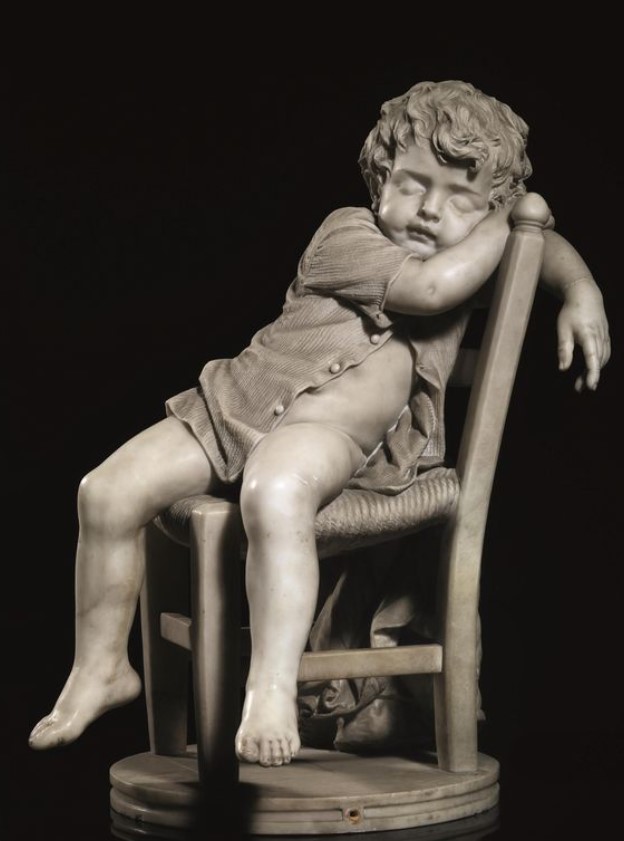
Argenti scolpì quest’opera alta complessivamente 80 centimetri a Milano tanto che accanto alla firma posta sul piano dove appoggia la sedia, pone la sua firma in corsivo e il luogo di realizzazione.
Di questa scultura ammalia l’estremo realismo complessivo e la cura che l’artista posa in ogni più piccolo dettaglio. Sembra quasi di udire il respiro pesante del fanciullo che all’improvviso si addormenta profondamente benchè sia seduto su una sedia.

L’Argenti era abilissimo nel riprodurre soggetti infantili e in quest’opera dimostra tutta la sua conoscenza degli atteggiamenti tipici dei bambini.
Osservate con attenzione le righe della camiciola che indossa e come si muova formando pieghe non forzate. E’ un pezzo di bravura che non può lasciare indifferenti.
Senza dubbio Antonio Argenti con la maturità raggiunse una straordinaria abilità nello scolpire.

Aveva studiato scultura presso l’Accademia di Brera sotto l’attenta guida di Pietro Magni e riuscì a conquistare il Premio Canonica grazie all’altorilievo in gesso raffigurante la Morte di Giulio Cesare, oggi custodito presso la Galleria di Arte Moderna di Milano.
Ebbe modo di partecipare a numerose mostre annuali sia in Italia e all’estero e fu particolarmente ricercato per realizzare preziosi monumenti funebri, tutt’oggi visibili al Cimitero Monumentale di Milano ma anche in Russia, Germania, Francia e Stati Uniti.

Nel corso degli anni il Riposino ha subito diversi danni tanto che il piede sinistro del bambino presenta una frattura successivamente reimperniata anche se continua a mancare parte dell’alluce.
Per il momento il vostro Michelangelo Buonarroti vi saluta dandovi appuntamento ai prossimi post e sui social.

Sculpture of the day: the Rest by Antonio Argenti
The sculpture of the day that I want to offer you today is the Riposino by Antonio Argenti, a work in Carrara marble created by the artist in the second half of the nineteenth century and now belonging to a private collection located in Connecticut.
Argenti sculpted this 80 cm high work in Milan so much so that next to the signature placed on the surface where the chair rests, he places his signature in italics and the place of realization.
Of this sculpture, the extreme overall realism and the care that the artist puts into every smallest detail fascinates. It almost seems to hear the heavy breathing of the child who suddenly falls deeply asleep although he is sitting on a chair.
Argenti was very skilled in reproducing children’s subjects and in this work he demonstrates all his knowledge of the typical attitudes of children.
Look closely at the stripes on the shirt he’s wearing and how it moves in unforced folds. It is a piece of skill that cannot leave you indifferent. Without a doubt Antonio Argenti with maturity reached an extraordinary ability in sculpting.
He had studied sculpture at the Brera Academy under the careful guidance of Pietro Magni and managed to win the Canonica Prize thanks to the plaster high-relief depicting the Death of Julius Caesar, now kept in the Gallery of Modern Art in Milan.
He was able to participate in numerous annual exhibitions both in Italy and abroad and was particularly sought after for creating precious funeral monuments, still visible today in the Monumental Cemetery of Milan but also in Russia, Germany, France and the United States.
Over the years, the Riposino has suffered several damages, so much so that the child’s left foot has a fracture that was subsequently re-pinned even though part of the big toe is still missing.
For the moment, your Michelangelo Buonarroti greets you by making an appointment for the next posts and on social media.

Sostienici – Support Us
Se questo blog ti piace e ti appassiona, puoi aiutarci a farlo crescere sempre più sostenendoci in modo concreto condividendo i post, seguendo le pagine social e con un contributo che ci aiuta ad andare avanti con il nostro lavoro di divulgazione. . ENGLISH: If you like and are passionate about this blog, you can help us make it grow more and more by supporting us in a concrete way by sharing posts, following social pages and with a contribution that helps us to move forward with our dissemination work.
8,00 €
-
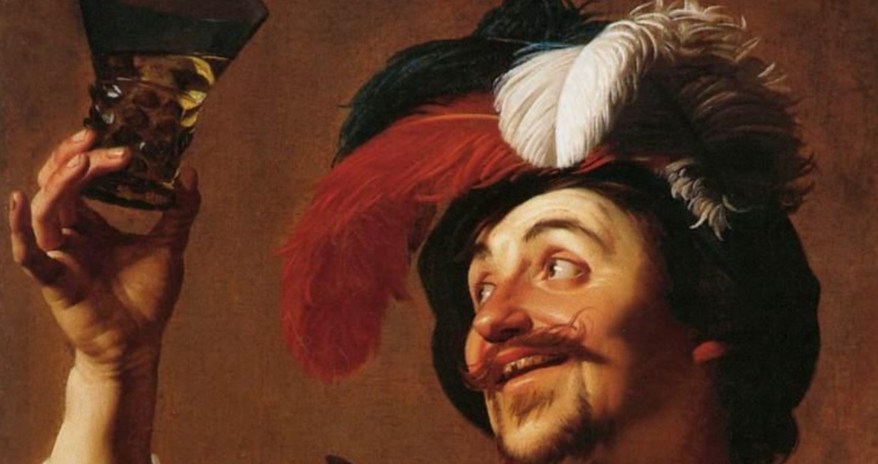
Quel sorriso del violinista felice di Gerrit van Honthorst
🇮🇹Un brindisi, un sorriso, una luce che taglia il buio. Conoscete il dipinto del violinista felice con un bicchiere di vino (1624) di Gerrit van Honthorst?… 🇬🇧A toast, a smile, a light that cuts through the darkness. Are you familiar with the painting of the Happy Violinist with a Glass of Wine (1624) by Gerrit…
-
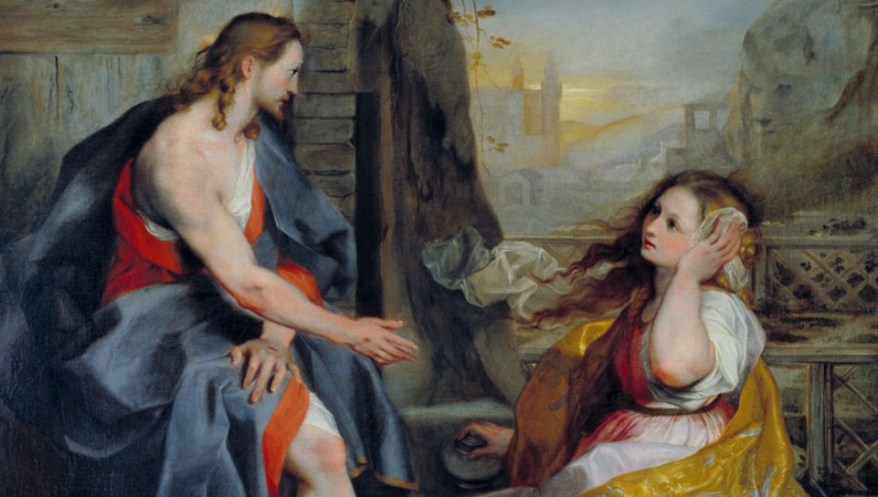
Noli me tangere di Federico Barocci: il capolavoro agli Uffizi che racconta l’incontro più emozionante dopo la Resurrezione
🇮🇹Nel Noli me tangere di Federico Barocci Maria Maddalena riconosce Cristo risorto e prova a toccarlo. Ma lui la ferma… 🇬🇧In Federico Barocci’s Noli Me Tangere, Mary Magdalene recognizes the risen Christ and tries to touch him. But he stops her…
-
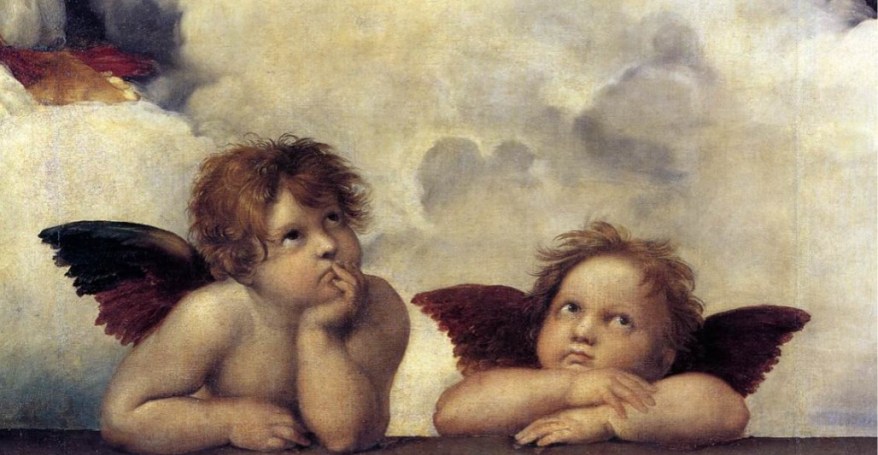
6 aprile 1520: la morte di Raffaello Sanzio e la nascita di un mito immortale
🇮🇹“Qui giace Raffaello: da lui, quando visse, la natura temette d’essere vinta, ora che egli è morto, teme di morire”. Il 6 aprile 1520 Raffaello morì a soli 37 anni… 🇬🇧“Here lies Raphael: when he lived, nature feared to be conquered by him, now that he is dead, she fears to die.” On April 6,…
Condividi:


Questo sono io





sostienici

Sostienici – Support Us
Se questo blog ti piace e ti appassiona, puoi aiutarci a farlo crescere sempre più sostenendoci in modo concreto condividendo i post, seguendo le pagine social e con un contributo che ci aiuta ad andare avanti con il nostro lavoro di divulgazione. . ENGLISH: If you like and are passionate about this blog, you can help us make it grow more and more by supporting us in a concrete way by sharing posts, following social pages and with a contribution that helps us to move forward with our dissemination work.
€10,00


1 commento »