
Lo Schiavo Morente: Eros e Thanatos
Lo Schiavo Morente è forse una delle figure più sensuali alle quali ho dato forma nel corso della mia vita.
Il nome con il quale è conosciuto gli fu attribuito da Hans Grimm che seppe interpretare nella posa della scultura un uomo mentre sta vivendo gli ultimi atti di vita, quasi fosse un San Sebastiano trafitto dalle frecce che qui però non sono presenti.

Ad osservare meglio, lo Schiavo Morente sembra più un’opera che metta assieme in modo magistrale Eros e Thanatos, i due impulsi che dominano l’uomo.
Attraverso i due elementi opposti che rappresentano l’amore come forza creatrice di vita e la morte, collegata anche alla distruzione che può generare, si racchiude l’intera esistenza di una persona.
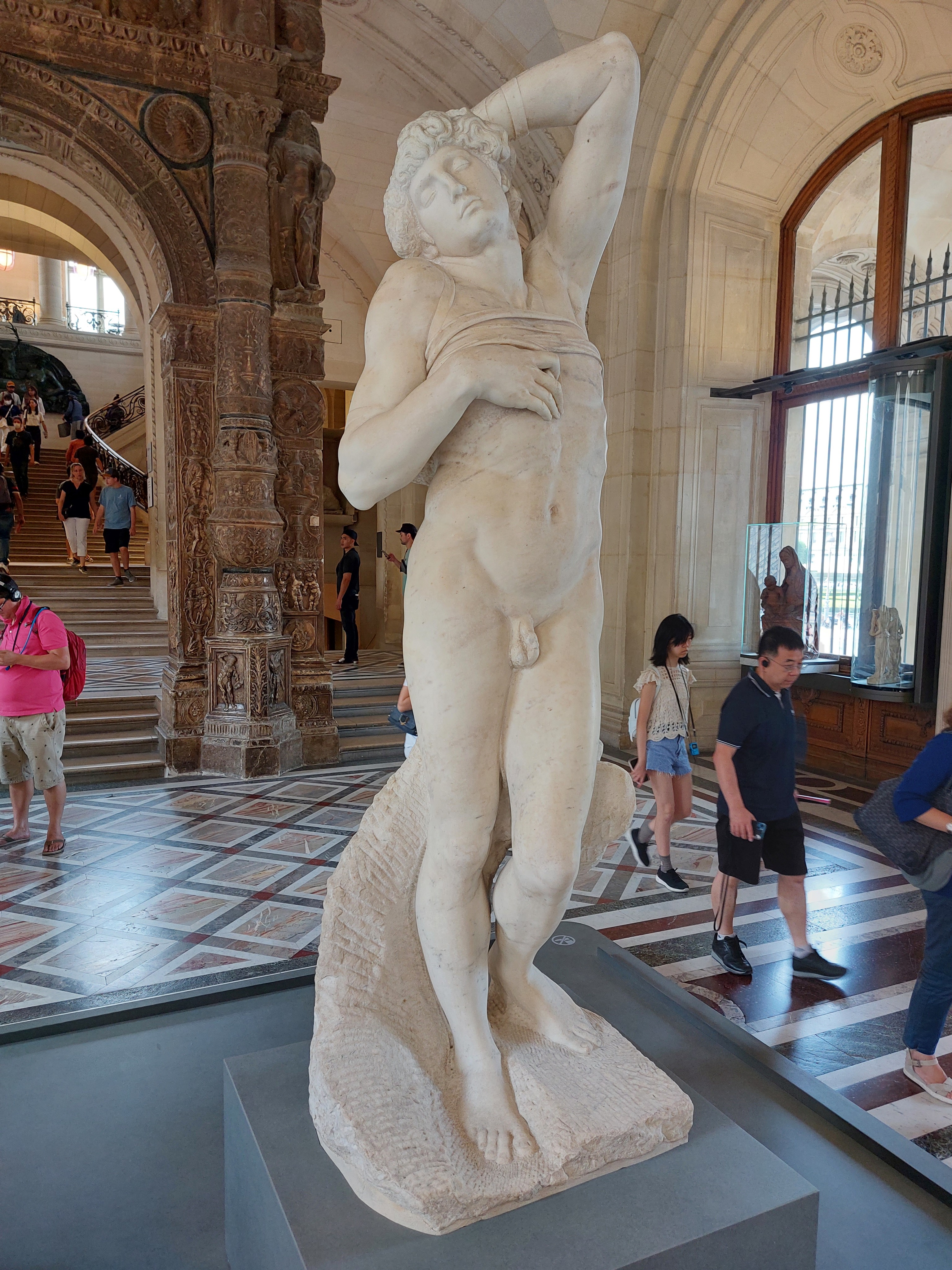
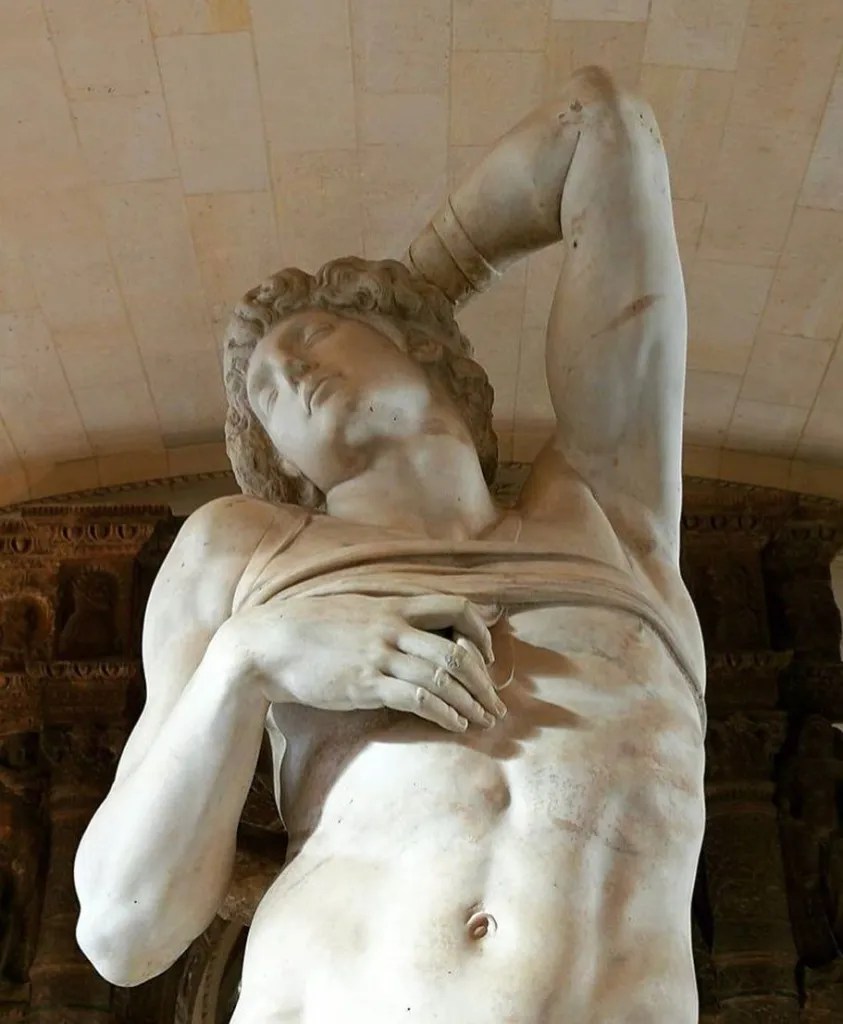
Lo Schiavo Morente ha lacci che stringono il petto e il polso sinistro mentre sembra che voglia sostenere il peso della testa con il braccio alzato.
Se avessi posizionato questa scultura nel secondo progetto della Tomba di Giulio II davanti a un pilastro, l’effetto ottenuto sarebbe stato quello di avere a che fare con un lento scivolamento verso il basso del corpo, non più sostenuto dalla forza vitale.
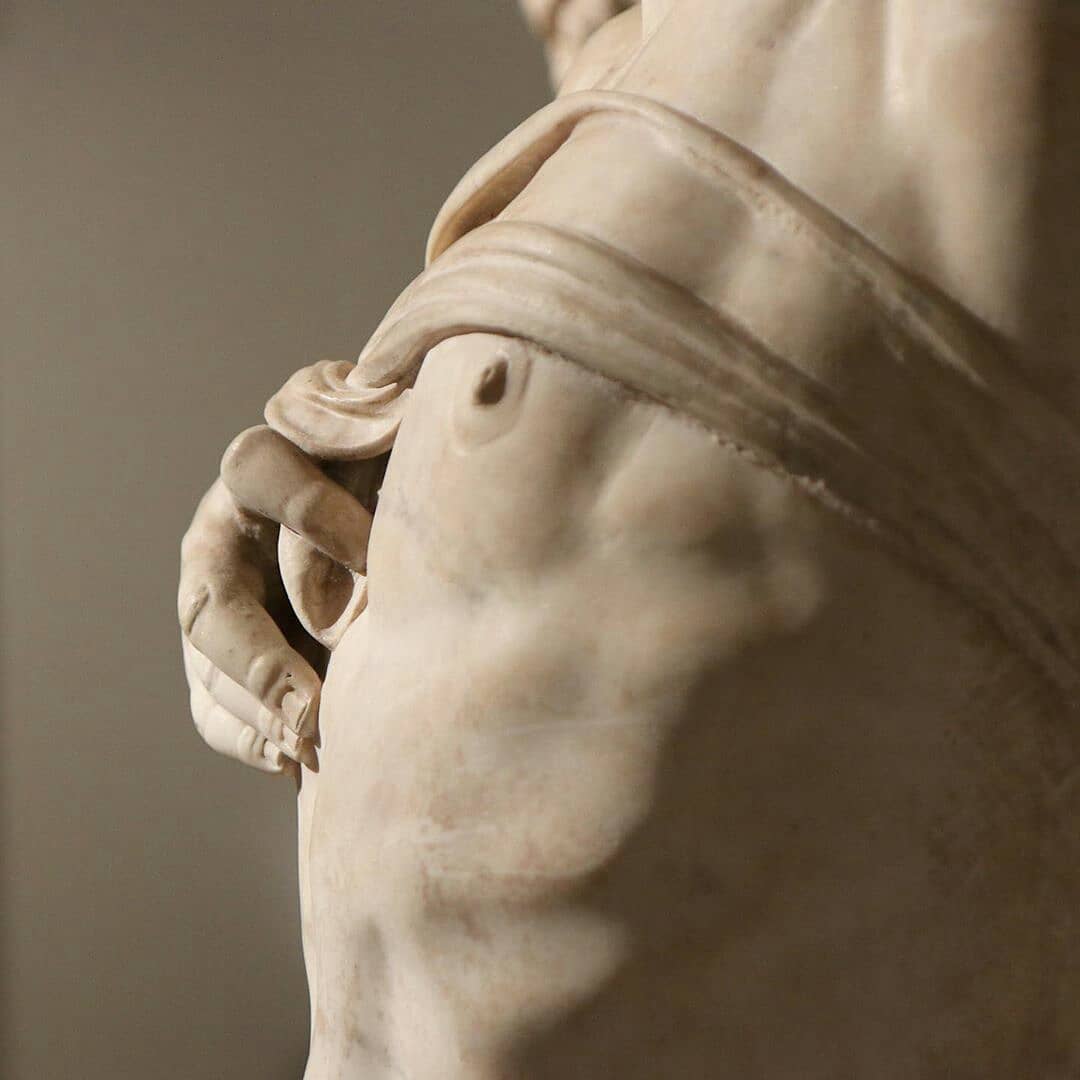
Chiave di volta per la lettura di quest’opera potrebbe essere la scimmietta che gli scolpii a supporto della gamba sinistra.
L’avete mai vista? Spesso passa inosservata eppure non è un dettaglio di poco conto. Il babbuino, secondo l’antica fonte degli Hieroglyphica di Horapollo, alluderebbe alla sapienza letteraria. Aguzzate la vista: l’animale stringe in mano probabilmente una pergamena arrotolata che rimanda ancora una volta alla sapienza.
Lo Schiavo Morente in compagnia del babbuino erudito può essere considerato uno dei saperi umanistici addolorato e sconsolato dalla scomparsa di papa Giulio II.
Ovviamente questa è una delle tante interpretazioni che hanno cercato di dare i miei posteri: alla fine dei conti io non lasciai in merito alcuna indicazione.
Per il momento il vostro Michelangelo Buonarroti vi saluta dandovi appuntamento ai prossimi post e sui social.
The Dying Slave: Eros and Thanatos
The Dying Slave is perhaps one of the most sensual figures to which I have given shape in the course of my life.
The name by which he is known was attributed to him by Hans Grimm who was able to interpret a man in the pose of the sculpture while he is experiencing the last acts of life, almost as if he were a Saint Sebastian pierced by arrows which, however, are not present here.
Looking closer, the Dying Slave seems more like a work that masterfully brings together Eros and Thanatos, the two impulses that dominate man.
Through the two opposing elements that represent love as a creative force of life and death also connected to the destruction it can generate, the entire existence of a person is enclosed.
The Dying Slave has strings gripping his chest and left wrist as he appears to be supporting the weight of the head with his raised arm.
If I had placed this sculpture in the second project of the Tomb of Julius II in front of a pillar, the effect obtained would have been that of having to deal with a slow downward sliding of the body, no longer supported by the vital force.
The keystone for reading this work could be the little monkey that I sculpted to support his left leg.
Have you ever seen her? It often goes unnoticed and yet it is not a trivial detail. The baboon, according to the ancient source of the Hieroglyphica of Horapollo, would allude to literary wisdom. Sharpen your view: the animal probably holds a rolled up parchment in its hand which once again refers to wisdom.
The Dying Slave in the company of the learned baboon can be considered one of the humanistic forms of knowledge saddened and disconsolate by the death of Pope Julius II.
Obviously this is one of the many interpretations that my posterity has tried to give: in the end, I left no indication in this regard.
For the moment, your Michelangelo Buonarroti greets you by making an appointment for the next posts and on social media.

Sostienici – Support Us
Se questo blog ti piace e ti appassiona, puoi aiutarci a farlo crescere sempre più sostenendoci in modo concreto condividendo i post, seguendo le pagine social e con un contributo che ci aiuta ad andare avanti con il nostro lavoro di divulgazione. . ENGLISH: If you like and are passionate about this blog, you can help us make it grow more and more by supporting us in a concrete way by sharing posts, following social pages and with a contribution that helps us to move forward with our dissemination work.
8,00 €
-
Festival La Versiliana 2026: tra musica, teatro e grandi narrazioni
Dal 17 luglio al 23 agosto 2026, la pineta di Marina di Pietrasanta ospiterà la 47ª edizione del Festival La Versiliana. Una kermesse aperta a tutti nella quale linguaggi diversi dialogano tra loro in un equilibrio tra tradizione e contemporaneità.
-
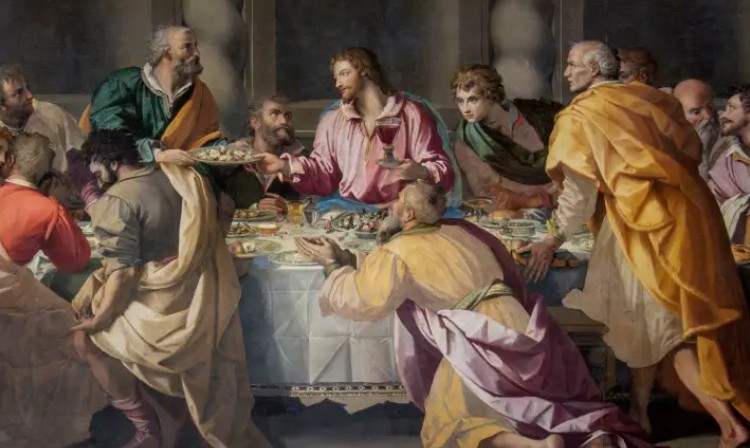
Giovedì Santo: l’Ultima Cena di Allori che pochi conoscono a Firenze
🇮🇹Nel cuore di Museo di Santa Maria Novella, a Firenze, si conserva una delle interpretazioni più affascinanti e meno note dell’Ultima Cena: quella realizzata da Alessandro Allori nel 1584… 🇬🇧In the heart of the Santa Maria Novella Museum in Florence, one of the most fascinating and least-known interpretations of the Last Supper is preserved: the…
-
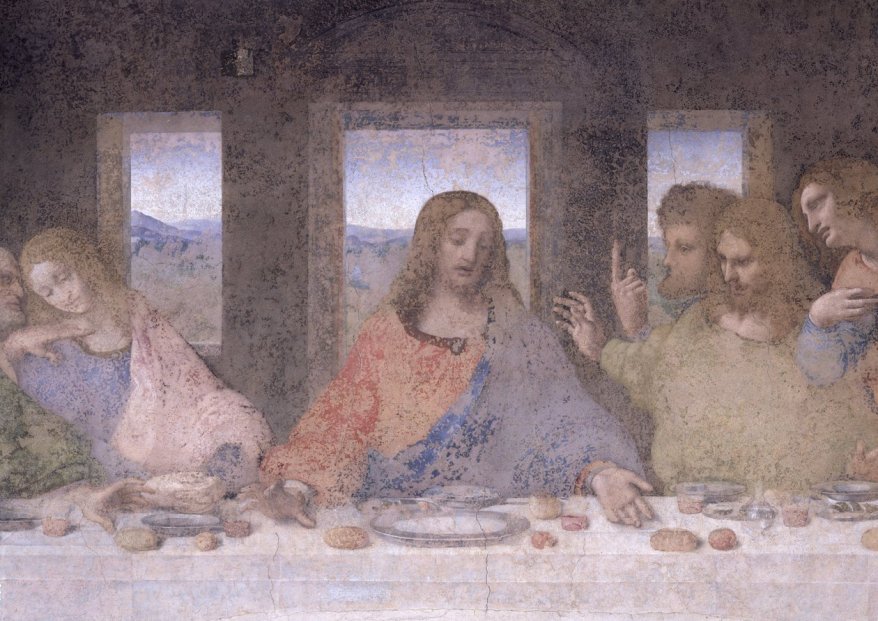
Cenacolo di Leonardo: i dettagli che raccontano il tradimento
🇮🇹Nel Cenacolo di Leonardo da Vinci, custodito a Santa Maria delle Grazie, Cristo annuncia il tradimento e il tempo si ferma… 🇬🇧In Leonardo da Vinci’s Last Supper, housed in Santa Maria delle Grazie, Christ announces the betrayal and time stands still…
Condividi:


Questo sono io





sostienici

Sostienici – Support Us
Se questo blog ti piace e ti appassiona, puoi aiutarci a farlo crescere sempre più sostenendoci in modo concreto condividendo i post, seguendo le pagine social e con un contributo che ci aiuta ad andare avanti con il nostro lavoro di divulgazione. . ENGLISH: If you like and are passionate about this blog, you can help us make it grow more and more by supporting us in a concrete way by sharing posts, following social pages and with a contribution that helps us to move forward with our dissemination work.
€10,00


Vi aspetto ogni giorno, come l’alba. Grazie Tomaso!!!
"Mi piace"Piace a 1 persona