
La Scultura del giorno: Narciso al bagno di Paul Dubois
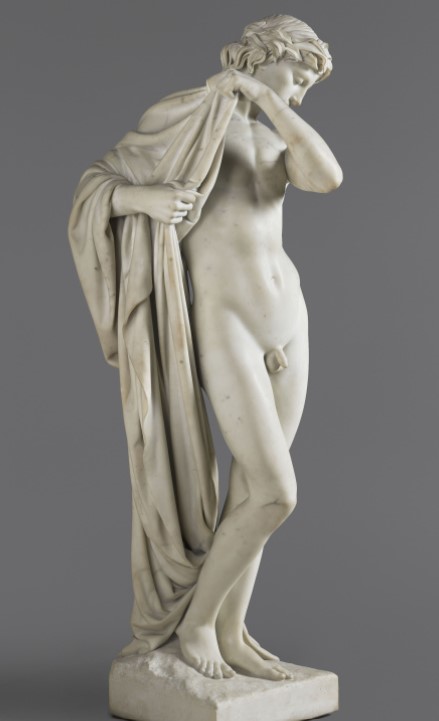
La scultura del giorno che vi propongo oggi è l’elegante e sensuale Narciso di Paul Dubois, scolpito nel 1863.
Paul Dubois fu un apprezzato scultore e pittore francese, nato nel luglio del 1829 a Norgent-sur-Seine. Suo padre era un notaio reale ma la scultura in qualche modo gli scorreva nelle vene già prima di venire al mondo: era il pronipote di Jean Baptiste Pigalle.
Dubois frequentò l’Ecole des Beaux Arts di Parigi e il prestigioso studio di Touissant.
Nel 1863, dopo aver soggiornato a Roma per approfondire le sue conoscenze in ambito della scultura, presentò al Salone di Parigi Narciso al Bagno il quale gli fece conquistare una medaglia d’oro.
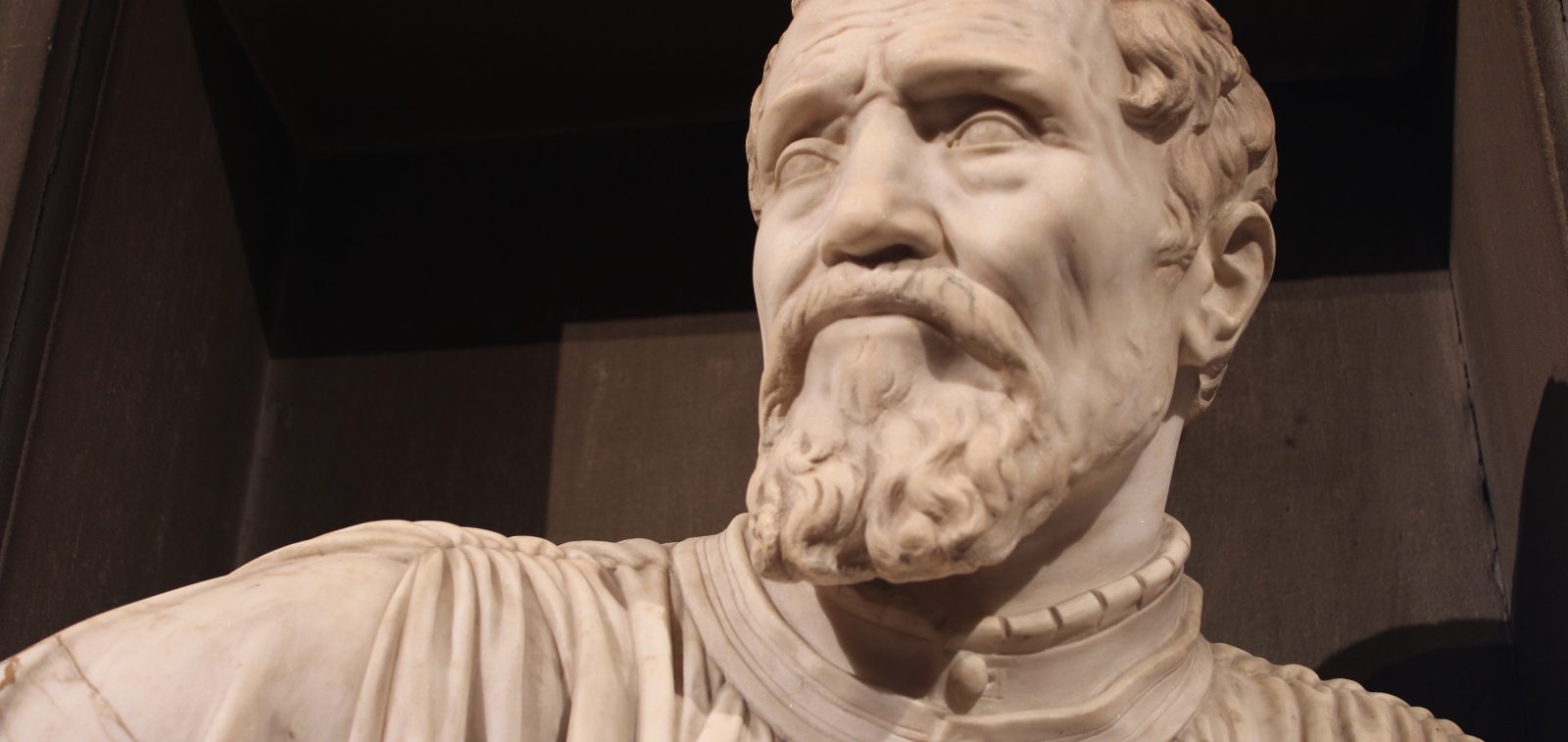
Profondamente influenzato dall’arte italiana e in particolar modo dalla scultura rinascimentale, lo scultore divenne il primo esponente dei cosiddetti scultori fiorentini che emularono i predecessori toscani a cavallo fra il Quattrocento e il Cinquecento.
Dubois scolpì il giovane Narciso, figlio di Cefiso e della ninfa Liriope che, insensibile al sentimento dell’amore, non ricambiò minimamente la passione aveva nei suoi confronti Eco.
Per punizione la dea Nemesi lo fece innamorare della propria immagine riflessa in una fonte e lui morì consumato da questa passione verso sé stesso fino a trasformarsi nel nome che ancora oggi porta il suo nome.

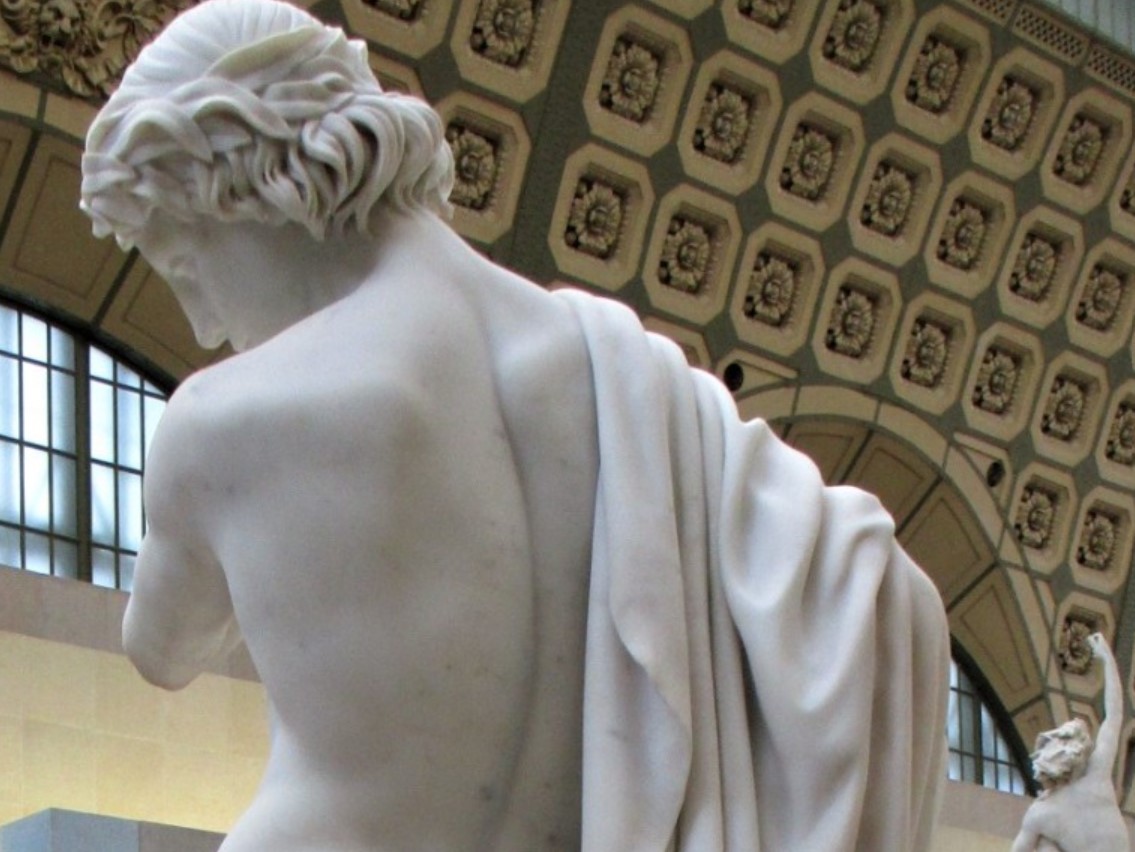
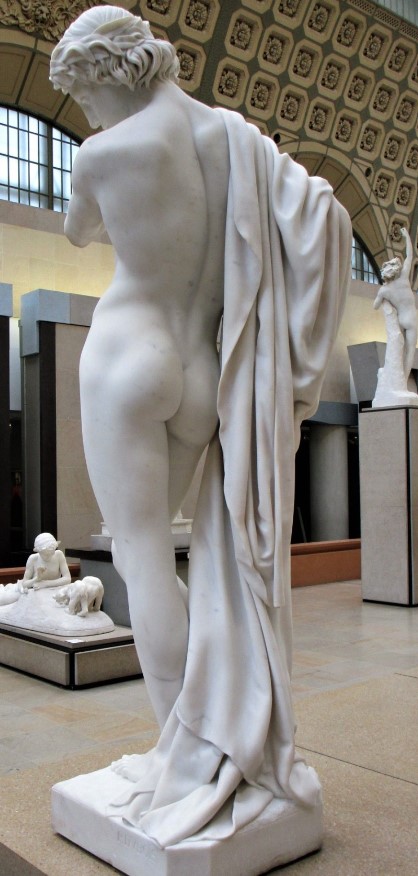
Narciso nella scultura di Dubois sta guardando il suo riflesso con occhi perdutamente innamorati.
Osservate l’espressione del suo volto e le mani nell’atto di spogliarsi o più probabilmente vestirsi.
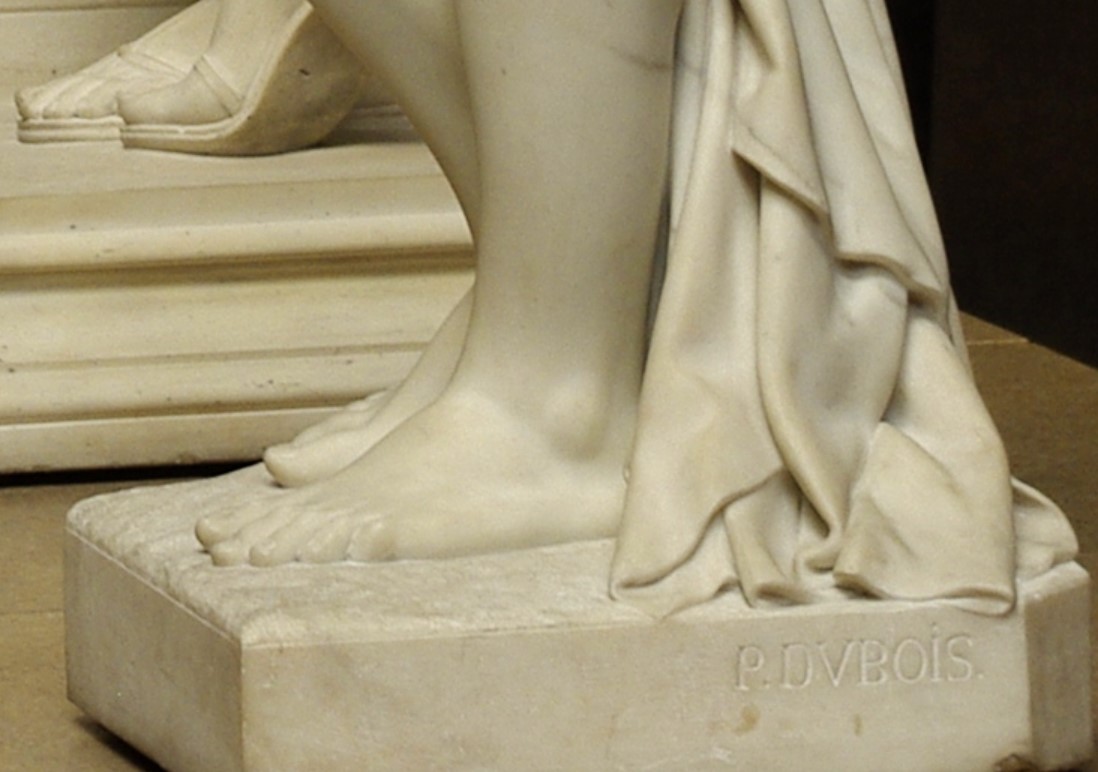
La scultura, firmata sulla base dall’artista, la potete ammirare con i vostri occhi presso il Museé d’Orsay.
Per il momento il vostro Michelangelo Buonarroti vi saluta dandovi appuntamento ai prossimi post e sui social.

Sculpture of the day: Narcissus bathing by Paul Dubois
The sculpture of the day that I propose to you today is the Narcissus by Paul Dubois, sculpted in 1863.
Paul Dubois was an appreciated French sculptor and painter, born in July 1829 in Norgent-sur-Seine. His father was a royal notary but sculpture somehow flowed through his veins even before he was born: he was the great-grandson of Jean Baptiste Pigalle.
Dubois attended the Ecole des Beaux Arts in Paris and attended Touissant’s studio for a long time.
In 1863, after having stayed in Rome to deepen his knowledge of sculpture, he presented Narciso al Bagno at the Paris Salon, which won him a gold medal.
The sculptor was profoundly influenced by Italian art and in particular by Renaissance sculpture, so much so that he became the first exponent of the so-called Florentine sculptors who emulated their Tuscan predecessors between the fifteenth and sixteenth centuries.
Dubois sculpted the young Narcissus, son of Cefiso and the nymph Liriope who, insensitive to the feeling of love, did not reciprocate the passion Echo had towards him.
As punishment, the goddess Nemesis made him fall in love with her own image reflected in a source and he died consumed by this passion towards himself until he transformed into the name that still bears her name today.
Narcissus in Dubois’ sculpture is looking at his reflection with eyes madly in love. Observe the expression on his face and hands in the act of undressing or more likely dressing.
The sculpture, signed on the base by the artist, can be admired with your own eyes at the Museé d’Orsay.
For the moment, your Michelangelo Buonarroti greets you by making an appointment for the next posts and on social media.

Sostienici – Support Us
Se questo blog ti piace e ti appassiona, puoi aiutarci a farlo crescere sempre più sostenendoci in modo concreto condividendo i post, seguendo le pagine social e con un contributo che ci aiuta ad andare avanti con il nostro lavoro di divulgazione. . ENGLISH: If you like and are passionate about this blog, you can help us make it grow more and more by supporting us in a concrete way by sharing posts, following social pages and with a contribution that helps us to move forward with our dissemination work.
8,00 €
-
L’arte che ti guarda: quando lo spettatore diventa protagonista
🇮🇹Davanti ad alcune opere accade qualcosa di difficile da spiegare: non siamo più noi a guardare il quadro, ma è il quadro a guardare noi… 🇬🇧Something difficult to explain happens in front of some works: it is no longer us who look at the painting, but the painting that looks at us…
-
I più grandi falsi della storia dell’arte: storie incredibili, truffe milionarie e il confine sottile tra genio e inganno
🇮🇹 I falsi più incredibili della storia dell’arte. Un dipinto venduto per milioni… che non era autentico. Esperti ingannati per anni. Collezionisti pronti a tutto pur di possedere un “capolavoro”. Da Han van Meegeren a Wolfgang Beltracchi, capace di creare opere perfette ma mai esistite prima… 🇬🇧 The most incredible fakes in art history. A…
-
16 aprile 1535: il giorno in cui iniziai a far costruire i ponteggi per il Giudizio Universale
🇮🇹Era il 16 aprile del 1535 quando diedi avvio a un’opera che avrebbe segnato per sempre la mia vita e, forse, anche il destino dell’arte: iniziai a far costruire il ponteggio per affrescare il Giudizio Universale nella Cappella Sistina… 🇬🇧It was April 16, 1535 when I began a project that would forever mark my life…
Condividi:


Questo sono io





sostienici

Sostienici – Support Us
Se questo blog ti piace e ti appassiona, puoi aiutarci a farlo crescere sempre più sostenendoci in modo concreto condividendo i post, seguendo le pagine social e con un contributo che ci aiuta ad andare avanti con il nostro lavoro di divulgazione. . ENGLISH: If you like and are passionate about this blog, you can help us make it grow more and more by supporting us in a concrete way by sharing posts, following social pages and with a contribution that helps us to move forward with our dissemination work.
€10,00


splendida la posa, splendido il drappo cascante sul fianco e la morbidezza del corpo così armonioso… Grazie per i dettagli!
"Mi piace"Piace a 1 persona
:-* un’opera molto sensuale
"Mi piace"Piace a 1 persona
vero
"Mi piace"Piace a 1 persona