
La Giuditta
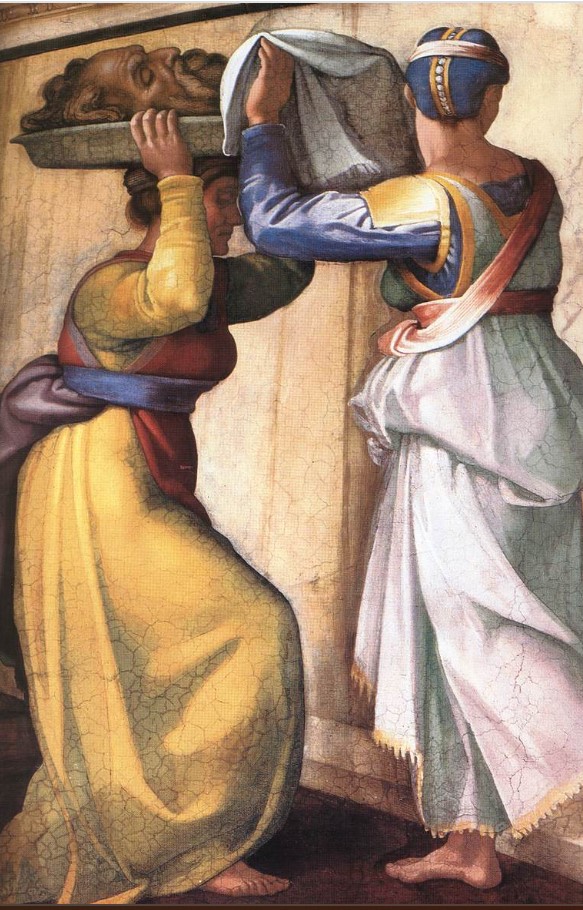
Mentre Donatello realizzò la sua imponente Giuditta in bronzo poco prima di compiere i settant’anni, fra 1453 e il 1457, io volli affrescare l’eroina biblica sulla volta della Sistina in uno dei quattro pennacchi qualche anno dopo, attorno al 1508.
Il volto fiero e il gesto deciso pensato da Donatello, nel mio affresco lasciò spazio a una Giuditta girata di spalle che guarda il corpo di Oloferne appena decapitato, giacente giace sul letto. Per evitare la vista del collo mozzato, preferii proporre il generale del re babilonese Nabucodonosor visto di scorcio, celando la parte più sanguinolenta.

L’episodio di Giuditta e Oloferne viene narrato nell’Antico Testamento. Giuditta riuscì a salve la propria città di Betulia dal terribile assedio di Oloferne, generale di Nabucodonosor, decapitandolo nel momento in cui cercò di sedurla.
Se guardate con attenzione, noterete che nel pennacchio narrai la vicenda in tre momenti diversi. A sinistra si vedono le guardie addormentate mentre al centro compare Giuditta che sta coprendo con un panno bianco il capo appena mozzato di Oloferne, sistemato sopra un vassoio sostenuto sopra il proprio capo dall’ancella.
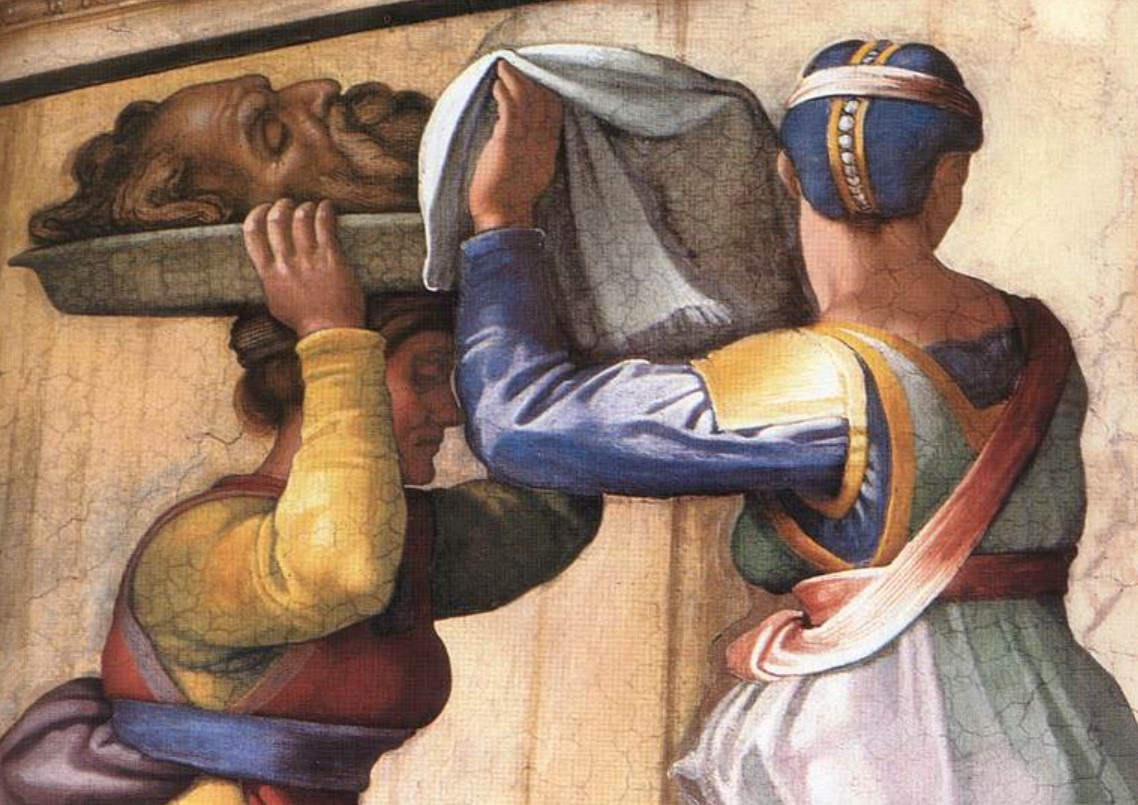
C’è chi sostiene che il capo di Oloferne abbia qualche affinità con me. Che sia un autoritratto? Chissà.
Infine a destra si vede il corpo di scorcio di Oloferne, come vi avevo anticipato prima.
Sia Giuditta che l’ancella le trasposi dal cartone preparatorio sull’intonaco fresco mediante la tecnica dello spolvero mentre Oloferne preferii trasporlo con al tecnica dell’incisione.
Per il momento il vostro Michelangelo Buonarroti vi saluta dandovi appuntamento ai prossimi post e sui social.
The Judith
While Donatello created his imposing bronze Judith shortly before turning seventy, between 1453 and 1457, I wanted to fresco the biblical heroine on the Sistine vault in one of the four spandrels a few years later, around 1508.
The proud face and the decisive gesture conceived by Donatello, in my fresco gave way to a Judith turned from behind who looks at the body of Holofernes just beheaded, lying lying on her bed. To avoid the sight of the severed neck, I preferred to propose the general of the Babylonian king Nebuchadnezzar seen from an angle, hiding the bloodiest part.
The episode of Judith and Holofernes is narrated in the Old Testament. Judith managed to save her own city of Bethulia from the terrible siege of Holofernes, general of Nebuchadnezzar, beheading him when he tried to seduce her.
If you look carefully, you will notice that in the plume I narrated the story at three different times. On the left we see the sleeping guards while in the center of her appears Judith who is covering with a white cloth the freshly severed head of Holofernes, placed on a tray supported above her own head by the handmaid.
There are those who argue that the head of Holofernes has some affinity with me. Is it a self portrait? Maybe.
Finally on the right you can see the foreshortened body of Holofernes, as I anticipated earlier.
Both Judith and the handmaid I transposed from the preparatory cartoon onto the fresh plaster using the dusting technique while Holofernes preferred to transpose it with the engraving technique.
For the moment, your Michelangelo Buonarroti greets you by making an appointment for the next posts and on social media.

Sostienici – Support Us
Se questo blog ti piace e ti appassiona, puoi aiutarci a farlo crescere sempre più sostenendoci in modo concreto condividendo i post, seguendo le pagine social e con un contributo che ci aiuta ad andare avanti con il nostro lavoro di divulgazione. . ENGLISH: If you like and are passionate about this blog, you can help us make it grow more and more by supporting us in a concrete way by sharing posts, following social pages and with a contribution that helps us to move forward with our dissemination work.
10,00 €
-
Il Sacrificio di Isacco e quel momento tra la vita e la morte
🇮🇹Oggi voglio raccontarvi alcuni dettagli sul mio disegno del Sacrificio di Isacco, conservato oggi a Casa Buonarroti. Su quel foglio volli tracciare il momento preciso in cui la paura fa spazio al miracolo… 🇬🇧Today I want to tell you some details about my drawing of the Sacrifice of Isaac, now preserved at Casa Buonarroti. On…
-
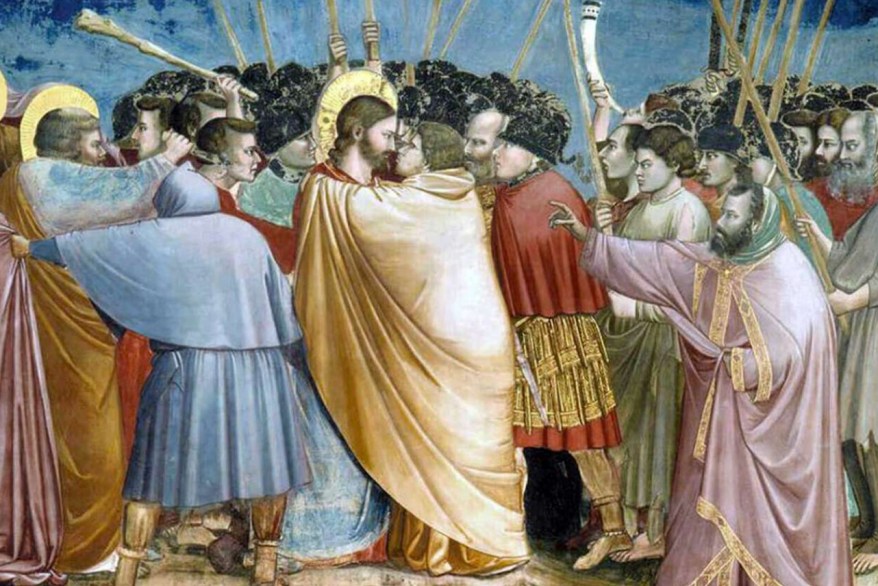
Mercoledì Santo: il giorno del tradimento di Giuda affrescato da Giotto
🇮🇹Il Mercoledì Santo è il giorno del silenzio, della riflessione e del tradimento. È il momento in cui Giuda sceglie di vendere Gesù per trenta denari, segnando uno dei passaggi più dolorosi della Settimana Santa…. 🇬🇧Holy Wednesday is a day of silence, reflection, and betrayal. ✝It is the moment when Judas chooses to sell Jesus…
-
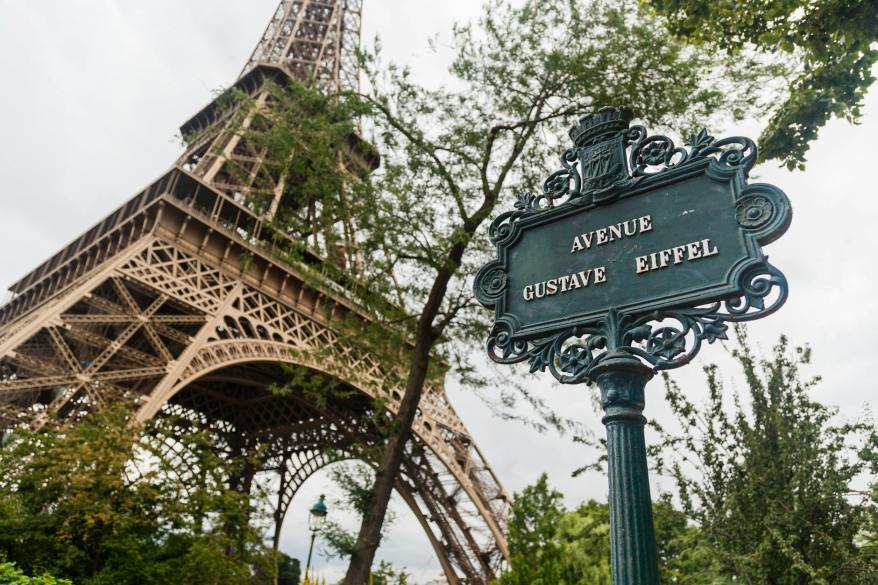
31 marzo 1889: inaugurata la Torre Eiffel tra critiche feroci e un destino inaspettato
🇮🇹Il 31 marzo 1889 segna una data destinata a cambiare per sempre il volto di Parigi e dell’immaginario collettivo globale: viene inaugurata la Torre Eiffel, l’opera più audace e discussa del suo tempo… 🇬🇧March 31, 1889 marks a date destined to change the face of Paris and the global collective imagination forever: the Eiffel Tower,…
Condividi:


Questo sono io





sostienici

Sostienici – Support Us
Se questo blog ti piace e ti appassiona, puoi aiutarci a farlo crescere sempre più sostenendoci in modo concreto condividendo i post, seguendo le pagine social e con un contributo che ci aiuta ad andare avanti con il nostro lavoro di divulgazione. . ENGLISH: If you like and are passionate about this blog, you can help us make it grow more and more by supporting us in a concrete way by sharing posts, following social pages and with a contribution that helps us to move forward with our dissemination work.
€10,00


