
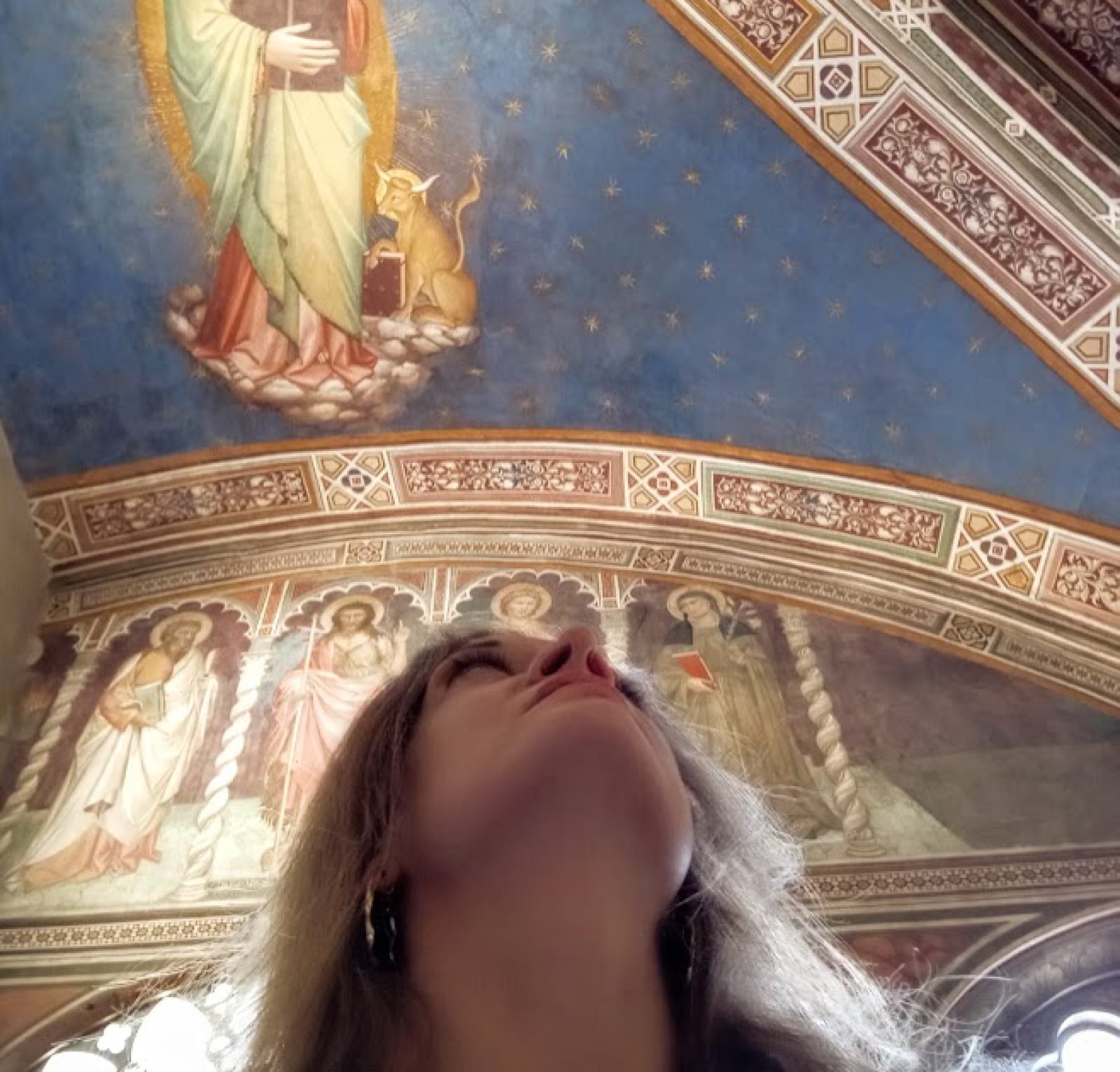
Giona: l’ultimo profeta che affrescai
Giona si trova sullo stesso asse del Cristo Giudice che affrescai anni dopo. E’ l’ultimo dei profeti che dipinsi e, rispetto agli altri, ha dimensioni assai maggiori.
Sapete quante giornate impiegai per affrescarlo? Dieci.
Giona è sempre stato considerato uno dei profeti minori ma di fatto, fu con la sua stessa vita, fu il precursore di Cristo. Dio affidò al veggente il compito di recarsi fino a Ninive per avvertire gli abitanti che se non si sarebbero convertiti, la città presto sarebbe stata distrutta.
Giona disobbedì e, mentre si trovava su di un bastimento, fu buttato a mare dai marinai e inghiottito da un pesce.
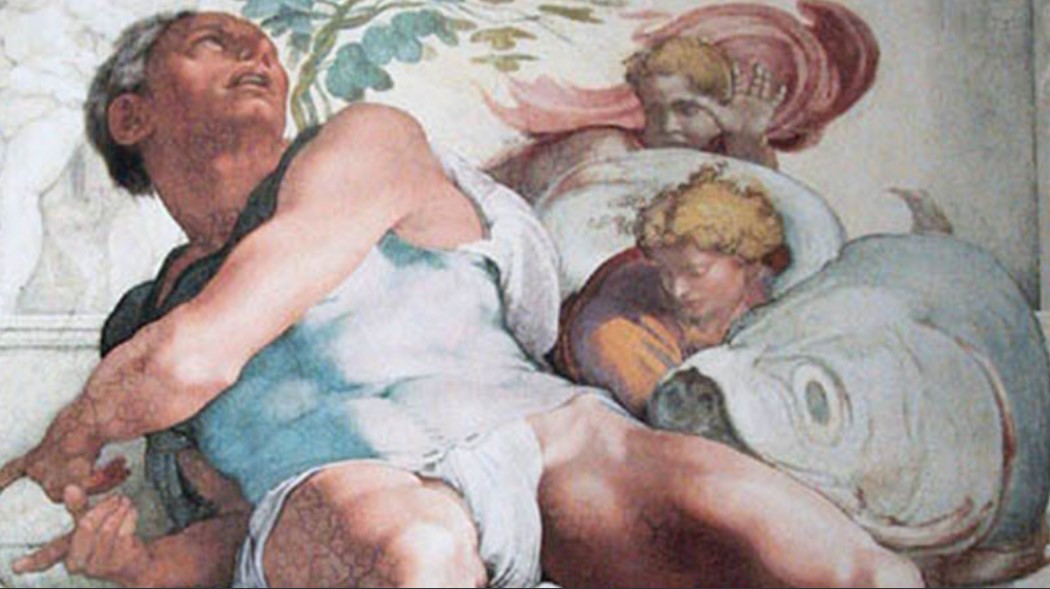
Il suo pentimento fu così sentito che Dio, dopo tre giorni, lo perdonò e poté uscire dalle viscere dell’animale. Questi tre giorni prefigurano la Resurrezione di Cristo proprio come sta scritto nel vangelo di Matteo “Come infatti Giona rimase tre giorni e tre notti nel ventre del pesce, così il Figlio dell’uomo resterà tre giorni e tre notti nel cuore della terra.”
Guardandolo dall’entrata che si trova dalla parte opposta del profeta, non vi sembrerà che abbia una grandezza differente rispetto alle altre figure: si tratta invece di un’illusione prospettica creata volutamente per evitare che le figure più distanti dall’osservatore si vedessero troppo piccole per essere lette correttamente.

Giona è l’unico veggente che non consulta alcun volume e nemmeno legge le profezie annotate sui rotoli di pergamena: la sua sapienza e la veggenza di cui era dotato sembra arrivino direttamente dall’osservazione diretta di Dio.
Questo profeta fu molto apprezzata anche dal mio carissimo amico Giorgio Vasari che così la descrisse:
Ma chi non amirerà e non resterà smarrito veggendo la terribilità dell’Iona, ultima figura della cappella? Dove con la forza della arte la volta, che per natura viene innanzi girata dalla muraglia, sospinta dalla apparenza di quella figura che si piega indietro, apparisce diritta e vinta dall’arte del disegno, ombre e lumi, pare che veramente si pieghi indietro?
Giorgio Vasari

Per il momento il vostro Michelangelo Buonarroti vi saluta dandovi appuntamento ai prossimi post e sui social.

Jonah: the last prophet I frescoed
Jonah is located on the same axis as Christ the Judge that I frescoed years later. It is the last of the prophets I painted and, compared to the others, it is much larger in size.
Do you know how many days it took me to fresco it? Ten.
Jonah has always been considered one of the minor prophets but in fact he was the forerunner of Christ with his own life. God entrusted the seer with the task of going to Nineveh to warn the inhabitants that if they did not convert, the city would soon be destroyed. Jonah disobeyed and while he was on a ship, he was thrown overboard by the sailors and swallowed by a fish.
His repentance was so felt that God, after three days, forgave him and he was able to come out of the animal’s bowels. These three days prefigure the Resurrection of Christ just as it is written in the Gospel of Matthew “For as Jonah remained three days and three nights in the belly of the fish, so the Son of man will remain three days and three nights in the heart of the earth.”
Looking at it from the entrance which is on the opposite side of Jonah, it will not seem to you that it has a different size compared to the other figures: instead it is a perspective illusion created deliberately to avoid that the figures further away from the observer would be seen too small to be read correctly.
Jonah is the only seer who does not consult any volume or even read the prophecies noted on the parchment rolls: His wisdom and the vision he was endowed with seem to come directly from direct observation of God.
The figure of Jonah was also greatly appreciated by my dearest friend Giorgio Vasari who described it as follows:
But who will not admire and be lost at seeing the terribleness of the Iona, the last figure in the chapel? Where with the force of art the vault, which by nature is turned forward by the wall, pushed by the appearance of that figure bending backwards, appears straight and overcome by the art of drawing, shadows and lights, does it really seem to bend backwards?
Giorgio Vasari
For the moment, your Michelangelo Buonarroti greets you by making an appointment for the next posts and on social media.

Sostienici – Support Us
Se questo blog ti piace e ti appassiona, puoi aiutarci a farlo crescere sempre più sostenendoci in modo concreto condividendo i post, seguendo le pagine social e con un contributo che ci aiuta ad andare avanti con il nostro lavoro di divulgazione. . ENGLISH: If you like and are passionate about this blog, you can help us make it grow more and more by supporting us in a concrete way by sharing posts, following social pages and with a contribution that helps us to move forward with our dissemination work.
10,00 €
-
Festival La Versiliana 2026: tra musica, teatro e grandi narrazioni
Dal 17 luglio al 23 agosto 2026, la pineta di Marina di Pietrasanta ospiterà la 47ª edizione del Festival La Versiliana. Una kermesse aperta a tutti nella quale linguaggi diversi dialogano tra loro in un equilibrio tra tradizione e contemporaneità.
-
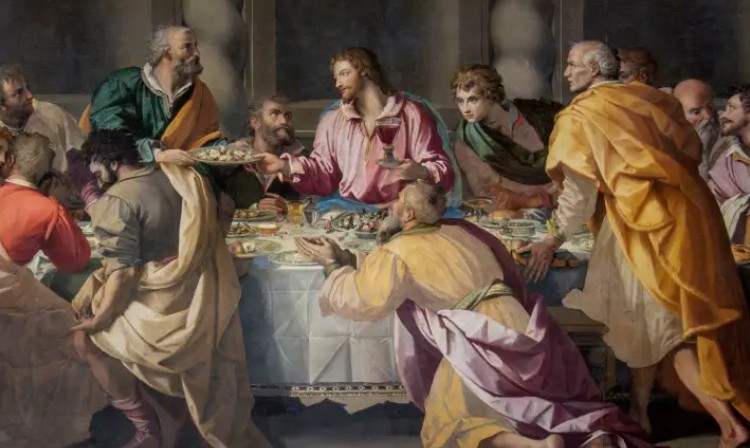
Giovedì Santo: l’Ultima Cena di Allori che pochi conoscono a Firenze
🇮🇹Nel cuore di Museo di Santa Maria Novella, a Firenze, si conserva una delle interpretazioni più affascinanti e meno note dell’Ultima Cena: quella realizzata da Alessandro Allori nel 1584… 🇬🇧In the heart of the Santa Maria Novella Museum in Florence, one of the most fascinating and least-known interpretations of the Last Supper is preserved: the…
-
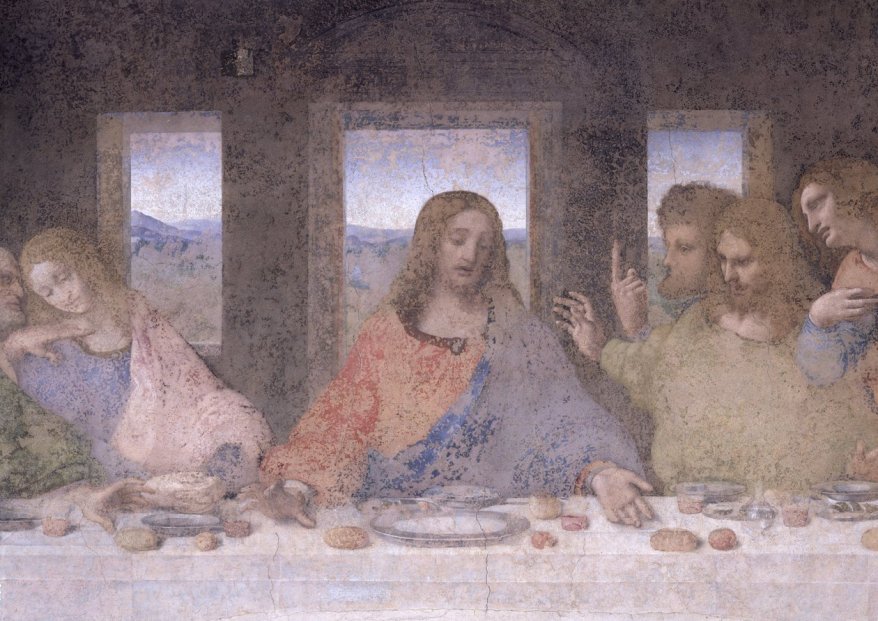
Cenacolo di Leonardo: i dettagli che raccontano il tradimento
🇮🇹Nel Cenacolo di Leonardo da Vinci, custodito a Santa Maria delle Grazie, Cristo annuncia il tradimento e il tempo si ferma… 🇬🇧In Leonardo da Vinci’s Last Supper, housed in Santa Maria delle Grazie, Christ announces the betrayal and time stands still…
Condividi:


Questo sono io





sostienici

Sostienici – Support Us
Se questo blog ti piace e ti appassiona, puoi aiutarci a farlo crescere sempre più sostenendoci in modo concreto condividendo i post, seguendo le pagine social e con un contributo che ci aiuta ad andare avanti con il nostro lavoro di divulgazione. . ENGLISH: If you like and are passionate about this blog, you can help us make it grow more and more by supporting us in a concrete way by sharing posts, following social pages and with a contribution that helps us to move forward with our dissemination work.
€10,00


1 commento »