
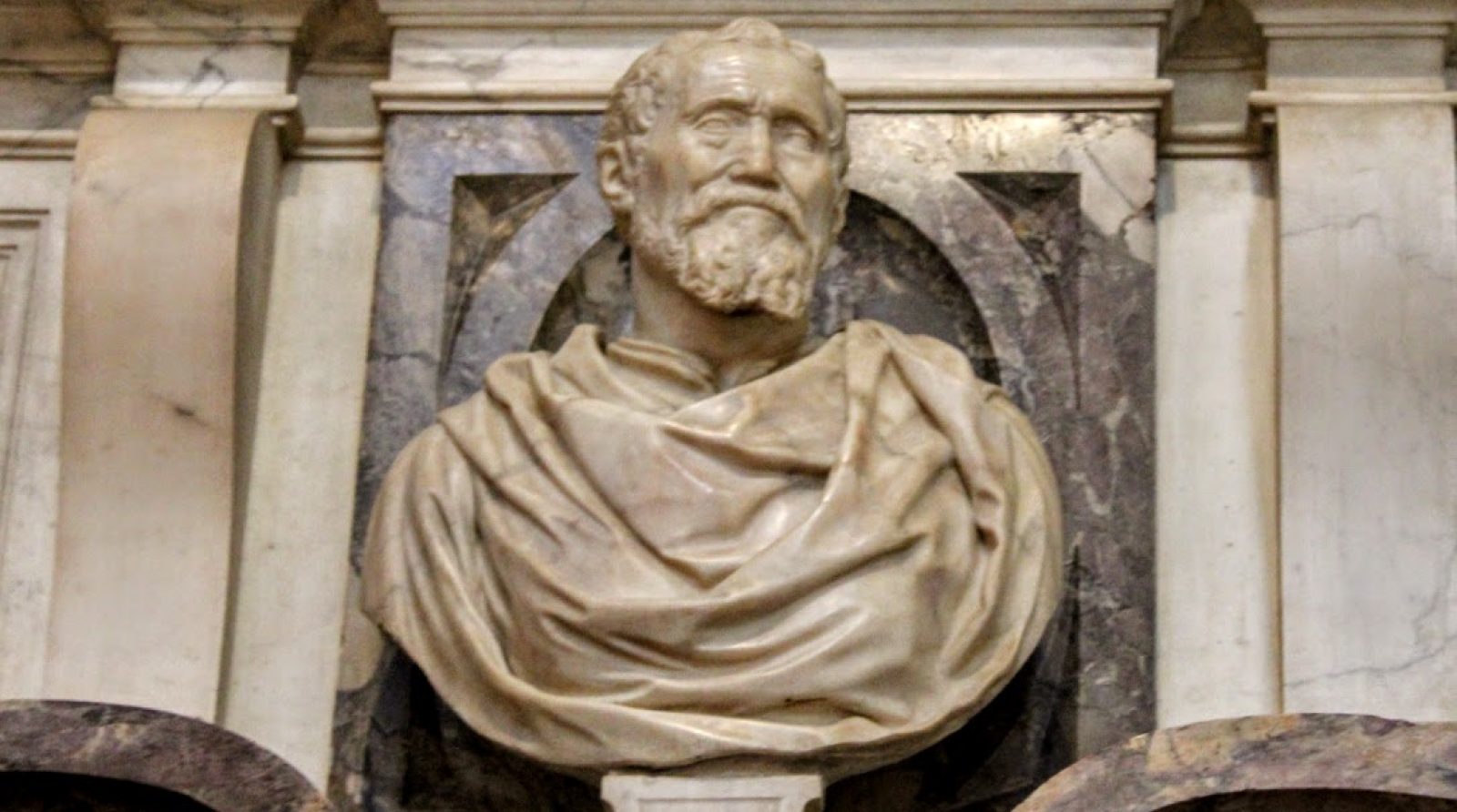
Il Sacrificio di Isacco: un disegno per due papi
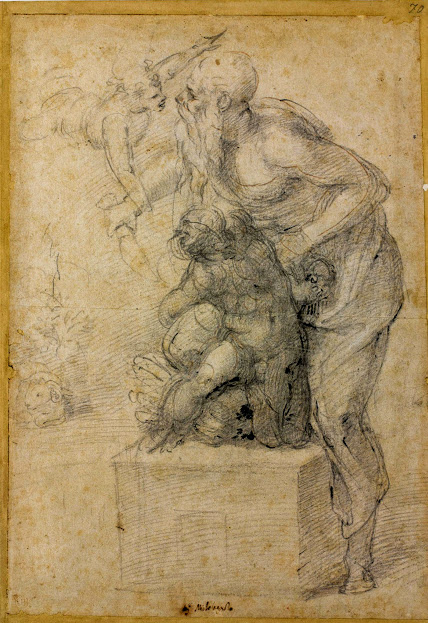
Il disegno che vi propongo oggi raffigura il Sacrificio di Isacco ed è uno dei tesori di Casa Buonarroti. La sua storia è collegata alla sepoltura di due papi quando ancora uno dei due era ancora in vita ma andiamo con ordine. Vi racconto questa storia dal principio.
Ora dovete sapere che questo tema biblico era molto in voga nella Firenze dell’epoca ed ebbe un ruolo non trascurabile nella storia dell’arte cittadina.
Poco più di un centinaio di anni prima, il Sacrificio di Isacco era stato il tema dato al Ghiberti e al Brunelleschi per realizzare la formella bronzea con dorature. L’artista che avrebbe realizzato la più bella formella, avrebbe conquistato il diritto di realizzare la porta Nord del Battistero di Firenze, quella che poi io definii la “Porta del Paradiso”. In quell’occasione fu il Ghiberti a spuntarla.

Realizzai questo disegno nel 1525 circa, momento in cui ero impegnato con il progetto della Sagrestia Nuova.
Probabilmente è uno studio da ricondurre alla doppia tomba di Leone X e Clemente VII che in quel frangente pensavo di posizionare nella parete di fondo del coro della basilica di San Lorenzo.
Fu un’idea che portai avanti per poco tempo e si può avere una visione complessiva del progetto mediante un mio disegno appartenente alla Christ Church di Oxford in cui sono evidenti le effigi dei due pontefici seduti accanto alla Vergine con il Bambino, sormontati da due tondi istoriati. Nel tondo di destra si vede proprio il Sacrificio di Isacco.
Nel disegno di Casa Buonarroti si vede Abramo in piedi dietro il figlio Isacco. Ha la gamba destra alzata con il rispettivo piede che fa forza sull’altare sacrificale a forma di parallelepipedo.
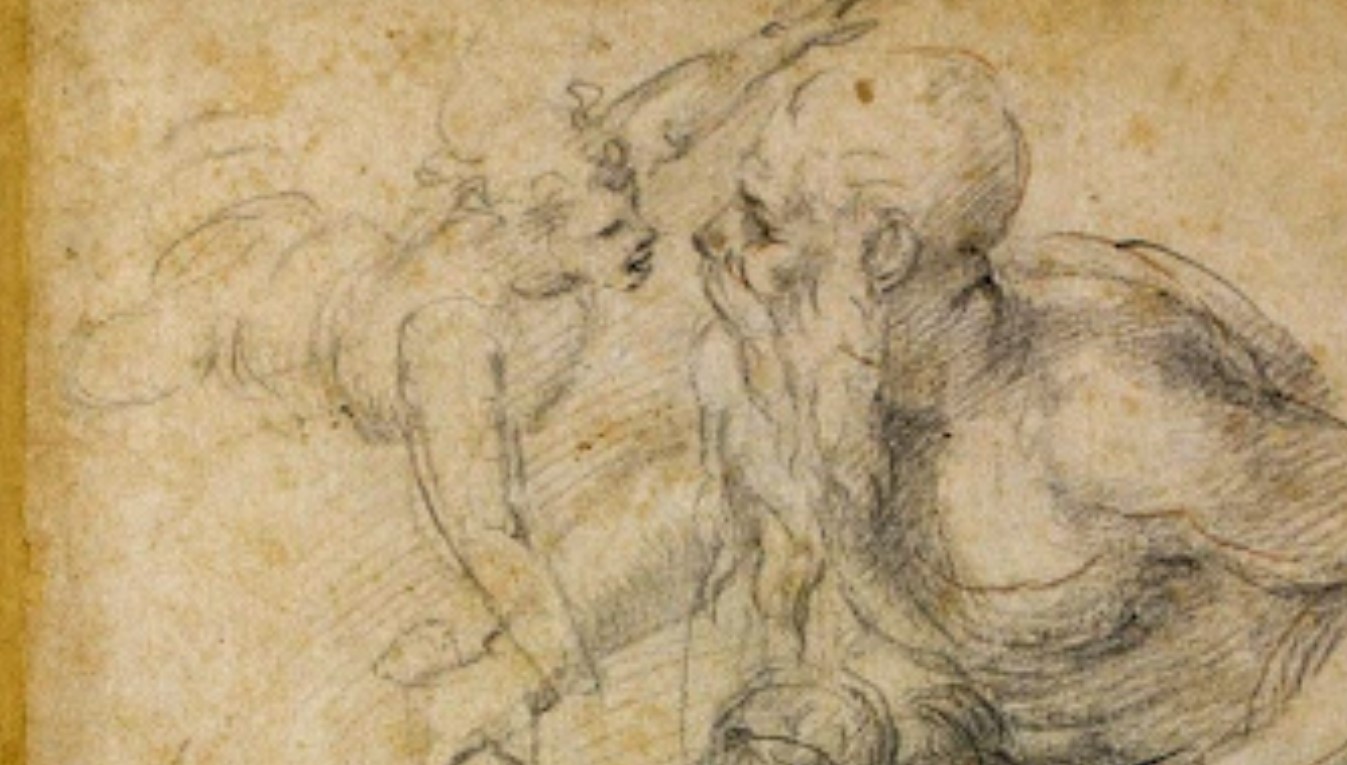
Il torso di Isacco è ruotato verso sinistra e ha il braccio sempre sinistro tenuto dal padre dietro la schiena. La posizione serpentinata dei due corpi riporta alla mente il Tondo Doni.
Abramo impugna il coltello con la mano destra e sta per uccidere il figlio ma dall’alto arriva un Angelo che gli impedisce di sacrificare Isacco.
Per il momento il vostro Michelangelo Buonarroti vi saluta dandovi appuntamento ai prossimi post e sui social.

The Sacrifice of Isaac: a drawing for two popes
The drawing that I propose to you today depicts the Sacrifice of Isaac and is one of the treasures of Casa Buonarroti. Its story is connected to the burial of two popes when one of the two was still alive but let’s go in order. I tell you this story from the beginning.
Now you must know that this biblical theme was very much in vogue in Florence at the time and played a non-negligible role in the history of the city’s art.
Just over a hundred years earlier, the Sacrifice of Isaac had been the theme given to Ghiberti and Brunelleschi to create the bronze panel with gilding. The artist who would have created the most beautiful panel would have won the right to create the north door of the Baptistery of Florence, what I later called the “Door of Paradise”. On that occasion it was Ghiberti who won.
I made this drawing around 1525, when I was busy with the project for the New Sacristy.
It is probably a study to be traced back to the double tomb of Leo X and Clement VII which at that juncture I thought of placing on the back wall of the choir of the basilica of San Lorenzo.
It was an idea that I carried forward for a short time and you can get an overall vision of the project through a drawing of mine belonging to Christ Church in Oxford in which the effigies of the two pontiffs seated next to the Virgin and Child are evident, surmounted by two roundels historiated. In the tondo on the right you can see the Sacrifice of Isaac.
In the drawing of Casa Buonarroti Abraham is seen standing behind his son Isaac. His right leg is raised with the respective foot exerting force on the parallelepiped-shaped sacrificial altar.
Isaac’s torso is rotated to the left and his left arm is still held by his father behind his back. The serpentine position of the two bodies brings to mind the Doni Tondo.
Abraham holds the knife in his right hand and is about to kill his son but an Angel arrives from above him and prevents him from sacrificing Isaac.
For the moment, your Michelangelo Buonarroti greets you by making an appointment for the next posts and on social media.

Sostienici – Support Us
Se questo blog ti piace e ti appassiona, puoi aiutarci a farlo crescere sempre più sostenendoci in modo concreto condividendo i post, seguendo le pagine social e con un contributo che ci aiuta ad andare avanti con il nostro lavoro di divulgazione. . ENGLISH: If you like and are passionate about this blog, you can help us make it grow more and more by supporting us in a concrete way by sharing posts, following social pages and with a contribution that helps us to move forward with our dissemination work.
8,00 €
-
Festival La Versiliana 2026: tra musica, teatro e grandi narrazioni
Dal 17 luglio al 23 agosto 2026, la pineta di Marina di Pietrasanta ospiterà la 47ª edizione del Festival La Versiliana. Una kermesse aperta a tutti nella quale linguaggi diversi dialogano tra loro in un equilibrio tra tradizione e contemporaneità.
-
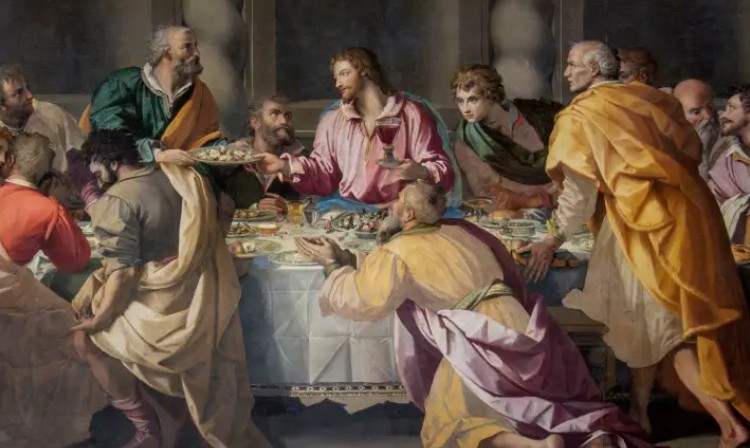
Giovedì Santo: l’Ultima Cena di Allori che pochi conoscono a Firenze
🇮🇹Nel cuore di Museo di Santa Maria Novella, a Firenze, si conserva una delle interpretazioni più affascinanti e meno note dell’Ultima Cena: quella realizzata da Alessandro Allori nel 1584… 🇬🇧In the heart of the Santa Maria Novella Museum in Florence, one of the most fascinating and least-known interpretations of the Last Supper is preserved: the…
-
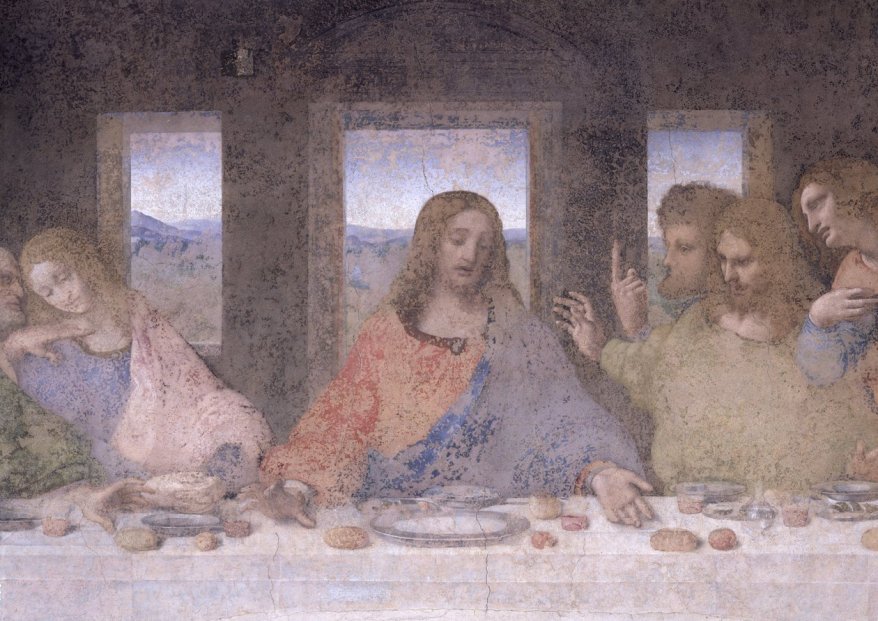
Cenacolo di Leonardo: i dettagli che raccontano il tradimento
🇮🇹Nel Cenacolo di Leonardo da Vinci, custodito a Santa Maria delle Grazie, Cristo annuncia il tradimento e il tempo si ferma… 🇬🇧In Leonardo da Vinci’s Last Supper, housed in Santa Maria delle Grazie, Christ announces the betrayal and time stands still…
Condividi:


Questo sono io





sostienici

Sostienici – Support Us
Se questo blog ti piace e ti appassiona, puoi aiutarci a farlo crescere sempre più sostenendoci in modo concreto condividendo i post, seguendo le pagine social e con un contributo che ci aiuta ad andare avanti con il nostro lavoro di divulgazione. . ENGLISH: If you like and are passionate about this blog, you can help us make it grow more and more by supporting us in a concrete way by sharing posts, following social pages and with a contribution that helps us to move forward with our dissemination work.
€10,00


