
La Scultura del giorno: la Susanna di Reinhold Begas
La Scultura del giorno che vi propongo oggi è Susanna, scolpita dall’artista tedesco Reinhold Begas nel 1873. Un’opera che ebbe un’esistenza travagliata, complessa e poco rassicurante che vale la pena conoscere nel dettaglio. Sedetevi comodi che ve la racconto dal principio.
Begas, per scolpire la sua Susanna ma anche per far forma ad altre pere sue, mise da parte il classicismo in voga all’epoca ritornando alle forme fluide tipiche del Barocco. Il suo modo del tutto personale di scolpire non a caso fu definito “Stile Begas” e venne considerato a tutti gli effetti un riformatore della scuola berlinese.
Alla stregua dei suoi contemporanei scultori, Begas si recò a Roma per perfezionarsi e per aver modo di studiare da vicino le opere di arte antica ma anche del Rinascimento e del periodo Barocco.
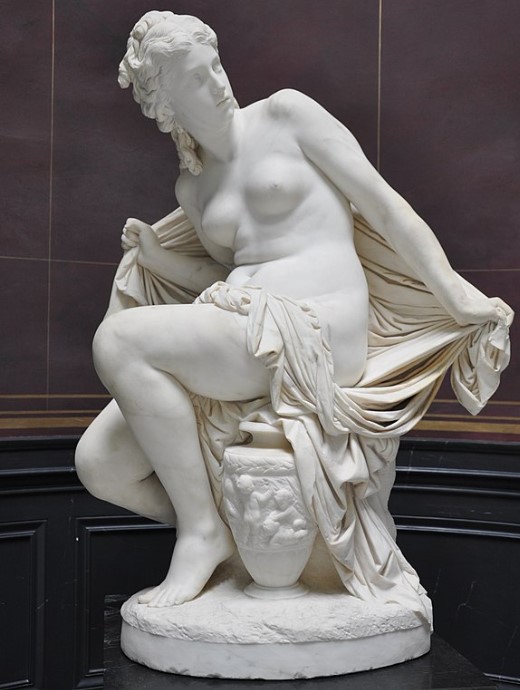
Susanna era la bella moglie di un ricco babilonese e secondo la narrazione biblica, le sue virtù sarebbero state messe a dura prova. Due anziani giudici osservandola di nascosto mentre faceva il bagno, la spinsero a commettere adulterio. Lei oppose resistenza e i due tentarono di farla condannare a morte per promiscuità. A salvare Susanna da quella morte fu la sua incrollabile fede in Dio.
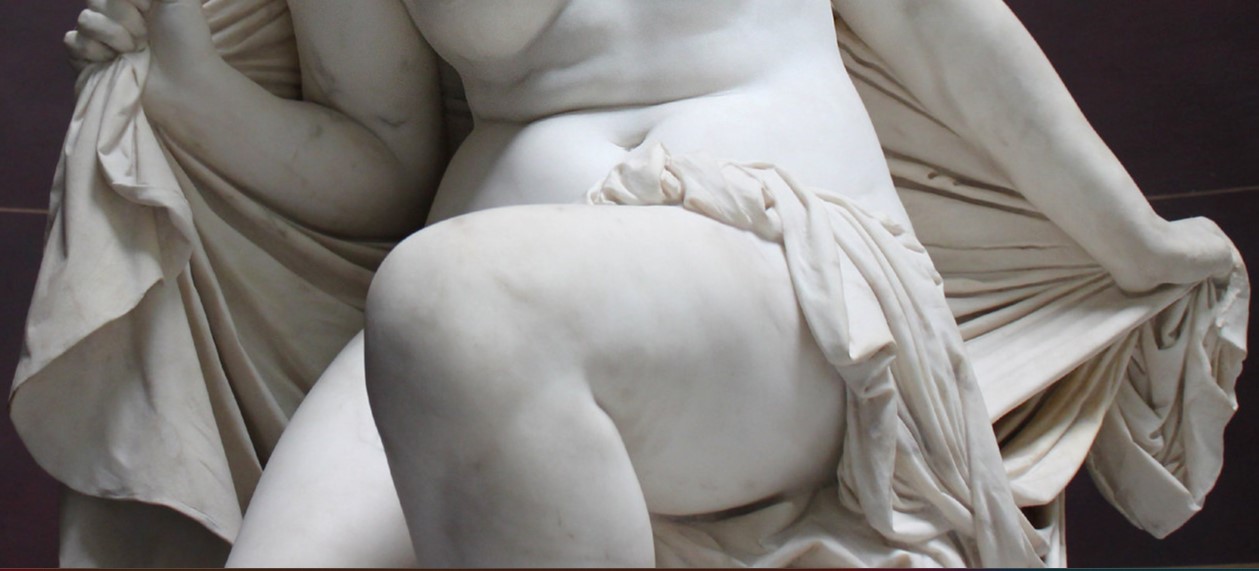
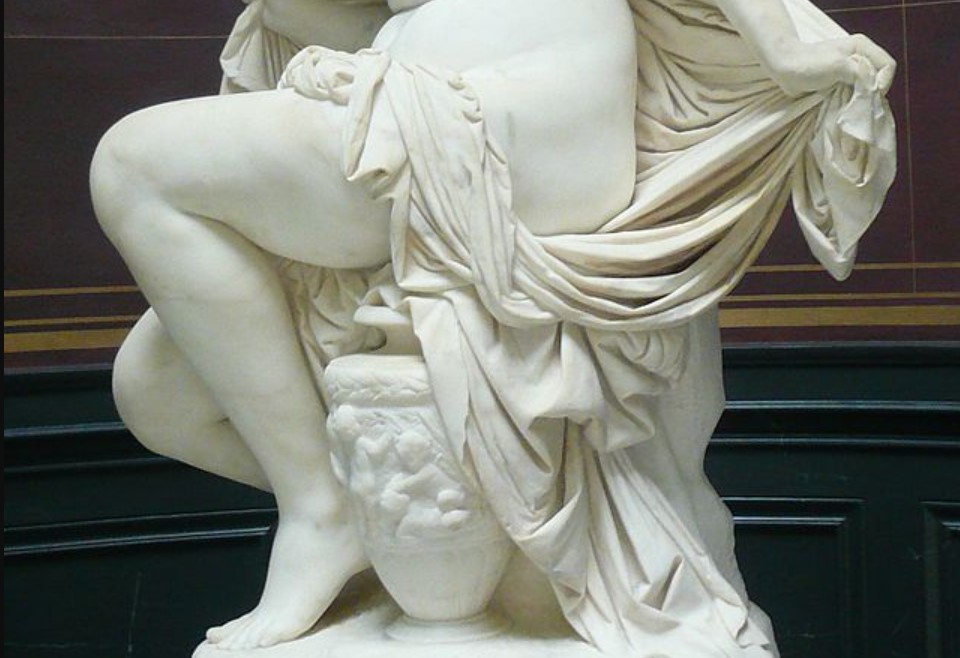
Il soggetto di Susanna è stato ripreso molte volte da tanti artisti nel corso dei secoli. Begas la scelse soprattutto per aver modo di creare un’immagine molto sensuale. Il panneggio che avrebbe dovuto coprire le sue nudità, lo adopera sapientemente per accentuarne l’erotismo.

E’ come se Begas facesse mettere nella posizione dei vecchioni che osservano la giovane tutti gli spettatori. Susanna è infatti scolpita da sola e pare sorpresa nel rendersi conto che qualcuno la stia guardando in un momento di intimità come quello che ha chi sta facendo il bagno o ha appena finito di farlo.
Come vi ho accennato prima, questa raffinata opera ebbe una storia assai complicata. Fu presentata per la prima volta a Vienna nel 1873 durante l’Esposizione Mondiale ma non venne venduta nell’immediato.
Susanna entrò a far parte delle collezioni dell’editore Rudolf Mosse nel 1908 che volle farla posizionare nella sua villa di Leipsiger Platz, assieme ad altre sculture di artisti dell’epoca. Al tempo Mosse era uno degli uomini più ricchi della Prussia e nella sua collezione si annoveravano migliaia di opere, acquistate o commissionate direttamente agli artisti nel corso degli anni.
Mosse fu anche uomo generoso tanto che a partire dal 1910 aprì le porte al pubblico della sua dimora per consentire a tutti di ammirare le opere presenti, esposte in venti stanze suddivise su tre piani.
Nel 1933, quando i nazisti salirono al potere, l’intera collezione d’arte della famiglia Lachmann- Mosse fu sequestrata e venduta dalle case d’asta di Rudolph Lepke e Union. La Susanna però non finì nel gruppo di opere battute all’asta ma venne esposta tre anni dopo nell’Accademia di Belle Arti e figura fra i prestatori della scultura la moglie di Hugo Lederer.

Nel 1944 la scultura fu inviata da una commissione sovietica a Leningrado dopodiché, nel 1978, fu portata al Museo Etnografico di Lpisia assieme ad altri oggetti d’arte restituiti. Dal 1994 fu esposta nella Nationalgalerie dove rimase senza proprietario fino al 2001.
Finalmente nel 2017 la Susanna di Begas fu restituita ai legittimi proprietari: gli eredi della famiglia Mosse. Poco dopo l’opera fu acquisita dallo stato tedesco mediante il sostegno economico della Kulturstiftung der Länder, una fondazione culturale.
Se volete ammirare di persona Susanna di Reinhold Begas, la troverete esposta nella Alte Nationalgalerie di Berlino.
Per il momento il vostro Michelangelo Buonarroti vi saluta dandovi appuntamento ai prossimi post e sui social.

Sculpture of the day: Susanna by Reinhold Begas
The Sculpture of the day that I propose to you today is Susanna, sculpted by the German artist Reinhold Begas in 1873.
This work had a very troubled, complex and not very reassuring existence that is worth knowing in detail. Sit back and I’ll tell you from the beginning.
Begas to sculpt his Susanna but also to shape other pears of his, put aside the classicism in vogue at the time returning to the fluid forms typical of the Baroque. It was no coincidence that his entirely personal way of sculpting was called “Begas Style” and was considered to all intents and purposes a reformer of the Berlin school.
Like his contemporary sculptors, Begas went to Rome to perfect himself and to have the opportunity to closely study the works of ancient art but also of the Renaissance and the Baroque period.
Susanna was the beautiful wife of a wealthy Babylonian and according to the biblical narrative, her virtues were put to the test. Two senior judges of her secretly watching her while she bathed, urged her to commit adultery. She resisted and the two attempted to have her sentenced to death for promiscuity. What saved Susanna from that death was her unshakeable faith in God.
The subject of Susanna has been taken up many times by many artists over the centuries. Begas chose her above all to have the opportunity to create a very sensual image. The drapery that was supposed to cover her nudity is used wisely to accentuate her eroticism.
It is as if Begas had all the spectators put in the position of the old men watching the young woman. Susanna is in fact sculpted by herself and seems surprised to realize that someone is watching her in a moment of intimacy like the one experienced by someone who is taking a bath or who has just finished doing so.
As I mentioned before, this fine work by Begas had a very complicated history. It was presented for the first time in Vienna in 1873 during the World Exhibition but was not sold immediately.
Susanna became part of the collections of the publisher Rudolf Mosse in 1908 who wanted to have it placed in his villa in Leipsiger Platz together with other sculptures by artists of the time. At the time Mosse was one of the richest men in Prussia and his collection included thousands of works, purchased or commissioned directly from artists over the years.
Mosse was also a generous man, so much so that starting in 1910 he opened the doors of his home to the public to allow everyone to admire the works on display, exhibited in twenty rooms spread over three floors.
In 1933, when the Nazis came to power, the entire art collection of the Lachmann-Mosse family was seized and sold by the auction houses of Rudolph Lepke and Union. However, the Susanna did not end up in the group of works auctioned but was exhibited three years later in the Academy of Fine Arts and the wife of Hugo Lederer is among the lenders of the sculpture. In 1944 the sculpture was sent by a Soviet commission to Leningrad after which, in 1978, it was taken to the Ethnographic Museum of Lpisia together with other returned art objects. From 1994 it was exhibited in the Nationalgalerie where it remained without an owner until 2001.
Finally in 2017 the Susanna di Begas was returned to its rightful owners: the heirs of the Mosse family. Shortly thereafter, the work was acquired by the German state with financial support from the Kulturstiftung der Länder, a cultural foundation.
If you want to see Susanna by Reinhold Begas in person, you will find her exhibited in the Alte Nationalgalerie in Berlin.
For the moment, your Michelangelo Buonarroti greets you by making an appointment for the next posts and on social media.

Sostienici – Support Us
Se questo blog ti piace e ti appassiona, puoi aiutarci a farlo crescere sempre più sostenendoci in modo concreto condividendo i post, seguendo le pagine social e con un contributo che ci aiuta ad andare avanti con il nostro lavoro di divulgazione. . ENGLISH: If you like and are passionate about this blog, you can help us make it grow more and more by supporting us in a concrete way by sharing posts, following social pages and with a contribution that helps us to move forward with our dissemination work.
8,00 €
-
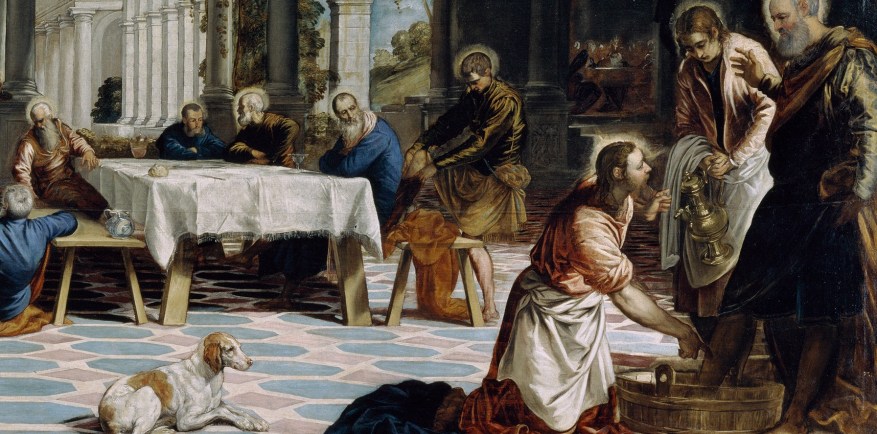
La Lavanda dei Piedi di Tintoretto: Il Capolavoro Veneziano al Prado
🇮🇹Tra i capolavori più affascinanti del Rinascimento veneziano, “La Lavanda dei Piedi” di Jacopo Tintoretto rappresenta un perfetto equilibrio tra spiritualità, innovazione compositiva e straordinaria forza narrativa… 🇬🇧Among the most fascinating masterpieces of the Venetian Renaissance, Jacopo Tintoretto’s “The Washing of the Feet” represents a perfect balance between spirituality, compositional innovation, and extraordinary narrative force…
-
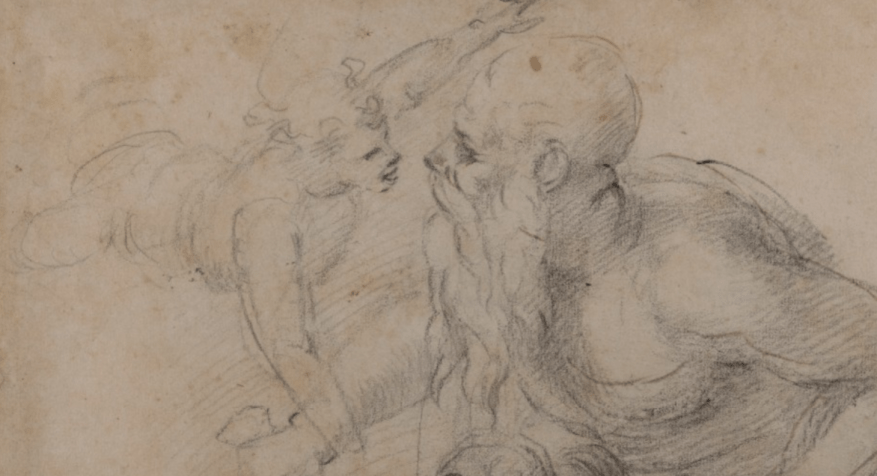
Il Sacrificio di Isacco e quel momento tra la vita e la morte
🇮🇹Oggi voglio raccontarvi alcuni dettagli sul mio disegno del Sacrificio di Isacco, conservato oggi a Casa Buonarroti. Su quel foglio volli tracciare il momento preciso in cui la paura fa spazio al miracolo… 🇬🇧Today I want to tell you some details about my drawing of the Sacrifice of Isaac, now preserved at Casa Buonarroti. On…
-
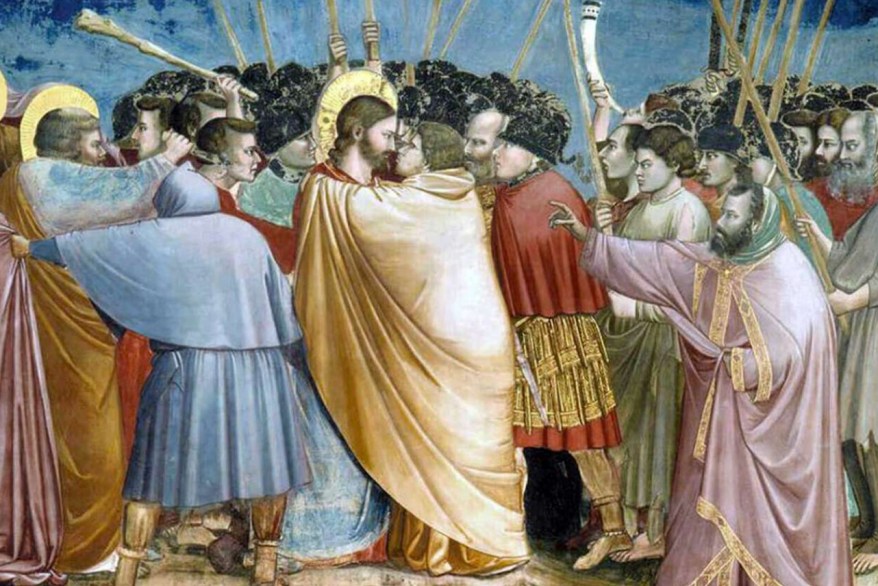
Mercoledì Santo: il giorno del tradimento di Giuda affrescato da Giotto
🇮🇹Il Mercoledì Santo è il giorno del silenzio, della riflessione e del tradimento. È il momento in cui Giuda sceglie di vendere Gesù per trenta denari, segnando uno dei passaggi più dolorosi della Settimana Santa…. 🇬🇧Holy Wednesday is a day of silence, reflection, and betrayal. ✝It is the moment when Judas chooses to sell Jesus…
Condividi:


Questo sono io





sostienici

Sostienici – Support Us
Se questo blog ti piace e ti appassiona, puoi aiutarci a farlo crescere sempre più sostenendoci in modo concreto condividendo i post, seguendo le pagine social e con un contributo che ci aiuta ad andare avanti con il nostro lavoro di divulgazione. . ENGLISH: If you like and are passionate about this blog, you can help us make it grow more and more by supporting us in a concrete way by sharing posts, following social pages and with a contribution that helps us to move forward with our dissemination work.
€10,00


