

Il restauro della Pietà Vaticana
Erano le 11.30 del 21 maggio del 1972 quando quel folle di Lazlo Toth assestò quindici martellate alla mia superba Pietà Vaticana. “Sono Gesù Cristo risorto dalla morte” gridava mentre colpiva l’opera staccando il naso alla Vergine, distruggendo le palpebre e spezzando il braccio sinistro della Madre delle madri.
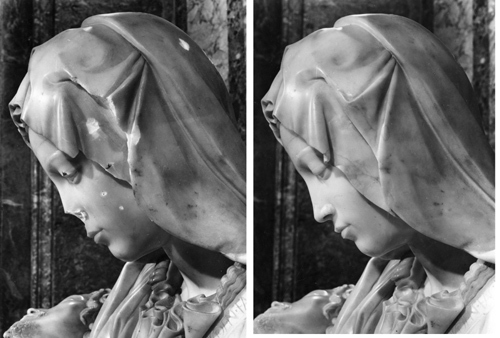
Dopo quella giornata così nefasta e dolorosa , il 22 maggio del 1972, l’Osservatore Romano chiedeva a gran voce ai suoi lettori “Potrà il capolavoro michelangiolesco ritornare al suo primitivo aspetto?”. Me lo chiedevo anch’io ripetutamente, quasi fosse un mantra, in quelle ore tremende e tormentate.
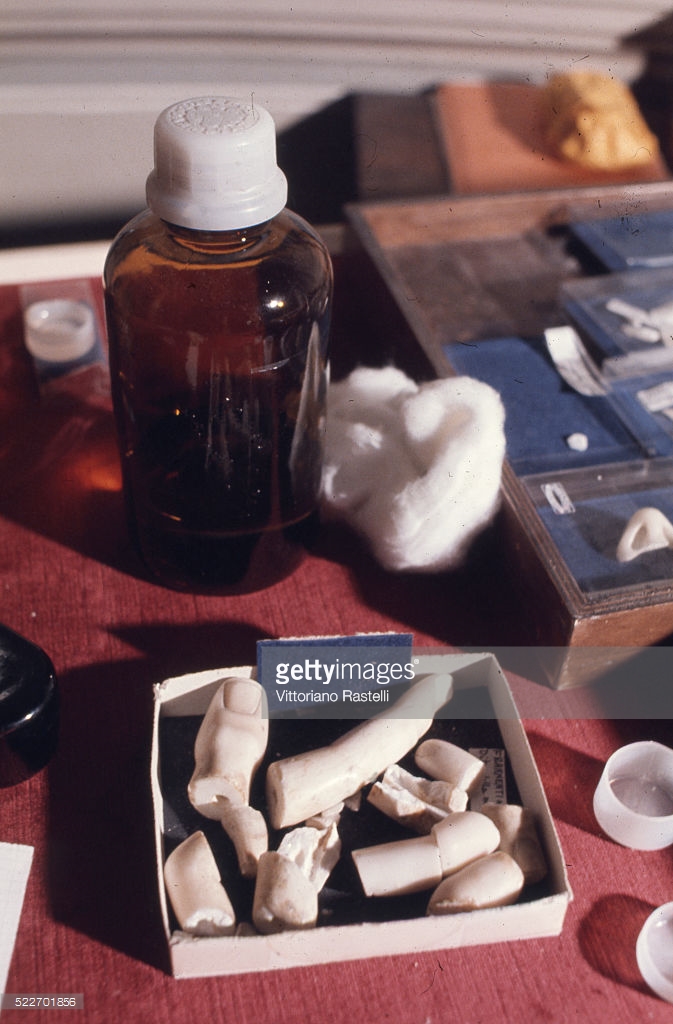
Vennero raccolti con scrupolosa attenzione tutti i frammenti che giacevano a terra: una cinquantina in totale.
Il restauro fu diretto da Redig De Campos, in quel frangente direttore dei Musei e delle Gallerie Pontificie. Fu necessario un anno di tempo per rendere di nuovo la mia opera bella come prima, o quasi. Dico quasi perché, nonostante il magistrale lavoro che è stato fato, le fratture rimangono sia sull’opera che sull’anima.
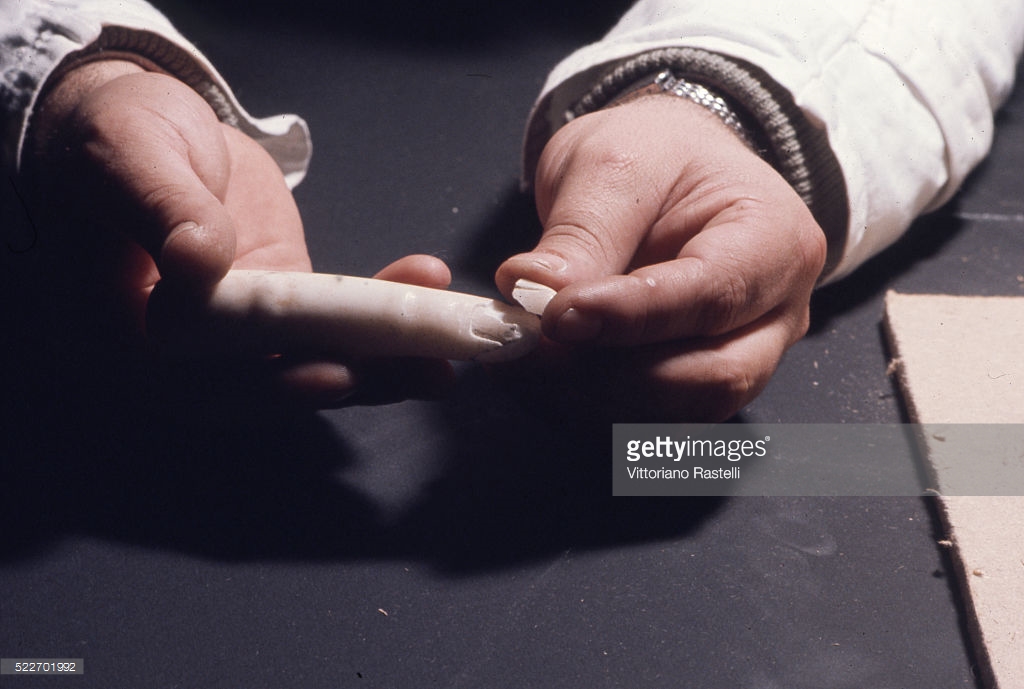
Le difficoltà oggettive di quel restauro non furono poche.
Bisognava ricostruire e riposizionare in maniera impeccabile le parti danneggiate. Per far ciò si adoperò come modello il calco che venne eseguito proprio sulla Pietà nel Settecento, tutt’oggi viene conservato presso i Musei Vaticani.
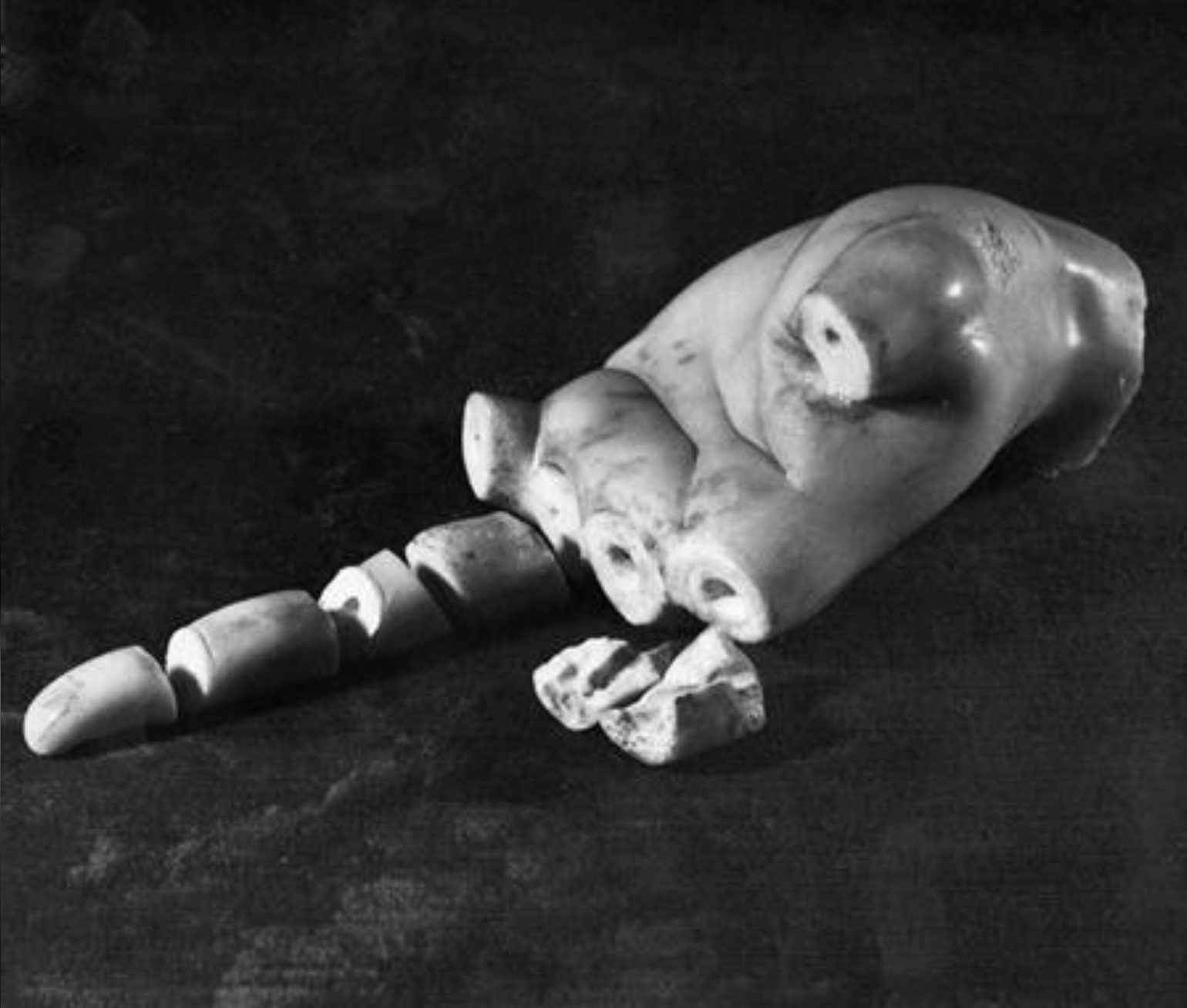
Sebbene secondo la concezione più moderna del restauro definita da Cesare Brandi non si potesse ricostruire un bene danneggiato senza inquinare la veridicità dell’opera, così non si fece. Fu deciso all’unanimità (Brandi compreso) di eseguire una ricostruzione fedele delle parti mancanti adoperando tutti i frammenti ritrovati e integrando le piccole porzioni di marmo mancanti con integrazioni per restituire alla Pietà tutta la sua bellezza originaria.

Se volete avere un’idea di come sia stato effettuato questo grande lavoro, guardate questo interessante video del restauro della Pietà Vaticana cliccando QUA.
Per il momento il vostro Michelangelo Buonarroti vi saluta.
The restoration of the Vatican Pietà
It was 11:30 am on May 21st 1972 when that madman of Lazlo Toth settled fifteen hammers at my superb Vatican Pietà. “I am Jesus Christ risen from the dead” he shouted as he struck the work by taking his nose away from the Virgin, destroying his eyelids and breaking the left arm of the Mother of Mothers.
After that day so nefarious and painful, all the fragments that lay on the ground were collected with scrupulous attention: about fifty in total. The restoration was directed by Redig De Campos, at the time director of the Pontifical Museums and Galleries. It took me a year to make my work as beautiful as before, or almost so. I say almost because despite the masterful work that there has been the fractures remain both on the work and on the soul.
The objective difficulties of that restoration were not few. It was necessary to rebuild and reposition the damaged parts in an impeccable manner. To do this, the model was used as a model that was performed on the Pietà in the eighteenth century, which is still preserved today in the Vatican Museums.
Although according to the most modern conception of the restoration defined by Cesare Brandi it was not possible to reconstruct a damaged property without polluting the veracity of the work, so it did not happen. In fact it was decided unanimously (including Brandi) to opt for a faithful reconstruction of the missing parts using all the fragments found and integrating the small missing marble portions with additions to restore all its original beauty to the Pietà.

If you want to have an idea of how this great work has been done, look at this interesting video of the restoration of the Vatican Pieta by clicking HERE.
For the moment, your Michelangelo Buonarroti greets you, leaving you the images of those precious fragments collected on the ground.

Sostienici – Support Us
Se questo blog ti piace e ti appassiona, puoi aiutarci a farlo crescere sempre più sostenendoci in modo concreto condividendo i post, seguendo le pagine social e con un contributo che ci aiuta ad andare avanti con il nostro lavoro di divulgazione. . ENGLISH: If you like and are passionate about this blog, you can help us make it grow more and more by supporting us in a concrete way by sharing posts, following social pages and with a contribution that helps us to move forward with our dissemination work.
5,00 €
ULTIMI ARTICOLI
La fine dell’originalità: perché oggi tutta l’arte sembra già vista
🇮🇹La sensazione è sempre la stessa: guardiamo un quadro, una scultura o un’installazione e pensiamo “L’ho già visto da qualche parte”. Ma è davvero la fine dell’originalità? … 🇬🇧The feeling is always the same: we look at a painting, a sculpture, or an installation and think, “I’ve seen this before.” But is this really the…
8 aprile 1492: la morte di Lorenzo il Magnifico, l’uomo che fece grande il Rinascimento
🇮🇹8 aprile 1492: si spegne Lorenzo il Magnifico, il cuore pulsante del Rinascimento. Alle quattro del mattino Firenze perde il suo signore, mecenate e poeta… 🇬🇧April 8, 1492: Lorenzo the Magnificent, the beating heart of the Renaissance, passes away. At four in the morning, Florence loses its lord, patron, and poet…
Sotto un cielo di glicine: la magia di Villa Bardini
🇮🇹Per pochi giorni all’anno, il pergolato di Villa Bardini si trasforma in un tunnel lilla lungo 70 metri, dove profumo e bellezza si intrecciano sopra una delle viste più romantiche di Firenze… 🇬🇧For a few days a year, the pergola of Villa Bardini transforms into a 70-meter-long lilac tunnel, where scent and beauty intertwine above…
Come se la giustizia negata in vita possa compiersi altrove
🇮🇹Se davvero l’anima, una volta sciolta dal corpo, ritorna sulla terra per vivere ancora, così mi domando, quale sorte attende chi oggi appare tanto bella ai miei occhi, ma così crudele nel cuore? 🇬🇧If the soul, once freed from the body, truly returns to earth to live again, I ask myself, what fate awaits the…
Si è verificato un problema. Aggiorna la pagina e/o riprova in seguito.
Condividi:


Questo sono io





sostienici

Sostienici – Support Us
Se questo blog ti piace e ti appassiona, puoi aiutarci a farlo crescere sempre più sostenendoci in modo concreto condividendo i post, seguendo le pagine social e con un contributo che ci aiuta ad andare avanti con il nostro lavoro di divulgazione. . ENGLISH: If you like and are passionate about this blog, you can help us make it grow more and more by supporting us in a concrete way by sharing posts, following social pages and with a contribution that helps us to move forward with our dissemination work.
€10,00


