

Yayoi Kusama è morta a 97 anni: la regina dei pois lascia un’arte infinita
È morta il 14 agosto in un ospedale di Tokyo, ma la notizia è stata resa pubblica soltanto oggi, 27 agosto. Yayoi Kusama aveva 97 anni.
E quasi come in un ultimo paradosso della sua lunga carriera, proprio nei prossimi mesi una delle sue opere più celebri arriverà in Italia, alle OGR Torino.
La notizia arriva improvvisa e lascia un vuoto enorme nell’arte contemporanea: Yayoi Kusama è morta a 97 anni. L’artista giapponese, diventata celebre in tutto il mondo per i suoi pois, le Infinity Mirror Rooms, le zucche e gli ambienti capaci di trasformare lo spazio in un’esperienza quasi allucinatoria, si è spenta il 14 agosto 2026 in un ospedale di Tokyo.
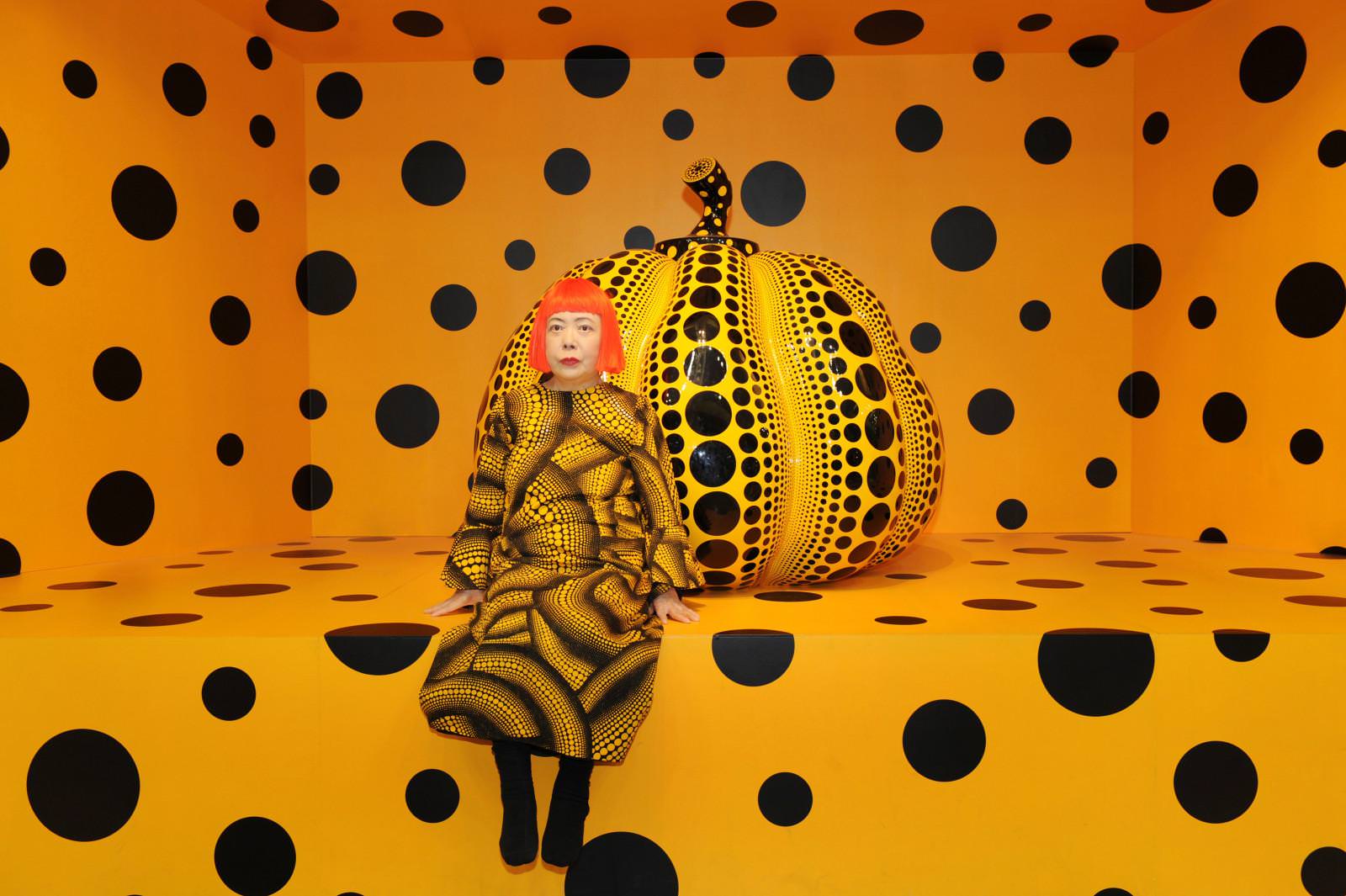
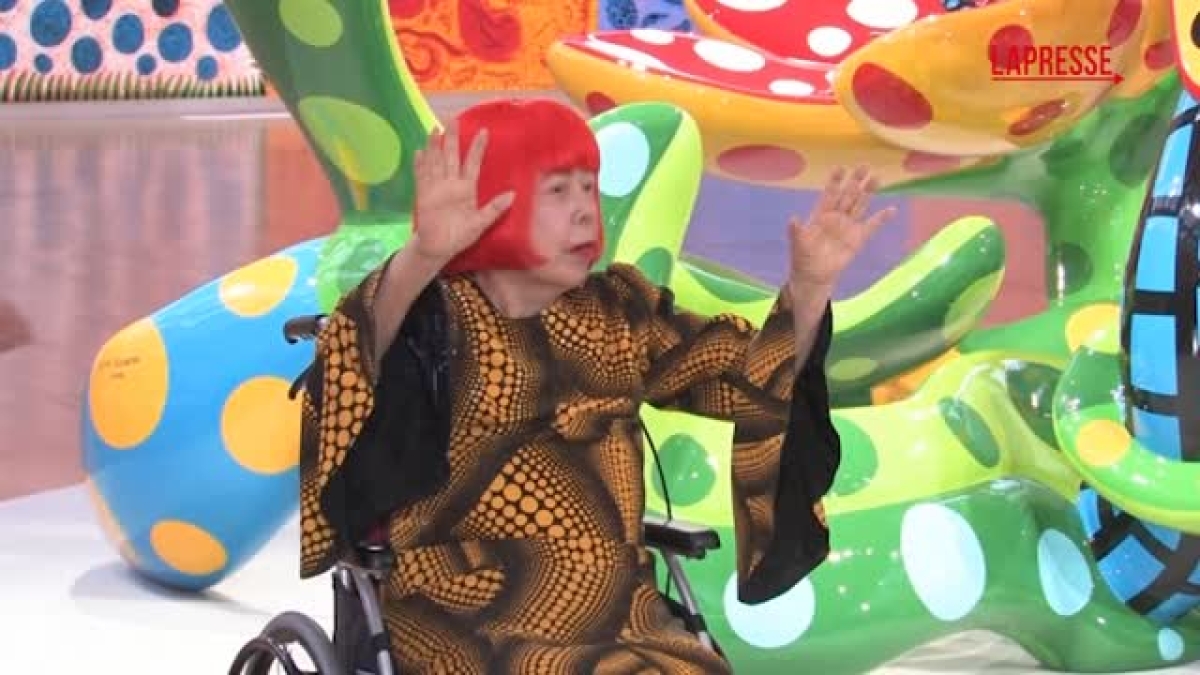
A comunicarlo è stato il suo studio soltanto oggi, 27 agosto. La dichiarazione ufficiale ricorda una vita interamente consacrata alla creazione e sottolinea che Kusama aveva continuato a dipingere fino agli ultimi giorni.
La coincidenza rende ancora più particolare questa notizia: dal 31 ottobre il pubblico italiano potrà entrare nuovamente nel suo universo, grazie alla grande installazione immersiva che sarà presentata alle OGR Torino.
A Torino, in autunno, la sua arte continuerà a vivere
E qui arriva una coincidenza che rende ancora più significativa la notizia della sua morte.
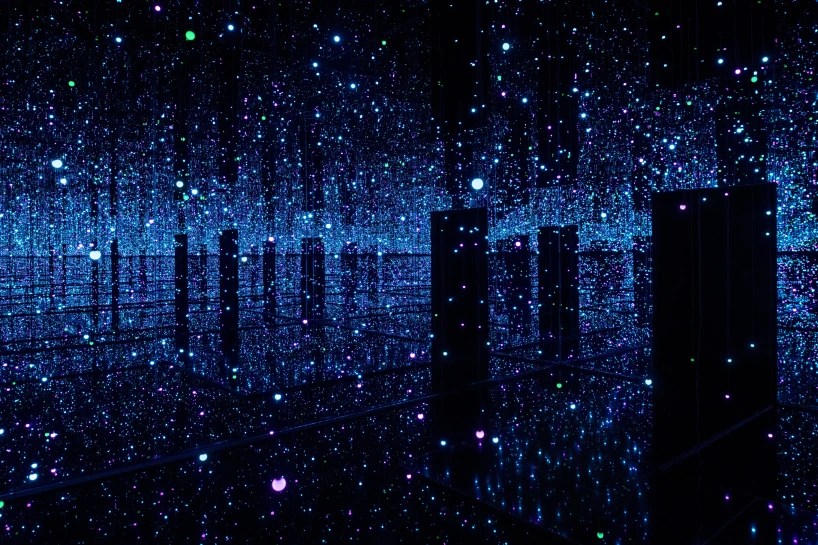
Alle OGR Torino, dal 31 ottobre 2026 al 28 febbraio 2027, sarà infatti presentata The Eternally Infinite Light of the Universe Illuminating the Quest for Truth, una delle sue celebri Infinity Mirror Room. L’installazione fa parte di The Quantum Effect, progetto dedicato ai rapporti fra arte contemporanea, fisica quantistica e nuovi modi di percepire la realtà.
Entrare nell’opera significa perdere, almeno per qualche minuto, la percezione dei confini.
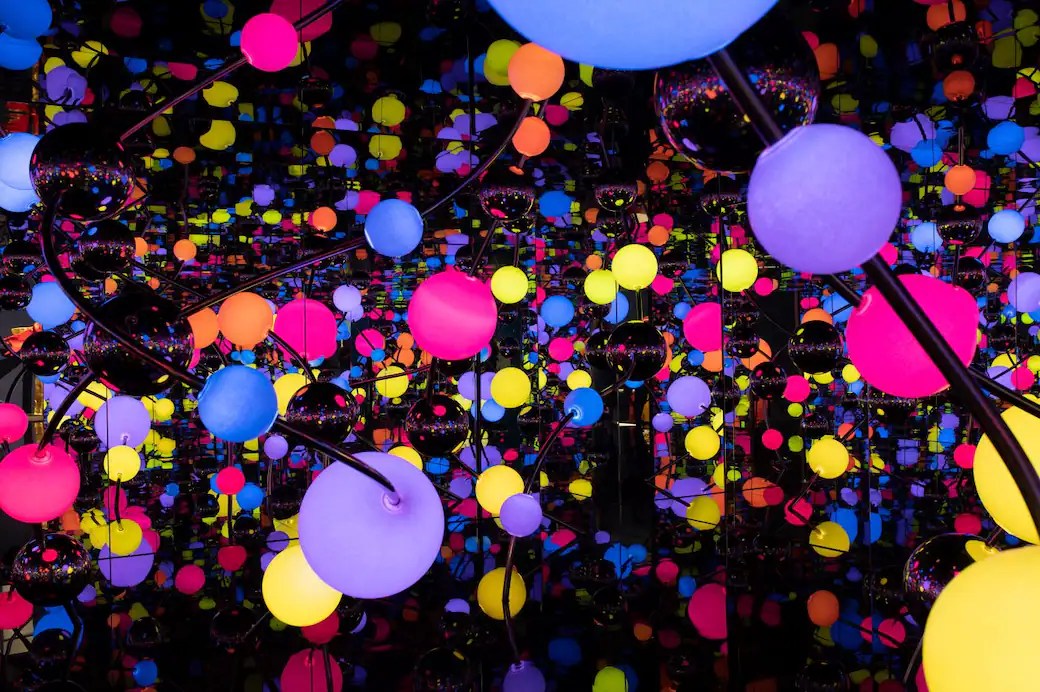
Luce, specchi e ripetizione costruiscono un ambiente nel quale i punti luminosi sembrano moltiplicarsi all’infinito. Lo spazio fisico lascia progressivamente il posto a una dimensione quasi cosmica, dove diventa difficile capire dove finisca la stanza e dove cominci l’universo immaginato dall’artista.
È probabilmente uno dei modi più adatti per ricordare Kusama: non attraverso un’immagine immobile, ma entrando direttamente dentro la sua idea di infinito.
Una bambina che trasformò le visioni in arte
Yayoi Kusama era nata a Matsumoto, nella prefettura di Nagano, il 22 marzo 1929, ultima di quattro figli di una famiglia proprietaria di un’attività legata alla produzione e al commercio di semi e piante.
Aveva iniziato a disegnare da bambina.
Il rapporto con la madre fu però difficile. Kusama raccontò che spesso i suoi disegni venivano strappati dalle sue mani. Quella necessità di disegnare rapidamente, prima che il lavoro potesse esserle portato via, sarebbe rimasta in qualche modo impressa nel suo modo di lavorare.
Ancora più importante sarebbe stata un’altra esperienza infantile: le visioni che Kusama raccontava come una sorta di invasione del mondo reale.
Fiori, punti, reticoli e forme ripetute sembravano moltiplicarsi davanti ai suoi occhi. L’artista trasformò progressivamente quelle esperienze in immagini e superfici, facendo dell’ossessione non un limite, ma la materia stessa della sua arte.
Dai fiori ai pois: quando il trauma diventa linguaggio
Dopo gli studi nella tradizione della pittura nihonga, Kusama iniziò a costruire un linguaggio sempre più personale.
Fra le sue fonti d’ispirazione ci fu anche Georgia O’Keeffe, con la quale entrò in contatto epistolare prima della partenza per gli Stati Uniti.
Nel 1957 Kusama lasciò il Giappone e si trasferì negli Stati Uniti, arrivando poi a New York, dove entrò rapidamente nell’ambiente dell’avanguardia.
Fu una scelta coraggiosa e difficilissima.
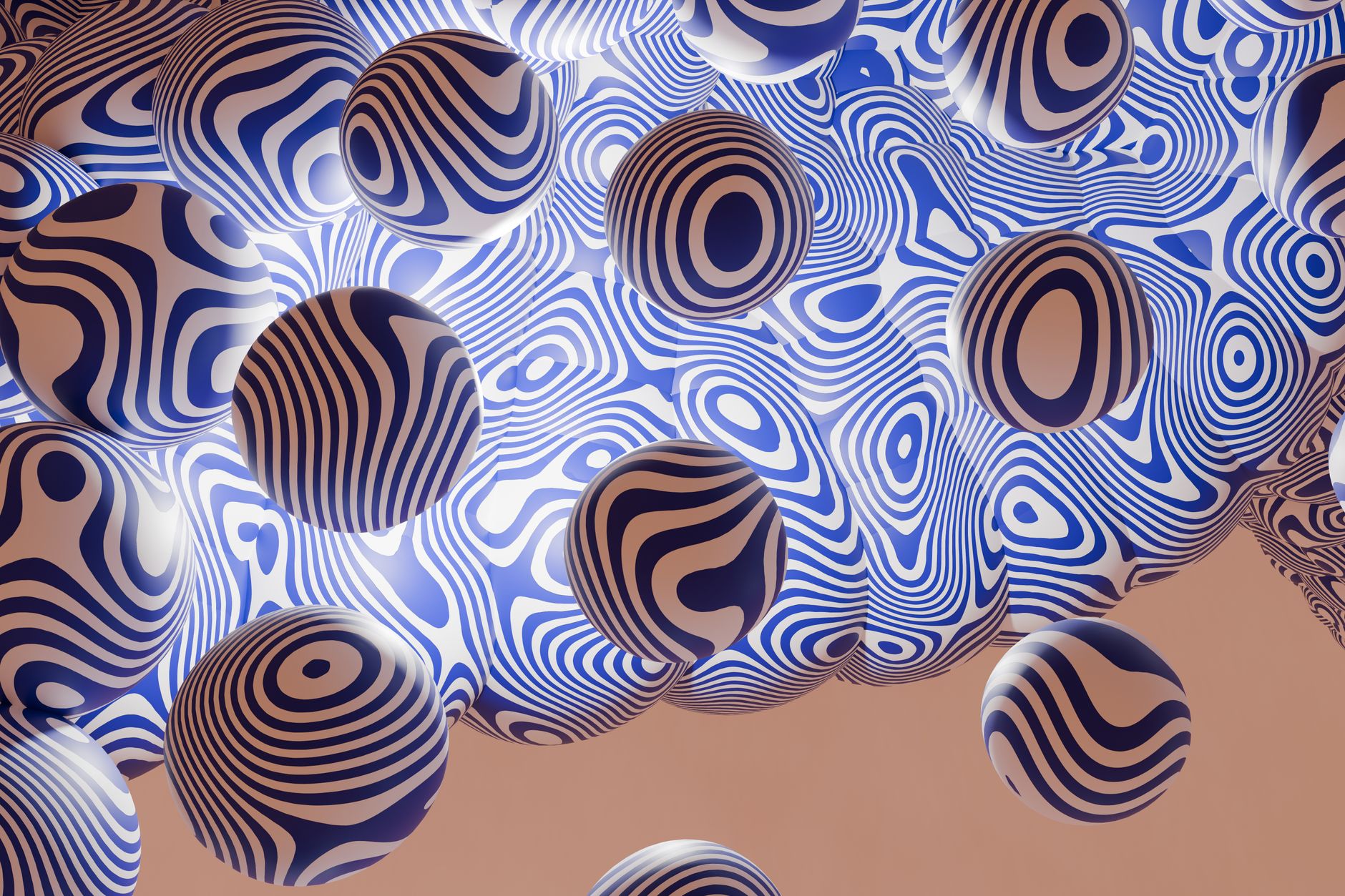
A New York realizzò le prime monumentali Infinity Nets, enormi superfici ricoperte da una ripetizione quasi ossessiva di piccoli segni. Quelle tele sembravano non avere un inizio né una fine.
Era nata una delle idee fondamentali della sua ricerca: la ripetizione come forma di infinito.
Le Infinity Nets e le Infinity Mirror Rooms
Prima vennero le reti. Poi arrivarono gli ambienti.
Le Infinity Mirror Rooms trasformarono definitivamente il rapporto fra spettatore e opera d’arte. Non si trattava più soltanto di osservare un dipinto o una scultura: il visitatore entrava nell’opera e diventava parte di essa.
Gli specchi moltiplicavano il corpo, le luci si replicavano senza apparente fine e lo spazio sembrava perdere la propria dimensione reale.
Questa intuizione, nata negli anni Sessanta, avrebbe anticipato una modalità di fruizione dell’arte oggi diventata comunissima: l’opera come esperienza da vivere, attraversare e fotografare.
Kusama aveva però iniziato a sperimentare molto prima che i social network trasformassero le installazioni immersive in fenomeni globali.
Femminismo, performance e provocazione
Negli anni Sessanta Kusama fu anche protagonista della scena underground newyorkese.
Realizzò performance provocatorie, happening e azioni legate alla nudità, alla sessualità, al pacifismo e alla protesta contro la guerra.
Le sue soft sculptures, realizzate ricoprendo oggetti con forme morbide e ripetitive, affrontavano anche le sue paure e le sue ossessioni sessuali. Il Whitney Museum, per esempio, ricorda le celebri sculture di accumulazione ricoperte di forme falliche come parte della sua ricerca sulle proprie ansie e sul tentativo di affrontarle attraverso la ripetizione.
Kusama non separava la vita dall’arte. La propria esperienza psicologica diventò uno dei principali materiali della sua produzione.
Nel 1977 scelse di vivere in un ospedale psichiatrico
Nel 1973 tornò in Giappone. Nel 1977 scelse volontariamente di vivere in un ospedale psichiatrico di Tokyo ma non smise di lavorare.
Ogni giorno continuò a recarsi nel suo studio, mantenendo una disciplina artistica impressionante. La sua permanenza nella struttura psichiatrica non rappresentò dunque la fine della carriera, ma divenne parte di una particolare organizzazione della sua vita: ospedale, studio, pittura, scrittura.
Kusama continuò a creare mentre il sistema dell’arte cambiava intorno a lei.
La fama arrivò anche grazie ai pois
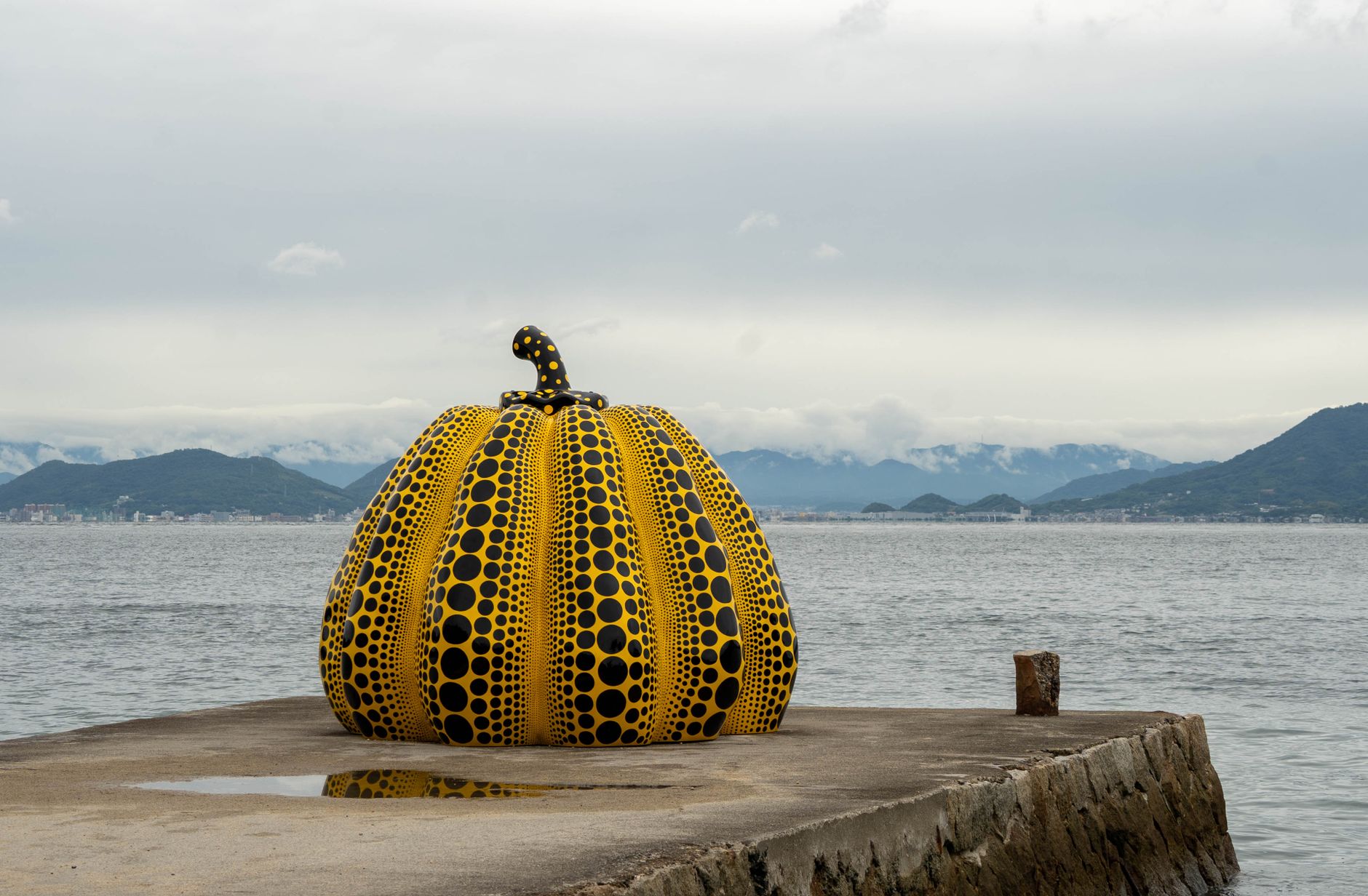
I pois diventarono la sua firma. Comparvero sulle tele, sulle sculture, sugli ambienti, sui corpi durante le performance e, molti anni dopo, anche nella moda.
Nel 2012 arrivò la celebre collaborazione con Louis Vuitton, che contribuì ulteriormente a trasformare il linguaggio di Kusama in un’immagine riconoscibile anche al di fuori dei musei.
Nel frattempo le sue mostre attiravano folle sempre più grandi. Nel 2014, secondo i dati raccolti da The Art Newspaper, le esposizioni di Kusama furono tra le più visitate al mondo e il giornale definì quell’anno come appartenente a Kusama. Le sue mostre arrivavano ad attirare migliaia di visitatori al giorno.
La “regina dei pois” era diventata una superstar internazionale.
Un’artista impossibile da rinchiudere in una sola definizione
Pittore, scultrice, performer, installatrice, scrittrice, poetessa, regista: Yayoi Kusama non ha mai accettato facilmente una sola definizione.
La sua produzione attraversa decenni e linguaggi diversi, ma conserva alcuni elementi costanti: ripetizione, infinito, dissoluzione del sé, ossessione, colore e desiderio di superare i confini del corpo.
Nel 2017 a Tokyo è stato inaugurato il Yayoi Kusama Museum, ulteriore testimonianza di quanto il suo lavoro sia diventato parte della cultura contemporanea internazionale.
L’ultimo messaggio: l’arte può ancora salvare
Durante la pandemia Kusama aveva affidato all’arte un messaggio di speranza. Aveva parlato della necessità di reagire alla paura e alla sofferenza attraverso l’amore, la solidarietà e la creatività. Per lei l’arte non era soltanto una professione: era una forma di resistenza.
Oggi, dopo la notizia della sua morte, quelle parole assumono un significato diverso. Yayoi Kusama se ne è andata a 97 anni, ma il suo universo non si è spento.
Continuerà a brillare nelle stanze di specchi, nei pois che hanno conquistato il mondo, nelle sue tele infinite e, dal prossimo 31 ottobre, anche a Torino.
Per il momento il sempre vostro Michelangelo Buonarroti vi saluta dandovi appuntamento ai prossimi post e sui social.
Yayoi Kusama has died at 97: the queen of polka dots leaves behind a never-ending legacy of art
She died on August 14th in a Tokyo hospital, but the news was only made public today, August 27th. Yayoi Kusama was 97 years old. And almost as if in a final paradox of her long career, in the coming months one of her most celebrated works will arrive in Italy, at the OGR Turin.
The news comes suddenly and leaves a huge void in contemporary art: Yayoi Kusama has died at the age of 97. The Japanese artist, renowned worldwide for her polka dots, Infinity Mirror Rooms, pumpkins, and environments capable of transforming space into an almost hallucinatory experience, passed away on August 14, 2026, in a Tokyo hospital.
Her studio announced the news only today, August 27th. The official statement recalls a life entirely devoted to creation and emphasizes that Kusama continued to paint until her final days.
Coincidence makes this news even more special: starting October 31st, the Italian public will once again be able to enter his universe, thanks to the large-scale immersive installation that will be presented at the OGR Turin.
His art will live on in Turin this fall
And here comes a coincidence that makes the news of his death even more significant.
At the OGR Turin, from October 31, 2026, to February 28, 2027, The Eternally Infinite Light of the Universe Illuminating the Quest for Truth, one of his famous Infinity Mirror Rooms, will be presented. The installation is part of The Quantum Effect, a project dedicated to the relationship between contemporary art, quantum physics, and new ways of perceiving reality.
Entering the work means losing, at least for a few minutes, the perception of boundaries.
Light, mirrors, and repetition create an environment in which the points of light seem to multiply infinitely. Physical space gradually gives way to an almost cosmic dimension, where it becomes difficult to know where the room ends and the artist’s imagined universe begins.
This is probably one of the most fitting ways to remember Kusama: not through a static image, but by entering directly into her idea of infinity.
A child who transformed visions into art
Yayoi Kusama was born in Matsumoto, Nagano Prefecture, on March 22, 1929, the youngest of four children in a family that owned a business related to the production and trade of seeds and plants.
She began drawing as a child.
Her relationship with her mother, however, was difficult. Kusama said that her drawings were often snatched from her hands. That need to draw quickly, before the work could be taken away, would somehow remain imprinted on her way of working.
Even more important was another childhood experience: the visions that Kusama described as a sort of invasion of the real world.
Flowers, dots, grids, and repeated shapes seemed to multiply before her eyes. The artist gradually transformed those experiences into images and surfaces, making obsession not a limitation, but the very material of her art.
From Flowers to Polka Dots: When Trauma Becomes Language
After studying the tradition of nihonga painting, Kusama began to develop an increasingly personal language.
Among her sources of inspiration was Georgia O’Keeffe, with whom she corresponded before leaving for the United States.
In 1957, Kusama left Japan and moved to the United States, eventually arriving in New York, where she quickly entered the avant-garde scene.
It was a courageous and extremely difficult choice.
In New York, she created her first monumental Infinity Nets, enormous surfaces covered with an almost obsessive repetition of small marks. Those canvases seemed to have neither beginning nor end.
One of the fundamental ideas of her research was born: repetition as a form of infinity.
The Infinity Nets and the Infinity Mirror Rooms
First came the nets. Then came the environments.
The Infinity Mirror Rooms definitively transformed the relationship between viewer and artwork. It was no longer simply a matter of observing a painting or sculpture: the visitor entered the work and became part of it.
The mirrors multiplied the body, the lights replicated without apparent end, and the space seemed to lose its real dimension.
This intuition, born in the 1960s, anticipated a way of enjoying art that has become very common today: the work as an experience to be lived, walked through, and photographed.
Kusama, however, had begun experimenting long before social networks transformed immersive installations into global phenomena.
Feminism, Performance, and Provocation
In the 1960s, Kusama was also a prominent figure in the New York underground scene.
She staged provocative performances, happenings, and actions involving nudity.
to sexuality, pacifism, and anti-war protest.
Her soft sculptures, made by covering objects with soft, repetitive shapes, also addressed her fears and sexual obsessions. The Whitney Museum, for example, commemorates her famous accumulation sculptures covered with phallic forms as part of her exploration of her own anxieties and her attempt to address them through repetition.
Kusama did not separate life from art. Her own psychological experience became one of the primary materials of her production.
In 1977, she chose to live in a psychiatric hospital
In 1973, she returned to Japan. In 1977, she voluntarily chose to live in a psychiatric hospital in Tokyo but did not stop working.
She continued to go to her studio every day, maintaining an impressive artistic discipline. Her stay in the psychiatric facility did not, therefore, mark the end of her career, but rather became part of a particular organization of her life: hospital, studio, painting, writing.
Kusama continued to create while the art system changed around her.
Fame also came thanks to polka dots
Polka dots became her signature. They appeared on canvases, sculptures, environments, bodies during performances, and, many years later, even in fashion.
In 2012, the celebrated collaboration with Louis Vuitton arrived, further helping to transform Kusama’s language into an image recognizable even outside of museums.
Meanwhile, her exhibitions attracted ever-larger crowds. In 2014, according to data collected by The Art Newspaper, Kusama’s exhibitions were among the most visited in the world, and the newspaper defined that year as Kusama’s. Her exhibitions attracted thousands of visitors a day.
The “Queen of Polka Dots” had become an international superstar.
An artist impossible to pin down to a single definition
Painter, sculptor, performer, installer, writer, poet, director: Yayoi Kusama has never easily accepted a single definition.
Her work spans decades and diverse languages, yet retains some constants: repetition, infinity, dissolution of the self, obsession, color, and the desire to transcend the confines of the body.
In 2017, the Yayoi Kusama Museum opened in Tokyo, further testament to how her work has become a part of international contemporary culture.
Her final message: art can still save
During the pandemic, Kusama entrusted art with a message of hope. She spoke of the need to react to fear and suffering through love, solidarity, and creativity. For her, art was not just a profession: it was a form of resistance.
Today, after the news of her death, those words take on a different meaning. Yayoi Kusama has passed away at 97, but her universe has not died.
She will continue to shine in the mirrored rooms, in the polka dots that have conquered the world, in her infinite canvases, and, starting October 31st, also in Turin.
At the OGR, entering her Infinity Mirror Room, visitors will find themselves immersed in exactly what Kusama sought throughout her life: a boundless space, where the body seems to dissolve and infinity suddenly becomes visible.
For now, your ever-loving Michelangelo Buonarroti bids you farewell, saying he’ll see you in future posts and on social media.

Sostienici – Support Us
Se questo blog ti piace e ti appassiona, puoi aiutarci a farlo crescere sempre più sostenendoci in modo concreto condividendo i post, seguendo le pagine social e con un contributo che ci aiuta ad andare avanti con il nostro lavoro di divulgazione. . ENGLISH: If you like and are passionate about this blog, you can help us make it grow more and more by supporting us in a concrete way by sharing posts, following social pages and with a contribution that helps us to move forward with our dissemination work.
10,00 €
-
Freyja piange oro: la triste storia della dea nordica dipinta da Anne-Marie Zilberman
🇮🇹Le lacrime di Freyja di Anne-Marie Zilberman racconta la dea nordica attraverso il mito, il dolore e l’amore. Scopri la storia delle sue leggendarie lacrime d’oro… 🇬🇧Anne-Marie Zilberman’s *Freyja’s Tears* portrays the Norse goddess through myth, sorrow, and love. Discover the story of her legendary golden tears…
-
I giganti del Barocco: i grandi scultori del Seicento
🇮🇹Nel Seicento la scultura cambia per sempre. A Roma, Bernini, Algardi, Mochi e Maderno trasformano le sculture in scene capaci di coinvolgere lo sguardo e lasciare senza fiato… 🇬🇧In the seventeenth century, sculpture changed forever. In Rome, Bernini, Algardi, Mochi, and Maderno transformed sculptures into scenes capable of captivating the eye and leaving the viewer…
-
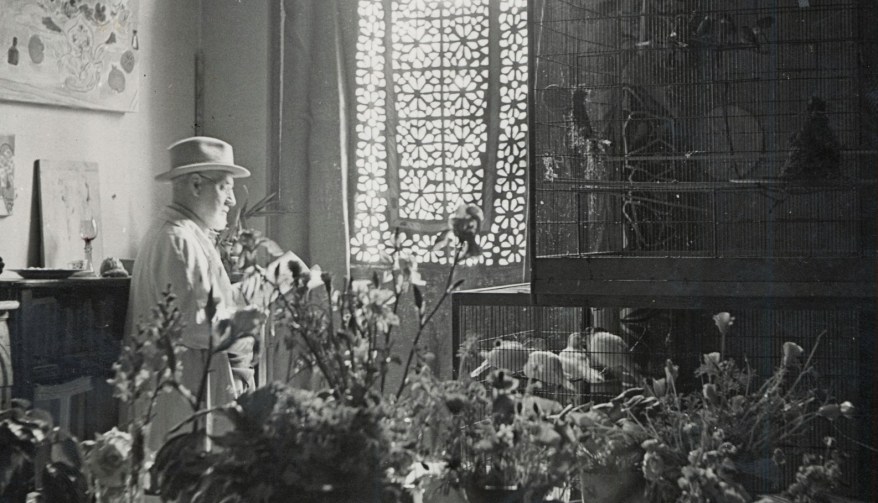
Matisse, il mondo intero dentro una stanza: al MUDEC la mostra che racconta la sua arte
🇮🇹’Matisse. Il mondo in una stanza’ al MUDEC di Milano racconta come Africa, Islam, Russia, Cina e Tahiti cambiarono l’arte di Henri Matisse… 🇬🇧’Matisse: The World in a Room’ at MUDEC in Milan tells the story of how Africa, Islam, Russia, China, and Tahiti transformed the art of Henri Matisse…
Condividi:


Questo sono io




sostienici

Sostienici – Support Us
Se questo blog ti piace e ti appassiona, puoi aiutarci a farlo crescere sempre più sostenendoci in modo concreto condividendo i post, seguendo le pagine social e con un contributo che ci aiuta ad andare avanti con il nostro lavoro di divulgazione. . ENGLISH: If you like and are passionate about this blog, you can help us make it grow more and more by supporting us in a concrete way by sharing posts, following social pages and with a contribution that helps us to move forward with our dissemination work.
€10,00


Una bella età, pensa che non conoscevo neppure questa artista, l’ho scoperta solo ora attraverso il tuo blog 👏👏👏👏👏👏👏👏👏👏👏👏👏👏👏👌👌👌👌👌👍👍👍👍👍👍👍👍👍
"Mi piace""Mi piace"