
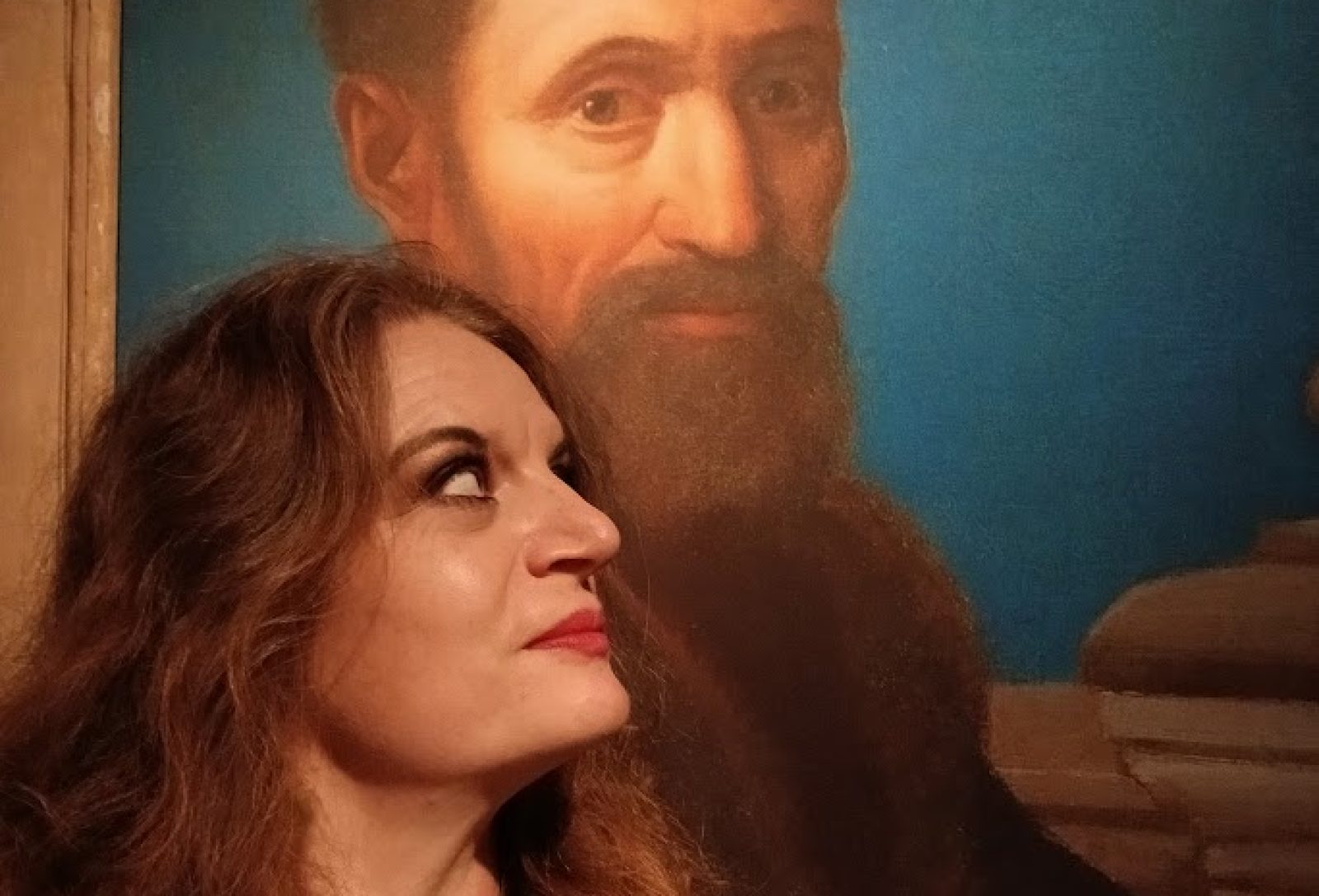
Dentro la bottega dei colori: Veronica Bazani e la pittura d’altri tempi
Tra foglie d’oro sottilissime, pigmenti macinati a mano e tavole preparate con pazienza quasi rituale, lavora Veronica Bazani, restauratrice e pittrice che riporta in vita le tecniche dell’arte medievale.
Ho avuto modo di conoscerla in occasione della 90ª Mostra Internazionale dell’Artigianato di Firenze, dove il suo lavoro ha catturato subito la mia attenzione.
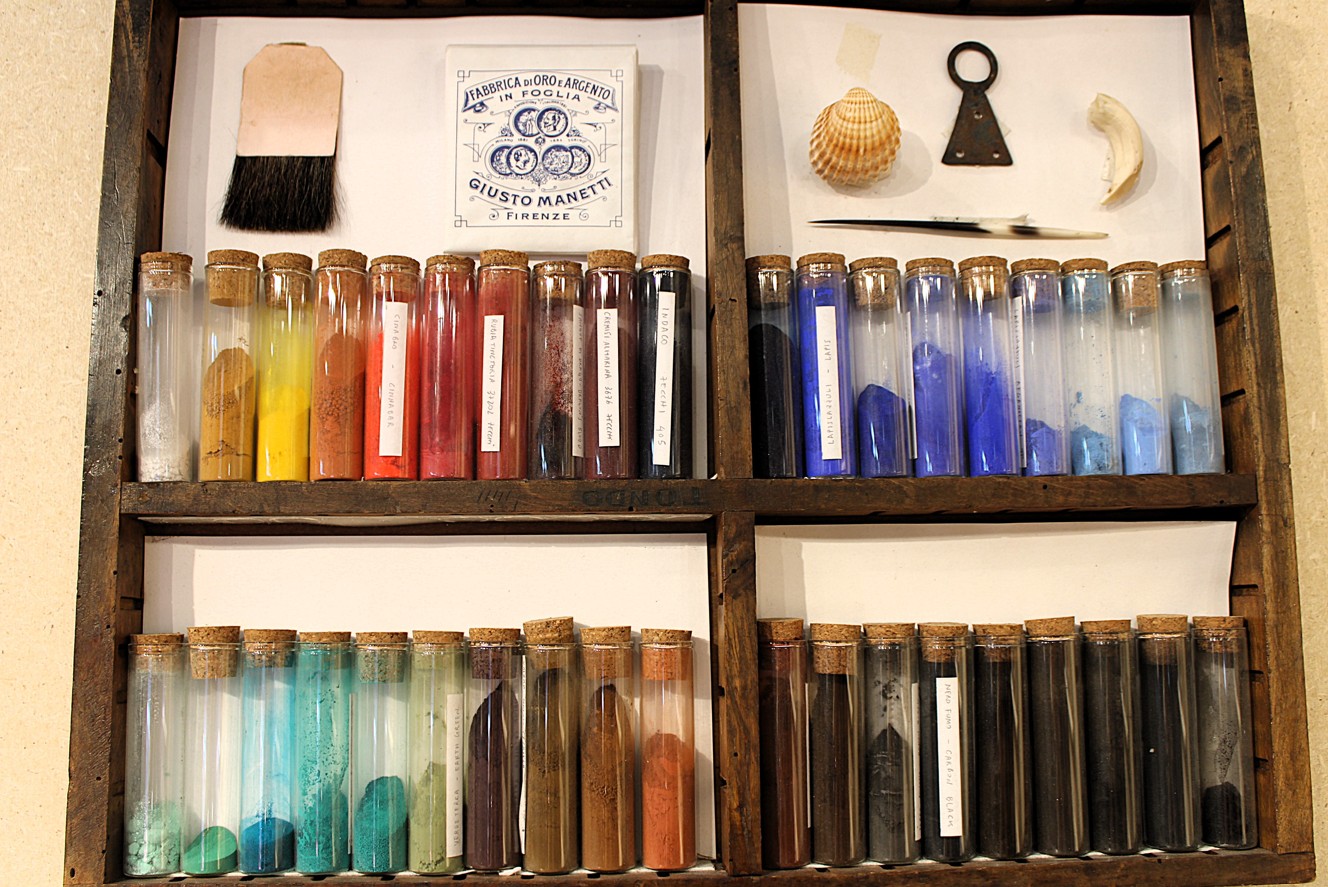
Nata a Pavia, Bazani è arrivata giovanissima a Firenze per studiare restauro. La città l’ha stregata ed è rimasta per recuperare e adoperare le tecniche della pittura delle botteghe che videro protagonisti Verrocchio, i segreti della pittura antica. Oggi dipinge su carta, pergamena e tavola, utilizzando la stessa tecnica che si vede nelle opere medievali e del primo Rinascimento custodite nei musei: la tempera all’uovo.
Ma quello che rende il suo lavoro unico è il modo in cui affronta ogni singola opera. Non si tratta solo di dipingere, ma di ricostruire un intero processo, esattamente come avveniva nelle botteghe di secoli fa. Tutto inizia dalla scelta del legno, che viene preparato con gesso e colla animale, strato dopo strato, fino a ottenere una superficie liscia come porcellana.
Il disegno viene poi trasferito e inciso con precisione, prima di arrivare alla fase più affascinante: la doratura.
L’utilizzo della foglia d’oro
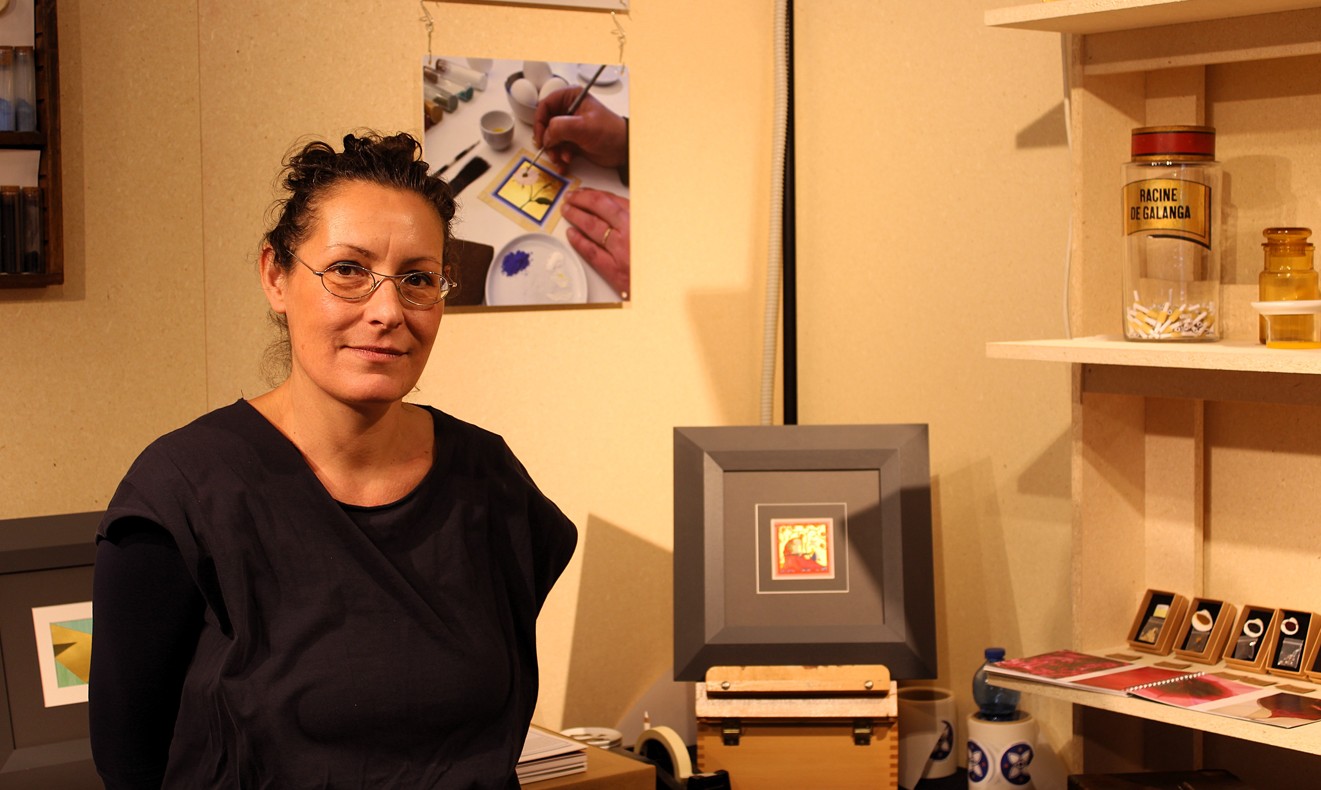
L’oro, nelle sue opere, non è solo decorazione. È luce, simbolo, materia viva. Le sottili foglie vengono applicate su una base di bolo e poi brunite fino a brillare, proprio come nelle icone medievali. Per ottenere quella tonalità calda e avvolgente, utilizza oro ad altissima caratura, quasi puro, capace di riflettere la luce in modo unico.
La foglia d’oro che l’artista adopera è ad altissima caratura, tra 23 e 23,75 carati. Più l’oro è puro, più assume quella tonalità calda, tendente all’arancio-rosso, tipica delle icone e delle tavole antiche. Carature più basse, come l’oro a 18 carati, contengono altri metalli che ne alterano il colore, rendendolo più freddo o verdastro.
La macinazione dei colori
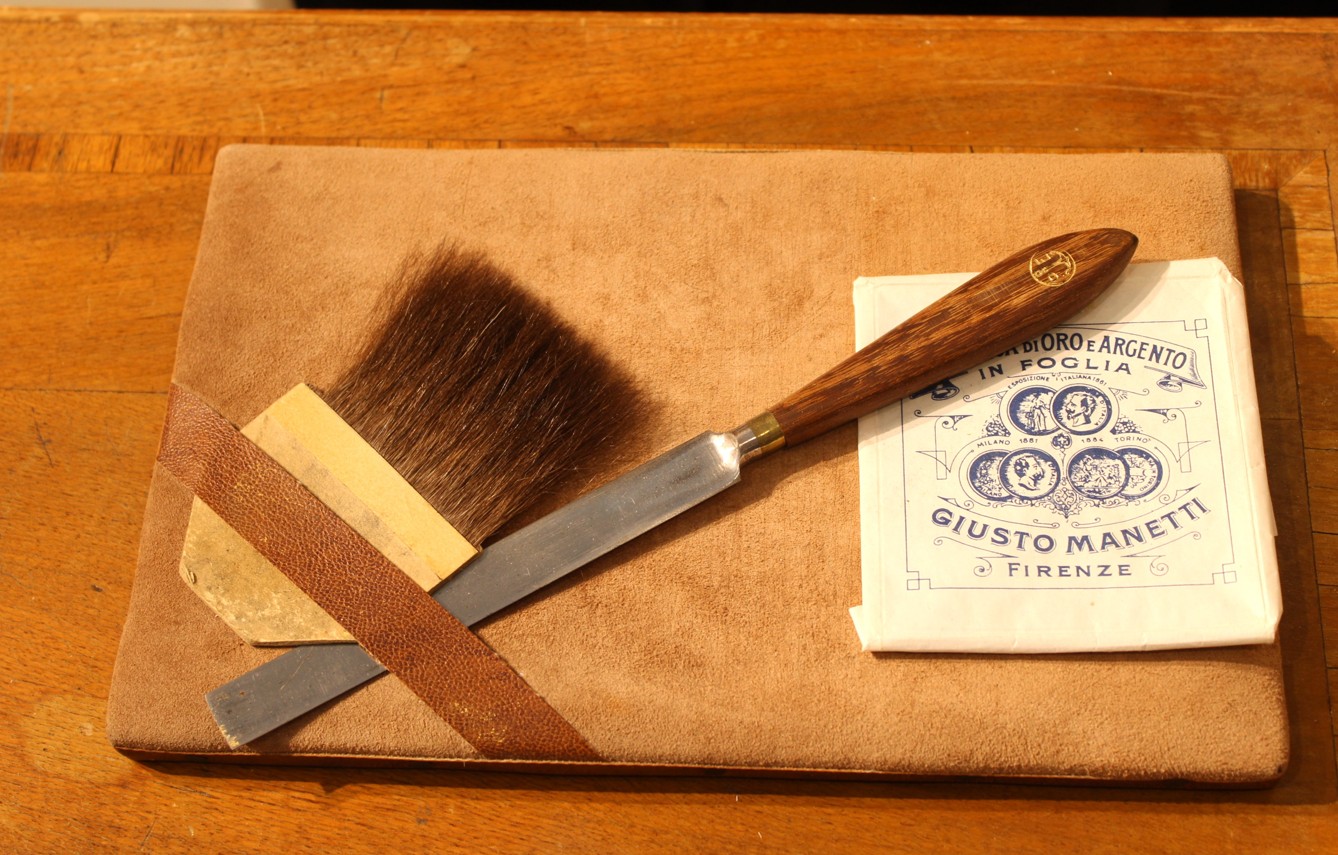
Poi arriva il colore. Ed è qui che il racconto si fa ancora più sorprendente. Veronica Bazani prepara molti dei suoi pigmenti da sola, partendo da materie prime naturali: pietre, terre, piante, perfino residui organici.
Il processo di macinazione è lento e meticoloso: diverso è il grado di macinazione, differente è la tonalità ottenuta. Mescolati al tuorlo d’uovo, questi pigmenti danno vita a una pittura luminosa, resistente, incredibilmente stabile nel tempo.
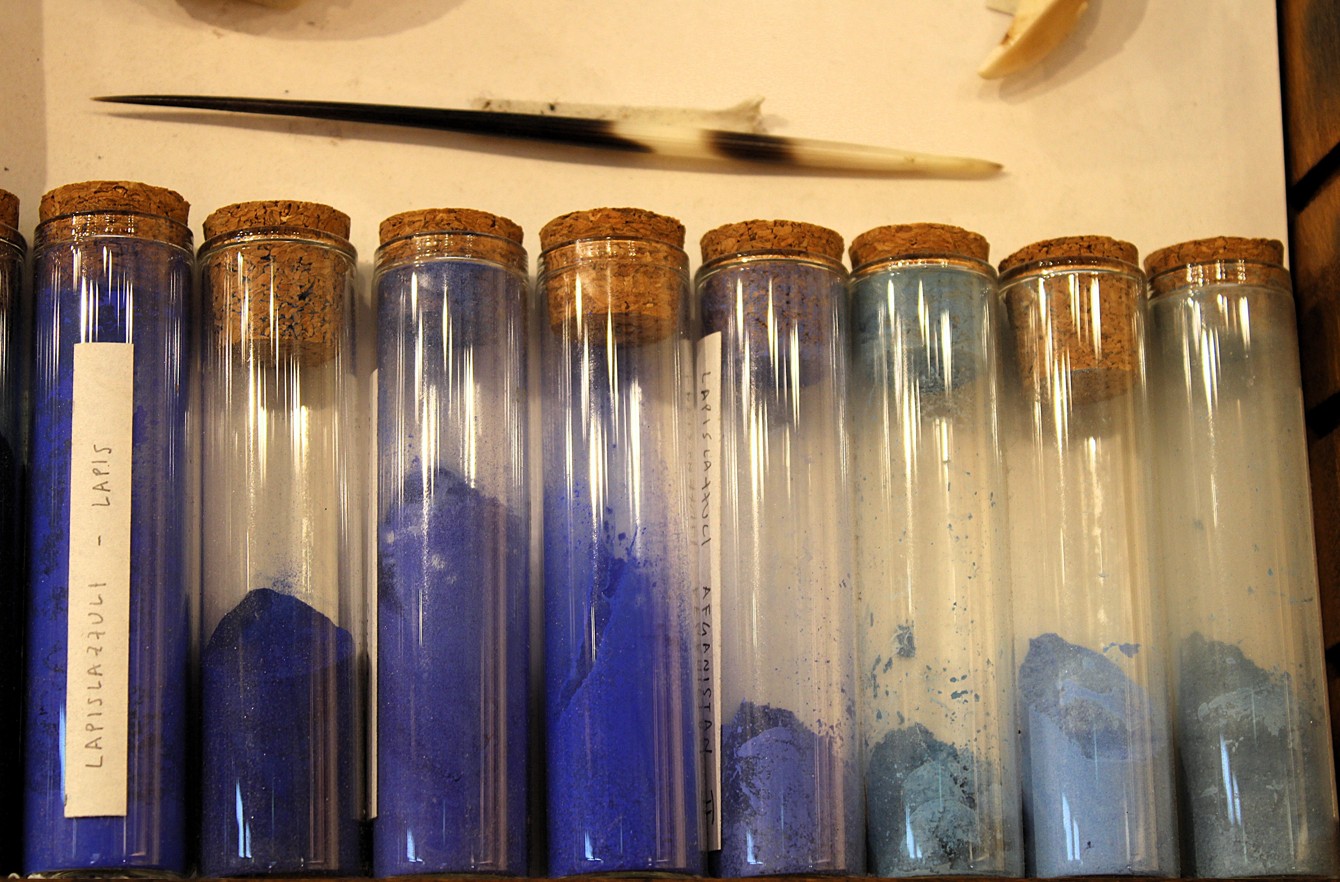
I colori, anche quelli tossici
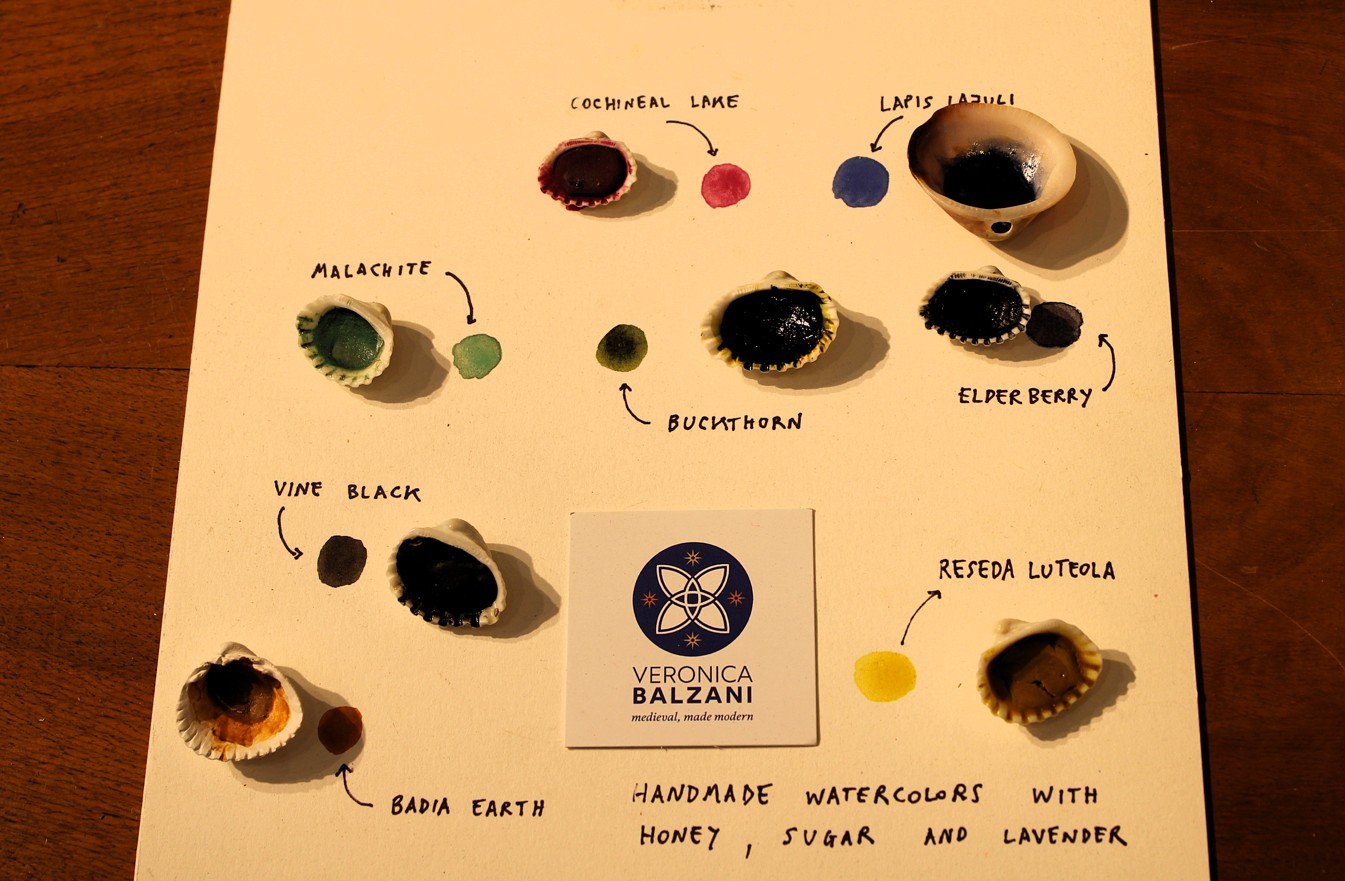
Alcuni di questi colori nascondono storie affascinanti e, a volte, anche pericolose. La malachite, ad esempio, un minerale verde brillante ricco di rame molto usato in passato ma è tossica.
Utilizzata già nell’antichità, offre tonalità intense può essere pericolosa se inalata durante la lavorazione. Lo stesso vale per altri pigmenti storici, come il cinabro a base di mercurio o il bianco di piombo. Ecco perché in questi casi particolari l’artista Bazani acquista i colori già macinati.
Nel Medioevo il pittore non era un artista, ma un artigiano. Il suo obiettivo non era esprimere sé stesso, ma realizzare opere destinate a durare nel tempo, utilizzando materiali perfetti e tecniche rigorose. Solo più tardi, con la nascita delle accademie, cambierà tutto.
Oggi Veronica Bazani tiene insieme questi due mondi. Da una parte la fedeltà assoluta alla tradizione, dall’altra uno sguardo contemporaneo che trasforma ogni opera in un racconto. Le sue tavole, le miniature e i lavori su pergamena non sono semplici copie del passato, ma testimonianze vive di un sapere antico.
Nel suo laboratorio si riscopre il valore del tempo, della manualità e della conoscenza. Ogni gesto ha un senso e ogni materiale una storia.
Dove trovare il laboratorio di Veronica Bazani a Firenze
Per chi desidera vedere da vicino queste tecniche affascinanti, il laboratorio di Veronica Bazani si trova nel centro storico di Firenze, a pochi passi dal Museo del Bargello, al numero 18 di via dei Pandolfini.
Qui è possibile scoprire le sue opere, osservare i materiali e immergersi nell’atmosfera autentica di una bottega d’arte. Nella stessa via è presente anche un piccolo spazio dedicato alla vendita, dove trovare creazioni originali e colori realizzati artigianalmente.
Per il momento il sempre vostro Michelangelo Buonarroti vi saluta dandovi appuntamento ai prossimi post e sui social.
Inside the Color Workshop: Veronica Bazani and Painting from the Past
Amidst the finest gold leaf, hand-ground pigments, and panels prepared with almost ritual patience, Veronica Bazani, a restorer and painter, brings medieval art techniques back to life.
I met her at the 90th International Crafts Exhibition in Florence, where her work immediately caught my attention.
Born in Pavia, Bazani came to Florence at a young age to study restoration. The city captivated her, and she stayed to rediscover and apply the painting techniques of the workshops that led to Verrocchio, the secrets of ancient painting. Today she paints on paper, parchment, and panel, using the same technique seen in medieval and early Renaissance works housed in museums: egg tempera.
But what makes her work unique is the way she approaches each individual piece. It’s not just a matter of painting, but of reconstructing an entire process, exactly as it was done in the workshops of centuries ago. It all begins with the choice of wood, which is prepared with gesso and animal glue, layer by layer, until a surface as smooth as porcelain is achieved.
The design is then transferred and precisely engraved, before arriving at the most fascinating stage: gilding.
The Use of Gold Leaf
Gold, in his works, is not just decoration. It is light, symbol, a living material. The thin leaves are applied to a bole base and then burnished until they shine, just like in medieval icons. To achieve that warm, enveloping hue, he uses very high-carat, almost pure gold, capable of reflecting light in a unique way.
The gold leaf the artist uses is extremely high-carat, between 23 and 23.75 carats. The purer the gold, the warmer it takes on that orange-red hue, typical of icons and ancient panels. Lower carats, such as 18-karat gold, contain other metals that alter the color, making it colder or greenish.
Grinding the Colors
Then comes the color. And this is where the story gets even more surprising. Veronica Bazani prepares many of her pigments herself, starting from natural raw materials: stones, soils, plants, even organic residues.
The grinding process is slow and meticulous: different degrees of grinding result in different hues. Mixed with egg yolk, these pigments create a luminous, durable, and incredibly durable paint.
Colors, Even the Toxic Ones
Some of these colors hide fascinating and, at times, dangerous stories. Malachite, for example, is a bright green mineral rich in copper, widely used in the past but toxic.
Used since ancient times, it offers intense hues and can be dangerous if inhaled during processing. The same is true for other historical pigments, such as mercury-based cinnabar or lead white. This is why, in these particular cases, the artist Bazani purchases pre-ground colors.
In the Middle Ages, the painter was not an artist, but a craftsman. His goal was not to express himself, but to create works designed to last over time, using perfect materials and rigorous techniques. Only later, with the birth of the academies, would everything change.
Today, Veronica Bazani brings these two worlds together. On the one hand, absolute fidelity to tradition, on the other, a contemporary perspective that transforms each work into a story. Her panels, miniatures, and works on parchment are not simple copies of the past, but living testimonies of ancient knowledge.
In her workshop, the value of time, craftsmanship, and knowledge is rediscovered. Every gesture has a meaning and every material a story.
Where to find Veronica Bazani’s workshop in Florence
For those who want to see these fascinating techniques up close, Veronica Bazani’s workshop is located in the historic center of Florence, just steps from the Bargello Museum, at 18 Via dei Pandolfini.
Here you can discover her works, observe the materials, and immerse yourself in the authentic atmosphere of an art studio. There is also a small sales area on the same street, where you can find original creations and handcrafted paints.
For now, yours truly, Michelangelo Buonarroti, bids farewell and says he’ll see you in future posts and on social media.

Sostienici – Support Us
Se questo blog ti piace e ti appassiona, puoi aiutarci a farlo crescere sempre più sostenendoci in modo concreto condividendo i post, seguendo le pagine social e con un contributo che ci aiuta ad andare avanti con il nostro lavoro di divulgazione. . ENGLISH: If you like and are passionate about this blog, you can help us make it grow more and more by supporting us in a concrete way by sharing posts, following social pages and with a contribution that helps us to move forward with our dissemination work.
10,00 €
Condividi:


Questo sono io




sostienici

Sostienici – Support Us
Se questo blog ti piace e ti appassiona, puoi aiutarci a farlo crescere sempre più sostenendoci in modo concreto condividendo i post, seguendo le pagine social e con un contributo che ci aiuta ad andare avanti con il nostro lavoro di divulgazione. . ENGLISH: If you like and are passionate about this blog, you can help us make it grow more and more by supporting us in a concrete way by sharing posts, following social pages and with a contribution that helps us to move forward with our dissemination work.
€10,00


Grazie!
"Mi piace"Piace a 1 persona
:-*
"Mi piace""Mi piace"