
Cenacolo di Leonardo: i dettagli che raccontano il tradimento
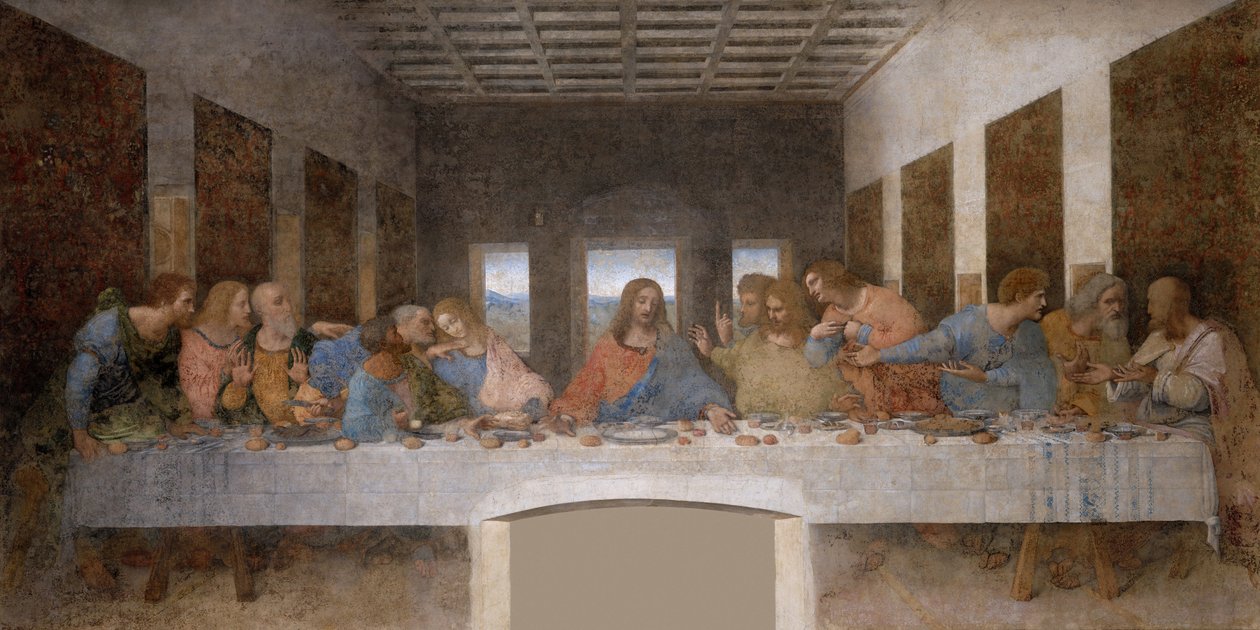
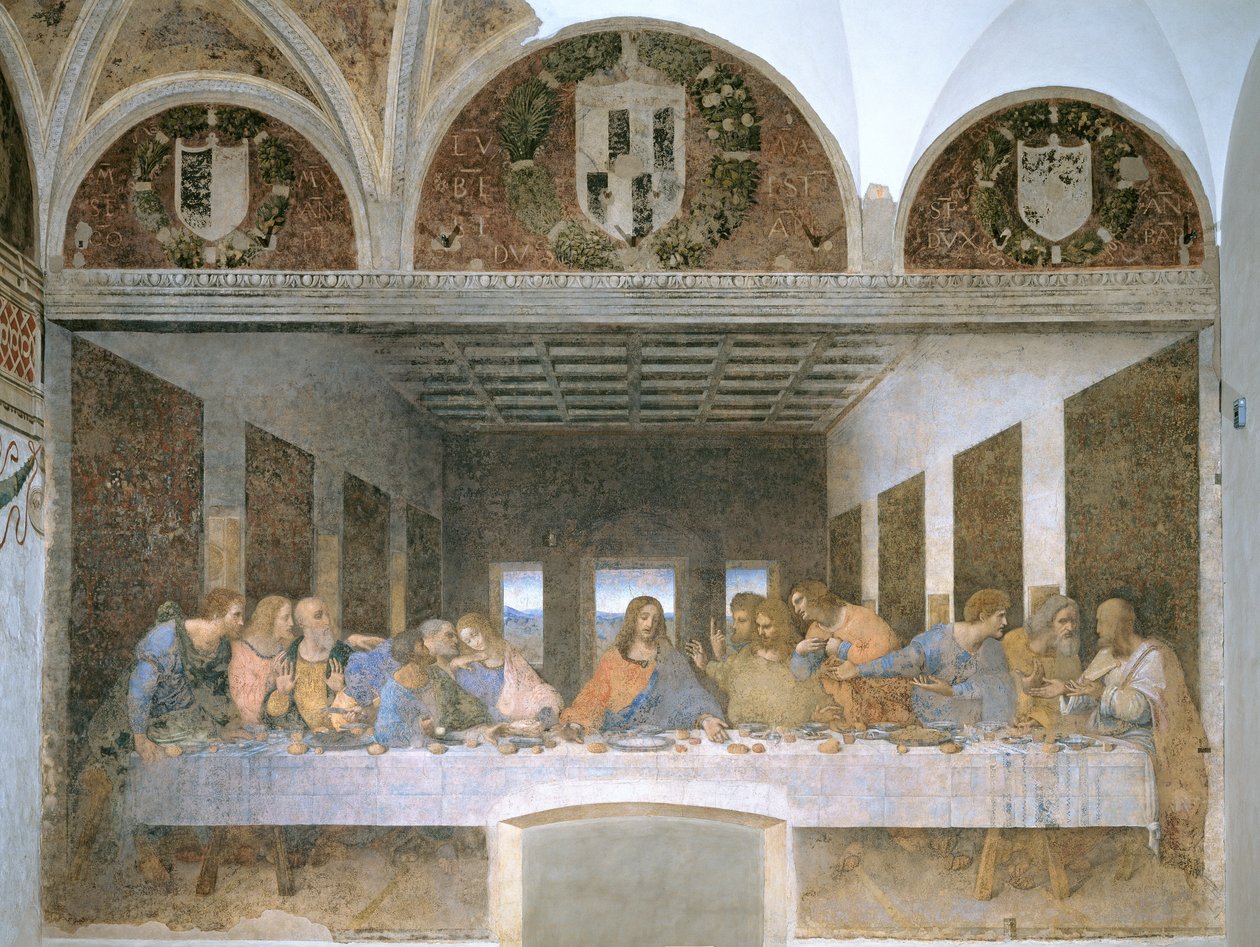
Il Cenacolo di Leonardo da Vinci è una di quelle opere che non smette di stupire nonostante sia stata realizzata secoli or sono. Affrescato nel refettorio di Santa Maria delle Grazie, a Milano, grazie anche ai restauri effettuati in diversi momenti, alcuni dettagli che sono riemersi, hanno contribuito a migliorare la leggibilità del significato del capolavoro di Leonardo.
Con l’arrivo della Pasqua e del Giovedì Santo, quest’opera torna al centro dell’attenzione globale: è qui che Leonardo ha raccontato uno dei momenti più intensi del Vangelo, trasformandolo in un dramma umano universale.
Il restauro che ha cambiato tutto: cosa vediamo oggi
Per secoli il Cenacolo è stato un capolavoro a rischio scomparsa. La tecnica scelta da Leonardo, ovvero una tempera mista su intonaco, si rivelò fin da subito fragile. Già nel Cinquecento si parlava di deterioramento precoce. Leonardo per dipingere infatti aveva bisogno di maggior tempo rispetto alla velocità d’esecuzione necessaria per l’affresco. Così, per aumentare il tempo di carbonatazione, sopra una preparazione fatta di creta e collante, fu steso uno spesso strato di tempera d’uovo molto grassa.
I restauri si sono susseguiti senza sosta: dal 1726 fino agli interventi del Novecento, molti tentativi finirono per alterare ulteriormente l’opera. Ridipinture, interventi invasivi, materiali non adeguati contribuirono a confondere i colori e a cancellare dettagli fondamentali.
Solo il lungo restauro concluso nel 1999 ha segnato una svolta decisiva. Per la prima volta si è cercato di recuperare ciò che restava dell’originale leonardiano.
E i risultati sono sorprendenti.
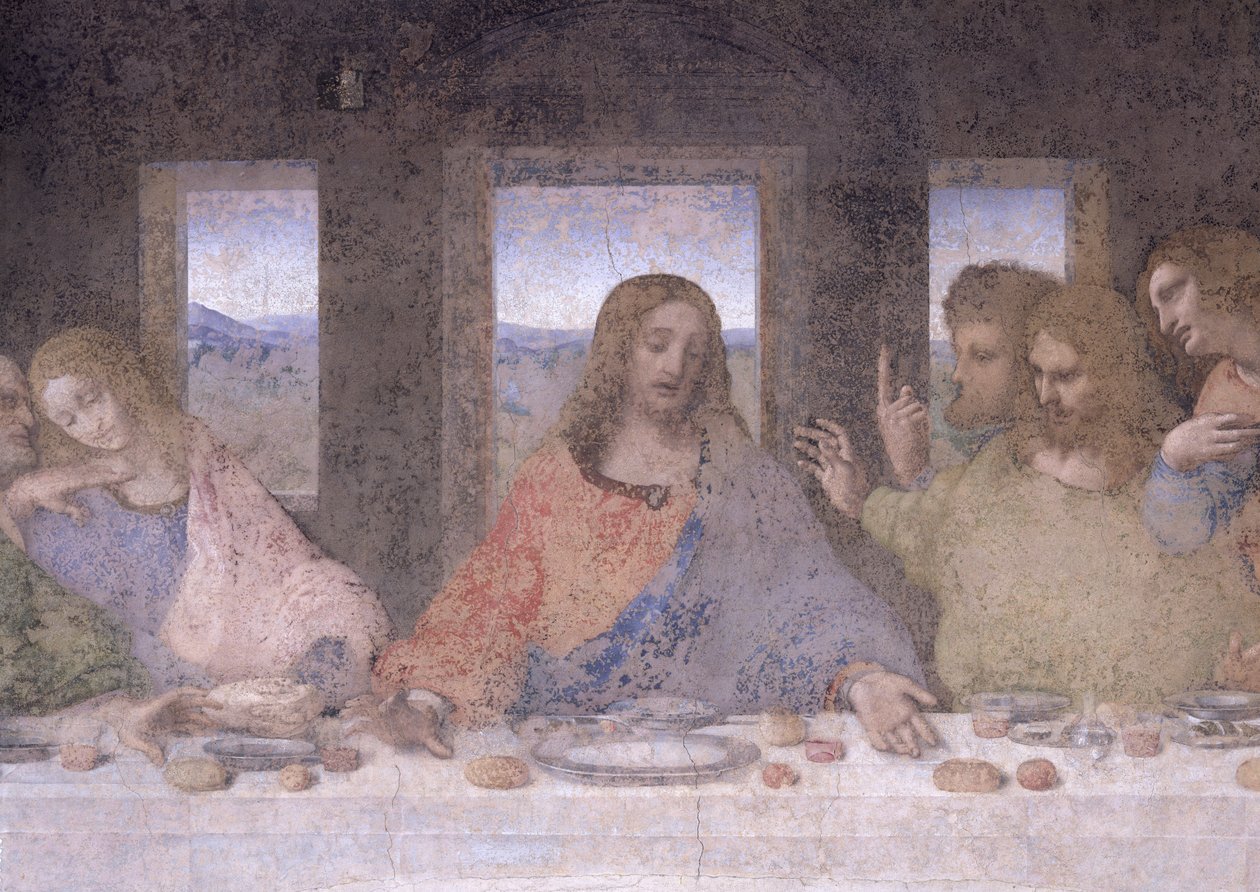
Sono riemersi i colori autentici, più luminosi e complessi di quanto si pensasse. Sono tornati visibili dettagli finissimi: i motivi decorativi degli arazzi, i corridoi immaginari tra uno sfondo e l’altro, gli oggetti disposti sulla tavola con precisione quasi narrativa.
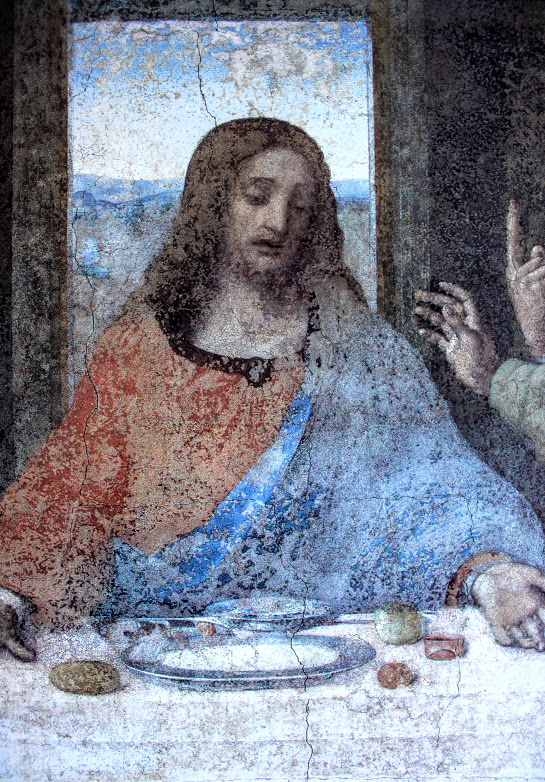
Persino un minuscolo foro sulla tempia di Cristo, utilizzato da Leonardo come punto per costruire la prospettiva, è tornato alla luce, rivelando il metodo rigoroso dietro l’apparente naturalezza della scena.

Come lavorava Leonardo: una tecnica sperimentale e rischiosa
Le analisi hanno mostrato quanto il Cenacolo sia diverso da un affresco tradizionale. Leonardo costruì la superficie con una preparazione a base di creta e collante sulla quale volle stendere tempera a uovo molto spessa. Una tecnica più simile alla pittura su tavola che alla pittura murale.
Sotto la superficie, gli studiosi hanno individuato un disegno preparatorio tracciato in modo sommario, con una tinta rossastra simile alle sinopie. Non sono state trovate tracce di spolvero, segno che Leonardo lavorò in modo diretto, modificando continuamente il progetto.
Le incisioni visibili nella parte superiore mostrano le linee prospettiche del soffitto, anche se non sempre coincidono perfettamente con il risultato finale. Questo rivela un processo creativo dinamico, fatto di continui aggiustamenti.

Il cuore del dipinto: le reazioni degli apostoli
Il Cenacolo non rappresenta semplicemente l’Ultima Cena ma bensì l’attimo in cui Cristo annuncia il tradimento.
E tutto, nella scena, ruota attorno alle reazioni degli apostoli.
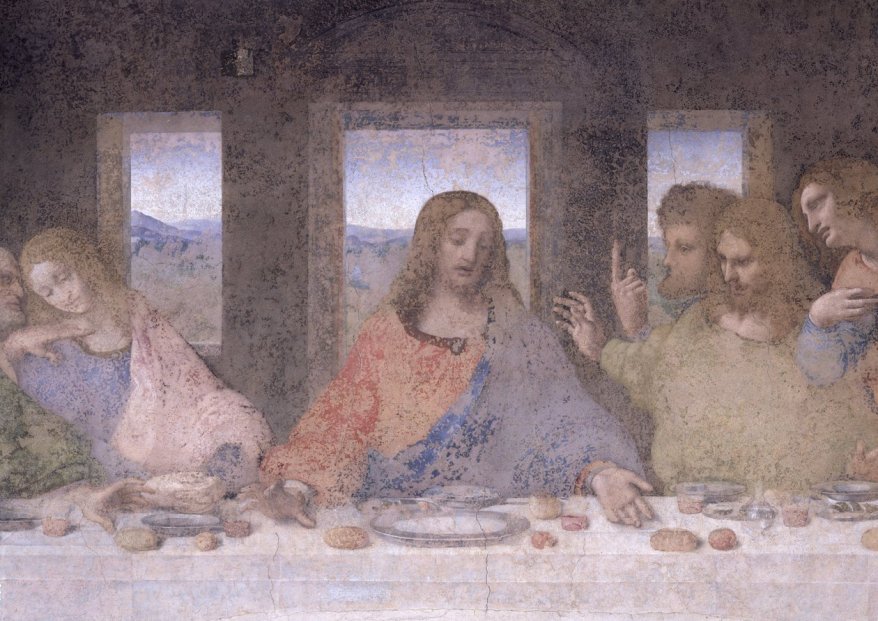
Leonardo li organizza in gruppi, uniti da emozioni comuni. È una scelta rivoluzionaria per l’epoca. C’è chi si protende in avanti, incredulo. Chi alza le mani, quasi a difendersi da un’accusa impensabile. Chi si volta verso il vicino cercando spiegazioni. Ogni gesto è calibrato, ogni espressione studiata.
Questo livello di realismo nasce da un lavoro approfondito: Leonardo osservò a lungo i volti e i comportamenti delle persone, studiando le espressioni e le reazioni emotive. Disegnò teste, mani, posture, cercando una varietà fisiognomica che rendesse ogni apostolo unico.
Il risultato è una scena viva, quasi cinematografica.
I personaggi: identità e tensioni
L’identificazione degli apostoli si basa su una copia antica conservata in Svizzera, che riporta i nomi dei discepoli. Da sinistra a destra si riconoscono Bartolomeo, Giacomo minore, Andrea, Giuda, Pietro, Giovanni, Tommaso, Giacomo maggiore, Filippo, Matteo, Taddeo e Simone.
Ma ciò che colpisce non è solo chi sono, ma come reagiscono.
Giuda è ritratto nell’ombra, isolato nella sua tensione. Pietro appare impulsivo, proteso in avanti. Giovanni sembra più raccolto, quasi sospeso. Tommaso alza il dito, gesto che anticipa il dubbio che lo renderà celebre.
Prospettiva e simbolo: tutto converge su Cristo
Dal punto di vista compositivo, il dipinto è costruito con una precisione sbalorditiva.
Le linee prospettiche convergono tutte sulla testa di Cristo, che diventa il centro visivo e simbolico della scena. Anche la posizione ideale dell’osservatore è stata studiata: più alta rispetto al livello reale, come se lo spettatore fosse chiamato a partecipare da una dimensione diversa.
Cristo è immobile, mentre tutto intorno è movimento. È il punto di equilibrio in un mondo che si sta sgretolando.
Un capolavoro salvato dal tempo
Oggi il Cenacolo è ciò che resta di un’opera sopravvissuta a errori, restauri invasivi e al passare dei secoli.
E proprio grazie all’ultimo grande intervento possiamo finalmente avvicinarci allo sguardo di Leonardo, riscoprendo dettagli che raccontano non solo una storia sacra, ma un’indagine profonda sull’animo umano.
Nel tempo della Pasqua, questa parete continua a parlare. E lo fa con una forza che nessun deterioramento è riuscito a cancellare.
Per il momento il sempre vostro Michelangelo Buonarroti vi saluta dandovi appuntamento ai prossimi post e sui social.
Leonardo’s Last Supper: The Details That Reveal the Betrayal
Leonardo da Vinci’s Last Supper is one of those works that never ceases to amaze, despite having been created centuries ago. Frescoed in the refectory of Santa Maria delle Grazie in Milan, thanks in part to restorations carried out over several periods, some details that have resurfaced have helped improve the understanding of the meaning of Leonardo’s masterpiece.
With the arrival of Easter and Holy Thursday, this work returns to the center of global attention: it is here that Leonardo recounted one of the most intense moments of the Gospel, transforming it into a universal human drama.
The Restoration That Changed Everything: What We See Today
For centuries, the Last Supper was a masterpiece at risk of disappearing. The technique chosen by Leonardo, a mixed tempera on plaster, immediately proved fragile. Already in the 16th century, there were concerns about premature deterioration. Leonardo, in fact, needed more time to paint than the speed required for the fresco. Thus, to increase the carbonation time, a thick layer of very greasy egg tempera was spread over a preparation of clay and glue.
Restorations continued relentlessly: from 1726 until the twentieth-century interventions, many attempts ended up further altering the work. Repainting, invasive interventions, and unsuitable materials contributed to blurring the colors and erasing key details.
Only the lengthy restoration concluded in 1999 marked a turning point. For the first time, an attempt was made to recover what remained of Leonardo’s original.
And the results are surprising.
The authentic colors reemerged, more luminous and complex than previously thought. The finest details were once again visible: the decorative motifs of the tapestries, the imaginary corridors between one background and another, the objects arranged on the panel with almost narrative precision.
Even a tiny hole in Christ’s temple, used by Leonardo as a point to construct perspective, has come to light, revealing the rigorous method behind the apparent naturalness of the scene.
How Leonardo Worked: An Experimental and Risky Technique
Analysis has shown how different the Last Supper is from a traditional fresco. Leonardo constructed the surface with a clay-based primer and glue, over which he applied a very thick layer of egg tempera. This technique is more similar to panel painting than mural painting.
Underneath the surface, scholars have identified a roughly drawn preparatory drawing, with a reddish tint similar to sinopias. No traces of dusting were found, a sign that Leonardo worked directly, continually modifying the project.
The incisions visible in the upper section show the perspective lines of the ceiling, although they do not always perfectly match the final result. This reveals a dynamic creative process, made of continuous adjustments.
The Heart of the Painting: The Apostles’ Reactions
The Last Supper does not simply represent the Last Supper, but rather the moment in which Christ announces the betrayal.
And everything in the scene revolves around the apostles’ reactions.
Leonardo arranges them in groups, united by shared emotions. It was a revolutionary choice for the time. Some lean forward, incredulous. Some raise their hands, as if defending themselves from an unthinkable accusation. Some turn to their neighbors, seeking explanations. Every gesture is calibrated, every expression studied.
This level of realism is born of in-depth work: Leonardo observed people’s faces and behaviors for a long time, studying their expressions and emotional reactions. He drew heads, hands, and postures, seeking a physiognomic variety that would make each apostle unique.
The result is a lively, almost cinematic scene.
The Characters: Identity and Tensions
The identification of the apostles is based on an ancient copy preserved in Switzerland, which lists the names of the disciples. From left to right, they are Bartholomew, James the Less, Andrew, Jude, Peter, John, Thomas, James the Greater, Philip, Matthew, Thaddeus, and Simon.
But what is striking is not only who they are, but how they react.
Judas is portrayed in the shadows, isolated in his tension. Peter appears impulsive, leaning forward. John seems more collected, almost suspended. Thomas raises his finger, a gesture that anticipates the doubt that will make him famous.
Perspective and symbol: everything converges on Christ
Compositionally, the painting is constructed with astonishing precision.
The perspective lines all converge on Christ’s head, which becomes the visual and symbolic center of the scene. Even the ideal position of the observer was studied: higher than the actual level, as if the viewer were called to participate from a different dimension.
Christ is still, while all around him is movement. He is the point of balance in a world that is crumbling.
A masterpiece saved by time
Today, the Last Supper is all that remains of a work that has survived errors, invasive restorations, and the passing of centuries.
And thanks to this latest major restoration, we can finally get closer to Leonardo’s vision, rediscovering details that tell not only a sacred story, but a profound exploration of the human soul.
During Easter, this wall continues to speak. And it does so with a strength that no amount of deterioration has managed to erase.
For now, yours truly, Michelangelo Buonarroti bids you farewell and invites you to see him in future posts and on social media.

Sostienici – Support Us
Se questo blog ti piace e ti appassiona, puoi aiutarci a farlo crescere sempre più sostenendoci in modo concreto condividendo i post, seguendo le pagine social e con un contributo che ci aiuta ad andare avanti con il nostro lavoro di divulgazione. . ENGLISH: If you like and are passionate about this blog, you can help us make it grow more and more by supporting us in a concrete way by sharing posts, following social pages and with a contribution that helps us to move forward with our dissemination work.
10,00 €
Condividi:


Questo sono io





sostienici

Sostienici – Support Us
Se questo blog ti piace e ti appassiona, puoi aiutarci a farlo crescere sempre più sostenendoci in modo concreto condividendo i post, seguendo le pagine social e con un contributo che ci aiuta ad andare avanti con il nostro lavoro di divulgazione. . ENGLISH: If you like and are passionate about this blog, you can help us make it grow more and more by supporting us in a concrete way by sharing posts, following social pages and with a contribution that helps us to move forward with our dissemination work.
€10,00


Una delle prime opere che si incontrano nei testi scolastici. C’è una curiosità che senz’altro conosci, a Castelnuovo Don Bosco (AT), c’é una suggestiva copia del cenacolo vinciano , si trova sulla parete di fronte all’altare del complesso nato nei luoghi natali di San Giovanni Bosco.
"Mi piace"Piace a 1 persona
Grazie, non lo sapevo :-*
"Mi piace"Piace a 1 persona
È un luogo poco conosciuto fuori regione ma raccoglie molti devoti al Santo e anche persone che semplicemente amano trascorrere qualche ora in un luogo suggestivo. Buona Pasqua e grazie sempre per tutto ciò che i tuoi post rappresentano per me.
"Mi piace""Mi piace"