

San Sebastiano del Bernini: il marmo che respira tra vita e morte
Tra le opere più sorprendenti della mostra “Bernini e i Barberini” a Palazzo Barberini, spicca un capolavoro giovanile di Gian Lorenzo Bernini: il San Sebastiano del 1617. Un’opera intensa, magnetica, capace di trasformare il marmo in carne viva e di raccontare un istante sospeso tra la vita e la morte.
Un capolavoro giovanile già maturo
Realizzato in marmo, il San Sebastiano testimonia la straordinaria precocità di Bernini. A poco più di vent’anni, lo scultore dimostra una padronanza tecnica e una consapevolezza espressiva già pienamente barocche.
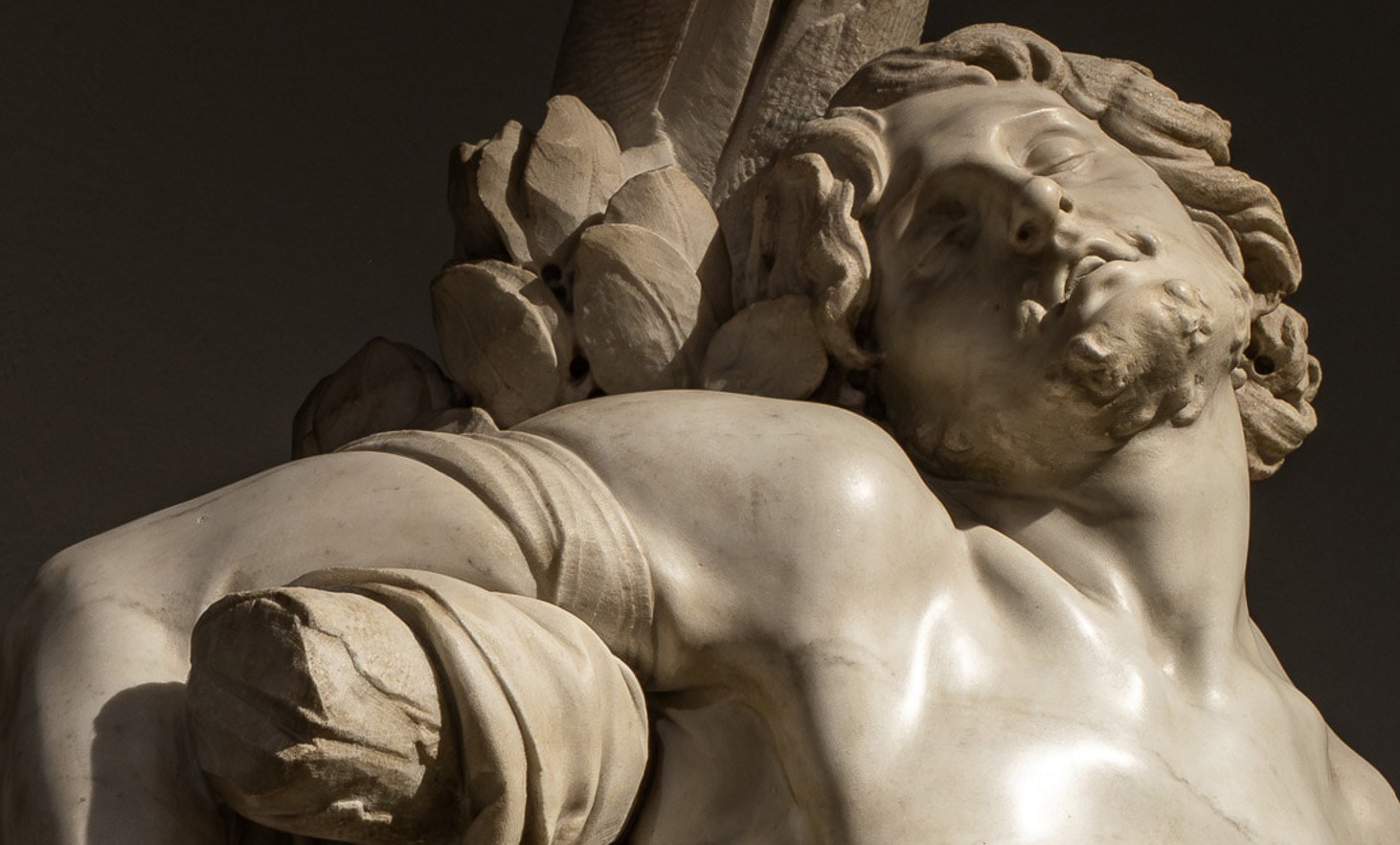
L’opera si colloca in un momento cruciale della sua carriera, tra i primi lavori e i grandi capolavori della maturità, anticipando temi e soluzioni che torneranno in opere celebri come l’Estasi di Santa Teresa.
Il legame con Maffeo Barberini: devozione e strategia
Il San Sebastiano è strettamente legato alla figura del cardinale Maffeo Barberini, futuro papa Urbano VIII. Barberini nutriva una profonda devozione per il santo, testimoniata anche da un epigramma a lui dedicato nei suoi Poemata.
Ma questa devozione aveva anche una dimensione politica e culturale. Il culto di San Sebastiano, copatrono di Roma, si inseriva perfettamente nella strategia di autocelebrazione della famiglia Barberini, che aveva uno dei suoi centri nella cappella in Sant’Andrea della Valle, edificata nel luogo legato alla tradizione del martirio del santo.
Acquisire un’opera così potente significava dunque unire fede, prestigio e propaganda.

Un San Sebastiano diverso: meno frecce, più umanità
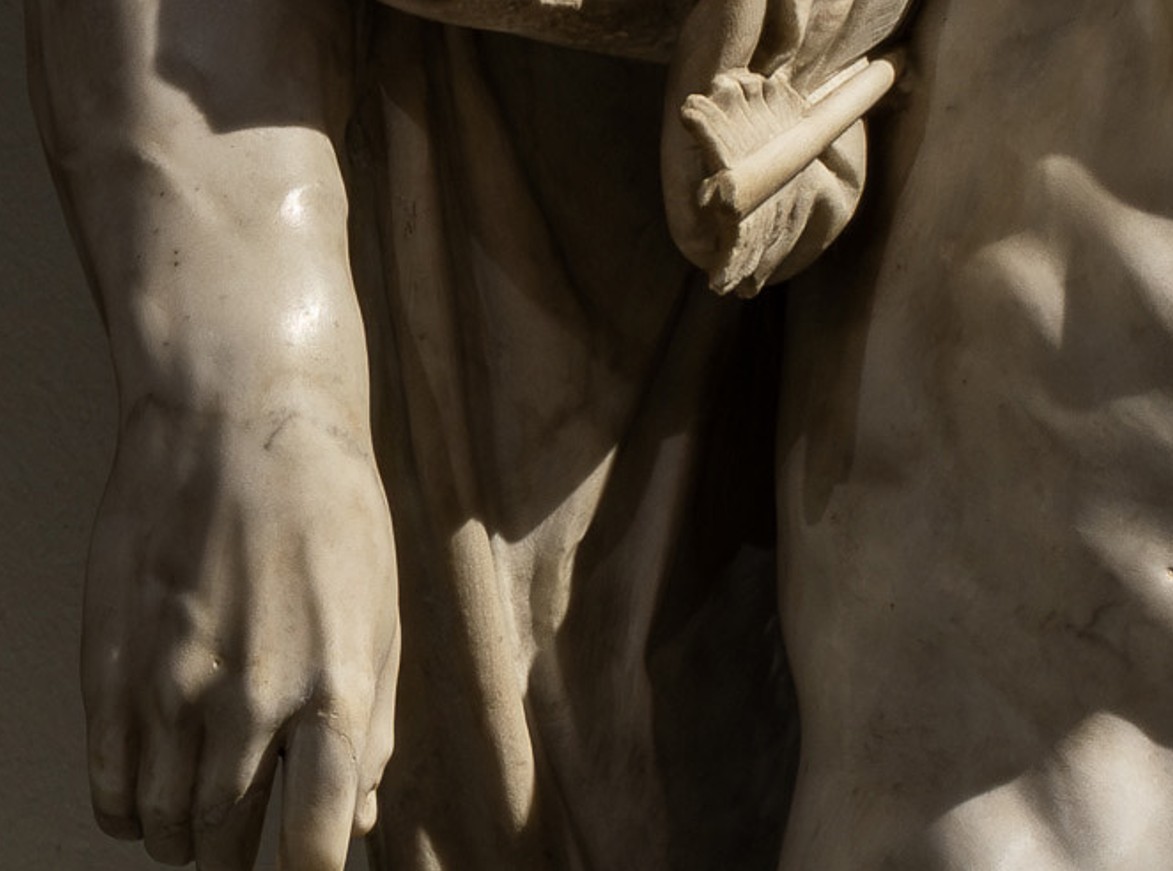
A differenza della tradizione agiografica, che descrive il martire trafitto da un numero impressionante di frecce, Bernini sceglie una via radicalmente diversa. Riduce gli elementi del martirio a poche frecce, disposte con una grazia compositiva ben studiata.
Questa scelta non è solo tecnica, ma profondamente poetica: il dolore non è spettacolarizzato, ma interiorizzato.
Il corpo del santo, giovane e atletico, richiama la bellezza classica, mentre la posa sostenuta da un tronco che evoca la croce, crea un parallelo con il Cristo della mia Pietà Vaticana.
Il momento del trapasso: il vero protagonista dell’opera
Il vero tema della scultura non è il martirio in sé, ma l’istante del trapasso.
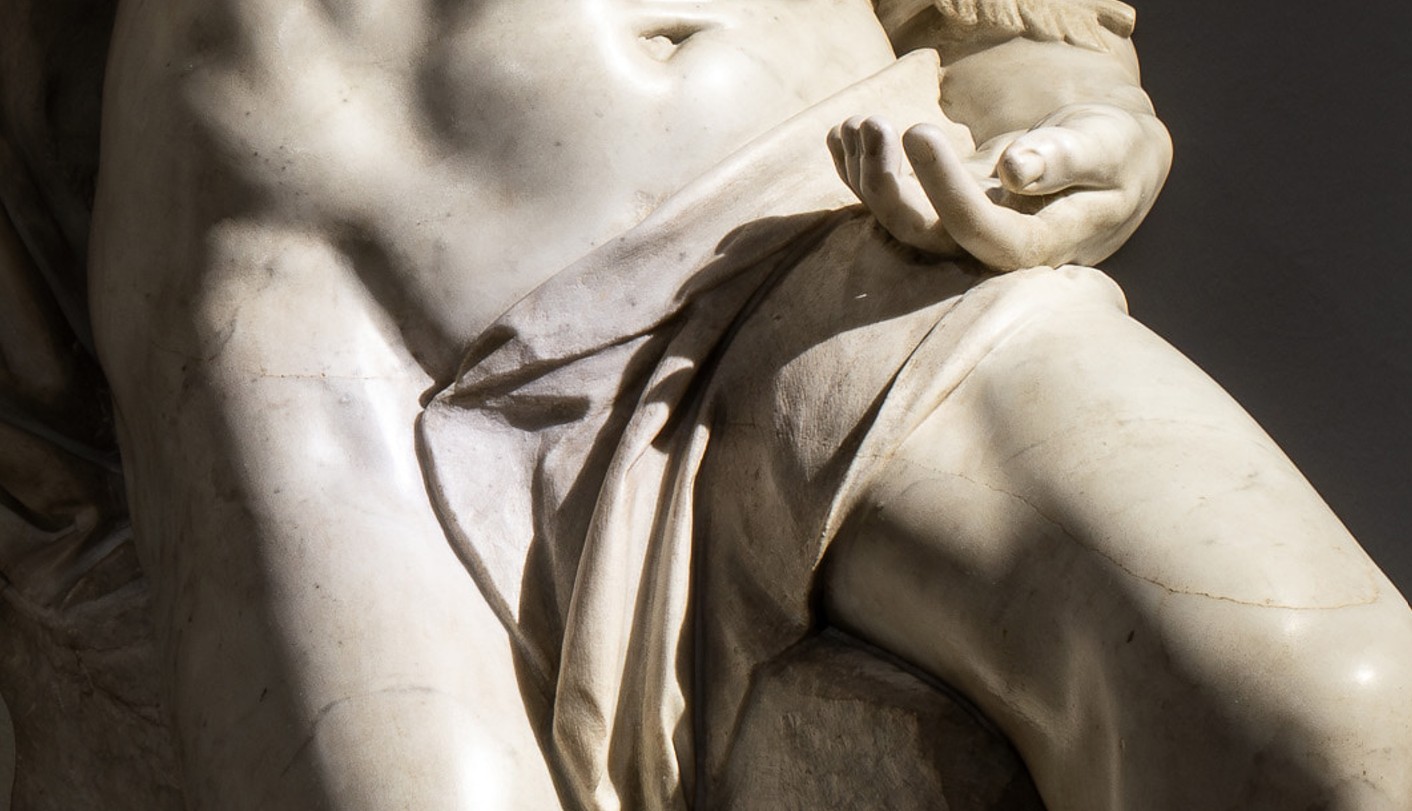
Bernini cattura un momento paradossale: San Sebastiano è ancora vivo, ma già oltre la vita. I sensi sono presenti e assenti allo stesso tempo. Il volto disteso, il corpo che cede, il braccio abbandonato: tutto parla di una resa dolce, quasi estatica.
È un’immagine che incarna perfettamente la sensibilità barocca, attratta da contrasti e ossimori: dolore e bellezza, morte e piacere, corpo e spirito.
Non a caso, questa tensione ritornerà trent’anni dopo nell’Estasi di Santa Teresa, dove il confine tra sofferenza e godimento si fa ancora più sottile.
Dove vedere oggi il San Sebastiano di Bernini
Tradizionalmente conservata al Museo Nacional Thyssen-Bornemisza, la scultura al momento è eccezionalmente visibile a Roma nella mostra “Bernini e i Barberini”.
Un’occasione rara per osservare da vicino uno dei primi capolavori del genio barocco, nel contesto storico e culturale che lo ha generato.
Per il momento il sempre vostro Michelangelo Buonarroti vi saluta dandovi appuntamento ai prossimi post e sui social.
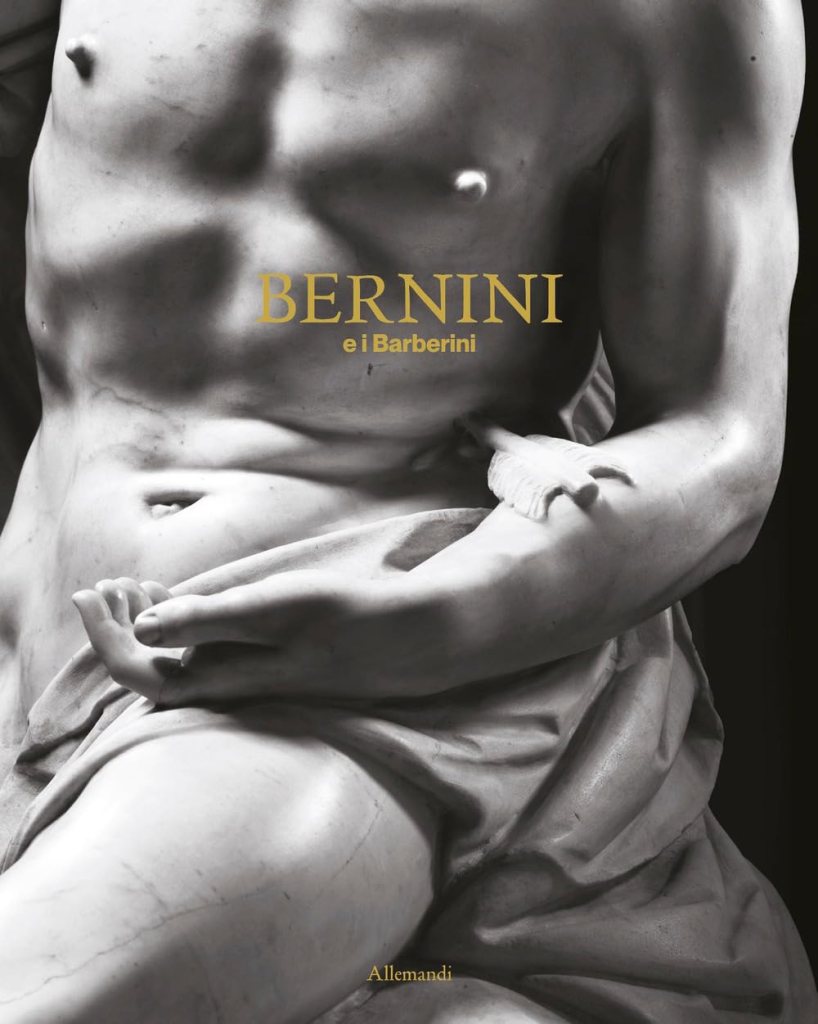
Bernini’s Saint Sebastian: Marble Breathing Between Life and Death
Among the most striking works in the “Bernini and the Barberinis” exhibition at Palazzo Barberini, an early masterpiece by Gian Lorenzo Bernini stands out: the Saint Sebastian from 1617. An intense, magnetic work, capable of transforming marble into living flesh and depicting a moment suspended between life and death.
An early masterpiece already mature
Crafted in marble, the Saint Sebastian demonstrates Bernini’s extraordinary precociousness. At just over twenty years old, the sculptor demonstrated a technical mastery and expressive awareness already fully Baroque.
The work dates to a crucial moment in his career, between his early works and the great masterpieces of his maturity, anticipating themes and solutions that would recur in famous works such as the Ecstasy of Saint Teresa.
The Connection with Maffeo Barberini: Devotion and Strategy
The Saint Sebastian is closely linked to the figure of Cardinal Maffeo Barberini, the future Pope Urban VIII. Barberini had a profound devotion to the saint, as evidenced by an epigram dedicated to him in his Poemata.
But this devotion also had a political and cultural dimension. The cult of Saint Sebastian, co-patron saint of Rome, fit perfectly into the Barberini family’s strategy of self-celebration, which centered on the chapel in Sant’Andrea della Valle, built on the site traditionally associated with the saint’s martyrdom.
Acquiring such a powerful work therefore meant combining faith, prestige, and propaganda.
A Different Saint Sebastian: Fewer Arrows, More Humanity
Unlike the hagiographic tradition, which depicts the martyr pierced by an impressive number of arrows, Bernini chooses a radically different approach. He reduces the elements of the martyrdom to a few arrows, arranged with carefully studied compositional grace.
This choice is not merely technical, but profoundly poetic: the pain is not spectacularized, but internalized.
The saint’s body, young and athletic, recalls classical beauty, while the pose supported by a trunk reminiscent of the cross draws a parallel with the Christ in my Vatican Pietà.
The moment of passing: the true protagonist of the work
The sculpture’s true theme is not martyrdom itself, but the moment of passing.
Bernini captures a paradoxical moment: Saint Sebastian is still alive, but already beyond life. The senses are simultaneously present and absent. The relaxed face, the yielding body, the abandoned arm: everything speaks of a gentle, almost ecstatic surrender.
It is an image that perfectly embodies the Baroque sensibility, drawn to contrasts and oxymorons: pain and beauty, death and pleasure, body and spirit.
It is no coincidence that this tension will return thirty years later in the Ecstasy of Saint Teresa, where the line between suffering and enjoyment becomes even more blurred.
Where to see Bernini’s Saint Sebastian today
Traditionally housed at the Museo Nacional Thyssen-Bornemisza, the sculpture is currently on display in Rome in the exhibition “Bernini and the Barberinis.”
A rare opportunity to observe one of the Baroque genius’s first masterpieces up close, in the historical and cultural context that created it.
For now, yours truly, Michelangelo Buonarroti bids farewell and invites you to join him in future posts and on social media.

Sostienici – Support Us
Se questo blog ti piace e ti appassiona, puoi aiutarci a farlo crescere sempre più sostenendoci in modo concreto condividendo i post, seguendo le pagine social e con un contributo che ci aiuta ad andare avanti con il nostro lavoro di divulgazione. . ENGLISH: If you like and are passionate about this blog, you can help us make it grow more and more by supporting us in a concrete way by sharing posts, following social pages and with a contribution that helps us to move forward with our dissemination work.
10,00 €
Articoli
Condividi:


Questo sono io





sostienici

Sostienici – Support Us
Se questo blog ti piace e ti appassiona, puoi aiutarci a farlo crescere sempre più sostenendoci in modo concreto condividendo i post, seguendo le pagine social e con un contributo che ci aiuta ad andare avanti con il nostro lavoro di divulgazione. . ENGLISH: If you like and are passionate about this blog, you can help us make it grow more and more by supporting us in a concrete way by sharing posts, following social pages and with a contribution that helps us to move forward with our dissemination work.
€10,00


Mi impressiona enormemente l’espressione in viso… dolore e serenità al tempo stesso
"Mi piace"Piace a 2 people
bellissima
"Mi piace"Piace a 1 persona