
La muffa nella Cappella Sistina: il Diluvio che quasi mi fece cedere
“El lavoro mio non va innanzi i’modo che a me paia meritare. E questa è la dificultà del lavoro, e ancora el non esser mia professione. e pur perdo il tempo mio senza frutto. Idio m’aiuti”.
Così scrissi al mi babbo Lodovico il 27 gennaio 1509. E non erano parole leggere. Ero lassù, sospeso sui ponteggi della Cappella Sistina, con il pennello in mano e il cuore greve. Avevo cominciato ad affrescare la volta, e già mi pareva di aver fallito.
Il Diluvio Universale e l’errore che non perdona
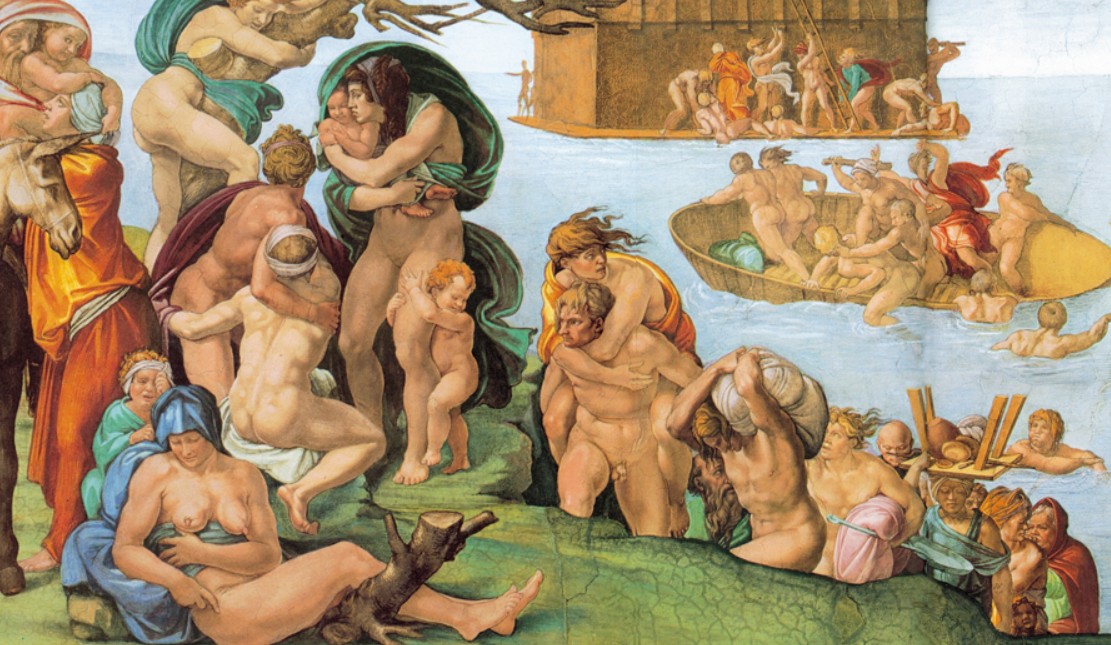
Stavo lavorando al Diluvio Universale, la prima scena della volta a cui misi mano. Credevo d’esser pronto. A Firenze, nella bottega del Domenico Ghirlandaio, avevo imparato l’arte dell’intonaco, la pazienza del mestiere, la scienza dei pigmenti. Ma Roma non è Firenze.
L’aria qui è più umida. Più pesante. E ciò che nella mia città asciugava come doveva, qui si ribellò.
Come raccontò poi Giorgio Vasari: “Fatto il quadro del Diluvio, se gli cominciò l’opera a muffare, di maniera che appena si scorgevan le figure”.
La mescola era sbagliata. Troppo umida. L’intonaco, invece di seccare, generò muffe che salirono come un castigo sulla superficie pittorica. Le figure si velavano, i corpi si spegnevano. E io con loro.
Ricominciai da capo adoperando un intonaco realizzato con una parte di calce e due di pozzolana. La pozzolana è di origine vulcanica e permette di ottenere un intonaco perfetto per il clima di Roma.
Il coraggio di distruggere per salvare
Molti non sanno che demolii quasi tutto. Sì, feci abbattere ciò che avevo già dipinto. Meglio distruggere che lasciare errore. Ma non tutto era perduto.
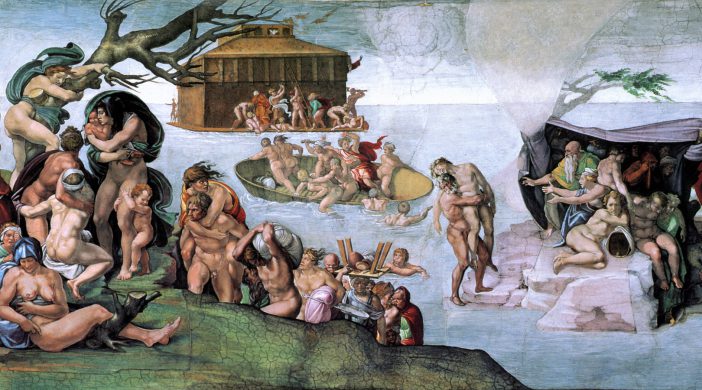
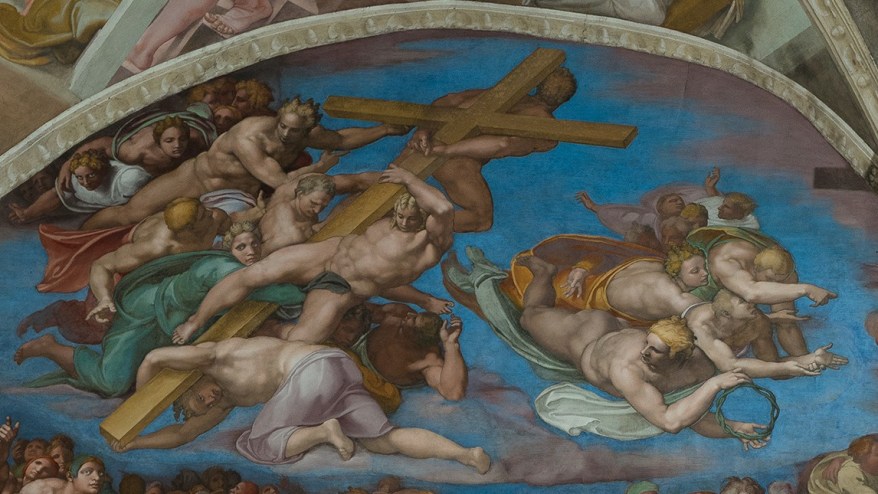
Una porzione resistette: il gruppo di figure accalcate sull’isolotto. Le prime sei “giornate” di lavoro. Quelle non mostrarono alterazioni gravi. Le lasciai vivere.

Durante il grande restauro del Novecento, diretto da Gianluigi Colalucci, si è potuto vedere come io avessi iniziato quella scena dal centro, non dal bordo come consuetudine. Un gesto inconsueto. Forse già segno del mio travaglio.
Quella parte dell’isolotto, lo confesso, la dipinsi in gran parte a secco, a tempera. Tecnica che poi abbandonai. Troppo rischiosa su quella superficie. Dopo il rifacimento, mi attenni più rigorosamente al buon fresco.
Eppure, per un poco ancora, tornai al colore steso a secco: il minio, ad esempio, riappare nei rossi del Sacrificio di Noè, poco distante.
L’errore mi aveva insegnato prudenza.
Fatica, solitudine e ostinazione
“Io sto in grande affanno e con grandissima fatica di corpo…”, scrissi nel novembre 1509 al mi fratello Buonarroti.
Non avevo amici. Non ne volevo. Non avevo tempo neppure per mangiare quanto bastasse. Di giorno ero arrampicato sui ponteggi della Cappella Sistina; di notte rimuginavo sugli errori, sulle proporzioni, sui colori che non mi parevano vivi quanto avrei voluto.
Il Diluvio, che racconta la rovina dell’umanità, fu per me quasi rovina interiore. Eppure, proprio da quel fallimento nacque la mia trasformazione.
Le scene successive si fecero più monumentali, le figure più grandi, i colori più audaci. Compresi che quella volta non era solo un incarico: era una lotta. Contro la materia, contro l’umidità, contro me stesso.
La lezione nascosta nella volta
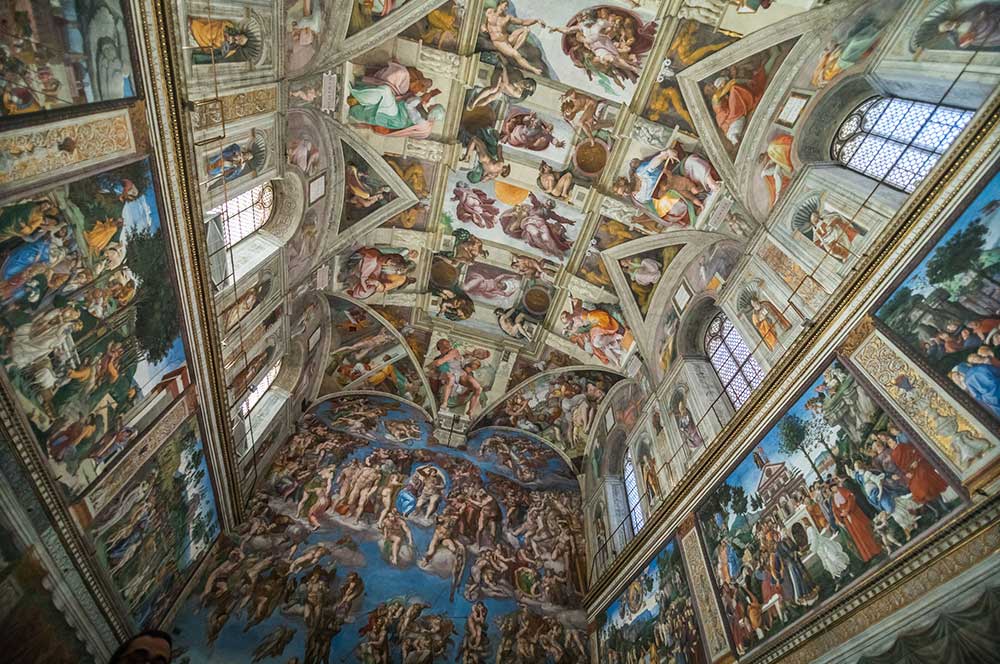
Se oggi alzate lo sguardo verso il Diluvio Universale nella Cappella Sistina, sappiate che sotto quella pittura si cela un errore, una demolizione, una rinascita.
L’isolotto affollato di corpi impauriti non è solo scena biblica. È testimonianza del mio primo cedimento e della mia prima vittoria.
Perché l’arte non nasce perfetta. Nasce nella fatica. Nella muffa. Nella distruzione.
E talvolta, per fare il cielo, bisogna prima affrontare il diluvio.
Per il momento il sempre vostro Michelangelo Buonarroti vi saluta dandovi appuntamento ai prossimi post e sui social.
Mold in the Sistine Chapel: The Flood That Almost Made Me Give Up
“My work is not progressing as I think it deserves. And this is the difficulty of the work, and also the fact that it is not my profession. And yet I waste my time fruitlessly. May God help me.”
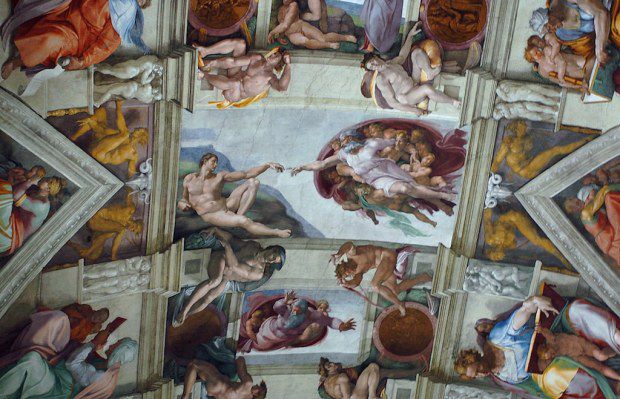
So I wrote to my father Lodovico on January 27, 1509. And they were not light words. I was up there, suspended on the scaffolding of the Sistine Chapel, brush in hand and a heavy heart. I had begun frescoing the vault, and already I felt I had failed.
The Great Flood and the Unforgiving Mistake
I was working on the Great Flood, the first scene of the vault I began. I thought I was ready. In Florence, in Domenico Ghirlandaio’s workshop, I had learned the art of plaster, the patience of the trade, the science of pigments. But Rome is not Florence.
The air here is more humid. Heavier. And what in my city dried as it should, here rebelled.
As Giorgio Vasari later recounted: “After he painted the Flood, the work began to mold, so much so that the figures could barely be seen.”
The mixture was wrong. Too moist. The plaster, instead of drying, generated mold that rose like a punishment over the painted surface. The figures became cloudy, the bodies faded. And I with them.
I started over again, using a plaster made with one part lime and two parts pozzolana. Pozzolana is of volcanic origin and makes for a plaster perfect for Rome’s climate.
The courage to destroy to save
Many don’t know that I demolished almost everything. Yes, I demolished what I had already painted. Better to destroy than leave mistakes. But all was not lost.
One portion resisted: the group of figures crowded on the islet. The first six “days” of work. Those showed no serious alterations. I let them live.
During the great twentieth-century restoration, directed by Gianluigi Colalucci, it was clear that I had started that scene from the center, not from the edge as was customary. An unusual gesture. Perhaps already a sign of my torment.
That part of the islet, I confess, I painted largely a secco, in tempera. A technique I later abandoned. Too risky on that surface. After the repainting, I adhered more rigorously to buon fresco.
And yet, for a while longer, I returned to dry paint: the red lead, for example, reappears in the reds of the Sacrifice of Noah, nearby.
The mistake had taught me caution.
Fatigue, Solitude, and Obstinacy
“I am in great distress and with the greatest physical fatigue…”, I wrote to my brother Buonarroti in November 1509.
I had no friends. I didn’t want any. I didn’t even have time to eat enough. By day, I climbed the scaffolding of the Sistine Chapel; by night, I brooded over the mistakes, the proportions, the colors that didn’t seem as vivid as I would have liked.
The Flood, which recounts the ruin of humanity, was almost an internal ruin for me. Yet, it was precisely from that failure that my transformation was born.
The subsequent scenes became more monumental, the figures larger, the colors bolder. I understood that that vault wasn’t just a task: it was a struggle. Against the material, against the humidity, against myself.
The lesson hidden in the vault
If you look up today at the Great Flood in the Sistine Chapel, know that beneath that painting lies a mistake, a demolition, a rebirth.
The small island crowded with frightened bodies isn’t just a biblical scene. It bears witness to my first failure and my first victory.
Because art isn’t born perfect. It’s born in toil. In mold. In destruction.
And sometimes, to create the sky, you must first face the flood.
For now, yours truly, Michelangelo Buonarroti bids you farewell, saying he’ll see you in future posts and on social media.

Sostienici – Support Us
Se questo blog ti piace e ti appassiona, puoi aiutarci a farlo crescere sempre più sostenendoci in modo concreto condividendo i post, seguendo le pagine social e con un contributo che ci aiuta ad andare avanti con il nostro lavoro di divulgazione. . ENGLISH: If you like and are passionate about this blog, you can help us make it grow more and more by supporting us in a concrete way by sharing posts, following social pages and with a contribution that helps us to move forward with our dissemination work.
10,00 €
Condividi:


Questo sono io





sostienici

Sostienici – Support Us
Se questo blog ti piace e ti appassiona, puoi aiutarci a farlo crescere sempre più sostenendoci in modo concreto condividendo i post, seguendo le pagine social e con un contributo che ci aiuta ad andare avanti con il nostro lavoro di divulgazione. . ENGLISH: If you like and are passionate about this blog, you can help us make it grow more and more by supporting us in a concrete way by sharing posts, following social pages and with a contribution that helps us to move forward with our dissemination work.
€10,00


