
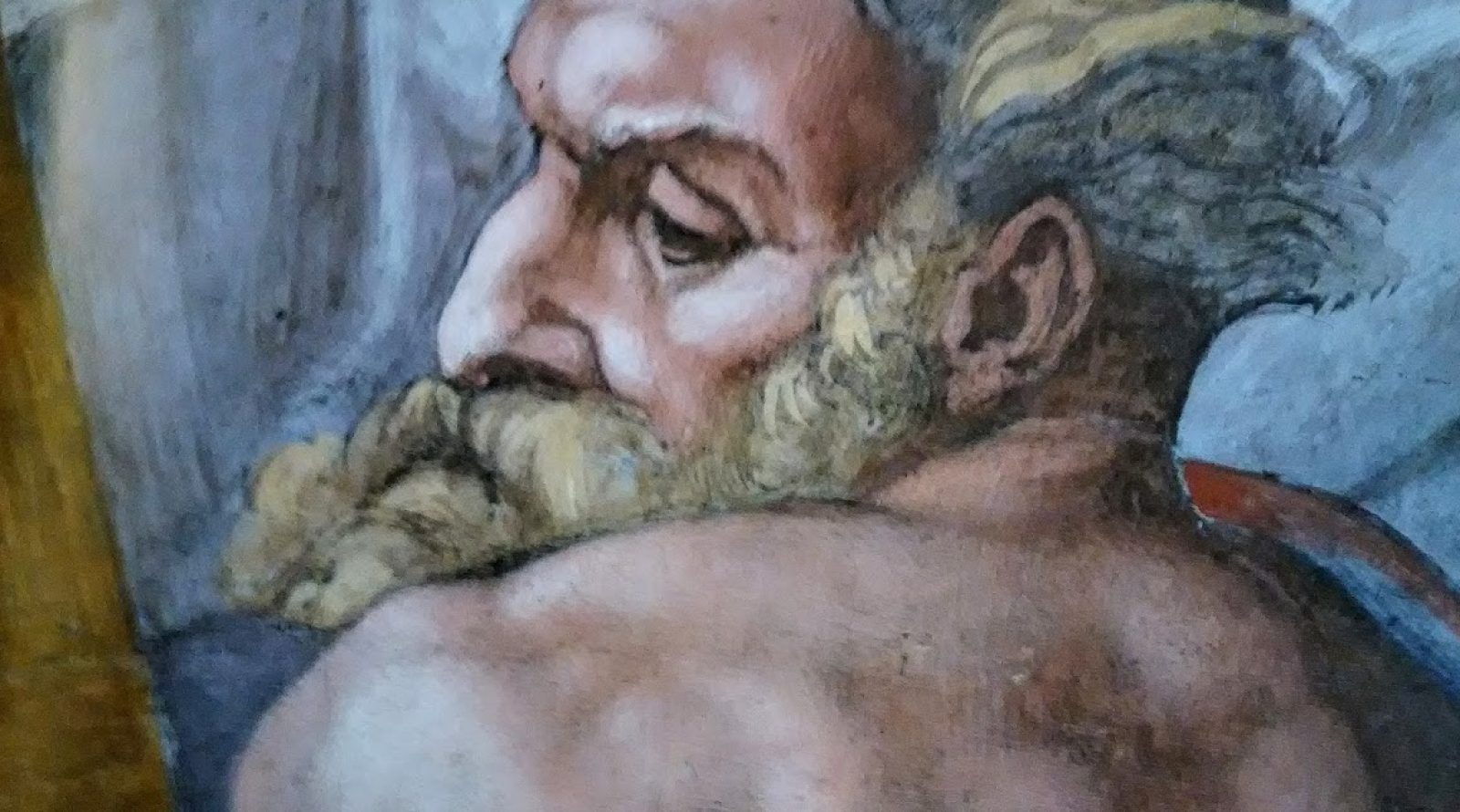
Trittico di Spinello Aretino torna restaurato alla Galleria dell’Accademia di Firenze
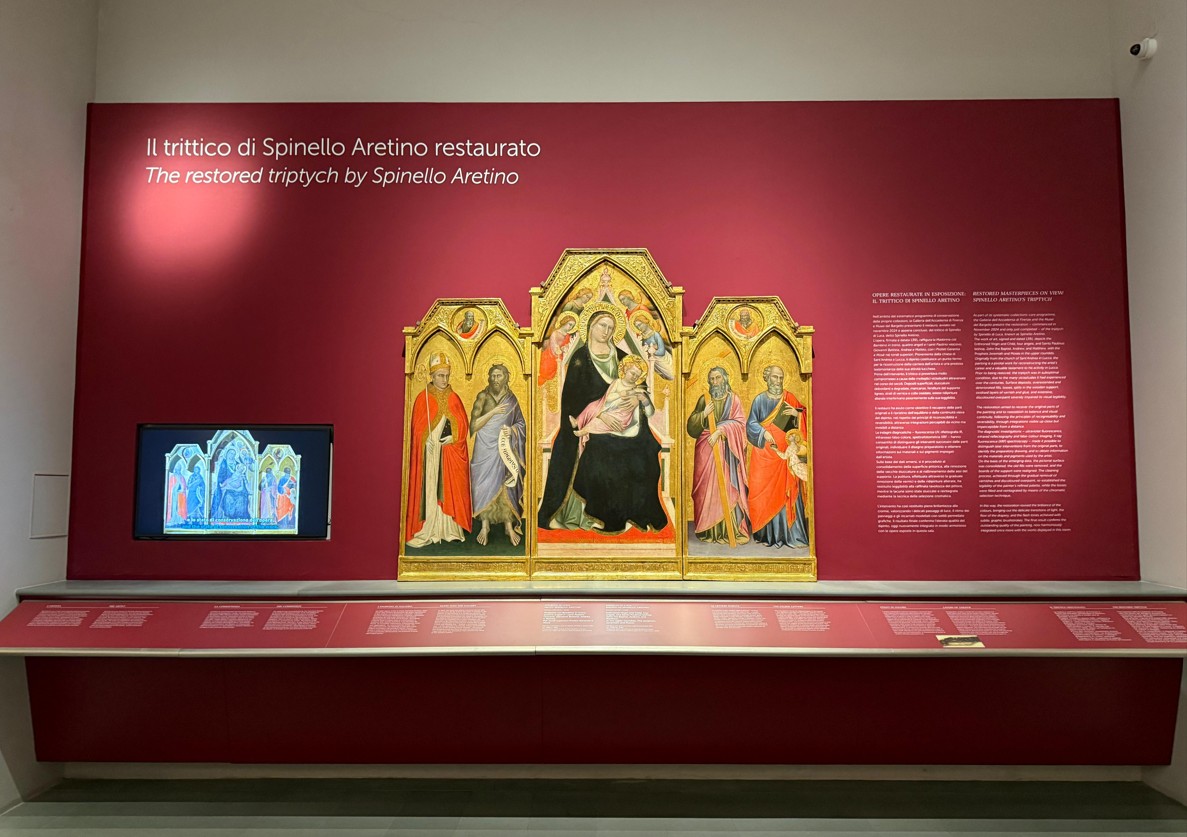
Dal 24 febbraio all’11 maggio 2026 la Galleria dell’Accademia di Firenze accoglie nuovamente il prezioso trittico di Spinello Aretino con un’esposizione temporanea interamente dedicata al restauro dell’opera.
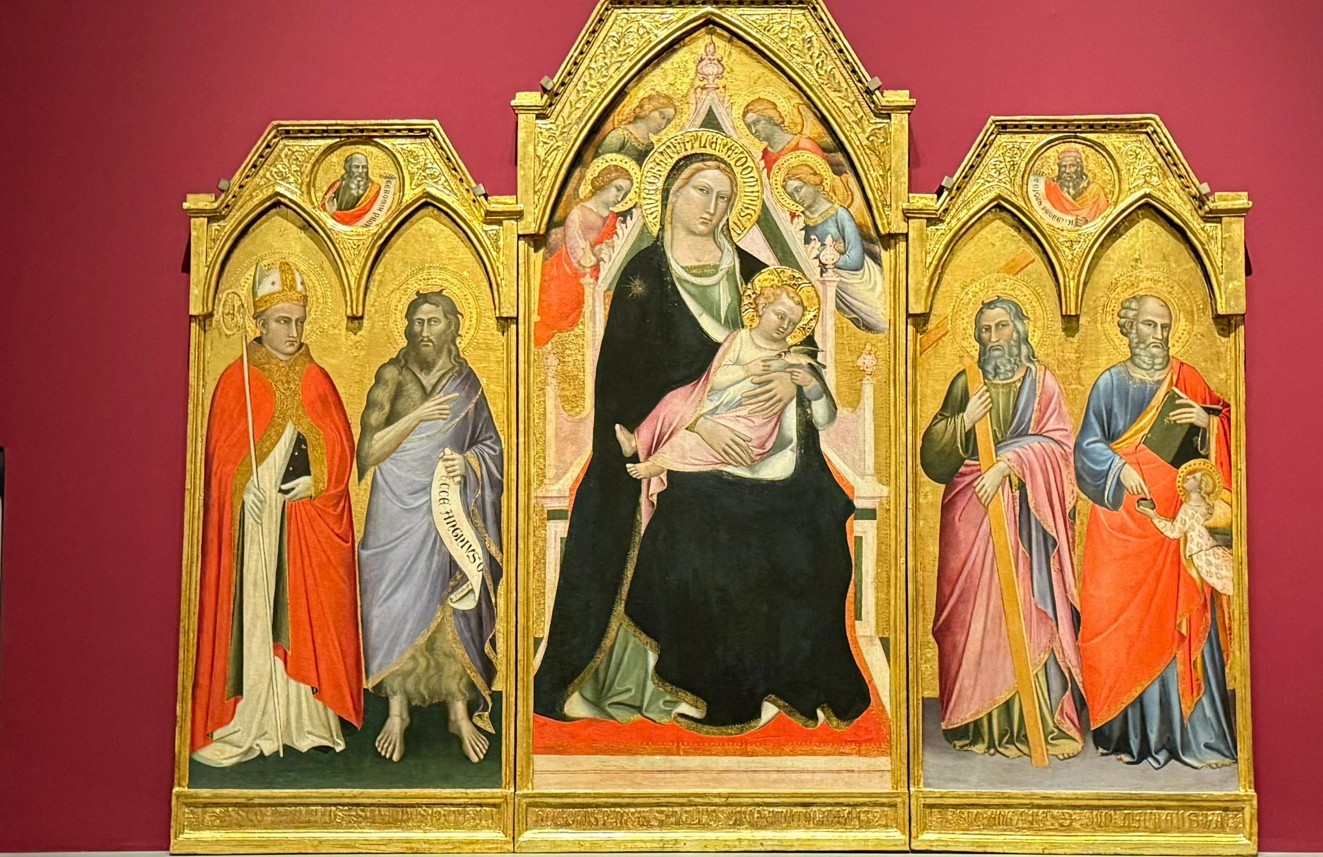
Il capolavoro, datato 1391, raffigura la Madonna col Bambino in trono, quattro angeli e santi ed è una delle testimonianze più significative della pittura toscana tra la fine del Trecento e l’inizio del Quattrocento.
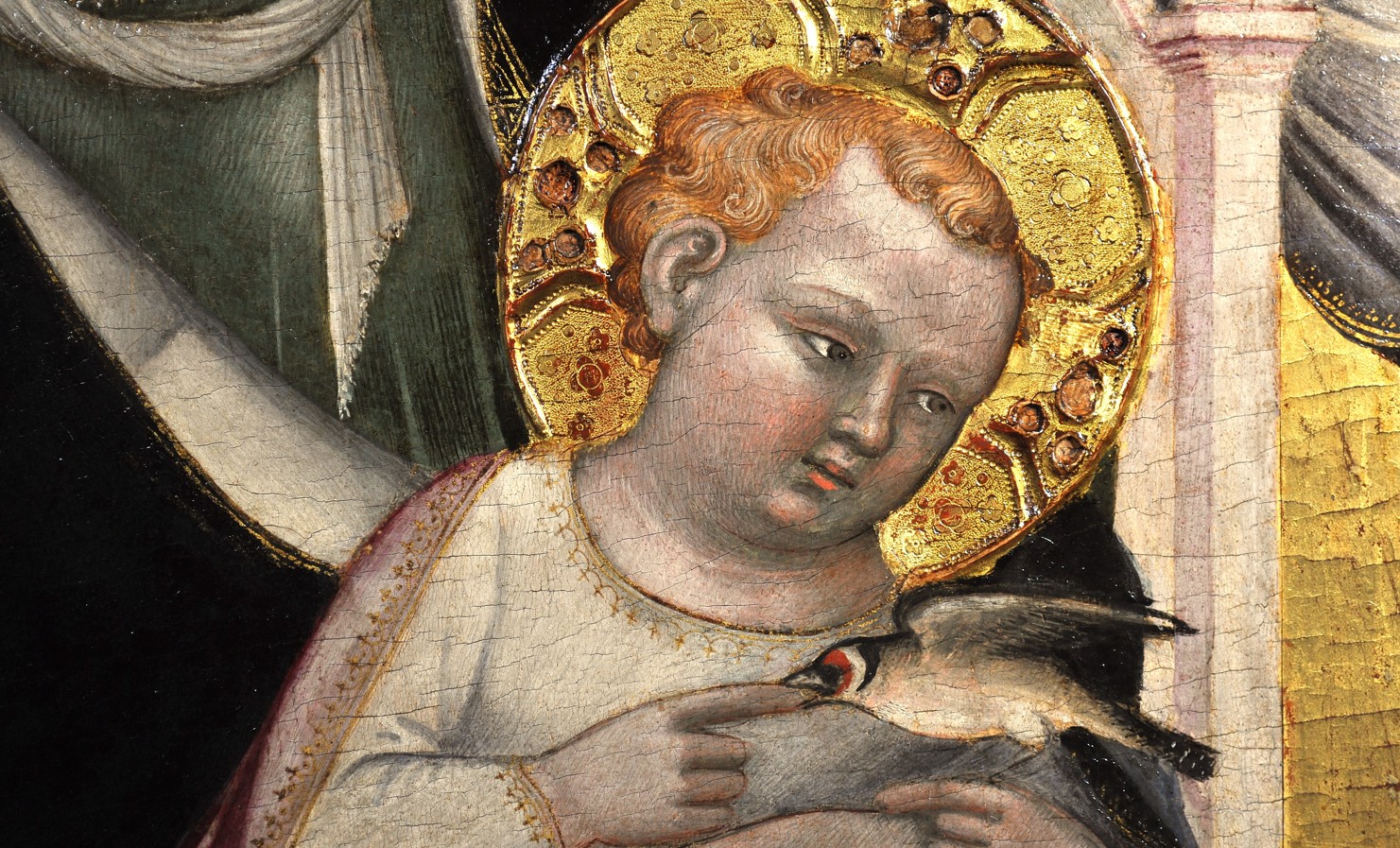
Dopo un intervento conservativo avviato nel novembre 2024 e accompagnato da una completa campagna di indagini diagnostiche, il dipinto è stato restituito alla piena leggibilità, riportando alla luce dettagli cromatici e qualità pittoriche rimaste a lungo nascoste sotto vernici ossidate e ridipinture.
Un capolavoro del Tardo Trecento tra Lucca, Pisa e Firenze
Spinello di Luca, noto come Spinello Aretino per le sue origini aretine, fu tra i protagonisti della pittura toscana tra XIV e XV secolo. Autore di tavole d’altare e importanti cicli di affreschi, contribuì al rinnovamento del linguaggio figurativo del suo tempo, distinguendosi per l’eleganza del segno e l’intensità narrativa.
Il trittico, dipinto su tavola a fondo oro e firmato dall’artista, fu commissionato dal mercante lucchese Paolino di Simonino di Bonagiunta per l’oratorio di Sant’Andrea a Lucca.
Nei pannelli laterali compaiono San Paolino vescovo, San Giovanni Battista, Sant’Andrea e San Matteo, mentre nei tondi superiori sono raffigurati i Profeti Geremia e Mosè.
L’opera rappresenta un punto fermo nella ricostruzione della carriera dell’artista, realizzata in un periodo di frequenti spostamenti tra Lucca, Pisa e Firenze.
La storia del trittico: dal rischio di esportazione alla tutela pubblica
Nel 1850 il dipinto rischiò di essere venduto illegalmente all’estero a seguito di una vendita illecita. L’intervento tempestivo del governo toscano ne impedì l’esportazione, sancendo la definitiva assegnazione alla Galleria dell’Accademia di Firenze, dove ancora oggi è custodito.
Questo episodio testimonia l’attenzione verso la tutela del patrimonio artistico già nell’Ottocento e rafforza il valore storico dell’opera all’interno delle collezioni statali.
Il restauro 2024-2026: indagini diagnostiche e recupero delle cromie originali
Prima dell’attuale intervento il trittico presentava un aspetto profondamente alterato a causa delle molteplici vicissitudini attraversate nel corso dei secoli. Depositi superficiali, vernici ossidate, colle alterate e ampie ridipinture compromettevano la leggibilità dell’immagine, mentre il supporto ligneo mostrava fenditure e problemi strutturali dovuti a precedenti restauri.
Le indagini diagnostiche preliminari hanno consentito di distinguere le parti originali dagli interventi successivi, di individuare il disegno preparatorio e di ottenere informazioni preziose sui materiali e sui pigmenti impiegati da Spinello.
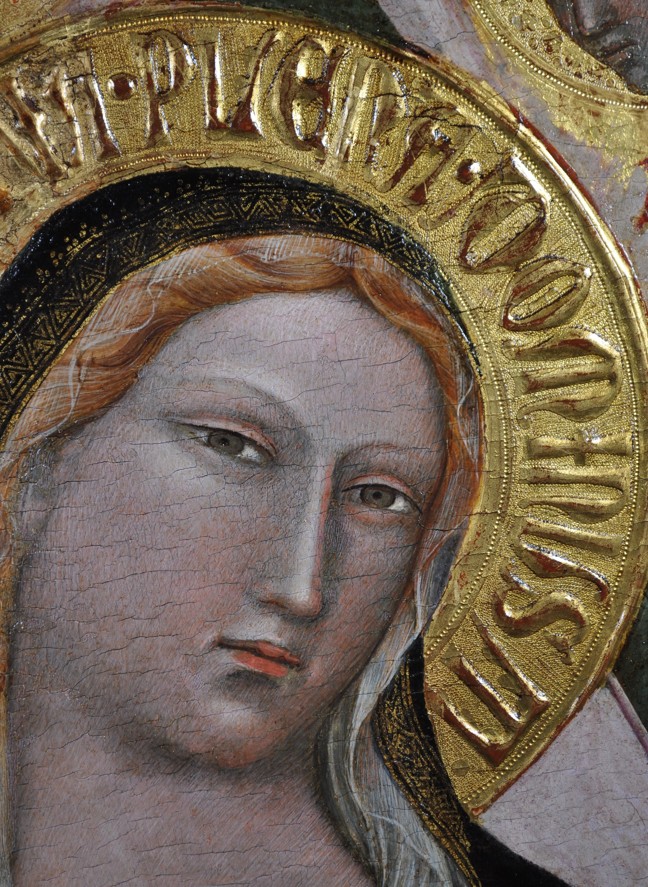
La fase più delicata è stata quella della pulitura, condotta gradualmente per stabilire il livello ottimale di intervento. La rimozione delle ridipinture alterate ha permesso di riscoprire il blu originale del manto della Madonna, realizzato con azzurrite e oltremare naturale, restituendo profondità e luminosità alla composizione.
Il lavoro sul supporto ligneo e la stabilità dell’opera
Parallelamente al restauro pittorico, si è intervenuti sul supporto ligneo con la rimozione delle vecchie traverse applicate in precedenti restauri, il riallineamento delle assi e l’inserimento di nuove traverse in legno di castagno. Queste sono state ancorate con meccanismi elastici tramite molle coniche, garantendo maggiore stabilità strutturale nel rispetto dei principi di reversibilità e riconoscibilità dell’intervento conservativo.
Il risultato finale è un’opera che ha ritrovato piena brillantezza cromatica, con delicati passaggi di luce, panneggi eleganti e incarnati modellati da sottili pennellate di carattere grafico che emergono oggi con rinnovata chiarezza.
Un’esposizione che racconta il lavoro del museo
La mostra, allestita nelle sale del primo piano dedicate alla pittura fiorentina del Tardo Trecento, racconta al pubblico l’intero processo conservativo. Un video illustrerà la storia dell’opera, le fasi del restauro e i risultati delle indagini scientifiche, accompagnando i visitatori alla scoperta del lavoro quotidiano che si svolge dietro le quinte di un museo.
Questa esposizione rappresenta un’occasione per approfondire la figura di Spinello Aretino e comprendere quanto il restauro sia fondamentale per la tutela e la valorizzazione del patrimonio artistico italiano. Fino all’11 maggio 2026, la Galleria dell’Accademia di Firenze offre così ai visitatori la possibilità di ammirare un capolavoro del Tardo Trecento restituito alla sua originaria bellezza.
Per il momento il sempre vostro Michelangelo Buonarroti vi saluta dandovi appuntamento ai prossimi post e sui social.
Spinello Aretino’s Triptych Returns Restored to the Galleria dell’Accademia in Florence
From February 24 to May 11, 2026, the Galleria dell’Accademia in Florence will once again host Spinello Aretino’s precious triptych with a temporary exhibition entirely dedicated to its restoration. This masterpiece, dated 1391, depicts the Madonna and Child Enthroned, Four Angels, and Saints and is one of the most significant examples of Tuscan painting between the late 14th and early 15th centuries.
After conservation work begun in November 2024 and accompanied by a comprehensive diagnostic investigation, the painting has been fully restored to its original state, bringing to light chromatic details and pictorial qualities that had long been hidden beneath oxidized varnish and overpainting.
A Late 14th-Century Masterpiece between Lucca, Pisa, and Florence
Spinello di Luca, known as Spinello Aretino due to his Arezzo origins, was a leading figure in Tuscan painting between the 14th and 15th centuries. A creator of altarpieces and important fresco cycles, he contributed to the renewal of the figurative language of his time, distinguishing himself for his elegant brushstrokes and narrative intensity.
The triptych, painted on a gold-ground panel and signed by the artist, was commissioned by the Lucca merchant Paolino di Simonino di Bonagiunta for the Oratory of Sant’Andrea in Lucca. The side panels depict Saint Paulinus the Bishop, Saint John the Baptist, Saint Andrew, and Saint Matthew, while the upper tondos depict the Prophets Jeremiah and Moses. The work represents a milestone in the reconstruction of the artist’s career, achieved during a period of frequent travel between Lucca, Pisa, and Florence.
The history of the triptych: from the risk of export to public protection
In 1850, the painting risked being sold illegally abroad following an illicit sale. The Tuscan government’s prompt intervention prevented its export, ultimately securing its permanent assignment to the Galleria dell’Accademia in Florence, where it remains today. This event demonstrates the dedication to the protection of artistic heritage since the 19th century and reinforces the work’s historical value within the state collections.
The 2024-2026 restoration: diagnostic investigations and recovery of the original colors
Before the current intervention, the triptych’s appearance was profoundly altered due to the many changes it had undergone over the centuries. Surface deposits, oxidized varnish, altered glues, and extensive repainting compromised the image’s legibility, while the wooden support showed cracks and structural problems due to previous restorations.
Preliminary diagnostic investigations made it possible to distinguish the original parts from subsequent interventions, identify the preparatory drawing, and obtain valuable information on the materials and pigments used by Spinello. The most delicate phase was cleaning, conducted gradually to determine the optimal level of intervention. The removal of the altered overpainting allowed the original blue of the Madonna’s cloak, created with azurite and natural ultramarine, to be rediscovered, restoring depth and luminosity to the composition.
Work on the wooden support and the stability of the work
In parallel with the pictorial restoration, work was carried out on the wooden support by removing the old crosspieces applied in previous restorations, realigning the boards, and inserting new chestnut wood crosspieces. These were anchored with elastic mechanisms using conical springs, ensuring greater structural stability while respecting the principles of reversibility and recognizability of the conservation intervention.
The final result is a work that has regained its full chromatic brilliance,
with delicate passages of light, elegant draperies, and flesh tones modeled by subtle, graphic brushstrokes that emerge today with renewed clarity.
An exhibition that showcases the museum’s work
The exhibition, held in the first-floor rooms dedicated to late-14th-century Florentine painting, presents the entire conservation process. A video will illustrate the history of the work, the restoration phases, and the results of the scientific investigations, accompanying visitors on a journey into the daily work that goes on behind the scenes of a museum.
This exhibition offers an opportunity to delve deeper into the figure of Spinello Aretino and understand how crucial restoration is to the protection and enhancement of Italy’s artistic heritage. Until May 11, 2026, the Galleria dell’Accademia in Florence offers visitors the opportunity to admire a late-14th-century masterpiece restored to its original beauty.
For now, Michelangelo Buonarroti bids farewell and invites you to join him in future posts and on social media.

Sostienici – Support Us
Se questo blog ti piace e ti appassiona, puoi aiutarci a farlo crescere sempre più sostenendoci in modo concreto condividendo i post, seguendo le pagine social e con un contributo che ci aiuta ad andare avanti con il nostro lavoro di divulgazione. . ENGLISH: If you like and are passionate about this blog, you can help us make it grow more and more by supporting us in a concrete way by sharing posts, following social pages and with a contribution that helps us to move forward with our dissemination work.
10,00 €
Articoli
Condividi:


Questo sono io





sostienici

Sostienici – Support Us
Se questo blog ti piace e ti appassiona, puoi aiutarci a farlo crescere sempre più sostenendoci in modo concreto condividendo i post, seguendo le pagine social e con un contributo che ci aiuta ad andare avanti con il nostro lavoro di divulgazione. . ENGLISH: If you like and are passionate about this blog, you can help us make it grow more and more by supporting us in a concrete way by sharing posts, following social pages and with a contribution that helps us to move forward with our dissemination work.
€10,00


