

Tra fatica, errori e genio: la nascita della volta della Cappella Sistina
Quando papa Giulio mi affidò gli affreschi della volta della Cappella Sistina, ero inconsapevole di quanto quel lavoro avrebbe messo alla prova il mio corpo, il mio ingegno e il mio carattere.
Due pontate, un solo respiro
Non lavorai alla Sistina in modo continuo e uniforme. Il ponteggio, così come io stesso l’avevo pensato e fatto realizzare, divideva la cappella in due, e così procedette anche il mio lavoro, in due tempi. Volta e lunette nacquero insieme, in stretta concomitanza, perché solo così il ponteggio mi permetteva di raggiungere ogni punto da affrescare.
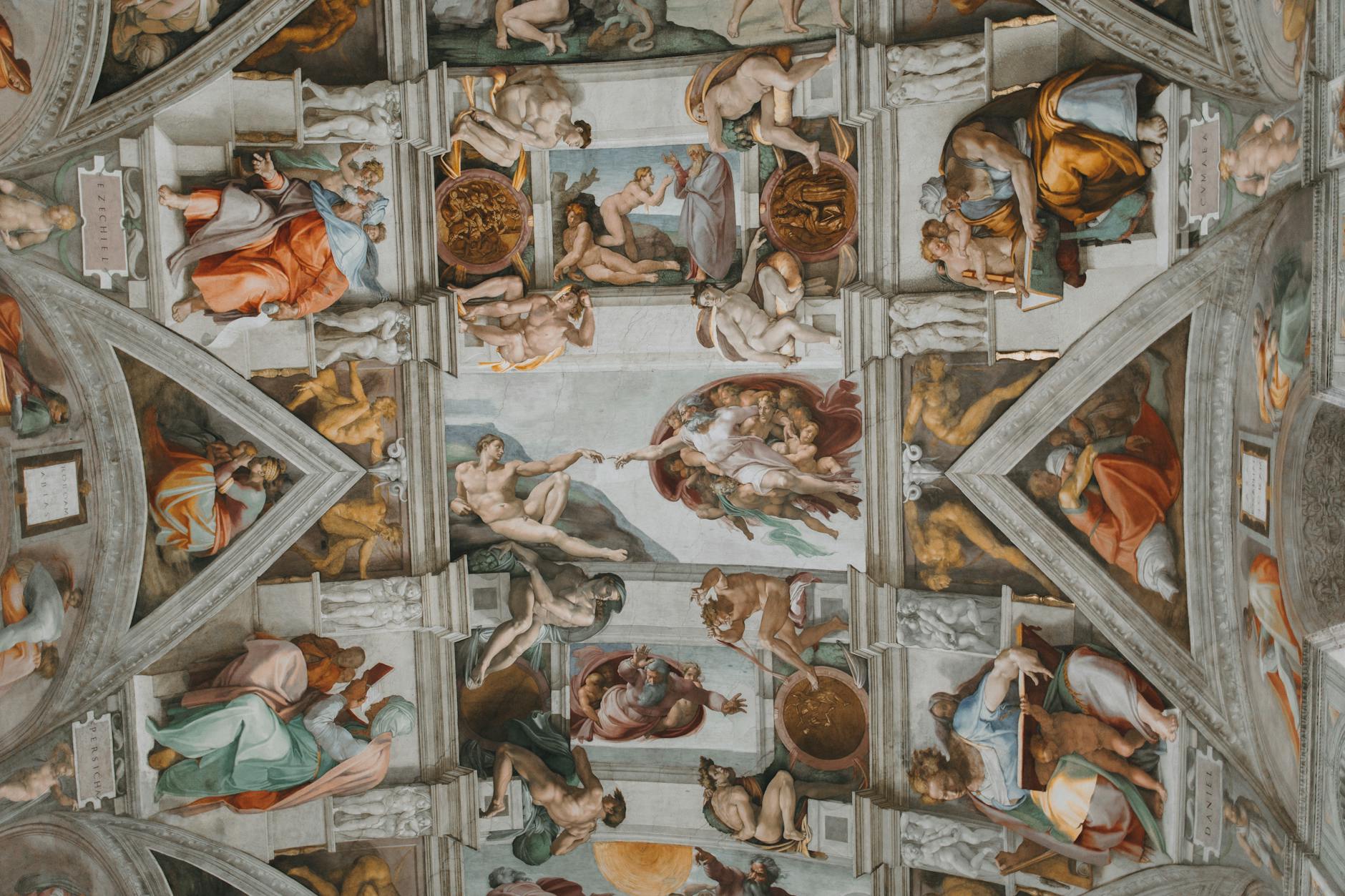
Con la prima pontata, come già raccontò il mio carissimo amico Condivi, dipinsi la metà, cioè dalla porta fino a mezzo la volta. Il lungo restauro condotto dal capo restauratore Colalucci lo confermò: tra la Creazione di Eva e la Creazione di Adamo corre una cesura invisibile ma netta. Lì passava un tempo la cancellata che separava il clero dai laici di Mino da Fiesole, e lì si arrestò la mia prima grande fatica.
Quella linea di confine oltre a separare gli spazi fisicamente li divide stilisticamente, dal punto di vista tecnico e mentale. Le figure cambiano proporzione, il disegno cambia metodo, la pittura accelera.

Dal cartone allo scalpello sul muro
All’inizio usai lo spolvero, come avevo imparato a bottega dai Ghirlandaio. Ma dalla Creazione di Adamo in poi, scelsi l’incisione indiretta: segni tracciati direttamente sull’intonaco fresco. Era più rapida, più decisa e mi permetteva di modificare i dettagli velocemente.
Anche l’ornamento mutò. Nei medaglioni ridussi le dorature e semplificai drasticamente le composizioni. Nei troni dei Profeti e delle Sibille, le figure iniziarono a coprire i balaustri, fino al caso estremo di Geremia, dove nemmeno li dorai: li dipinsi semplicemente di giallo. I tempi erano stretti e papa Giulio II voleva la sua opera terminata.

Lunette, vele e il tempo che corre
Nelle lunette qualcosa cambiò bruscamente: tra la terza e la quarta di ciascuna parete mutano le targhe con i nomi degli Antenati di Cristo e muta il numero delle giornate. All’inizio ogni lunetta comprendeva anche la fascia sopra le finestre; nella seconda metà, quella fascia restò nuda e fu completata molto tempo dopo, sotto papa Albani.
Il mio lavoro si fece più irregolare e rapido. Avevo il fiato sul collo del pontefice. Dove prima seguivo uno schema ordinato, iniziai ad adattarmi allo spazio e pure alla spossatezza che non mi lasciava tregua.

Ignudi, Genesi e proporzioni
All’inizio dipingevo le Storie della Genesi prima degli Ignudi. Ma dalla Separazione delle Acque in poi invertii l’ordine: prima i corpi, poi le storie. Il gesto precedeva il racconto e, a distanza di secoli, posso dire che avevo ragione aumentando l’impatto emotivo delle figure dipinte.
Nella seconda pontata le figure crescono appena, quasi impercettibilmente. Ma riempiono lo spazio con più forza. I Profeti e le Sibille, invece, aumentano visibilmente di dimensione: era un progetto studiato fin dall’inizio. Chi entra dalla Sala Regia doveva essere guidato, passo dopo passo, fino all’altare.
Solo Ezechiele rompe quella progressione ed è più basso degli altri.

Il Diluvio e l’errore che non ripetei più
Le prime pennellate di colore fui quelle che diedi nel riquadro del Diluvio Universale. Cominciai in modo inconsueto, dal centro della scena dominato dall’isolotto. Usai un intonaco che non era adatto al clima romano e l’inclemente umidità rovinò le figure. Come scrisse il Condivi, “l’opera cominciò a muffare”.
Cambiai tutto. Demolii gran parte della prima stesura salvando solo quello che resisteva.

Noè, gli Ignudi e la prima Sibilla
Solo dopo aver rifatto da capo il Diluvio dipinsi l’Ebbrezza di Noè e gli Ignudi.
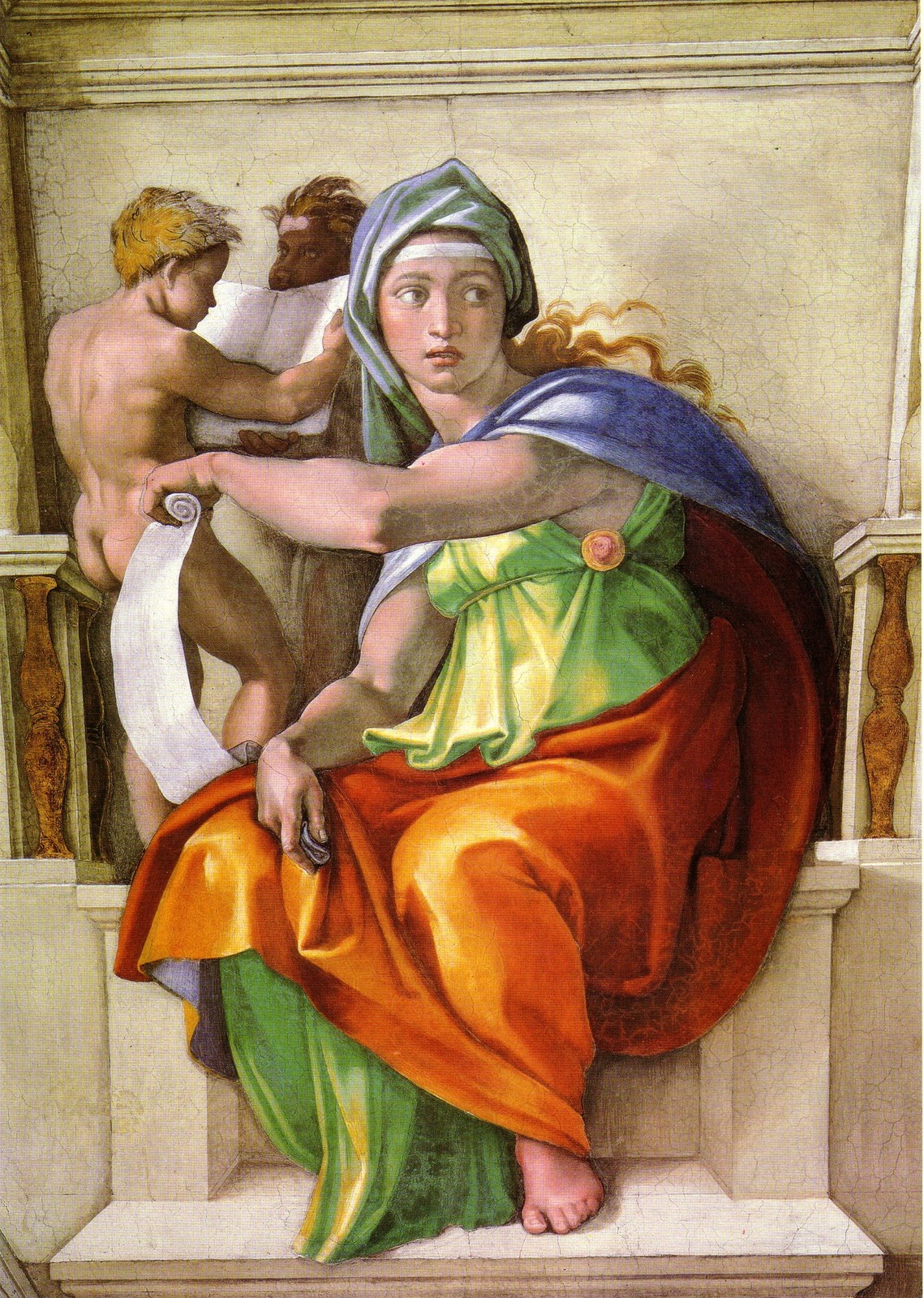
Tra i Veggenti, fu quasi certamente la Sibilla Delfica a nascere per prima. La curai come un dipinto su tavola con quel acidulo cangiante e una finitura estrema. I putti del suo trono li delegai agli aiuti ma non ne fui soddisfatto. Da allora, nei troni successivi, misi mano io stesso anche ai dettagli.
Così nacque quella volta affrescata che ancora desta meraviglia guidata da un sol pensiero: fare della pittura una cosa viva, potente, necessaria e un omaggio al divino, anche a costo di rimetterci la vista.
Per il momento il sempre vostro Michelangelo Buonarroti vi saluta dandovi appuntamento ai prossimi post e sui social.
Between Effort, Mistakes, and Genius: The Birth of the Sistine Chapel Vault
When Pope Julius entrusted me with the frescoes for the Sistine Chapel vault, I was unaware of how much that work would test my body, my ingenuity, and my character.
Two scaffoldings, a single breath
I did not work on the Sistine Chapel in a continuous, uniform manner. The scaffolding, as I had designed and built it, divided the chapel in two, and so my work proceeded, in two stages. The vault and lunettes were created together, in close conjunction, because only in this way did the scaffolding allow me to reach every point to fresco.
With the first scaffolding, as my dear friend Condivi has already recounted, I painted halfway, that is, from the door to the middle of the vault. The lengthy restoration conducted by the head restorer Colalucci confirmed this: between the Creation of Eve and the Creation of Adam there is an invisible but clear caesura. The gate that separated Mino da Fiesole’s clergy from the laity once ran there, and it was there that my first great work came to a halt.
That boundary, in addition to separating the spaces physically, also divided them stylistically, both technically and mentally. The figures shift proportions, the drawing changes method, the painting accelerates.
From cartoon to chisel on the wall
At first, I used spolvero, as I had learned in the Ghirlandaio workshop. But from the Creation of Adam onward, I chose indirect engraving: marks traced directly onto the fresh plaster. It was quicker, more decisive, and allowed me to quickly modify details.
The ornamentation also changed. In the medallions, I reduced the gilding and drastically simplified the compositions. In the thrones of the Prophets and Sibyls, the figures began to obscure the balusters, even to the extreme case of Jeremiah, where I didn’t even gild them: I simply painted them yellow. Time was tight, and Pope Julius II wanted his work finished.
Lunettes, Veils, and the Running of Time
Something abruptly changed in the lunettes: between the third and fourth lunettes on each wall, the plaques with the names of Christ’s Ancestors changed, and the number of days changed. Initially, each lunette also included the band above the windows; in the second half, that band remained bare and was completed much later, under Pope Albani.
My work became more irregular and rapid. I had the pontiff breathing down my neck. Where previously I had followed an orderly pattern, I began to adapt to the space and even to the exhaustion that gave me no respite.
Nudes, Genesis, and Proportions
At first, I painted the Stories of Genesis before the Nudes. But from the Parting of the Waters onward, I reversed the order: first the bodies, then the stories. The gesture preceded the story, and centuries later, I can say I was right, heightening the emotional impact of the painted figures.
In the second sweep, the figures grow slightly, almost imperceptibly. But they fill the space more forcefully. The Prophets and Sibyls, however, visibly increase in size: it was a plan conceived from the beginning. Those entering from the Sala Regia were to be guided, step by step, to the altar.
Only Ezekiel breaks that progression and is shorter than the others.
The Flood and the mistake I never made again
The first brushstrokes of color were those I applied to the panel of the Great Flood. I began in an unusual way, from the center of the scene dominated by the islet. I used a plaster that wasn’t suited to the Roman climate, and the inclement humidity ruined the figures. As Condivi wrote, “the work began to mold.”
I changed everything. I demolished much of the first draft, saving only what remained.
Noah, the Nudes, and the First Sibyl
Only after redoing the Flood from scratch did I paint the Drunkenness of Noah and the Nudes.
Among the Seers, the Delphic Sibyl was almost certainly the first to emerge. I treated her like a painting on wood, with that iridescent acidity and an extreme finish. I delegated the cherubs on her throne to assistants, but I wasn’t satisfied. From then on, on subsequent thrones, I also took care of the details myself.
Thus was born that frescoed vault that still inspires wonder, guided by a single thought: to make painting something alive, powerful, necessary, and a tribute to the divine, even at the cost of losing my sight.
For now, yours truly, Michelangelo Buonarroti bids you farewell, and we’ll see you in future posts and on social media.

Sostienici – Support Us
Se questo blog ti piace e ti appassiona, puoi aiutarci a farlo crescere sempre più sostenendoci in modo concreto condividendo i post, seguendo le pagine social e con un contributo che ci aiuta ad andare avanti con il nostro lavoro di divulgazione. . ENGLISH: If you like and are passionate about this blog, you can help us make it grow more and more by supporting us in a concrete way by sharing posts, following social pages and with a contribution that helps us to move forward with our dissemination work.
10,00 €
Articoli
Condividi:


Questo sono io





sostienici

Sostienici – Support Us
Se questo blog ti piace e ti appassiona, puoi aiutarci a farlo crescere sempre più sostenendoci in modo concreto condividendo i post, seguendo le pagine social e con un contributo che ci aiuta ad andare avanti con il nostro lavoro di divulgazione. . ENGLISH: If you like and are passionate about this blog, you can help us make it grow more and more by supporting us in a concrete way by sharing posts, following social pages and with a contribution that helps us to move forward with our dissemination work.
€10,00


