

Omero cieco guidato dalla poesia: il capolavoro neoclassico di Edward Sheffield Bartholomew
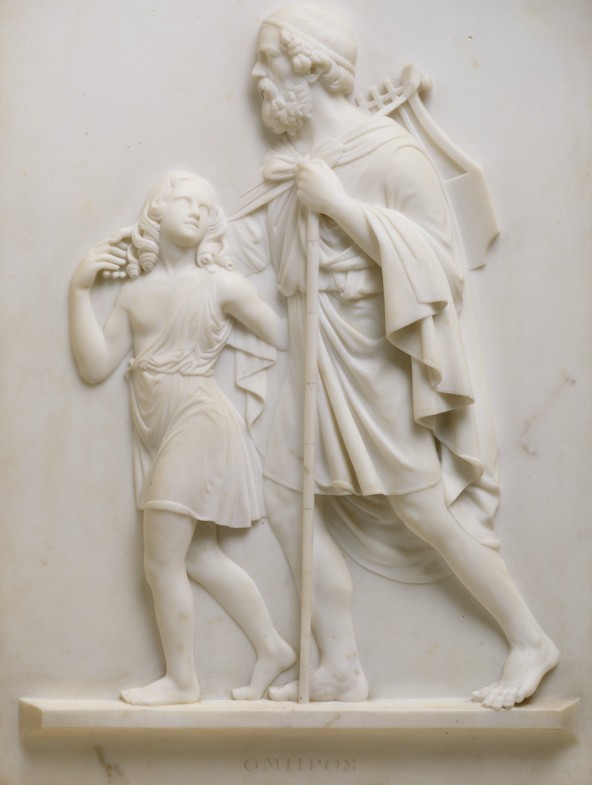
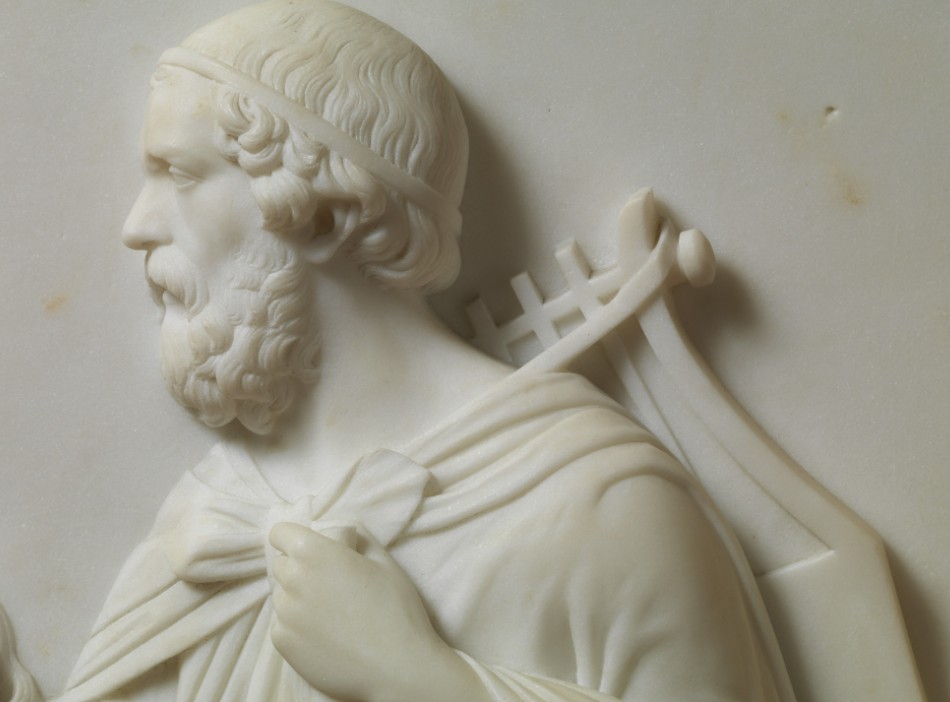
Il bassorilievo Omero cieco guidato dal genio della poesia, realizzato nel 1851 dallo scultore americano Edward Sheffield Bartholomew, è una delle opere più affascinanti della scultura neoclassica statunitense dell’Ottocento.
In questa composizione in marmo, l’artista affronta il tema dell’ispirazione artistica, raffigurata come forza guida capace di condurre il poeta oltre i limiti della condizione umana.
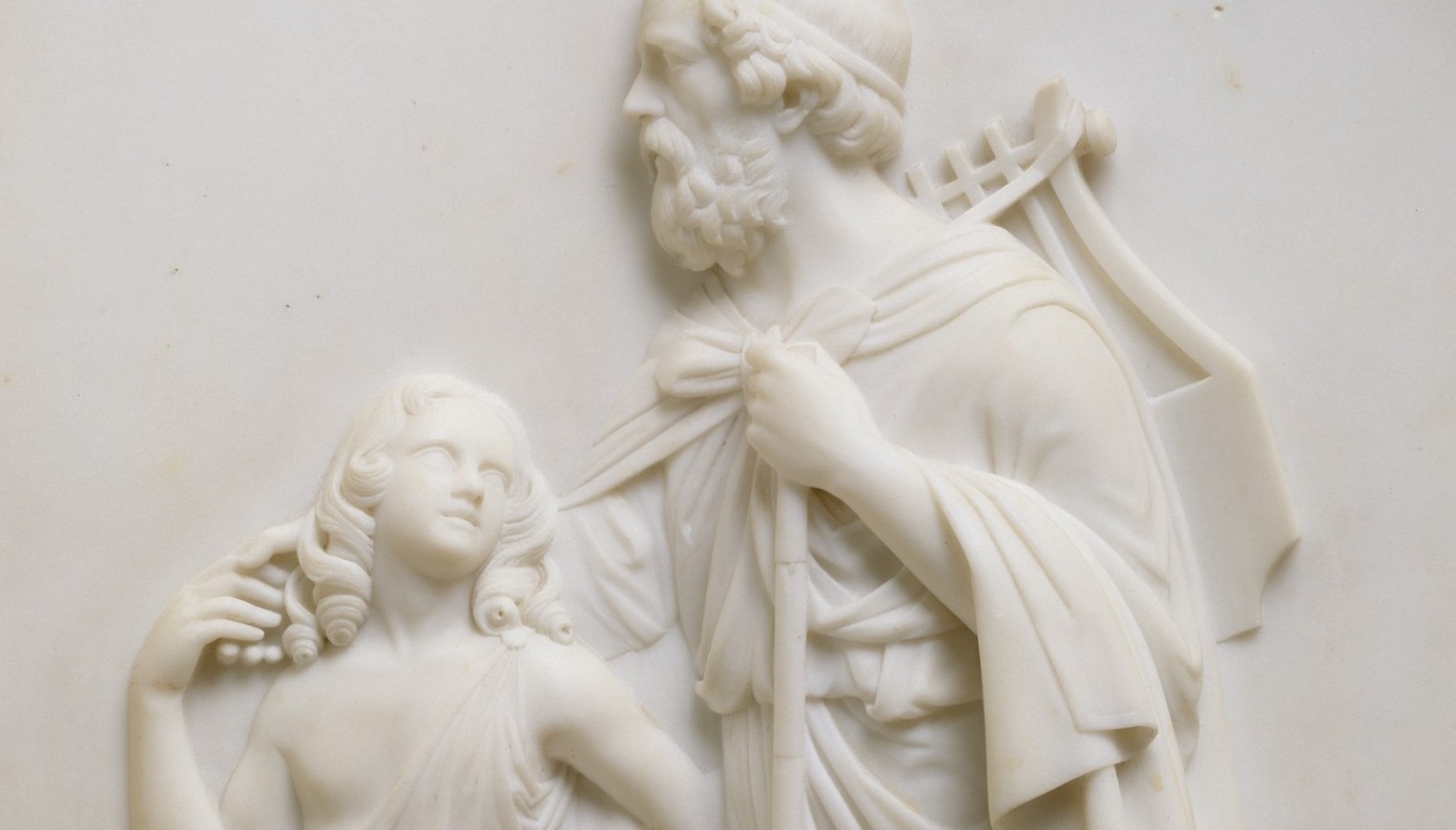
Il marmo, racchiuso entro una superficie controllata e finemente levigata, diventa lo spazio in cui Bartholomew sperimenta le potenzialità espressive del rilievo, trasformandolo in un campo visivo dinamico e profondamente narrativo.
La composizione: Omero e il genio della poesia
La scena raffigura Omero, cieco e anziano, mentre avanza sostenuto dal Genio della Poesia, una figura allegorica che lo guida verso un piedistallo simbolico.
Il gesto non è soltanto fisico, ma anche spirituale: la poesia diventa il tramite attraverso cui il poeta raggiunge l’immortalità. Le figure sembrano emergere dalla superficie marmorea con sorprendente naturalezza, dando vita a un’illusione spaziale che supera i limiti tradizionali del bassorilievo.
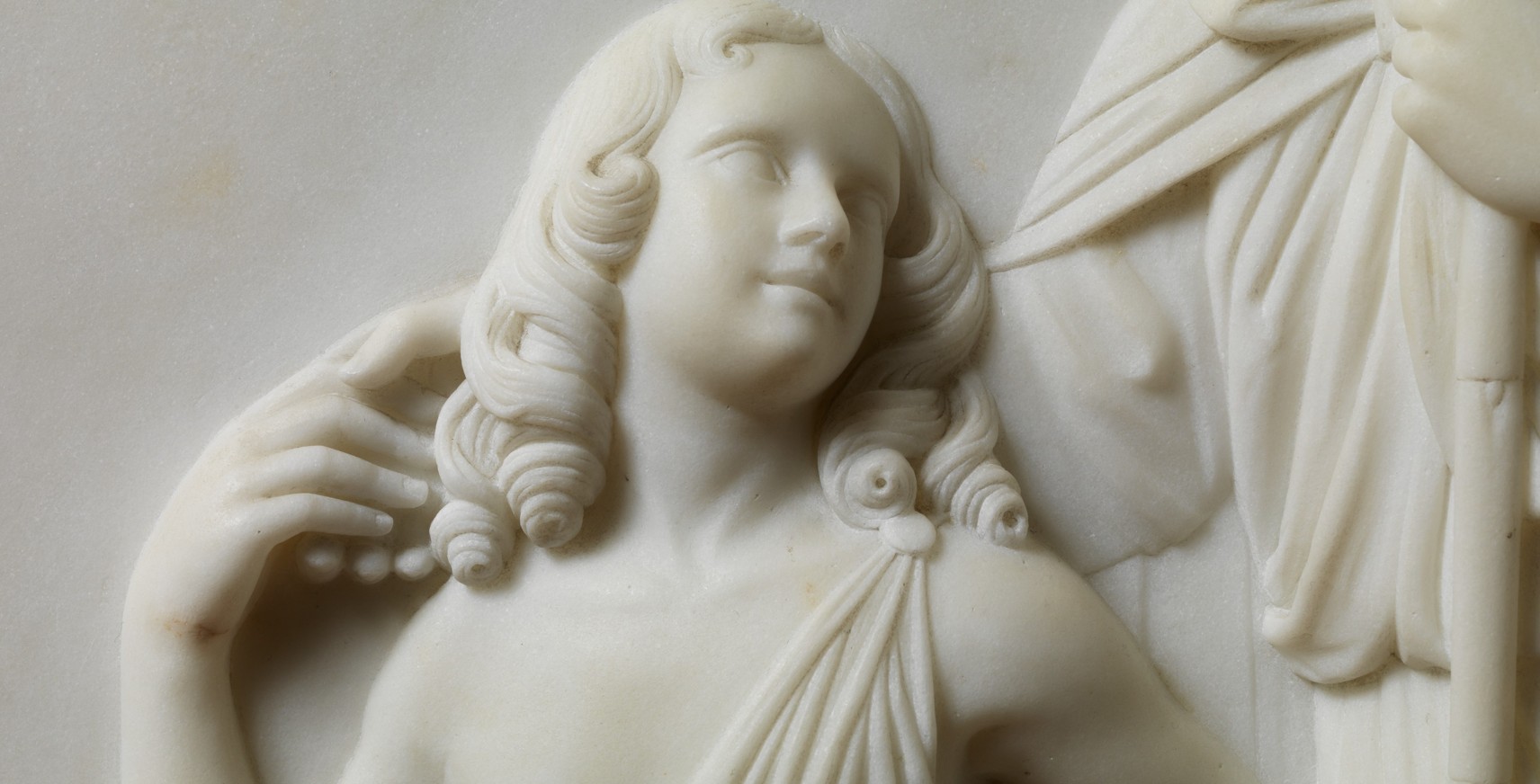
artholomew dimostra una padronanza straordinaria nel modulare i piani e le profondità, creando un equilibrio raffinato tra sporgenza e incisione. La luce scivola sulle superfici scolpite, amplificando la sensazione di movimento e conferendo alla scena una vibrante vitalità.
Tra realismo e idealismo: lo stile neoclassico americano
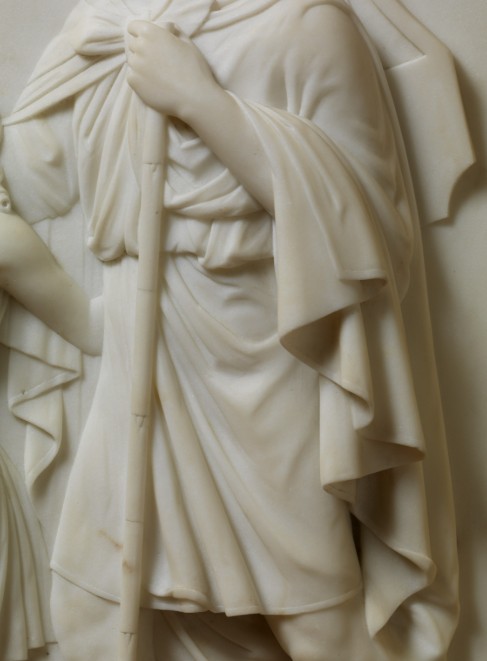
I personaggi indossano abiti di ispirazione classica che seguono le forme del corpo ma si aprono in pieghe eleganti e stilizzate. Questo trattamento del panneggio riflette una delle tensioni più interessanti della scultura americana di metà Ottocento, sospesa tra il desiderio di rappresentare il reale con precisione anatomica e l’aspirazione a un ideale di bellezza senza tempo.
Con Omero cieco guidato dal genio della poesia, Bartholomew realizza un’opera profondamente umana ma anche simbolica.
L’influenza di Antonio Canova nella scultura di Bartholomew
Il bassorilievo rivela chiaramente la profonda influenza esercitata da Antonio Canova sulla formazione e sulla sensibilità artistica di Bartholomew. La purezza delle linee, la chiarezza della composizione e la levigatezza impeccabile delle superfici rimandano direttamente al linguaggio canoviano, che rappresentava il modello di riferimento per molti scultori americani attivi in Italia.
Tuttavia, Bartholomew non si limita a imitare il maestro veneto. La sua interpretazione del classicismo è più narrativa e intimamente poetica, attenta al significato simbolico della scena e al dialogo emotivo tra le figure. In questo senso, l’opera testimonia un processo di assimilazione e rielaborazione personale del neoclassicismo europeo.
Edward Sheffield Bartholomew: biografia di uno scultore neoclassico americano
Le origini e la formazione
Edward Sheffield Bartholomew nacque negli Stati Uniti nel 1822 e si affermò come uno dei numerosi scultori americani che, a metà del XIX secolo, scelsero l’Italia come luogo privilegiato per la propria formazione artistica. Roma, in particolare, offriva un contesto ideale per lo studio dell’antico, del Rinascimento e della scultura neoclassica contemporanea.
Fin dai primi anni, Bartholomew dimostrò un talento notevole per la lavorazione del marmo, distinguendosi per la precisione tecnica e per l’interesse verso temi letterari e allegorici.
Una carriera breve ma di successo
Nonostante una carriera tragicamente breve, interrotta dalla morte prematura nel 1852, Bartholomew riuscì a ottenere un riconoscimento significativo sia negli Stati Uniti sia in Europa. Le sue opere furono apprezzate per l’equilibrio tra rigore formale e sensibilità espressiva, qualità che emergono con particolare chiarezza nel bassorilievo dedicato a Omero.
Quest’opera può essere considerata una sorta di sintesi della sua ricerca artistica, in cui la complessità tecnica del rilievo si unisce a una profonda riflessione sul ruolo dell’arte e della poesia.
Il rilievo come prova di maestria tecnica
La scultura a rilievo rappresenta una delle sfide più complesse per uno scultore, poiché richiede di suggerire volume, spazio e movimento all’interno di una superficie limitata. In Omero cieco guidato dal genio della poesia, Bartholomew supera brillantemente questa difficoltà, creando figure che sembrano avanzare verso l’osservatore, quasi liberandosi dal marmo.
La qualità della lavorazione, la delicatezza dei passaggi tonali e il controllo assoluto del materiale rivelano una maturità artistica sorprendente, soprattutto se si considera la giovane età dell’autore al momento della realizzazione.
Il bassorilievo in questione appartiene al Metropolitan Museum di New York.
Per il momento il sempre vostro Michelangelo Buonarroti vi saluta dandovi appuntamento ai prossimi post e sui social.
Blind Homer Guided by Poetry: Edward Sheffield Bartholomew’s Neoclassical Masterpiece
The bas-relief Blind Homer Guided by the Genius of Poetry, created in 1851 by American sculptor Edward Sheffield Bartholomew, is one of the most fascinating works of nineteenth-century American neoclassical sculpture.
In this marble composition, the artist addresses the theme of artistic inspiration, depicted as a guiding force capable of leading the poet beyond the limits of the human condition.
The marble, enclosed within a controlled and finely polished surface, becomes the space in which Bartholomew experiments with the expressive potential of relief, transforming it into a dynamic and profoundly narrative visual field.
The Composition: Homer and the Genius of Poetry
The scene depicts Homer, blind and elderly, advancing supported by the Genius of Poetry, an allegorical figure who guides him toward a symbolic pedestal.
The gesture is not only physical, but also spiritual: poetry becomes the medium through which the poet achieves immortality. The figures seem to emerge from the marble surface with surprising naturalness, creating a spatial illusion that transcends the traditional limits of bas-relief.
Artholomew demonstrates extraordinary mastery in modulating planes and depths, creating a refined balance between protrusion and incision. Light glides across the sculpted surfaces, amplifying the sensation of movement and imbuing the scene with vibrant vitality.
Between Realism and Idealism: The American Neoclassical Style
The figures wear classically inspired garments that follow the contours of the body but open into elegant, stylized folds. This treatment of drapery reflects one of the most interesting tensions in mid-nineteenth-century American sculpture, suspended between the desire to represent reality with anatomical precision and the aspiration to an ideal of timeless beauty.
With Blind Homer guided by the genius of poetry, Bartholomew creates a profoundly human yet symbolic work.
Antonio Canova’s Influence on Bartholomew’s Sculpture
The bas-relief clearly reveals Antonio Canova’s profound influence on Bartholomew’s artistic development and sensibility. The purity of the lines, the clarity of the composition, and the impeccable smoothness of the surfaces directly recall Canova’s style, which served as a model for many American sculptors working in Italy.
However, Bartholomew does not simply imitate the Venetian master. His interpretation of classicism is more narrative and intimately poetic, attentive to the symbolic meaning of the scene and the emotional dialogue between the figures. In this sense, the work demonstrates a process of personal assimilation and reworking of European Neoclassicism.
Edward Sheffield Bartholomew: Biography of an American Neoclassical Sculptor
Origin and Education
Edward Sheffield Bartholomew was born in the United States in 1822 and established himself as one of the many American sculptors who, in the mid-19th century, chose Italy as their preferred location for artistic training. Rome, in particular, offered an ideal context for the study of antiquity, the Renaissance, and contemporary neoclassical sculpture.
From an early age, Bartholomew demonstrated a remarkable talent for working with marble, distinguishing himself for his technical precision and interest in literary and allegorical themes.
A Short but Successful Career
Despite a tragically short career, cut short by his premature death in 1852, Bartholomew achieved significant recognition in both the United States and Europe. His works were praised for their balance between formal rigor and expressive sensitivity, qualities that emerge particularly clearly in the bas-relief dedicated to Homer.
This work can be considered a sort of synthesis of his artistic research, in which the technical complexity of the relief combines with a profound reflection on the role of art and poetry.
Relief as a Test of Technical Mastery
Relief sculpture represents one of the most complex challenges for a sculptor, as it requires suggesting volume, space, and movement within a limited surface. In Homer Blind, Guided by the Genius of Poetry, Bartholomew brilliantly overcomes this difficulty, creating figures that seem to advance toward the viewer, almost freeing themselves from the marble.
The quality of the workmanship, the delicacy of the tonal transitions, and the absolute control of the material reveal a surprising artistic maturity, especially considering the young age of the artist at the time of its creation.
The bas-relief in question belongs to the Metropolitan Museum of Art in New York.
For now, yours truly, Michelangelo Buonarroti, bids farewell and invites you to join him in future posts and on social media.

Sostienici – Support Us
Se questo blog ti piace e ti appassiona, puoi aiutarci a farlo crescere sempre più sostenendoci in modo concreto condividendo i post, seguendo le pagine social e con un contributo che ci aiuta ad andare avanti con il nostro lavoro di divulgazione. . ENGLISH: If you like and are passionate about this blog, you can help us make it grow more and more by supporting us in a concrete way by sharing posts, following social pages and with a contribution that helps us to move forward with our dissemination work.
10,00 €
Condividi:


Questo sono io





sostienici

Sostienici – Support Us
Se questo blog ti piace e ti appassiona, puoi aiutarci a farlo crescere sempre più sostenendoci in modo concreto condividendo i post, seguendo le pagine social e con un contributo che ci aiuta ad andare avanti con il nostro lavoro di divulgazione. . ENGLISH: If you like and are passionate about this blog, you can help us make it grow more and more by supporting us in a concrete way by sharing posts, following social pages and with a contribution that helps us to move forward with our dissemination work.
€10,00


Dettagli a dir poco eccezionali, si resta sempre a bocca aperta quando si ammirano certi capolavori 👏👏👏👏👏👏👏👏👏👍👍👍👍👍
"Mi piace""Mi piace"