

Presepe Napoletano: teatro della vita
Il presepe napoletano è una delle espressioni più alte e articolare dell’artigianato artistico italiano. Più che una semplice raffigurazione della Natività è un mondo a parte in grado di mettere assieme sacro, profano e vita quotidiana in un’unica meravigliosa scenografia.
Origini e sviluppo storico
Le prime forme di presepe hanno fatto la loro comparsa in Italia in epoca medievale, ma è a Napoli, tra il Seicento e Settecento che il presepe diviene un’arte elaborata. L’età barocca, con l’esaltazione del meraviglioso e dell’impatto teatrale, divenne il contesto perfetto per lo sviluppo di una tradizione che trovò nel regno borbonico un promotore d’eccezione.
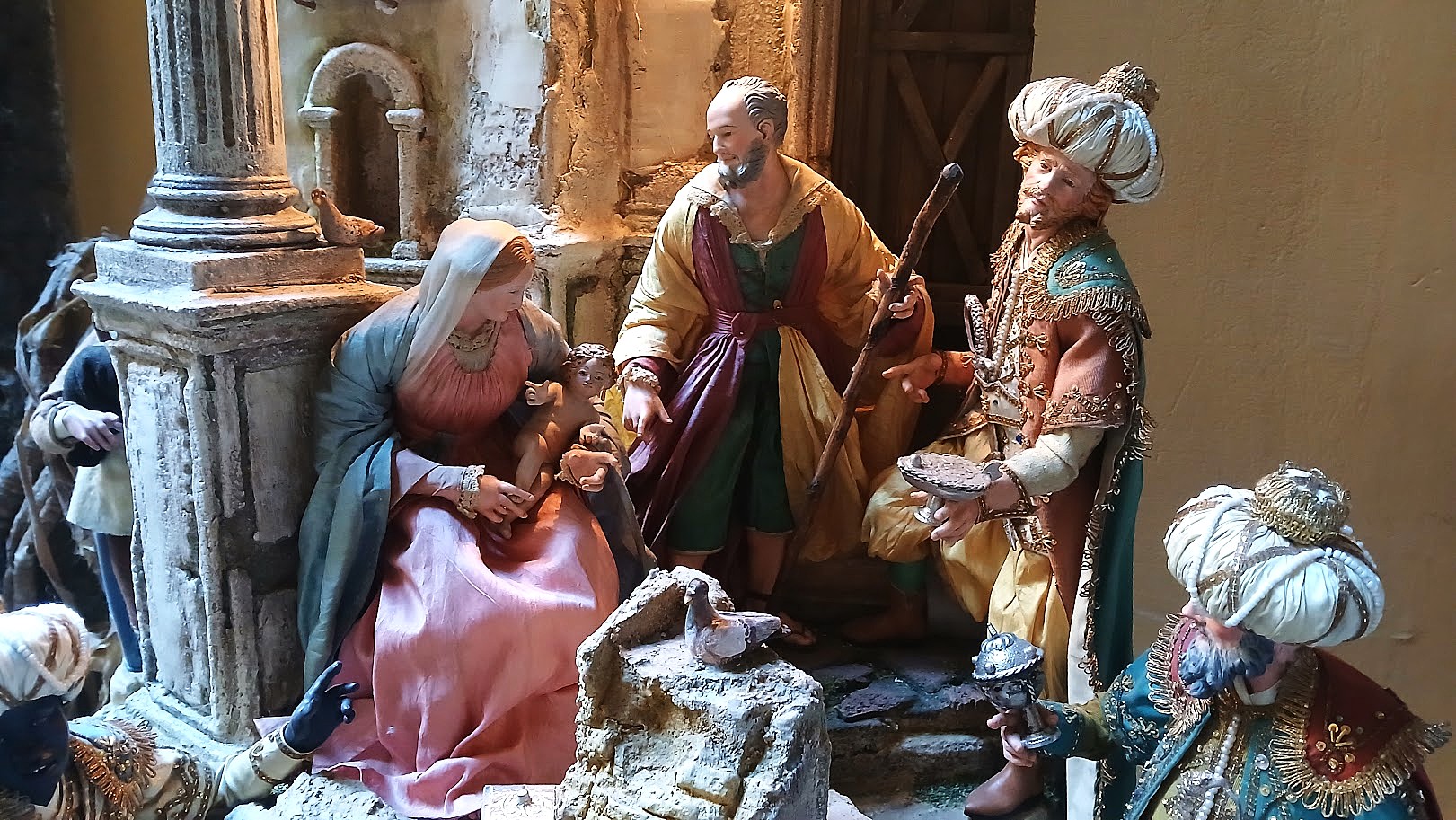

Carlo III di Borbone, grande estimatore del presepe, ne favorì la diffusione sia nelle corti che tra l’aristocrazia, dando un forte impulso alle botteghe artigiane che ancora oggi animano la celebre via San Gregorio Armeno di Napoli.
Le caratteristiche principali del Presepe Napoletano
Una scenografia teatrale
Il presepe napoletano rappresenta solo una scena a carattere religioso ma è ambientato in un paesaggio teatrale, articolato su più livelli. Tra rovine classiche, architetture barocche, vicoli popolari e scorci contadini, il tutto è pensato per portare lo sguardo dello spettatore verso la grotta della Natività.
L’arte del dettaglio
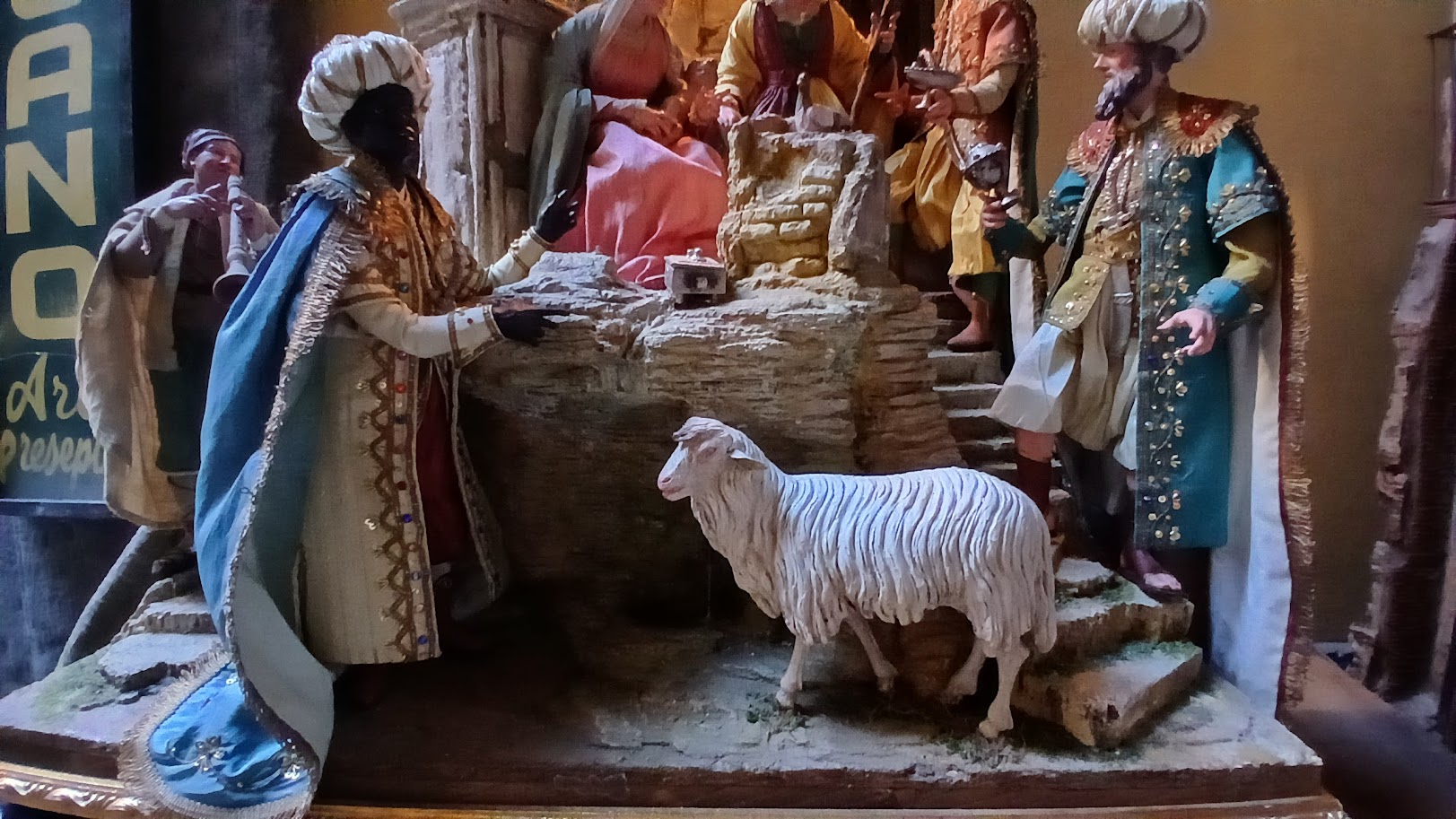
Pastori e oggetti dislocati nei vari punti del presepe napoletano, vengono realizzati con una cura straordinaria. Le figure hanno teste, braccia e gambe in terracotta dipinta mentre i corpi vengono modellati in fil di ferro e stoppa.
Gli abiti cuciti a mano vengono realizzati con tessuti in linea con la figura rappresentata: stoffe pregiate provenienti dall’oriente per i Re Magi e tessuti meno nobili per i pastori o gli altri personaggi popolari che si muovono sulla scena.
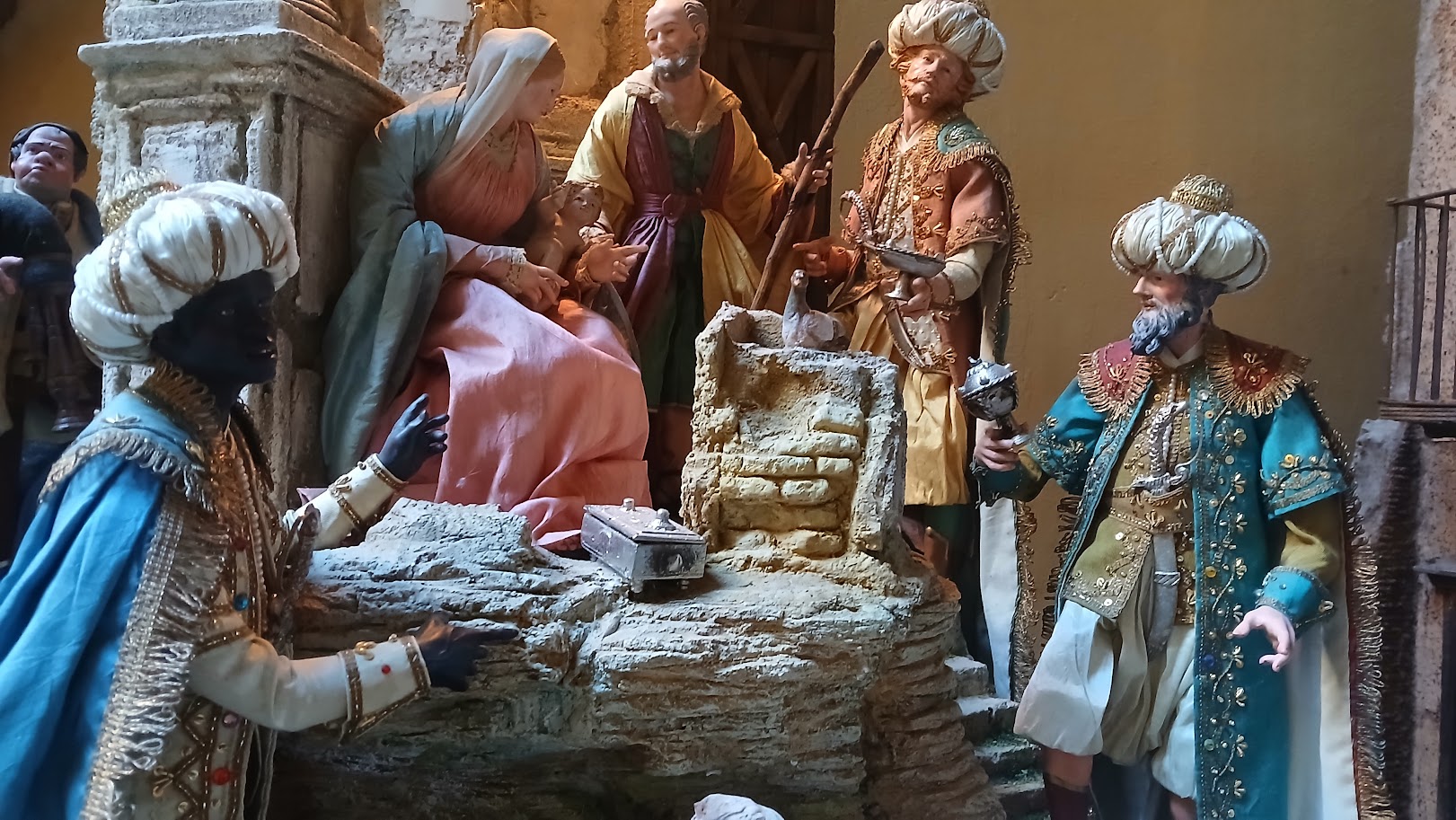
Accanto alla sacralità della scena principale, abbondano rappresentazioni del quotidiano: botteghe, taverne, mercati, artigiani e popolani ricreano un’atmosfera viva, tipica della Napoli settecentesca.
La struttura simbolica
La composizione tradizionale viene organizzata in tre aree distinte: la zona sacra incentrata sulla Natività, la taverna, luogo del vizio e del disordine e il mercato, emblema della vitalità popolare. Questa tripartizione è l’allegoria del percorso ideale che dal profano arriva al sacro.
I personaggi: un mondo da scoprire
Uno degli elementi più affascinanti del presepe napoletano è la varietà dei suoi personaggi. Ciascuno di loro ha una storia da raccontare, un carattere ben determinato e un significato simbolico.
Benino – il pastore dormiente
Disteso su un giaciglio di paglia o addormentato sotto un albero, Benino è il primo personaggio che si incontra idealmente nel presepe. Rappresenta il sogno dell’umanità che precede la nascita di Gesù: tutto parte dal suo sonno, come se il presepe fosse una visione che nasce dalla sua immaginazione.
Stefania – la donna del “bambino di pietra”
Figura meno nota del Benino ma molto suggestiva è la Stefania. La leggenda racconta che, essendo vergine, Stefania non poteva avvicinarsi al Bambino; così, per farlo, porta tra le braccia un bambino di pietra che, davanti alla Sacra Famiglia, si anima miracolosamente. È il simbolo della purificazione e del miracolo.
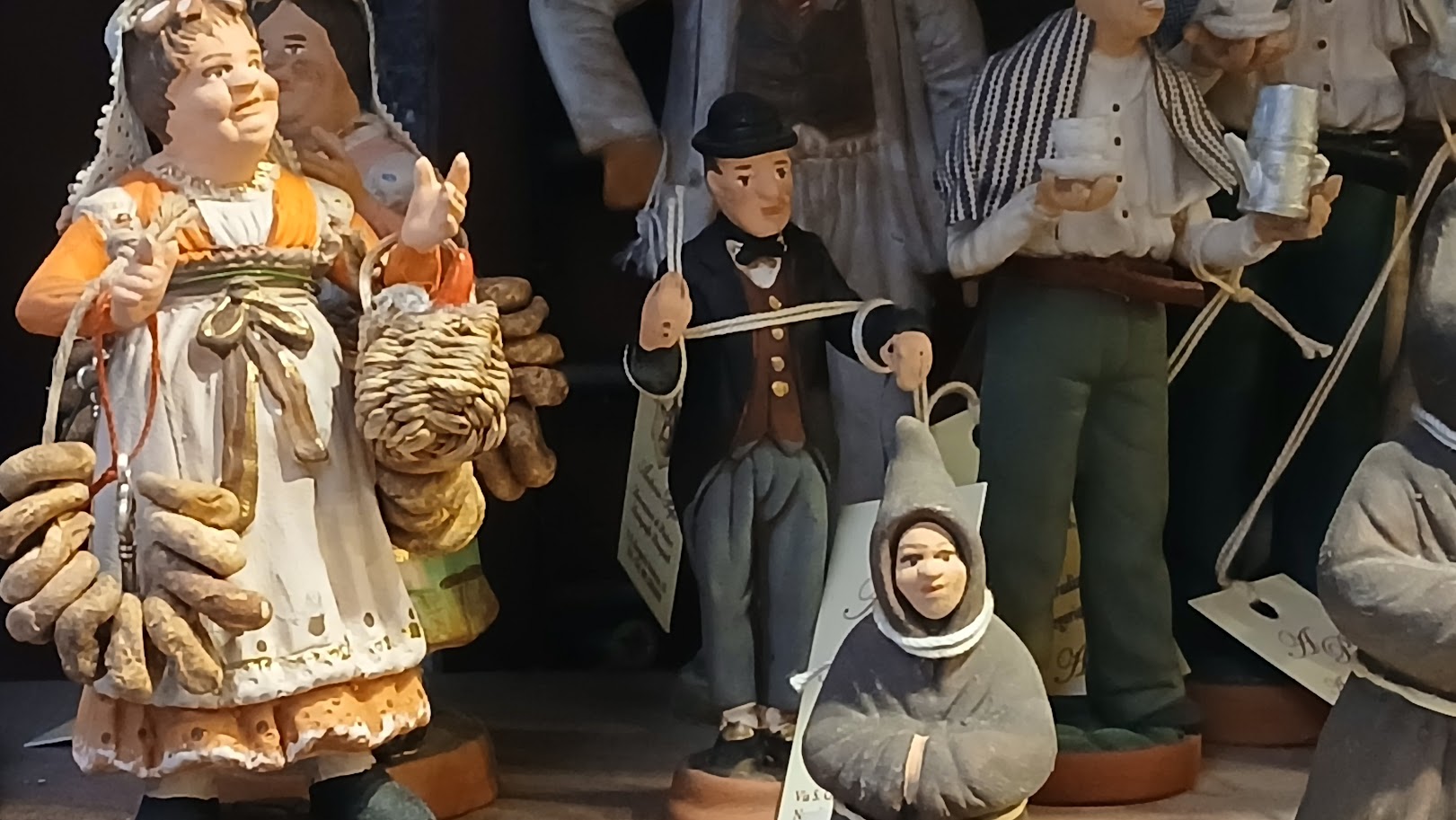
Ciccibacco – il signore del vino
Personaggio festoso, viene spesso rappresentato su un carro colmo di botti o uva. È l’erede delle figure dionisiache, simbolo del piacere e dell’abbondanza. La sua presenza accanto alla Natività ricorda la capacità napoletana di unire sacro e profano senza contraddizione.
Zi’ Vicienzo e zi’ Pascale – gli avventori dell’osteria
Due figure popolari, sedute a un tavolo col bicchiere in mano. Rappresentano la convivialità, la chiacchiera, il gusto per il cibo e per la compagnia. Sono il cuore dell’osteria, luogo simbolico del mondo terreno e delle sue tentazioni.
La zingara
Personaggio misterioso, spesso con la borsa o il fagotto in mano. Profetizza sciagure ma anche speranza. Porta con sé l’ambiguità, il destino e la superstizione, elementi profondamente radicati nella cultura popolare napoletana.
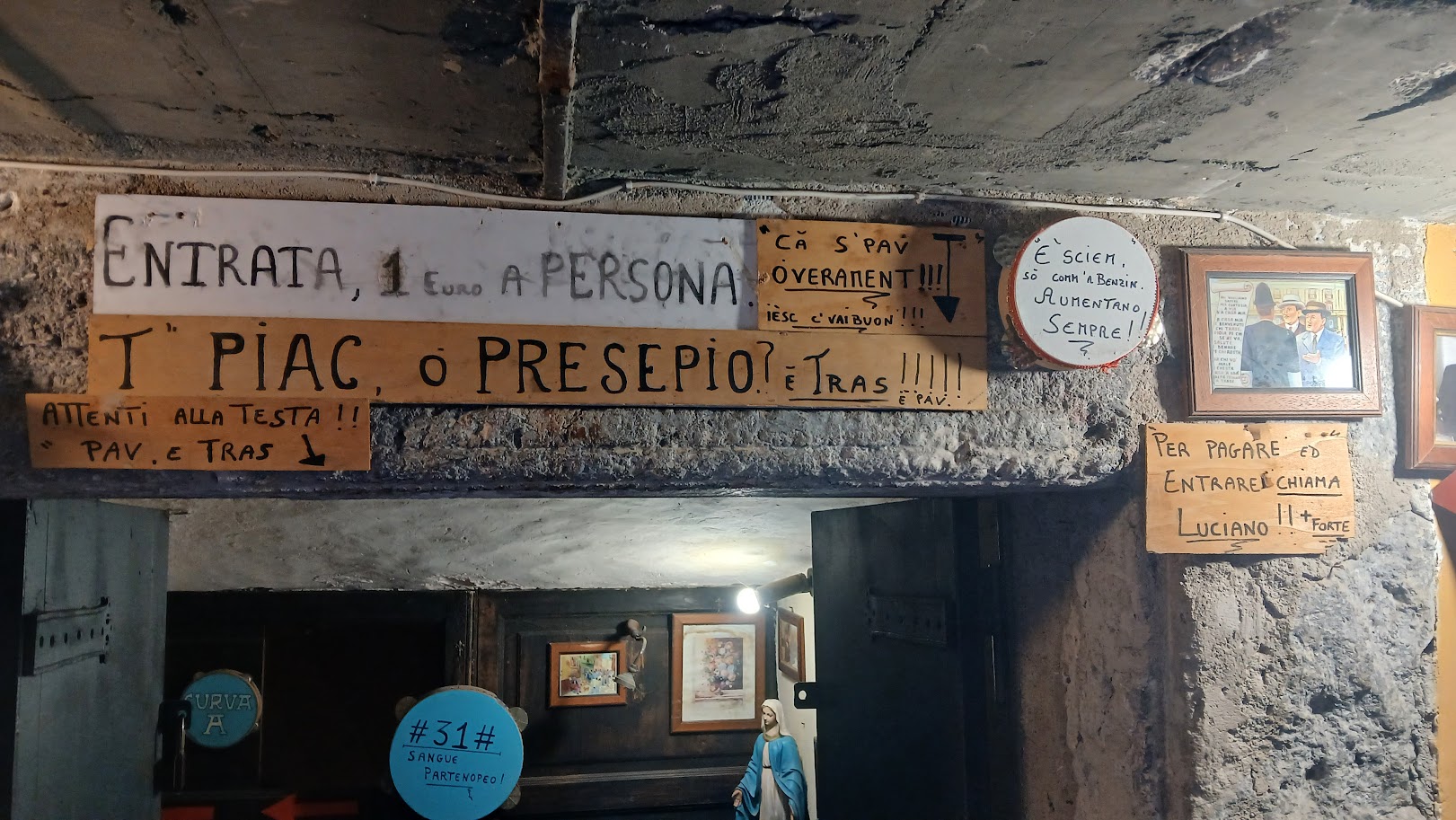
Il pescatore e il cacciatore
Figure opposte e complementari sono il pescatore e il cacciatore. Il primo, legato all’acqua e alla rinascita, simboleggia il bene mentre il cacciatore, legato alla morte e alla foresta, rappresenta il male. Insieme raccontano l’eterno equilibrio tra forze contrarie.
I venditori del mercato
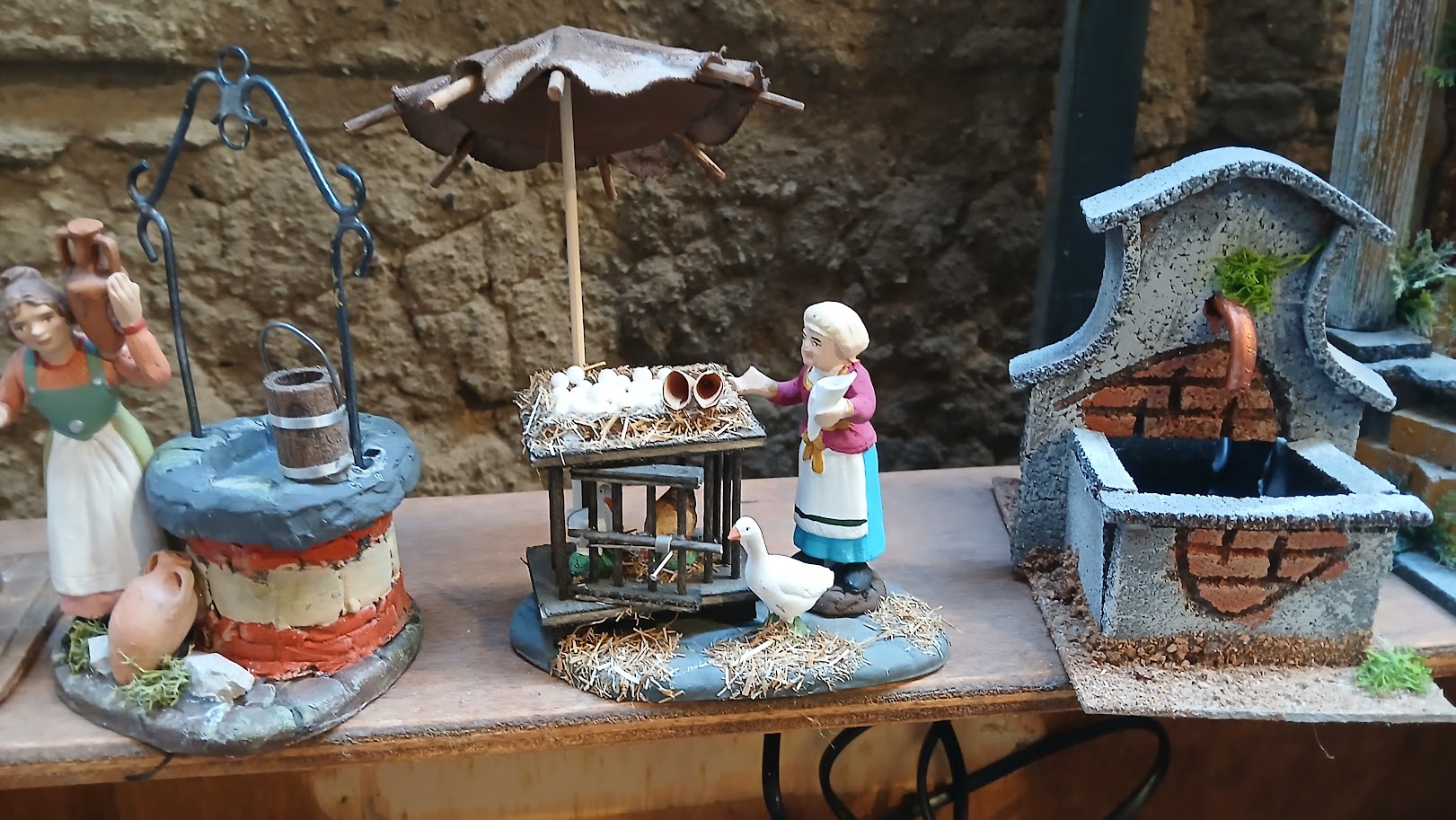
Tanti i venditori del mercato presenti nel Presepe Napoletano che ricordano proprio i rioni popolari e la loro vitalità. C’è il fruttivendolo con cesti colmi di agrumi, il pescivendolo con pesci in miniatura dalle scaglie colorate, il macellaio con il suo bancone e i tagli di carne, il fornaio con pagnotte rotonde e odorose, la donna del latte, il vinaio, il fabbro, il pastorello col gregge e tanti altri ancora.
Ogni figurante p un frammento di vita quotidiana e, secondo la tradizione, ogni venditore rappresenta un mese dell’anno, rendendo il presepe una sorta di “calendario vivente”.
Via San Gregorio Armeno: il cuore pulsante del presepe
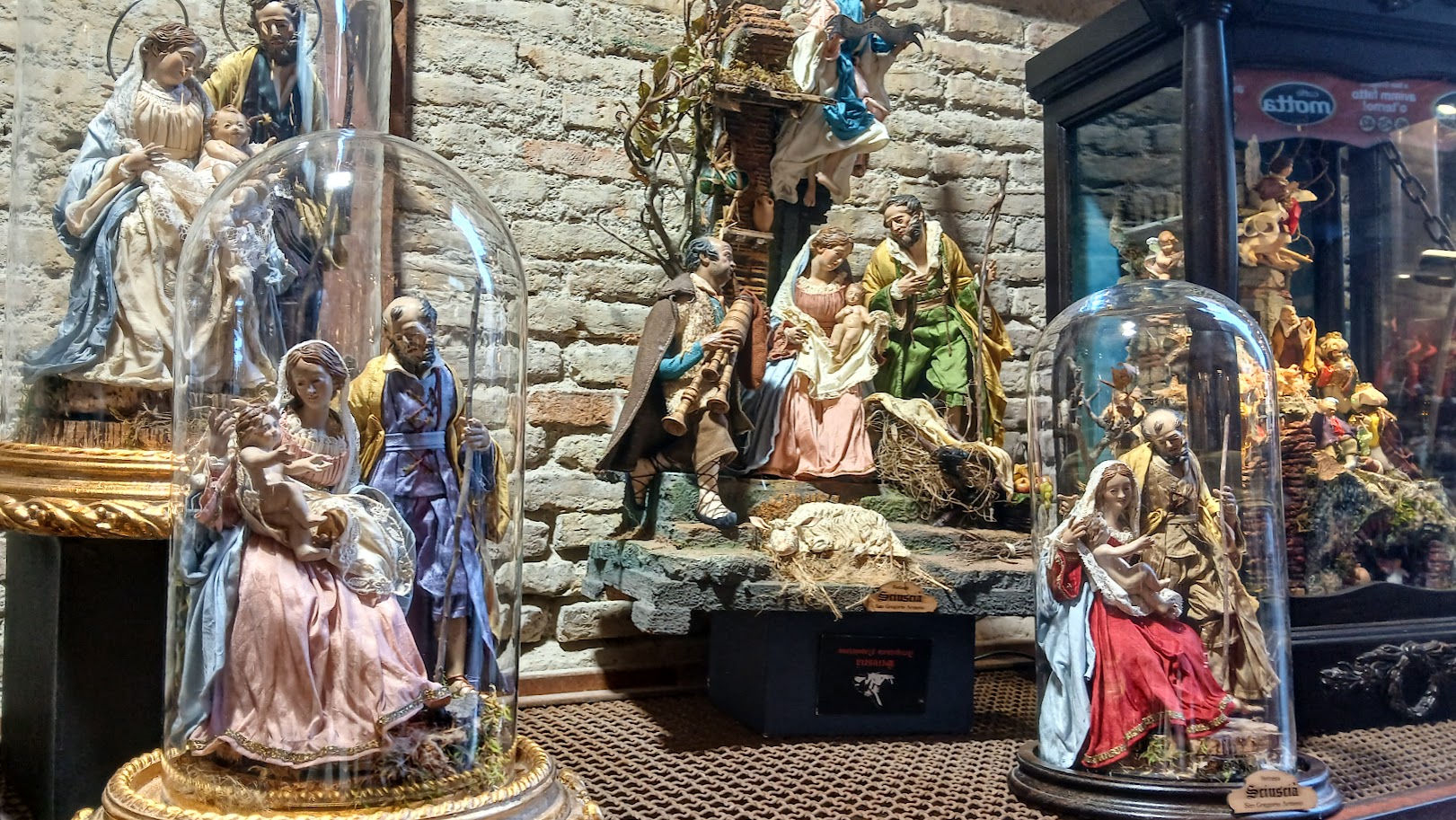
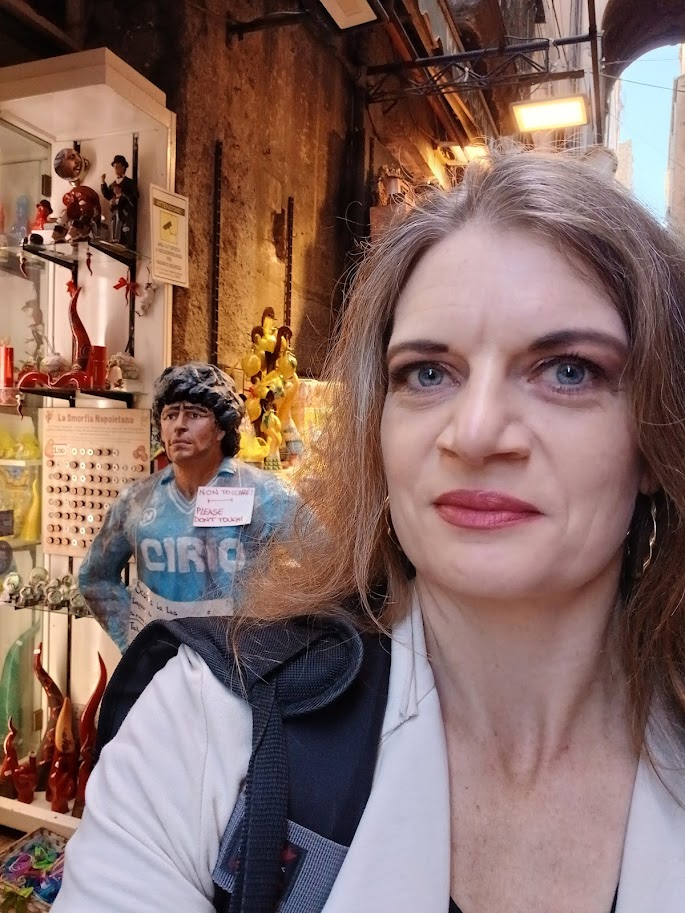
Impossibile parlare di presepe napoletano senza fare un accenno a via San Gregorio Armeno, conosciuta in tutto il mondo come “la strada dei presepi”. Ubicata nel cuore pulsante di Napoli, tra Spaccanapoli e via dei Tribunali, ospita decine di botteghe artigiane attive tutto l’anno.
A San Gregorio Armeno si trovano i maestri presepisti che modellano le teste in terracotta, i laboratori che confezionano abiti in seta, velluto e broccato e gli abili artigiani specializzati in scenografie, sugheri, luci e meccanismi animati.
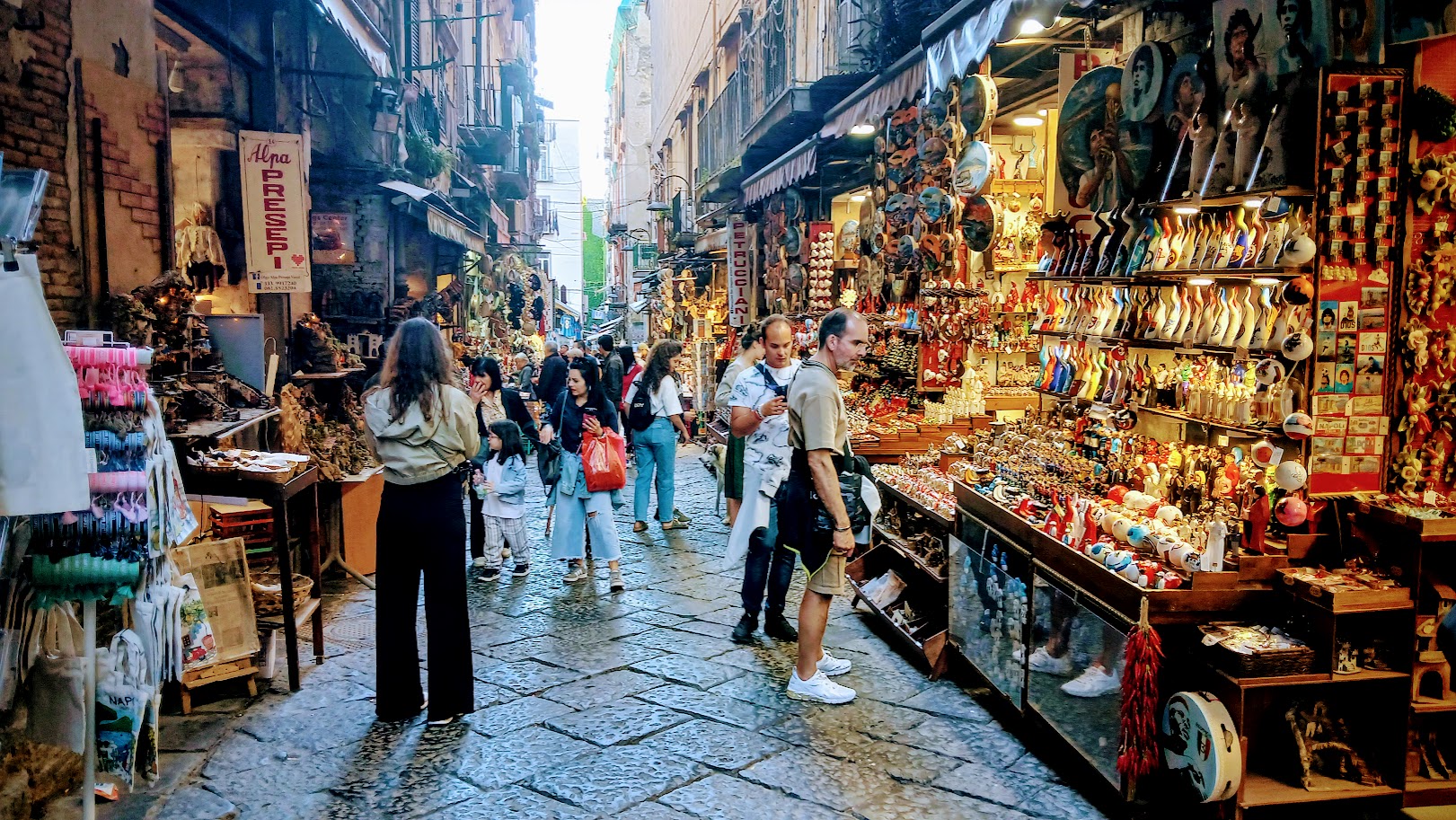
Un laboratorio a cielo aperto dove, accanto ai personaggi storici del presepe, compaiono figure contemporanee come statuine di calciatori, cantanti, politici e personaggi dello spettacolo, che rendono il presepe un’opera viva e sempre attuale.
Il presepe napoletano è una narrazione culturale in costante evoluzione. Mette assieme arte, folklore, religione e ironia, celebrando la vita nelle sue molteplici sfaccettature.
Per il momento il sempre vostro Michelangelo Buonarroti vi saluta dandovi appuntamento ai prossimi post e sui social.
The Neapolitan Nativity Scene: Theater of Life
The Neapolitan Nativity Scene is one of the finest and most diverse expressions of Italian artistic craftsmanship. More than a simple depiction of the Nativity, it is a world unto itself, bringing together the sacred, the profane, and everyday life in a single, marvelous setting.
Origins and Historical Development
The first forms of the nativity scene appeared in Italy in the Middle Ages, but it was in Naples, between the 17th and 18th centuries, that the nativity scene became an elaborate art form. The Baroque era, with its exaltation of the marvelous and the theatrical, became the perfect context for the development of a tradition that found an exceptional promoter in the Bourbon kingdom.
Charles III of Bourbon, a great admirer of the nativity scene, encouraged its spread both in courts and among the aristocracy, providing a strong impetus to the artisan workshops that still animate Naples’ famous Via San Gregorio Armeno.
The Main Features of the Neapolitan Nativity Scene
A Theatrical Setting
The Neapolitan nativity scene represents only a religious scene, but it is set in a theatrical landscape, structured on multiple levels. Among classical ruins, baroque architecture, popular alleys, and rural views, everything is designed to draw the viewer’s gaze toward the cave of the Nativity.
The Art of Detail
The shepherds and objects scattered throughout the Neapolitan nativity scene are crafted with extraordinary care. The figures have heads, arms, and legs in painted terracotta, while the bodies are fashioned from wire and tow.
The hand-sewn costumes are made from fabrics appropriate for the figure depicted: fine fabrics from the East for the Three Kings, and less noble fabrics for the shepherds and other popular characters who move across the scene.
Alongside the sacredness of the main scene, representations of everyday life abound: shops, taverns, markets, artisans, and commoners recreate a lively atmosphere typical of eighteenth-century Naples.
The Symbolic Structure
The traditional composition is organized into three distinct areas: the sacred area centered on the Nativity; the tavern, a place of vice and disorder; and the market, an emblem of popular vitality. This tripartite division is an allegory of the ideal path from the profane to the sacred.
The Characters: A World to Discover
One of the most fascinating elements of the Neapolitan nativity scene is the variety of its characters. Each has a story to tell, a distinct personality, and a symbolic meaning.
Benino – the Sleeping Shepherd
Whether lying on a bed of straw or asleep under a tree, Benino is the first character we ideally encounter in the nativity scene. It represents humanity’s dream preceding the birth of Jesus: everything begins with his sleep, as if the nativity scene were a vision born of his imagination.
Stefania – the woman of the “stone child”
A lesser-known figure than Benino, but highly evocative, is Stefania. Legend has it that, being a virgin, Stefania could not approach the Child; so, to do so, she carries a stone child in her arms, who, before the Holy Family, miraculously comes to life. It is the symbol of purification and miracle.
Ciccibacco – the lord of wine
A festive character, he is often depicted on a cart filled with barrels or grapes. He is the heir of Dionysian figures, a symbol of pleasure and abundance. His presence next to the Nativity scene recalls the Neapolitan ability to unite the sacred and the profane without contradiction.
Uncle Vicienzo and Uncle Pascale – the patrons of the tavern
Two popular figures, seated at a table with a glass in hand. They represent conviviality, conversation, and a love of food and company. They are the heart of the tavern, a symbolic place of the earthly world and its temptations.
The Gypsy
A mysterious character, often carrying a bag or bundle. She prophesies misfortune but also hope. She brings with her ambiguity, fate, and superstition, elements deeply rooted in Neapolitan folk culture.
The Fisherman and the Hunter
The fisherman and the hunter are opposing yet complementary figures. The fisherman, linked to water and rebirth, symbolizes good, while the hunter, linked to death and the forest, represents evil. Together, they narrate the eternal balance between opposing forces.
The Market Vendors
Many market vendors present in the Neapolitan Nativity Scene recall the working-class neighborhoods and their vitality. There’s the greengrocer with baskets full of citrus fruits, the fishmonger with miniature fish with colorful scales, the butcher with his counter and cuts of meat, the baker with round, fragrant loaves of bread, the milkwoman, the wine merchant, the blacksmith, the shepherd with his flock, and many others.
Each figure represents a fragment of daily life, and according to tradition, each vendor represents a month of the year, making the nativity scene and a sort of “living calendar.”
Via San Gregorio Armeno: the beating heart of the nativity scene
It’s impossible to talk about the Neapolitan nativity scene without mentioning Via San Gregorio Armeno, known worldwide as “the street of nativity scenes.” Located in the heart of Naples, between Spaccanapoli and Via dei Tribunali, it hosts dozens of artisan workshops that are open year-round.
In San Gregorio Armeno, you’ll find master nativity scene artists who model terracotta heads, workshops that make silk, velvet, and brocade dresses, and skilled artisans specializing in scenery, cork, lighting, and animated mechanisms.
An open-air workshop where, alongside the nativity scene’s historic characters, contemporary figures such as figurines of soccer players, singers, politicians, and celebrities appear, making the nativity scene a living and ever-present work.
The Neapolitan nativity scene is a constantly evolving cultural narrative. It brings together art, folklore, religion, and irony, celebrating life in its many facets.
For now, yours truly, Michelangelo Buonarroti bids farewell and invites you to join him in future posts and on social media.

Sostienici – Support Us
Se questo blog ti piace e ti appassiona, puoi aiutarci a farlo crescere sempre più sostenendoci in modo concreto condividendo i post, seguendo le pagine social e con un contributo che ci aiuta ad andare avanti con il nostro lavoro di divulgazione. . ENGLISH: If you like and are passionate about this blog, you can help us make it grow more and more by supporting us in a concrete way by sharing posts, following social pages and with a contribution that helps us to move forward with our dissemination work.
10,00 €
Articoli
Condividi:


Questo sono io





sostienici

Sostienici – Support Us
Se questo blog ti piace e ti appassiona, puoi aiutarci a farlo crescere sempre più sostenendoci in modo concreto condividendo i post, seguendo le pagine social e con un contributo che ci aiuta ad andare avanti con il nostro lavoro di divulgazione. . ENGLISH: If you like and are passionate about this blog, you can help us make it grow more and more by supporting us in a concrete way by sharing posts, following social pages and with a contribution that helps us to move forward with our dissemination work.
€10,00


I Presepi migliori appartengono tutti a Napoli, rispetto agli altri sanno distinguersi per bellezza e creatività 👏👏👏👏👏👏👍👍👍👍👍👍👍👍👍
"Mi piace"Piace a 1 persona