

La Scuola di Atene di Raffaello
I Musei Vaticani custodiscono raccolte di opere d’arte straordinarie, la Cappella Sistina e le mirabili stanze papali affrescate dai più grandi artisti del tempo.
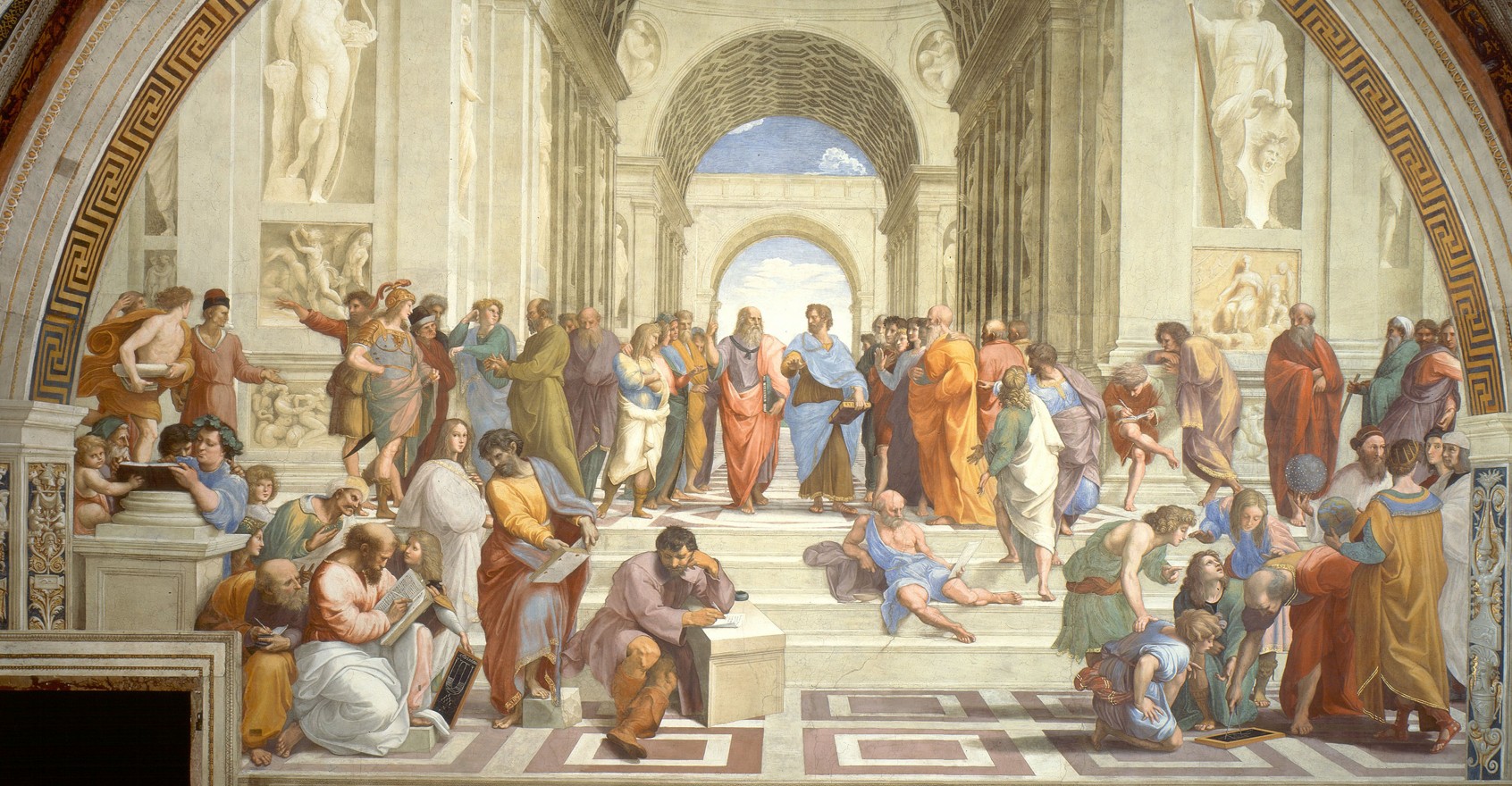
Nella Stanza della Segnatura, una delle quattro Stanze Vaticane nei Palazzi Apostolici, Raffaello affrescò la Scuola di Atene su commissione di papa Giulio II tra il 1509 e il 1511.
Le quattro discipline del sapere
Inizialmente la Stanza della Segnatura era destinata a divenire la biblioteca personale e lo studio del pontefice. Ecco perché nel programma iconografico degli affreschi di Raffaello sono presenti le quattro discipline del sapere ovvero teologia, filosofia, poesia e diritto, tipiche allegorie degli ambienti dedicati allo studio e alla lettura di una biblioteca.
Successivamente, venne cambiata destinazione d’uso all’ambiente divenendo la sede del tribunale della Santa Sede, la Segnatura di Grazia e Giustizia, da cui deriva il suo nome attuale.
La sequenza dei lavori
Le decorazioni pittoriche vennero avviate dalla volta e poi proseguirono sulla parete Est dove si può ammirare la Disputa del Sacramento e su quella Ovest dove è presente per l’appunto l’affresco di cui vi sto parlando.
I personaggi al centro
Nella Scuola di Atene Raffaello dipinse una maestosa assemblea di quasi sessanta tra i più importanti filosofi e matematici dell’antichità, intenti a discutere e a insegnare, in un’architettura classica e grandiosa, ispirata probabilmente al progetto del nuovo San Pietro di Bramante.
Al centro, in cima alla scalinata e nel punto di fuga prospettico, si trovano le due figure principali: Platone e Aristotele.

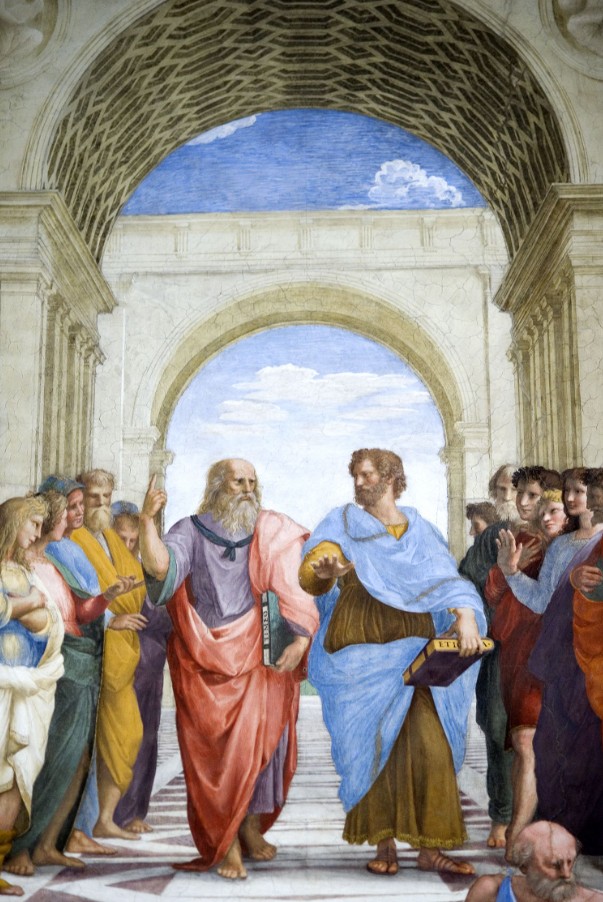
Platone è il personaggio a sinistra, con i tratti di Leonardo da Vinci. Veste di rosso e indica il cielo con il dito, simboleggiando la sua filosofia basata sul mondo delle idee e delle forme perfette. Simboleggia un po’ l’aspirazione al divino e all’astratto.
Aristotele in vece è il personaggio a destra. Veste di blu e marrone e tiene il palmo della mano teso verso la terra, a indicare la sua filosofia basata sull’osservazione della natura e della realtà terrena: è l’allegoria della conoscenza basata sull’esperienza.
Altri personaggi riconoscibili
Pitagora si trova a sinistra, in primo piano ed è raffigurato mentre scrive su una lavagna. Eraclito al centro, seduto da solo su un blocco di marmo, pensieroso è la figura che ha i miei tratti e si narra che fu un omaggio a me dopo che ebbe modo di vedere i miei affreschi della volta nella Cappella Sistina.
Nel cartone dell’opera custodito alla Pinacoteca di Brera, io non ero stato previsto e non compaio tra i personaggi che si muovono sulla scena.

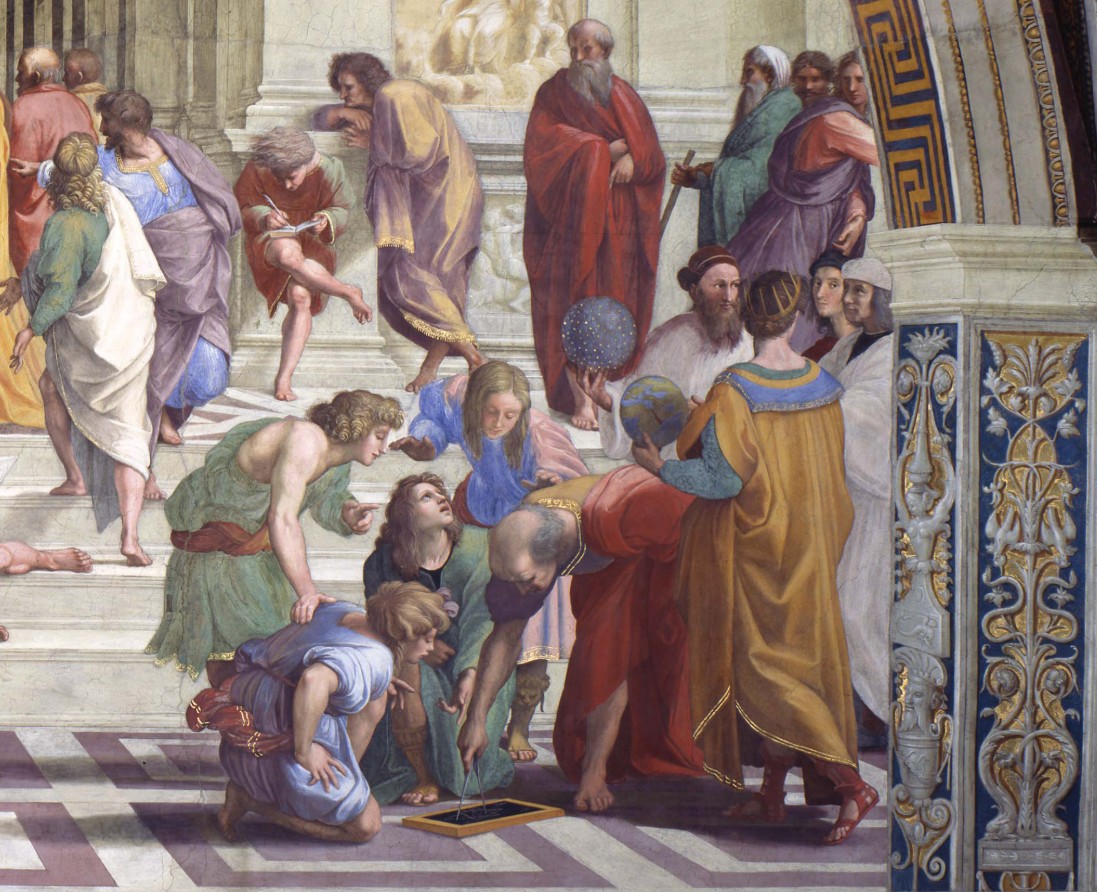
Diogene il Cinico è sdraiato sulle scale in atteggiamento anticonformista. mentre Archimede a destra, in primo piano, sta tracciando una figura geometrica con un compasso e ha le sembianze dell’architetto Bramante.
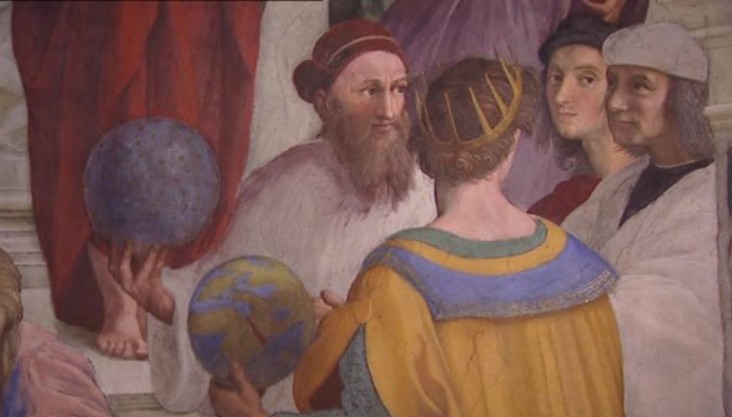
Tolomeo e Zoroastro, a destra in fondo, reggono rispettivamente il globo terrestre e quello celeste. Raffaello stesso si volle autoritrae all’estrema destra, guardando direttamente negli occhi l’osservatore con un berretto nero.
Ma che significato ha la Scuola di Atene?
L’opera è considerata un’icona del Rinascimento, poiché celebra l’armonia tra il sapere classico greco e romano e la cultura moderna, ponendo l’uomo al centro dell’universo e celebrando la ricerca della Verità attraverso la ragione, la scienza e la filosofia.
L’architettura perfettamente prospettica e l’equilibrio della composizione contribuiscono a creare una scena di solenne e misurata armonia.
Per il momento il sempre vostro Michelangelo Buonarroti vi saluta dandovi appuntamento ai prossimi post e sui social.

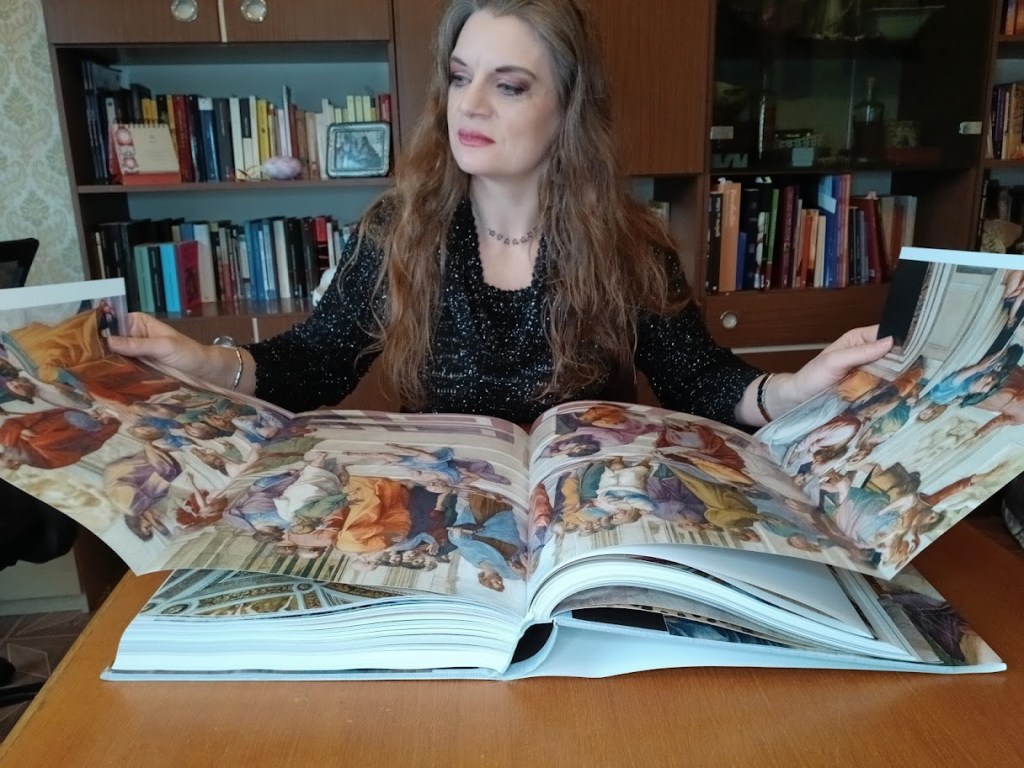
Raphael’s School of Athens
The Vatican Museums house extraordinary art collections, the Sistine Chapel, and the magnificent papal rooms frescoed by the greatest artists of the time.
In the Stanza della Segnatura, one of the four Vatican Rooms in the Apostolic Palaces, Raphael frescoed the School of Athens at the behest of Pope Julius II between 1509 and 1511.
The Four Disciplines of Knowledge
The Stanza della Segnatura was originally intended to serve as the pontiff’s personal library and study. This is why the iconographic program of Raphael’s frescoes features the four disciplines of knowledge: theology, philosophy, poetry, and law, typical allegories of the rooms dedicated to study and reading in a library.
Subsequently, the room’s intended use was changed, becoming the seat of the tribunal of the Holy See, the Segnatura of Grace and Justice, hence its current name.
The Sequence of Works
The pictorial decorations began on the vault and then continued on the east wall, where the Disputation of the Sacrament can be admired, and on the west wall, where the fresco I’m describing is located.
The Figures in the Center
In The School of Athens, Raphael painted a majestic assembly of nearly sixty of the most important philosophers and mathematicians of antiquity, intent on debating and teaching, in a classical and grandiose architecture, likely inspired by Bramante’s design for the new St. Peter’s Basilica.
In the center, at the top of the staircase and at the vanishing point of perspective, are the two main figures: Plato and Aristotle.
Plato is the figure on the left, with the features of Leonardo da Vinci. He is dressed in red and points to the sky, symbolizing his philosophy based on the world of ideas and perfect forms. He somewhat symbolizes the aspiration to the divine and the abstract.
Aristotle, on the other hand, is the figure on the right. He wears blue and brown and holds his palm outstretched toward the earth, indicating his philosophy based on the observation of nature and earthly reality: it is the allegory of knowledge based on experience.
Other recognizable characters
Pythagoras is on the left, in the foreground, depicted writing on a blackboard. Heraclitus in the center, sitting alone on a block of marble, is a pensive figure with my features, said to have been a tribute to me after he saw my frescoes on the Sistine Chapel ceiling.
Diogenes the Cynic is reclining on the stairs in a nonconformist pose, while Archimedes, on the right, in the foreground, is tracing a geometric figure with a compass and resembles the architect Bramante.
Ptolemy and Zoroaster, on the far right, hold the terrestrial and celestial globes respectively. Raphael himself painted a self-portrait on the far right, wearing a black cap, looking directly into the viewer’s eyes.
But what is the significance of the School of Athens?
The work is considered an icon of the Renaissance, as it celebrates the harmony between classical Greek and Roman knowledge and modern culture, placing humanity at the center of the universe and celebrating the search for Truth through reason, science, and philosophy.
The perfectly perspectived architecture and the balanced composition contribute to creating a scene of solemn and measured harmony.
For now, yours truly, Michelangelo Buonarroti bids you farewell and invites you to join him in future posts and on social media.

Sostienici – Support Us
Se questo blog ti piace e ti appassiona, puoi aiutarci a farlo crescere sempre più sostenendoci in modo concreto condividendo i post, seguendo le pagine social e con un contributo che ci aiuta ad andare avanti con il nostro lavoro di divulgazione. . ENGLISH: If you like and are passionate about this blog, you can help us make it grow more and more by supporting us in a concrete way by sharing posts, following social pages and with a contribution that helps us to move forward with our dissemination work.
10,00 €
Condividi:


Questo sono io





sostienici

Sostienici – Support Us
Se questo blog ti piace e ti appassiona, puoi aiutarci a farlo crescere sempre più sostenendoci in modo concreto condividendo i post, seguendo le pagine social e con un contributo che ci aiuta ad andare avanti con il nostro lavoro di divulgazione. . ENGLISH: If you like and are passionate about this blog, you can help us make it grow more and more by supporting us in a concrete way by sharing posts, following social pages and with a contribution that helps us to move forward with our dissemination work.
€10,00


