

Cappella Sistina: il prezioso foglio con gli studi per gli ignudi
Era l’autunno del 1508 quando iniziai a metter mano agli studi per la composizione degli affreschi che avrei poi realizzato per la volta della Cappella Sistina, su commissione di papa Giulio II della Rovere.
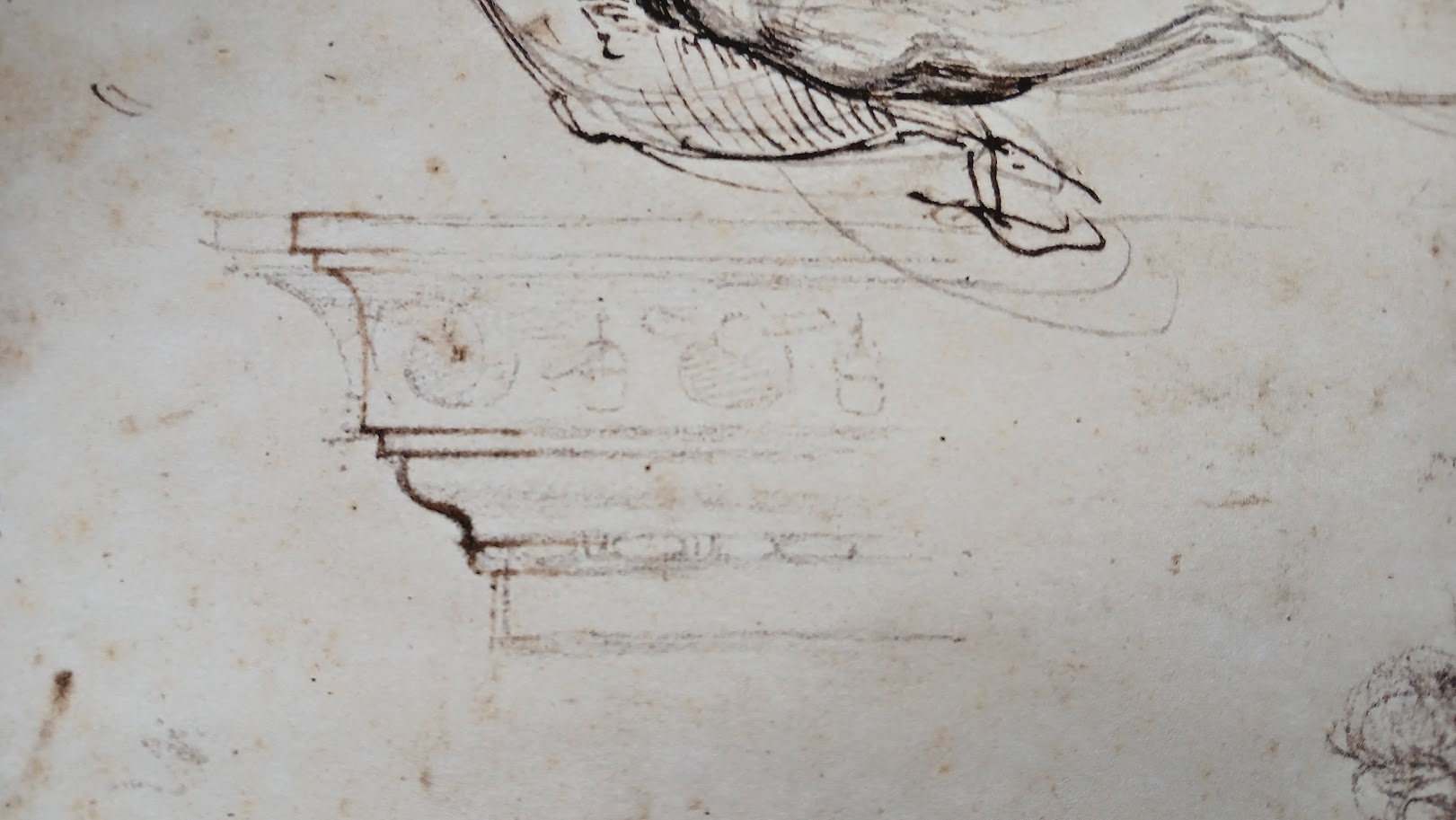
Proprio a questo medesimo periodo appartiene un foglio custodito negli archivi di Casa Buonarroti sul quale tracciai una prima idea dl cornicione decorato con conchiglie e ghiande in riferimento al cognome ‘della Rovere’ del pontefice committente.
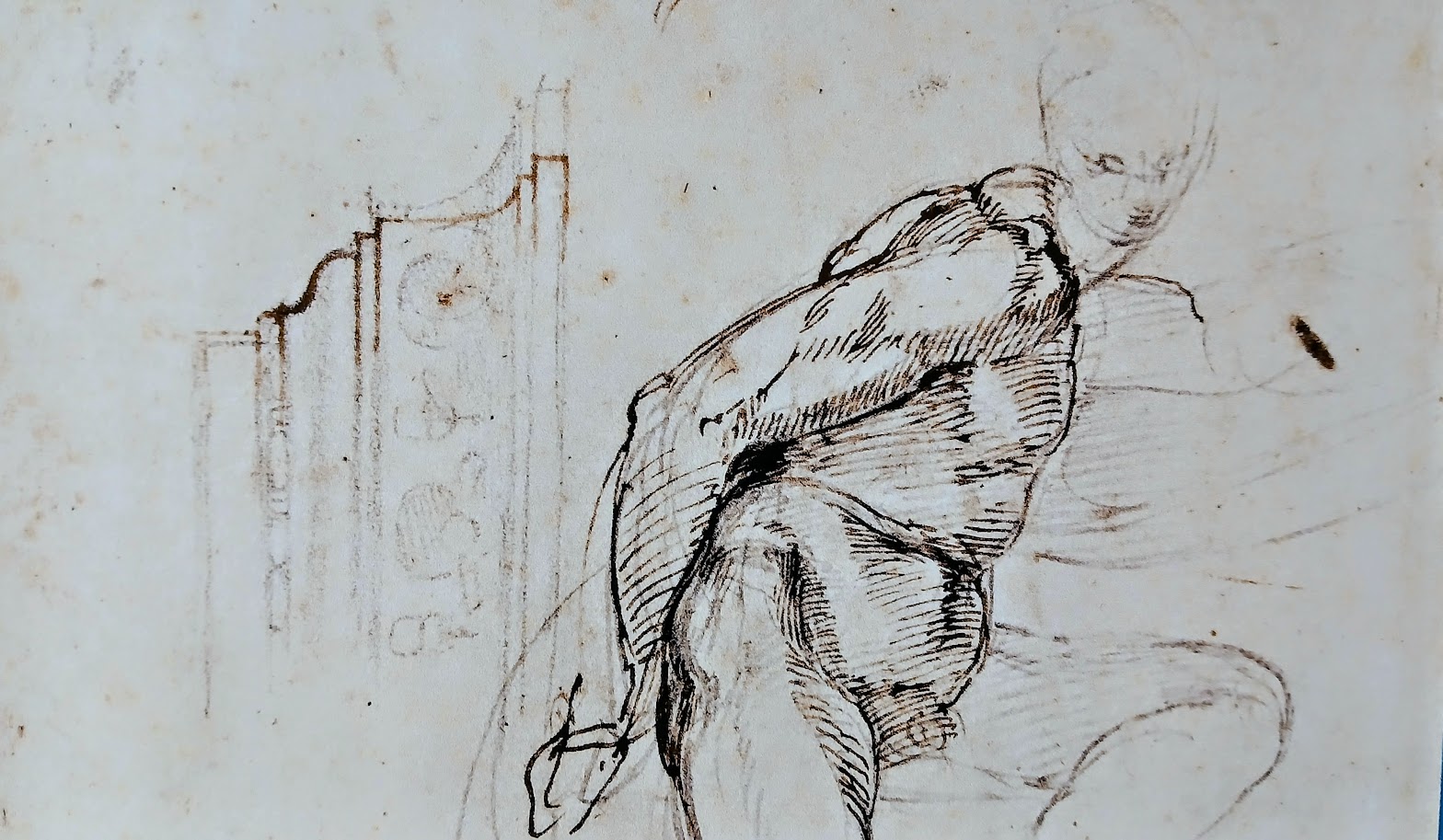
Questo motivo ornamentale però alla fine decisi di non adoperarlo per il cornicione della volta, preferendo qualcosa di meno elaborato ma più monumentale.
Qualcosa di affine è rintracciabile però nelle cornici che delimitano i pennacchi e le lunette, sebbene le mondanature risultino più sobrie.
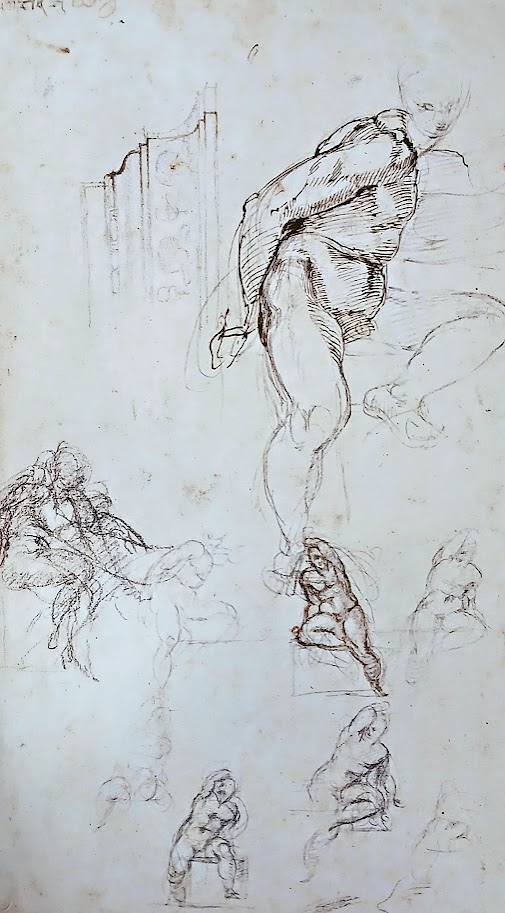
Come si può intuire da questo stesso foglio, fin dall’inizio avevo previsto la presenza degli ignudi.
Nel foglio si possono individuare gli studi di quello che si trova a sinistra della Sibilla Cumana e quello a destra del profeta Geremia.
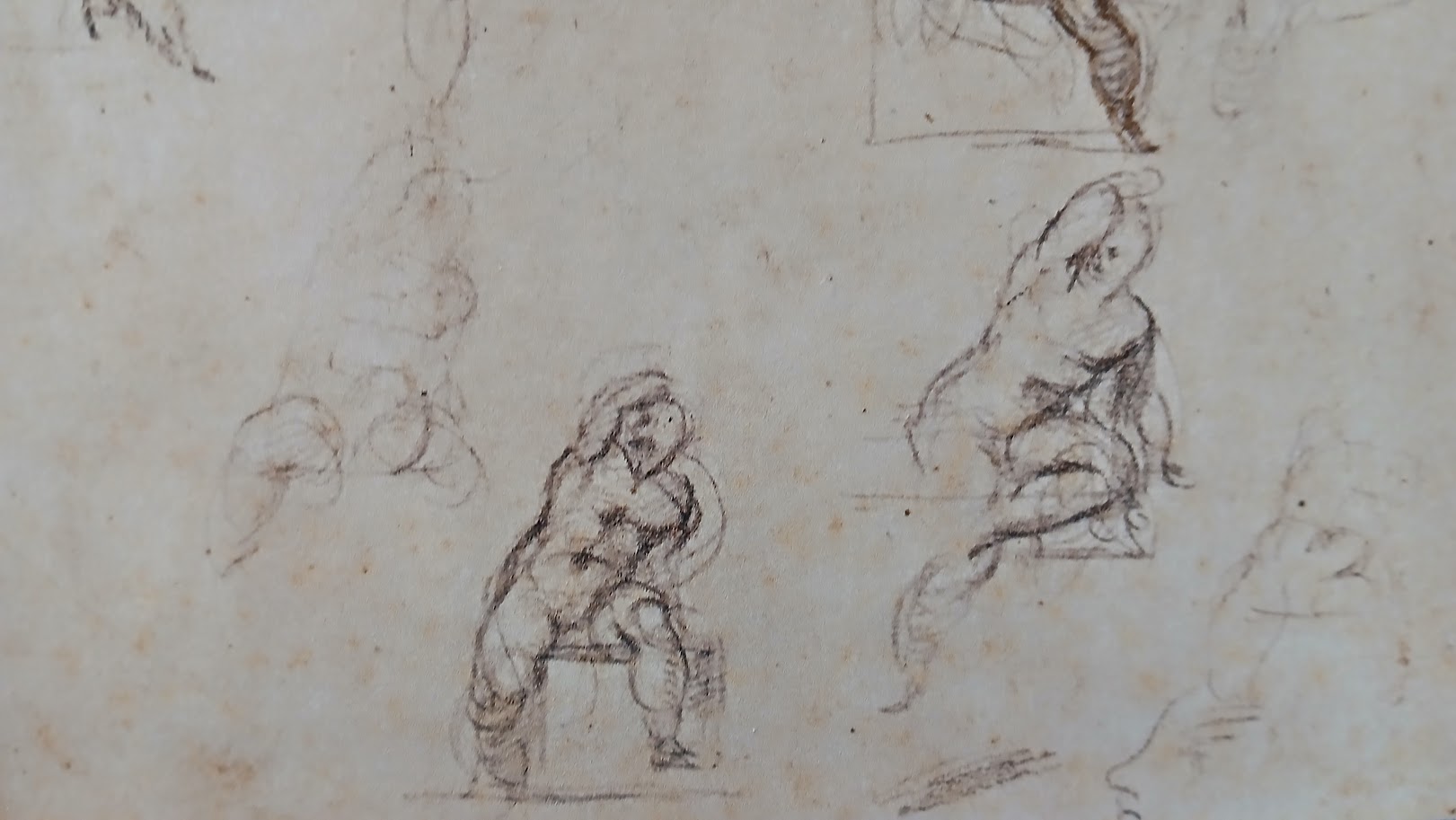
Per quanto riguarda le figure di ignudi più piccole, sono riconducibili all’ignudo che successivamente volli realizzare a buon fresco alla destra del profeta Isaia.
Per il momento il sempre vostro Michelangelo Buonarroti vi saluta dandovi appuntamento ai prossimi post e sui social.
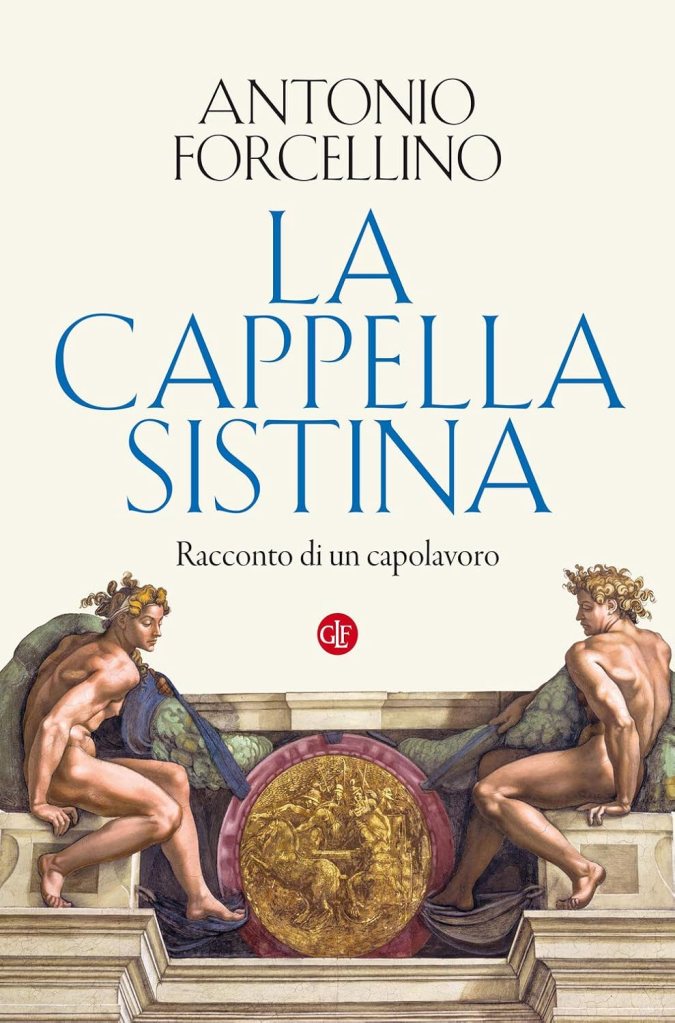
Sistine Chapel: the precious sheet with the studies for the nudes
It was the autumn of 1508 when I began sketching the composition of the frescoes I would later create for the Sistine Chapel ceiling, commissioned by Pope Julius II della Rovere.
From this same period is a sheet kept in the Casa Buonarroti archives on which I sketched an initial idea for a cornice decorated with shells and acorns, a reference to the surname “della Rovere” of the commissioning pontiff.
However, I ultimately decided not to use this ornamental motif for the ceiling cornice, preferring something less elaborate but more monumental. A similar motif can be found, however, in the cornices surrounding the pendentives and lunettes, although the mouldings are more sober.
As can be inferred from this same sheet, I had planned for the nudes from the beginning. In the sheet, you can see studies of the one to the left of the Cumaean Sibyl and the one to the right of the prophet Jeremiah.
As for the smaller nude figures, they are attributable to the nude I later painted in fresco to the right of the prophet Isaiah.
For now, yours truly, Michelangelo Buonarroti bids you farewell and invites you to join him in future posts and on social media.

Sostienici – Support Us
Se questo blog ti piace e ti appassiona, puoi aiutarci a farlo crescere sempre più sostenendoci in modo concreto condividendo i post, seguendo le pagine social e con un contributo che ci aiuta ad andare avanti con il nostro lavoro di divulgazione. . ENGLISH: If you like and are passionate about this blog, you can help us make it grow more and more by supporting us in a concrete way by sharing posts, following social pages and with a contribution that helps us to move forward with our dissemination work.
10,00 €
Condividi:


Questo sono io





sostienici

Sostienici – Support Us
Se questo blog ti piace e ti appassiona, puoi aiutarci a farlo crescere sempre più sostenendoci in modo concreto condividendo i post, seguendo le pagine social e con un contributo che ci aiuta ad andare avanti con il nostro lavoro di divulgazione. . ENGLISH: If you like and are passionate about this blog, you can help us make it grow more and more by supporting us in a concrete way by sharing posts, following social pages and with a contribution that helps us to move forward with our dissemination work.
€10,00


