
31 luglio 1873: l’incredibile trasporto del David verso la Galleria dell’Accademia
Era un soleggiato giorno come oggi quel 31 luglio del 1873, quando si decise di far iniziare il viaggio del David verso la Galleria dell’Accademia di Firenze.
Una manciata di mesi prima, nel maggio dello stesso anno, venne affidato all’ingegnere Porra e all’architetto de Fabris l’arduo compito di coordinare le operazioni.
Sempre a loro spettò l’onore e l’onore di organizzare quel trasporto e tutto ciò che sarebbe servito per quella titanica impresa di cui tutti i giornali dell’epoca parlarono per mesi.
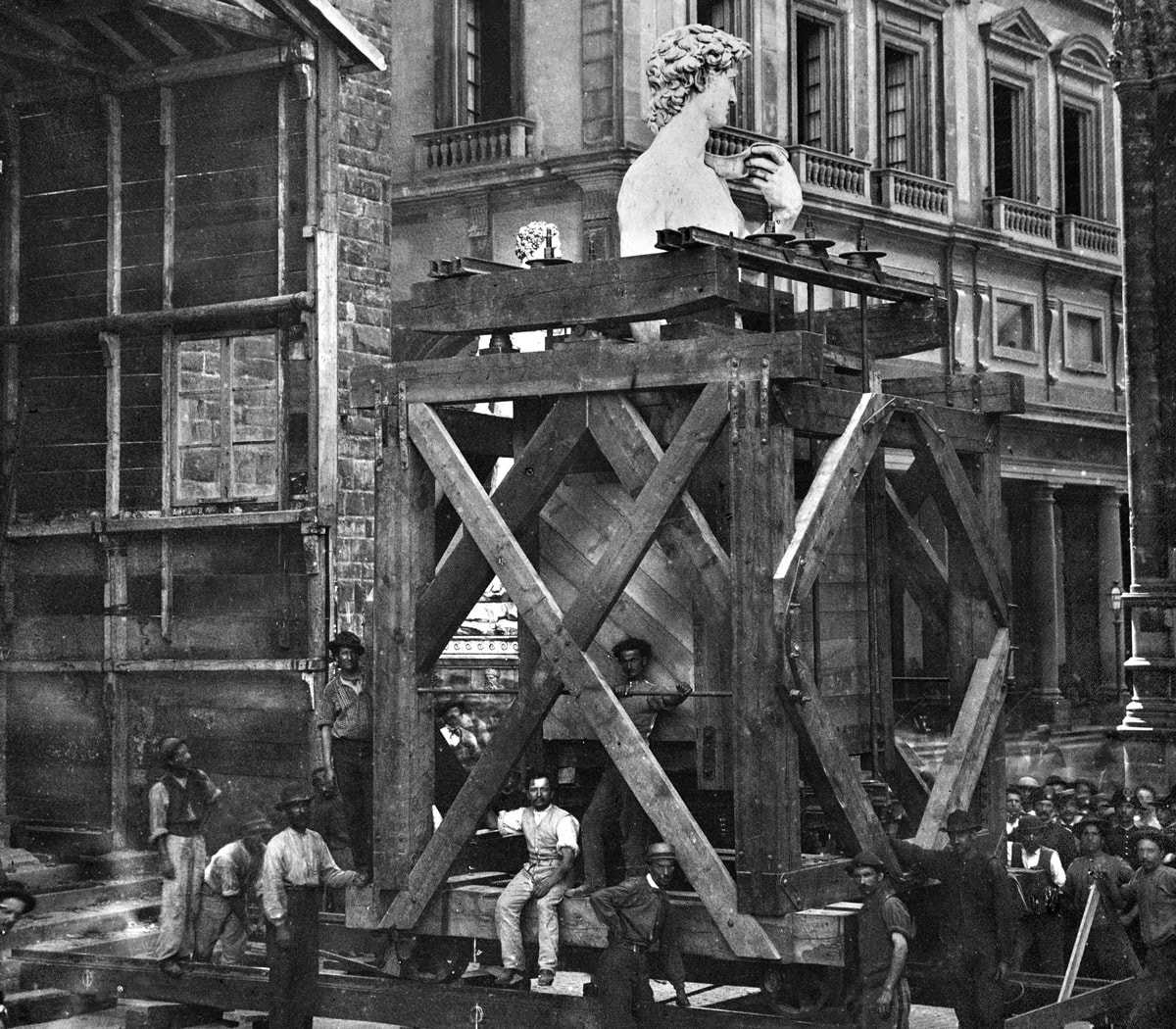
Collocare il gigante in un ambiente che lo avrebbe protetto dall’azione degli agenti atmosferici significava proteggerlo e custodirlo al meglio per le future generazioni. Dopo il restauro particolarmente aggressivo eseguito da Artistodemo Costoli adoperando una soluzione al cinquanta percento di acido cloridrico e ferri taglienti per graffiar via le croste più resistenti, l’opera era diventata ancor più vulnerabile.
Non solo. Nel corso dei secoli, a causa del cedimento del terreno sotto il peso dell’opera, il baricentro del David si era spostato pericolosamente in avanti e andava a sollecitare le caviglie che già presentavano dei cretti, ovvero delle fessurazioni.
Era dunque indispensabile riposizionare il baricentro nella posizione originale al più presto, per evitare problematiche importanti alla stabilità del colosso.
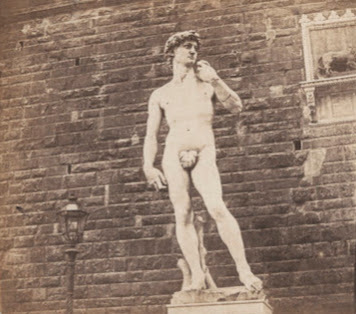
Durante lo spostamento l’opera avrebbe dovuto subire forti sollecitazioni, Poggi e Porra pensarono bene di movimentare l’opera all’interno di un carro realizzato con assi di legno, sospendendola grazie a un complesso apparto dotato di molle a spirale in acciaio.
Il carro si sarebbe spostato su binari paragonabili a quelli del treno. L’idea dei binari fu del Porra che lavorava come ingegnere per le ferrovie.
La questione delle curve obbligatorie, fu affrontata predisponendo un efficace piano girante. Sapete, tutti i dispositivi meccanici che hanno consentito di condurre il David fino all’Accademia, vennero realizzati nelle officine delle Strade Ferrate Romane.
La durata del trasferimento del David
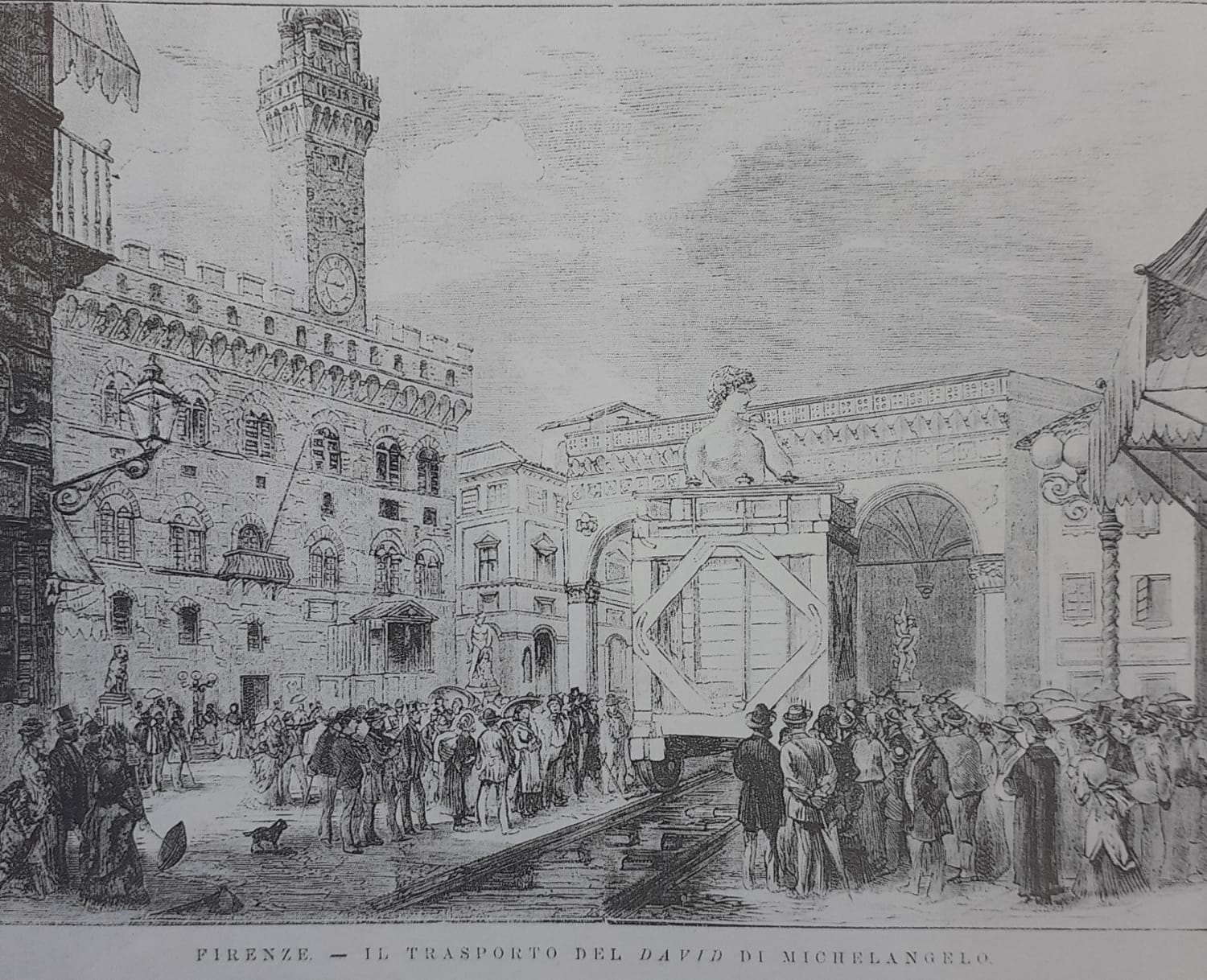
Il trasporto durò ben cinque giorni: dal 31 luglio al 4 di agosto del 1873. Si lavorava allo spostamento di notte e di mattino presto, dalle 4 fino alle 11 perché poi iniziava a fare troppo caldo ed era difficile lavorare sotto il solleone per la nutrita squadra di operai.
Il David fece il suo ingresso trionfale nella Galleria dell’Accademia passando attraverso un varco appositamente aperto in una delle pareti.
“L’operazione si concluse senza veruno incidente”, annotarono Poggi e Porra nel diario tenuto durante tutte le giornate dello spostamento.
Le foto dell’epoca così come le cronache documentano quanto l’impresa venne vissuta dai fiorentini come un grandioso evento. Le strade erano costantemente piene di persone che non volevano perdersi nemmeno un attimo di quello spostamento così atteso e importante.
Prima di essere esposto di nuovo al pubblico, il David dovette attendere qualche anno ancora ovvero fino alla ultimazione della sua tribuna progettata da Emilio de Fabris.
Il libro
Se volete conoscere tutta ma proprio tutta la storia del David, dal momento dell’estrazione del blocco nelle cave di Fantiscritti fino ai giorni vostri, vi propongo il libro che ha scritto colei che da anni mi da voce: la mia alter ego Antonietta Bandelloni.
Il libro Lui, il David lo trovate QUA.
Per il momento il vostro Michelangelo Buonarroti vi saluta dandovi appuntamento ai prossimi post e sui social.

July 31, 1873: The Transport of the David to the Galleria dell’Accademia Begins
It was a sunny day like today, July 31, 1873, when the decision was made to begin the journey of the David to the Galleria dell’Accademia in Florence.
A handful of months earlier, in May of that same year, the engineer Porra and the architect de Fabris were entrusted with the arduous task of coordinating the operations. They also had the honor and honor of organizing the transport and everything else needed for that titanic undertaking, which all the newspapers of the time covered for months.
Placing the giant in an environment that would protect it from the elements meant protecting and preserving it as best as possible for future generations. After the particularly aggressive restoration carried out by Artistodemo Costoli, who used a fifty-fifty hydrochloric acid solution and sharp tools to scrape away the most resistant crusts, the work had become even more vulnerable.
And that’s not all. Over the centuries, due to the subsidence of the ground under the weight of the work, the David’s center of gravity had shifted dangerously forward, placing strain on the ankles, which were already showing cracks.
It was therefore essential to reposition the center of gravity to its original position as soon as possible to avoid serious problems with the colossus’s stability.
During the move, the work would have been subjected to considerable stress. Poggi and Porra decided to move the work inside a cart made of wooden planks, suspended by a complex apparatus equipped with steel spiral springs.
The cart would have moved on tracks comparable to those of a train. The idea for the tracks was Porra’s, who worked as a railway engineer.
The issue of mandatory curves was addressed by developing an effective rotating platform. You know, all the mechanical devices that allowed the David to be transported to the Accademia were built in the workshops of the Roman Railways.
The David’s Move
The move lasted five days: from July 31st to August 4th, 1873. Work on the move took place at night and early in the morning, from 4:00 a.m. until 11:00 a.m., because it became too hot afterward, making it difficult for the large team of workers to work under the blazing sun.
The David made its triumphal entry into the Galleria dell’Accademia, passing through a specially opened opening in one of the walls.
“The operation was concluded without any incident,” noted Poggi and Porra in the diary they kept throughout the days of the move.
Photos from the period, as well as chronicles, document how the undertaking was experienced by the Florentines as a grandiose event. The streets were constantly crowded with people who didn’t want to miss even a moment of this eagerly awaited and important move.
Before being put on public display again, the David had to wait a few more years, until the completion of its tribune, designed by Emilio de Fabris.
For now, your Michelangelo Buonarroti bids you farewell and looks forward to seeing you in future posts and on social media.

Sostienici – Support Us
Se questo blog ti piace e ti appassiona, puoi aiutarci a farlo crescere sempre più sostenendoci in modo concreto condividendo i post, seguendo le pagine social e con un contributo che ci aiuta ad andare avanti con il nostro lavoro di divulgazione. . ENGLISH: If you like and are passionate about this blog, you can help us make it grow more and more by supporting us in a concrete way by sharing posts, following social pages and with a contribution that helps us to move forward with our dissemination work.
10,00 €
Condividi:


Questo sono io





sostienici

Sostienici – Support Us
Se questo blog ti piace e ti appassiona, puoi aiutarci a farlo crescere sempre più sostenendoci in modo concreto condividendo i post, seguendo le pagine social e con un contributo che ci aiuta ad andare avanti con il nostro lavoro di divulgazione. . ENGLISH: If you like and are passionate about this blog, you can help us make it grow more and more by supporting us in a concrete way by sharing posts, following social pages and with a contribution that helps us to move forward with our dissemination work.
€10,00


