
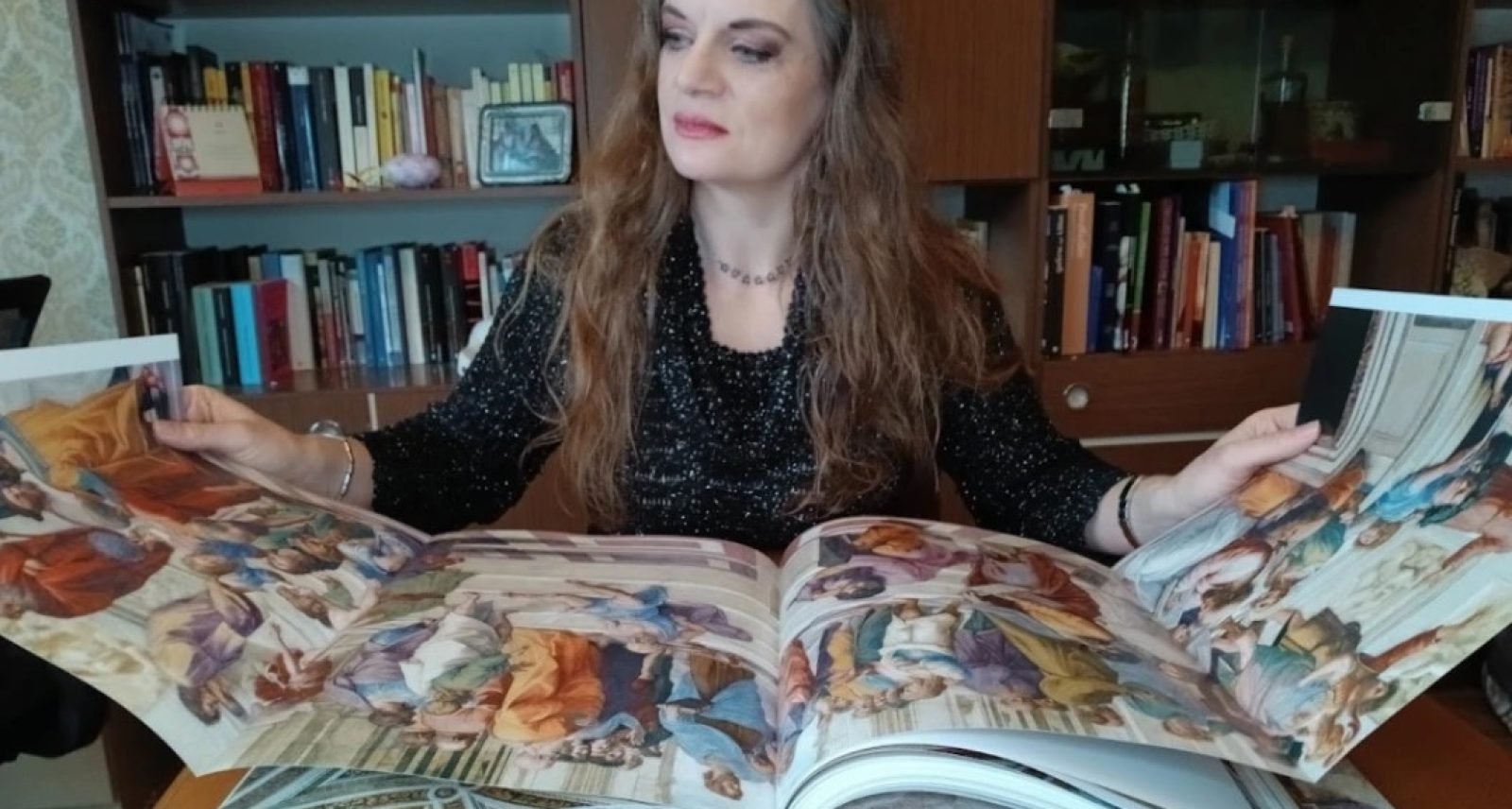
Fonte Gaia a Siena: sorgente di felicità
Fonte Gaia è la più grande e importante fontana pubblica di tutta Siena e si trova nel cuore pulsante della città: Piazza del Campo.
Tanto fu grande la sorpresa e la gioia con le quali la popolazione accolse lo sgorgare delle acque nel momento esatto dell’inaugurazione, avvenuta nel 1346, si pensò non ci potesse essere nome più azzeccato di Fonte Gaia.

Sapete, le fontane pubbliche all’epoca non erano esclusivamente abbellimenti coreografici dei luoghi simbolo della città ma venivano adoperate costantemente per far bere animali, per attingere acqua, per lavarsi e per lavare panni.
La grande fontana venne progettata da Jacopo della Quercia. Pensate che per alimentarla fu costruita un’opera idraulica laboriosa che richiese la realizzazione di trenta chilometri di galleria sotterranea per fare arrivare l’acqua fino alla Fonte.

Accadde però che lo scultore Jacopo della Quercia avesse scelto un marmo non appropriatissimo per quel tipo di lavori. Il marmo della Montagnola senese è notoriamente poco resistente alle intemperie e, con il passare degli anni, le sculture cominciarono a cedere e a deteriorarsi rapidamente.
Il danno più importante e conosciuto subito dalla Fonte Gaia risale al 1743 quando un tale, per vedere meglio il palio, si arrampicò sopra una delle sculture a tutto tondo rompendola in chissà quanti pezzi. Il povero sventurato morì sul colpo.
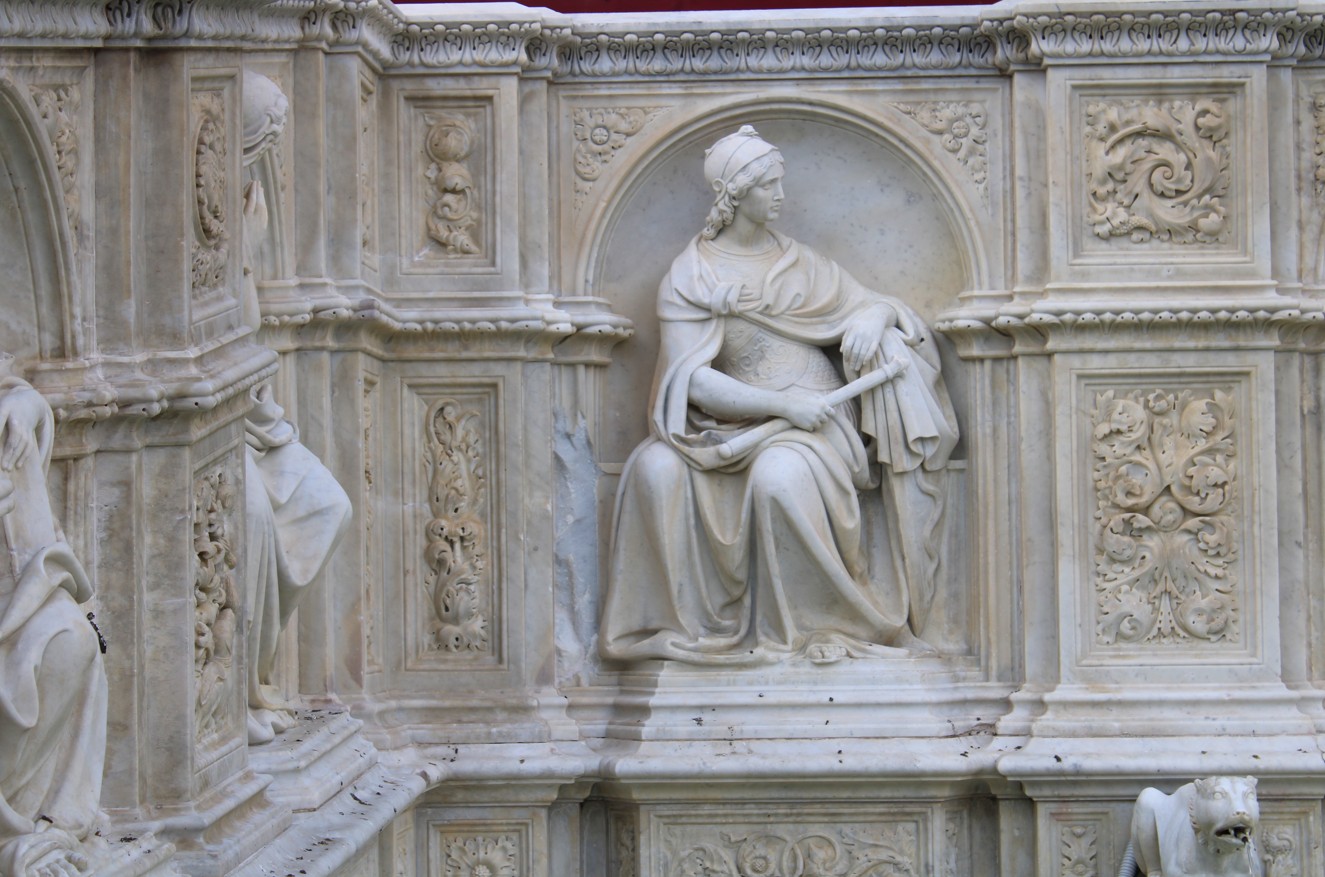
Nel 1859 venne deciso di sostituire le scultore di Jacopo della Quercia con opere identiche realizzate in marmo di Carrara dallo scultore senese Tito Sarocchi.
Dieci anni dopo la sostituzione delle opere fu completata e in quella medesima occasione, Fonte Gaia fu collocata in posizione più centrale e protetta dalla cancellata realizzata da Giuseppe Partini.
Che fine fecero i rilievi di Jacopo della Quercia?
Dopo un attento e lungo restauro oggi sono visibili presso il Museo di Santa Maria della Scala. Anche le sculture realizzate da Tito Sarocchi non sono più in piazza ma nel medesimo museo e sostituti con copie novecentesche.
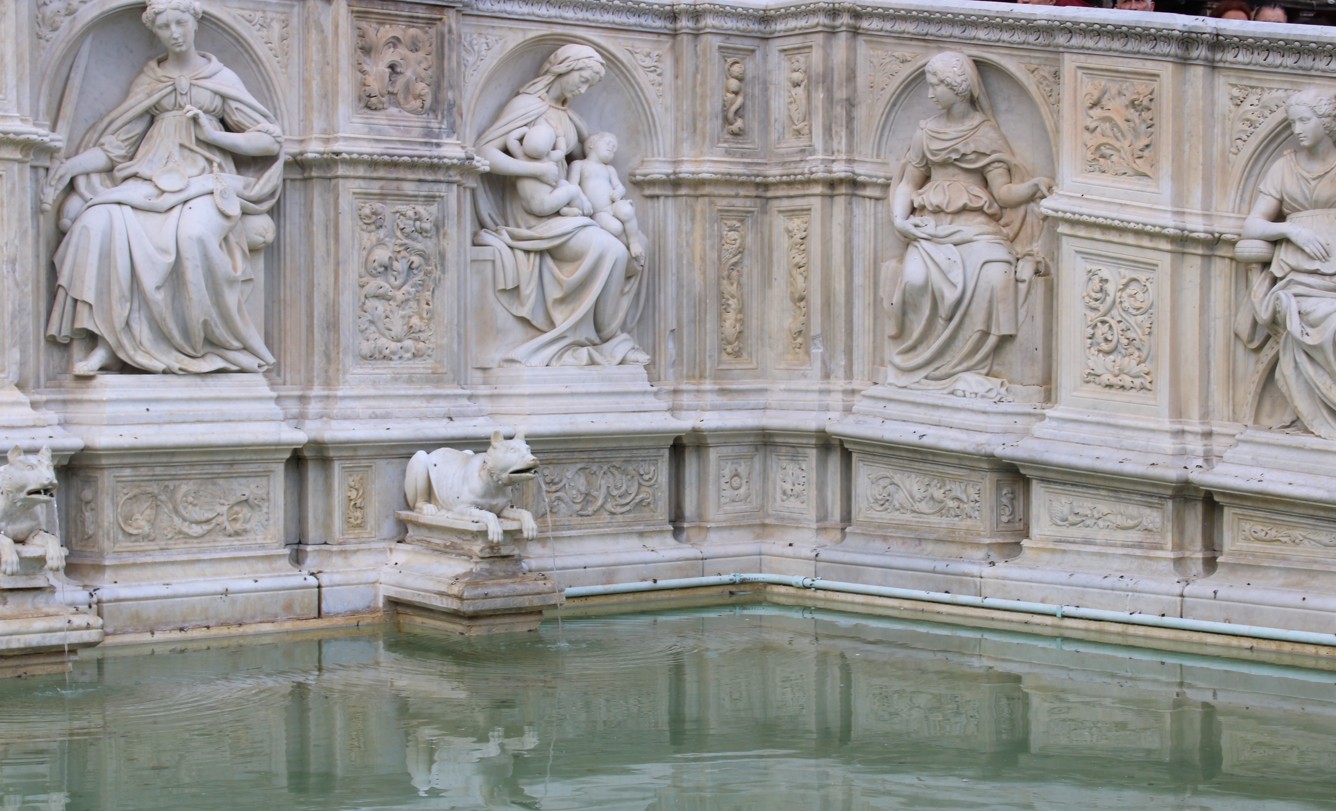
Il restauro
Fonte Gaia è stata sottoposta a un accurati intervento di restauro durato quattro mesi: da ottobre 2023 fino a febbraio 2024. Un lavoro meticoloso che ha visto impegnati il restauratore Stefano Landi e il suo staff per venti settimane consecutive e strumentazioni di ultima generazione come il Laser Thunder Compact, abbinato a tecniche avanzate. Ve ne ho parlato nel dettaglio QUA.
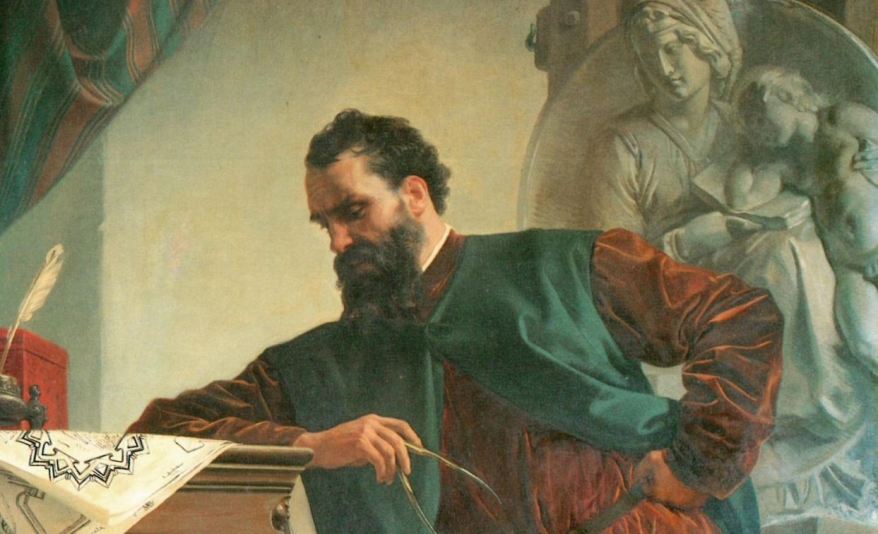
Per il momento il sempre vostro Michelangelo Buonarroti vi saluta dandovi appuntamento ai prossimi post e sui social.
Fonte Gaia in Siena: a source of happiness
Fonte Gaia is the largest and most important public fountain in all of Siena and is located in the heart of the city: Piazza del Campo.
So great was the surprise and joy with which the population greeted the gushing waters at the exact moment of its inauguration in 1346, that it was thought there could be no more fitting name than Fonte Gaia.
You know, public fountains at the time were not merely choreographic embellishments of the city’s iconic landmarks but were also used constantly to provide drinking water for animals, to draw water, to bathe, and to wash clothes.
The great fountain was designed by Jacopo della Quercia. Consider that to power it, a laborious hydraulic project was built, requiring the construction of thirty kilometers of underground tunnels to bring the water to the fountain.
However, the sculptor Jacopo della Quercia chose a marble that was not entirely appropriate for that type of work. The marble from the Montagnola Senese is notoriously poor in weather resistance, and over the years, the sculptures began to sag and deteriorate rapidly.
The most significant and well-known damage to the Fonte Gaia dates back to 1743, when a man, to better view the Palio, climbed onto one of the sculptures in the round, breaking it into who knows how many pieces. The unfortunate man died instantly.
In 1859, it was decided to replace the sculptures by Jacopo della Quercia with identical works in Carrara marble by the Sienese sculptor Tito Sarocchi.
Ten years later, the replacement of the sculptures was completed, and on that same occasion, the Fonte Gaia was relocated to a more central location, protected by a gate designed by Giuseppe Partini.
What happened to the reliefs by Jacopo della Quercia?
After a careful and lengthy restoration, they are now on display at the Museum of Santa Maria della Scala. Even the sculptures created by Tito Sarocchi are no longer in the square but in the same museum, replaced with 20th-century copies.
The Restoration
Fonte Gaia underwent a thorough restoration project that lasted four months: from October 2023 to February 2024. This meticulous work involved restorer Stefano Landi and his staff for twenty consecutive weeks, using state-of-the-art equipment such as the Laser Thunder Compact, combined with advanced techniques. I wrote about it in detail HERE.
For now, yours truly, Michelangelo Buonarroti bids you farewell and says hello to future posts and social media.

Sostienici – Support Us
Se questo blog ti piace e ti appassiona, puoi aiutarci a farlo crescere sempre più sostenendoci in modo concreto condividendo i post, seguendo le pagine social e con un contributo che ci aiuta ad andare avanti con il nostro lavoro di divulgazione. . ENGLISH: If you like and are passionate about this blog, you can help us make it grow more and more by supporting us in a concrete way by sharing posts, following social pages and with a contribution that helps us to move forward with our dissemination work.
10,00 €
Condividi:


Questo sono io





sostienici

Sostienici – Support Us
Se questo blog ti piace e ti appassiona, puoi aiutarci a farlo crescere sempre più sostenendoci in modo concreto condividendo i post, seguendo le pagine social e con un contributo che ci aiuta ad andare avanti con il nostro lavoro di divulgazione. . ENGLISH: If you like and are passionate about this blog, you can help us make it grow more and more by supporting us in a concrete way by sharing posts, following social pages and with a contribution that helps us to move forward with our dissemination work.
€10,00


