

3 luglio: San Tommaso visto dagli artisti
Oggi 3 luglio la Chiesa Cattolica ricorda San Tommaso, l’apostolo di Cristo più scettico in merito alla Sua Resurrezione.
Talvolta ricordato come ‘Tommaso l’incredulo’ per il desiderio di avere prove tangibili di quella rinascita, divenne un fervente sostenitore della fede cristiana e un missionario zelante.
Come è stato raffigurato San Tommaso nel corso dei secoli dagli artisti? Ci sono opere celeberrime a lui dedicate come l’Incredulità dipinta da Caravaggio o quella forgiata nel bronzo dal Verrocchio ma ci sono anche capolavori meno noti che vale la pena conoscere.

L’Incredulità di San Tommaso di Duccio di Buoninsegna
Come narra l’evangelista Giovanni, dopo otto giorni dall’apparizione agli apostoli, Gesù si mostrò nuovamente nella loro casa. Tommaso che non aveva creduto alla Resurrezione raccontata dai fratelli di fede, fu chiamato da Cristo per mettere il dito nella ferita sul suo costato e per guardare le stimmate.
Duccio di Buoninsegna dipinse a tempera su tavola proprio questa scena, mentre Tommaso tocca il costato. A destra e a sinistra della scena scentrale si vedono i due gruppi di apostoli.
La tavola in origine faceva parte della Maestà che Buoninsegna aveva realizzato per l’altare maggiore del Duomo di Siena, tra il 1308 e il 1311. Oggi è custodita nel Museo dell’Opera.
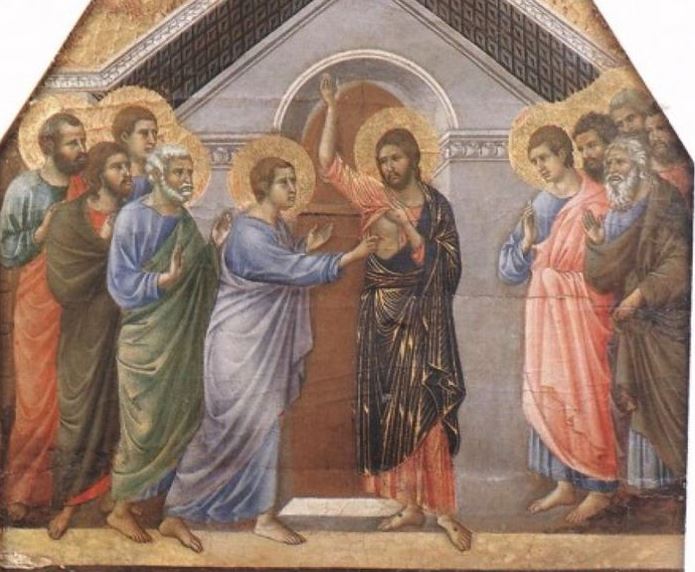
L’incredulità di San Tommaso di Cima da Conegliano
Anche Cima da Conegliano si confrontò sul tema di San Tommaso. L’opera a olio su tela gli venne commissionata dalla Scuola di San Tommaso dei Battuti, nel 1497 con lo scopo di collocarla nella chiesa di San Francesco di Portogruaro.
Ultimata nel 1504, l’artista fu pagato solo cinque anni più tardi. Nel dipinto Cristo acquista un aspetto più umano e meno divino. Si trova al centro della scena, attorniato dagli apostoli: sei a destra e cinque a sinistra.
Sullo sfondo si vedono due aperture: sono le strade di Cristo aperte verso i cieli e la gloria del Paradiso. Fateci caso, sullo sfondo delle rappresentazioni dell’Incredulità di San Tommaso spesso ci sono aperture verso l’esterno da leggere in questa chiave.
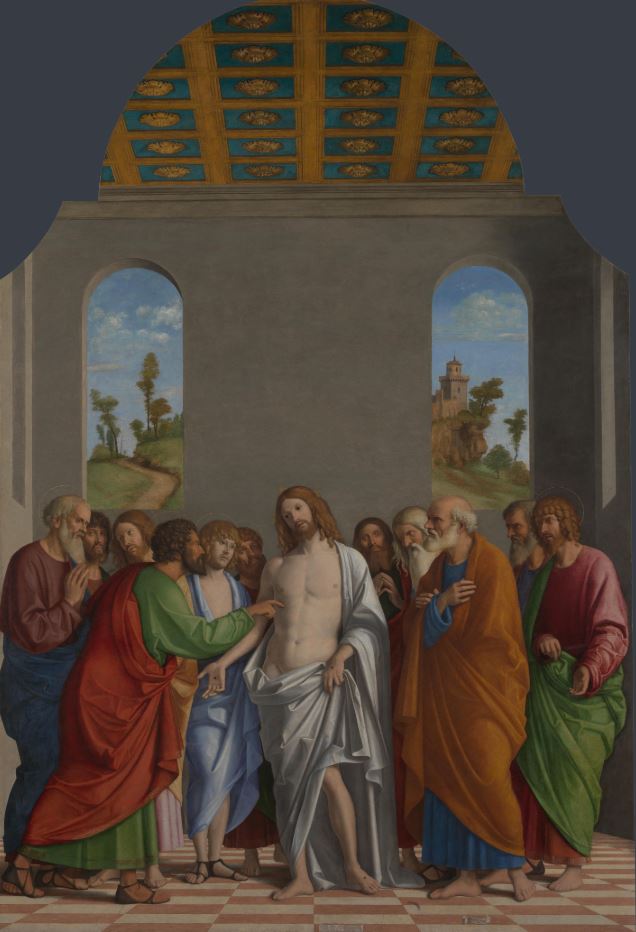
L’Incredulità di San Tommaso del Salviati
Il Salviati, al secolo Francesco de Rossi, dipinse un’Incredulità un po’ diversa da quelle che vi ho proposto fino al momento. L’Apostolo infatti non mette l’indice nella ferita del costato di Cristo ma è in ginocchio e sembra chiedere perdono per il suo non credere.
L’opera venne dipinta a olio tra il 1543 e i l 1547 dal Salviati per la chiesa di Notre-Dame-de-Confort a Lione su commissione di Tommaso II de Gadagne, consigliere fiorentino di Francesco I di Francia.
L’opera è firmata FRANCESCO SALVIATO FLO. e oggi è custodita al Museo del Louvre.
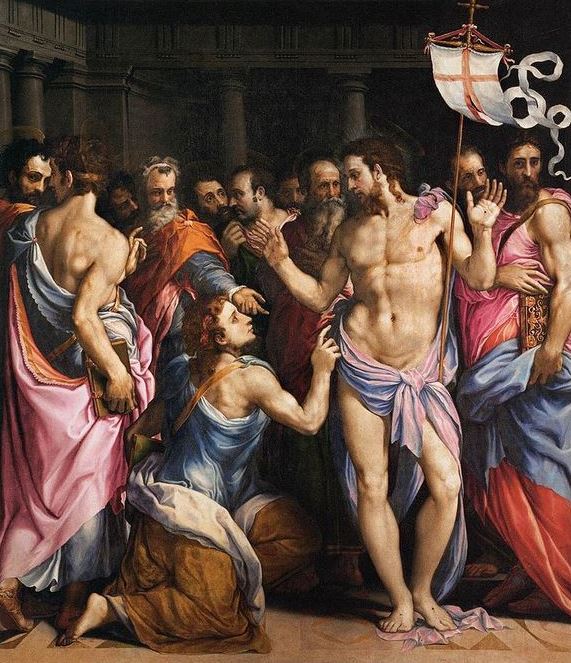
L’incredulità di San Tommaso del Bronzino
Alessandro Allori, detto il Bronzino, dipinse l’Incredulità di San Tommaso a olio su tavola nel 1595.
San Tommaso, al contrario di quanto accade abitualmente nelle opere dipinte, si trova a destra e non a Sinistra.
Il Cristo a torso nudo cerca lo sguardo dell’Apostolo che non lo ricambia ma osserva la ferita del costato prima di toccarla. Il dipinto appartiene alle collezioni del Complesso monumentale della Pilotta, a Parma.

Per il momento il sempre vostro Michelangelo Buonarroti vi saluta dandovi appuntamento ai prossimi post e sui social.
July 3: St. Thomas as seen by artists
Today, July 3, the Catholic Church remembers St. Thomas, the apostle of Christ who was most skeptical about His Resurrection.
Sometimes remembered as Thomas the Doubter for his desire to have tangible proof of that rebirth, he became a fervent supporter of the Christian faith and a zealous missionary.
How has St. Thomas been depicted by artists over the centuries? There are very famous works dedicated to him such as the Incredulity painted by Caravaggio or the one forged in bronze by Verrocchio but there are also lesser-known masterpieces that are worth knowing.
The Incredulity of St. Thomas by Duccio di Buoninsegna
As the evangelist John narrates, eight days after the apparition to the apostles, Jesus showed himself again in their house. Thomas, who had not believed in the Resurrection told by his brothers of faith, was called by Christ to put his finger in the wound on his side and to look at the stigmata.
Duccio di Buoninsegna painted this very scene in tempera on a panel, while Thomas touches the side. To the right and left of the central scene you can see the two groups of apostles.
The panel was originally part of the Maestà that Buoninsegna had created for the high altar of the Cathedral of Siena, between 1308 and 1311. Today it is kept in the Museo dell’Opera.
The Incredulity of Saint Thomas by Cima da Conegliano
Cima da Conegliano also addressed the theme of Saint Thomas. The oil on canvas work was commissioned by the Scuola di San Tommaso dei Battuti, in 1497 with the aim of placing it in the church of San Francesco in Portogruaro.
Completed in 1504, the artist was paid only five years later. In the painting, Christ takes on a more human and less divine appearance. He is at the center of the scene, surrounded by the apostles: six on the right and five on the left.
In the background you can see two openings: they are the roads of Christ open to the heavens and the glory of Paradise. Notice, in the background of the representations of the Incredulity of Saint Thomas there are often openings towards the outside to be read in this key.
The Incredulity of Saint Thomas by Salviati
Salviati, born Francesco de Rossi, painted an Incredulity a little different from those I have proposed to you up to now. In fact, the Apostle does not put his index finger in the wound in Christ’s side but is on his knees and seems to ask for forgiveness for his non-belief.
The work was painted in oil between 1543 and 1547 by Salviati for the church of Notre-Dame-de-Confort in Lyon, commissioned by Thomas II de Gadagne, Florentine advisor to Francis I of France.
The work is signed FRANCESCO SALVIATO FLO. and is now kept at the Louvre Museum.
The Incredulity of Saint Thomas by Bronzino
Alessandro Allori, known as Bronzino, painted the Incredulity of Saint Thomas in oil on wood in 1595.
Saint Thomas, contrary to what usually happens in painted works, is on the right and not on the left.
The bare-chested Christ seeks the gaze of the Apostle who does not return his gaze but observes the wound in his side before touching it. The painting belongs to the collections of the Monumental Complex of the Pilotta, in Parma.
For now, yours ever Michelangelo Buonarroti bids you farewell, making an appointment to see you in the next posts and on social media.

Sostienici – Support Us
Se questo blog ti piace e ti appassiona, puoi aiutarci a farlo crescere sempre più sostenendoci in modo concreto condividendo i post, seguendo le pagine social e con un contributo che ci aiuta ad andare avanti con il nostro lavoro di divulgazione. . ENGLISH: If you like and are passionate about this blog, you can help us make it grow more and more by supporting us in a concrete way by sharing posts, following social pages and with a contribution that helps us to move forward with our dissemination work.
10,00 €
Condividi:


Questo sono io





sostienici

Sostienici – Support Us
Se questo blog ti piace e ti appassiona, puoi aiutarci a farlo crescere sempre più sostenendoci in modo concreto condividendo i post, seguendo le pagine social e con un contributo che ci aiuta ad andare avanti con il nostro lavoro di divulgazione. . ENGLISH: If you like and are passionate about this blog, you can help us make it grow more and more by supporting us in a concrete way by sharing posts, following social pages and with a contribution that helps us to move forward with our dissemination work.
€10,00


