
Museo Correr: la spinetta di Francesco Patavino torna a suonare dopo il restauro
La spinetta realizzata intorno al 1552 da Franciscus Patavinus, custodita abitualmente nei depositi del Museo Correr di Venezia, è stata sottoposta a un complesso intervento di restauro che le ha permesso di tornare a suonare.
Il ritorno al suono di questo strumento non è solo un gesto conservativo – sottolinea Andrea Bellieni, curatore del Museo Correr – ma un modo per riattivare una memoria viva. Restituire voce a un oggetto antico significa ricollocarlo nel suo contesto originario: non come semplice reperto, ma come testimone attivo della cultura che lo ha generato“.
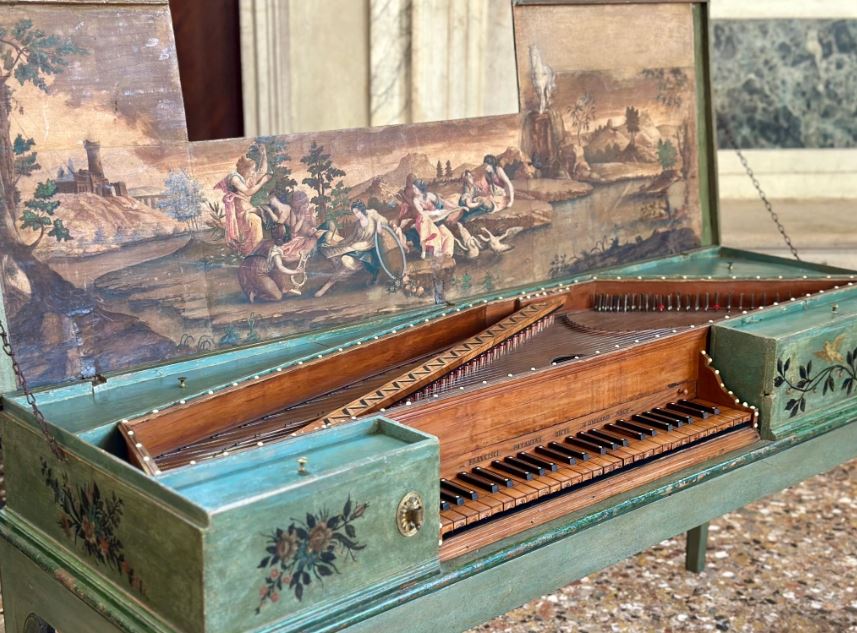
L’intervento rientra tra le attività di valorizzazione del patrimonio artistico della Fondazione Musei Civici di Venezia. Curato da Graziano Bandini con la collaborazione del Laboratorio Arvedi di Diagnostica Non Invasiva (CISRIC) dell’Università di Pavia, è stato reso possibile grazie al sostegno economico di Louis Vuitton.
Accenni storici della spinetta di Franciscus Patavinus
Appartenente alla famiglia del clavicembalo, la spinetta si distingue per le dimensioni più piccole e una sonorità più raccolta, ideale per ambienti privati. Molto diffusa tra la fine del Quattrocento e il Seicento, veniva adoperata soprattutto in contesti aristocratici e colti, spesso suonata da donne. La spinetta di fatto simboleggiava raffinatezza e cultura.
L’esemplare presente al Museo Correr è firmato Franciscus Patavinus e datato alla metà del XVI secolo. E’ difficilissimo avere oggi un modello che si è conservato così bene nel corso dei secoli.

E’ un caso raro di conservazione pressoché integrale. L’attribuzione è stata confermata da un confronto con un virginale, piccola spinetta diffusa in Inghilterra in epoca elisabettiana, conservato al Conservatoire Royal de Musique di Bruxelles, opera certa dello stesso autore e molto simile sotto il profilo tecnico e formale. A Patavinus è inoltre attribuito un cembalo conservato al Deutsches Museum di Monaco. Un ulteriore elemento di autenticazione è rappresentato dalla scritta «basi» incisa su un cartesino nella parte sinistra della tastiera, analoga a quella presente sullo strumento di Bruxelles.
Passaggi di proprietà e restauro
La spinetta venne acquistata dal Museo Correr all’inizio del Novecento è studiata approfonditamente solo nel 1995 dallo specialista Grant O’Brien.
Con il recente intervento avviato nel 2021 e curato da Graziano Bandini, la spinetta ha riacquistato piena funzionalità.
Il restauro ha riguardato in particolare il mobile ottocentesco che la custodisce, mentre lo strumento cinquecentesco è stato ritrovato in condizioni eccezionali: i ponticelli erano ancora nella loro posizione originale e la tavola armonica non presentava rimaneggiamenti.
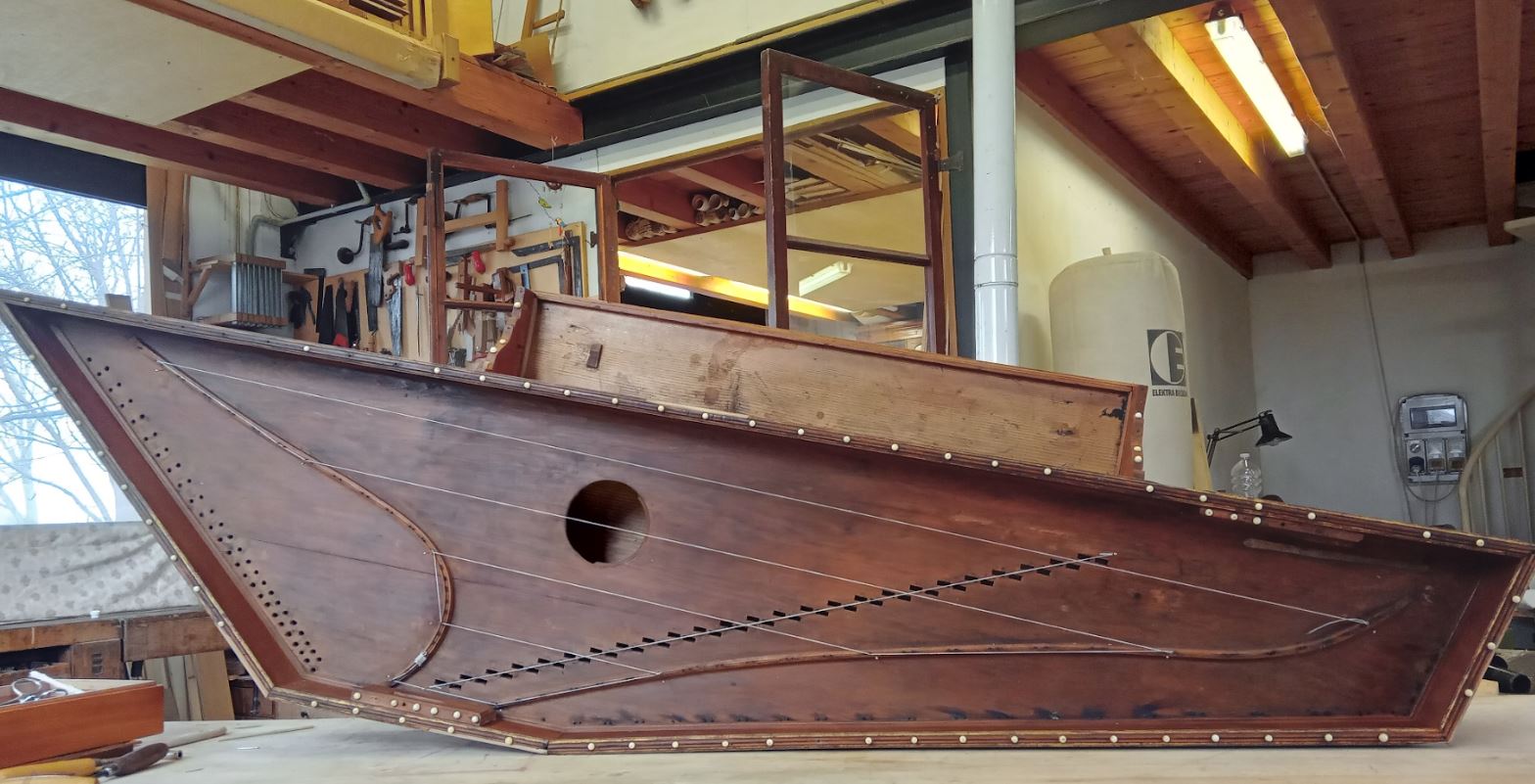
Per ripristinare la funzionalità musicale, sono stati ricostruiti i salterelli ovvero i piccoli leveraggi in legno che permettono ai tasti di pizzicare le corde, attraverso un minuzioso intervento tecnico che ha restituito allo strumento la sua voce originale.
Le corde sono state reinstallate, mentre i salterelli originali sono stati accuratamente conservati. Il restauro è stato anche occasione per applicare metodi di ricostruzione storica, basati sull’uso di unità di misura pre-metriche come once e piedi veneziani.

Per inaugurare il restauro, il maestro Matteo Messori, è tornato a suonare la spinetta nella Chiesetta di Palazzo Ducale.
Per il momento il sempre vostro Michelangelo Buonarroti vi saluta dandovi appuntamento ai prossimi post e sui social.
Museo Correr: the spinet of Franciscus Patavinus returns to sound after restoration
The spinet made around 1552 by Franciscus Patavinus, usually kept in the storage rooms of the Museo Correr in Venice, has undergone a complex restoration that has allowed it to play again.
The return to sound of this instrument is not only a conservative gesture – underlines Andrea Bellieni, curator of the Museo Correr – but a way to reactivate a living memory. Giving voice back to an ancient object means placing it back in its original context: not as a simple artifact, but as an active witness to the culture that generated it.
The intervention is part of the activities to enhance the artistic heritage of the Fondazione Musei Civici di Venezia. Curated by Graziano Bandini with the collaboration of the Arvedi Laboratory of Non-Invasive Diagnostics (CISRIC) of the University of Pavia, it was made possible thanks to the financial support of Louis Vuitton.
Historical notes on the spinet by Franciscus Patavinus
Belonging to the harpsichord family, the spinet is distinguished by its smaller size and a more intimate sound, ideal for private environments. Very widespread between the end of the fifteenth century and the seventeenth century, it was used especially in aristocratic and cultured contexts, often played by women. The spinet in fact symbolized refinement and culture.
The specimen present at the Correr Museum is signed Franciscus Patavinus and dated to the mid-sixteenth century. It is very difficult to have today a model that has been so well preserved over the centuries.
is a rare case of almost complete preservation. The attribution was confirmed by a comparison with a virginal, a small spinet widespread in England in the Elizabethan era, preserved at the Conservatoire Royal de Musique in Brussels, a certain work by the same author and very similar in technical and formal terms. A harpsichord preserved at the Deutsches Museum in Munich is also attributed to Patavinus. A further element of authentication is represented by the word “basi” engraved on a cartesino on the left side of the keyboard, similar to that on the Brussels instrument.
Changes of ownership and restoration
The spinet was purchased by the Correr Museum at the beginning of the twentieth century and was studied in depth only in 1995 by the specialist Grant O’Brien.
With the recent intervention started in 2021 and curated by Graziano Bandini, the spinet has regained full functionality.
The restoration concerned in particular the nineteenth-century cabinet that houses it, while the sixteenth-century instrument was found in exceptional condition: the bridges were still in their original position and the soundboard had not been altered.
To restore the musical functionality, the jacks, the small wooden levers that allow the keys to pluck the strings, were rebuilt through a meticulous technical intervention that restored the instrument to its original voice.
The strings were reinstalled, while the original jacks were carefully preserved. The restoration was also an opportunity to apply historical reconstruction methods, based on the use of pre-metric units of measurement such as ounces and Venetian feet.
To inaugurate the restoration, Maestro Matteo Messori returned to play the spinet in the Church of Palazzo Ducale.
For the moment, yours truly Michelangelo Buonarroti bids you farewell, making an appointment to see you in the next posts and on social media.

Sostienici – Support Us
Se questo blog ti piace e ti appassiona, puoi aiutarci a farlo crescere sempre più sostenendoci in modo concreto condividendo i post, seguendo le pagine social e con un contributo che ci aiuta ad andare avanti con il nostro lavoro di divulgazione. . ENGLISH: If you like and are passionate about this blog, you can help us make it grow more and more by supporting us in a concrete way by sharing posts, following social pages and with a contribution that helps us to move forward with our dissemination work.
10,00 €
Articoli


Condividi:


Questo sono io





sostienici

Sostienici – Support Us
Se questo blog ti piace e ti appassiona, puoi aiutarci a farlo crescere sempre più sostenendoci in modo concreto condividendo i post, seguendo le pagine social e con un contributo che ci aiuta ad andare avanti con il nostro lavoro di divulgazione. . ENGLISH: If you like and are passionate about this blog, you can help us make it grow more and more by supporting us in a concrete way by sharing posts, following social pages and with a contribution that helps us to move forward with our dissemination work.
€10,00


