

La Scultura del giorno: l’Ercole Farnese di Glicone
La scultura del giorno di cui voglio parlarvi oggi è il cosiddetto Ercole Farnese scolpito e firmato da Glicone: un capolavoro assoluto datato attorno III secolo d.C.
Il colossale Ercole, o Eracle secondo i greci, era il figlio di Zeus e Alcmena. Glicone lo raffigurò in modo magistrale durante un momento di riposo nell’opera appartenete al Museo Archeologico di Napoli.
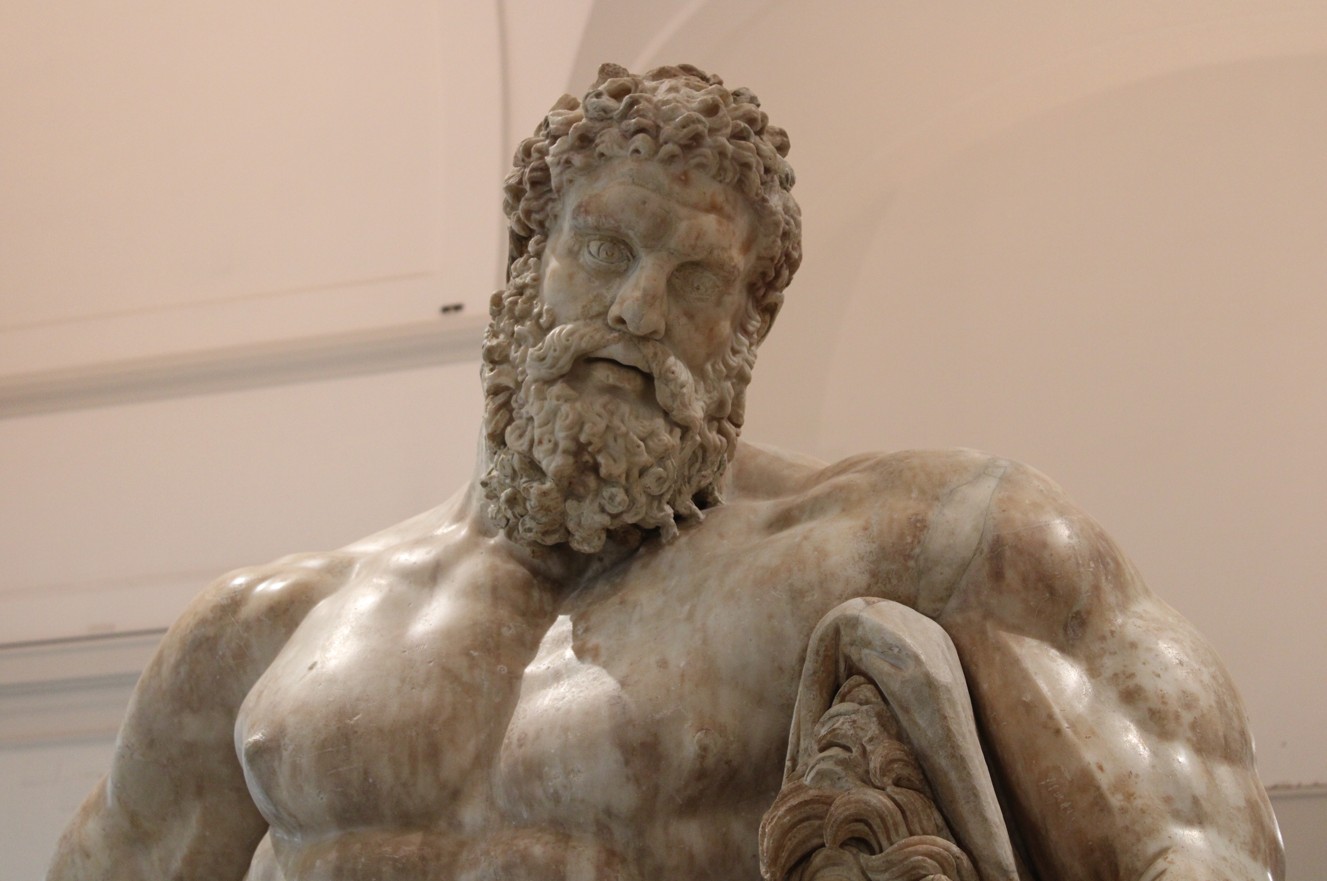
Osservando a distanza questa magnifica opera ci si sente minuscoli, tale è la sua imponenza. L’eroe greco tiene nella mano destra posizionata dietro la schiena i pomi delle Esperidi, simbolo delle sue fatiche e delle conquiste raggiunte.
Il realismo del marmo plasmato dallo scultore è sorprendente, tangibile nelle masse muscolari e nel vigore fisico di Ercole che impugna la sua clava, attributo distintivo del suo eroismo ma non solo. Proprio la clava che poggia sulla roccia è funzionale allo scarico dei pesi a terra e bilancia in modo eccellente tutta la figura.

Il contrasto tra il lato rilassato della figura e quello teso crea un dinamismo visivo che aggiunge profondità e vita all’opera. I dettagli anatomici sono resi con una straordinaria precisione, riflettendo un approccio artistico che valorizza la rappresentazione autentica della figura umana.
Se osservate con attenzione la base dell’opera, dalla parte destra, noterete la presenza di un profilo non lavorato e di due incavi innaturali. Alcuni studiosi ipotizzano in origine fosse compresa un’altra figura, probabilmente il figlio di Eacle Telefolnfine.
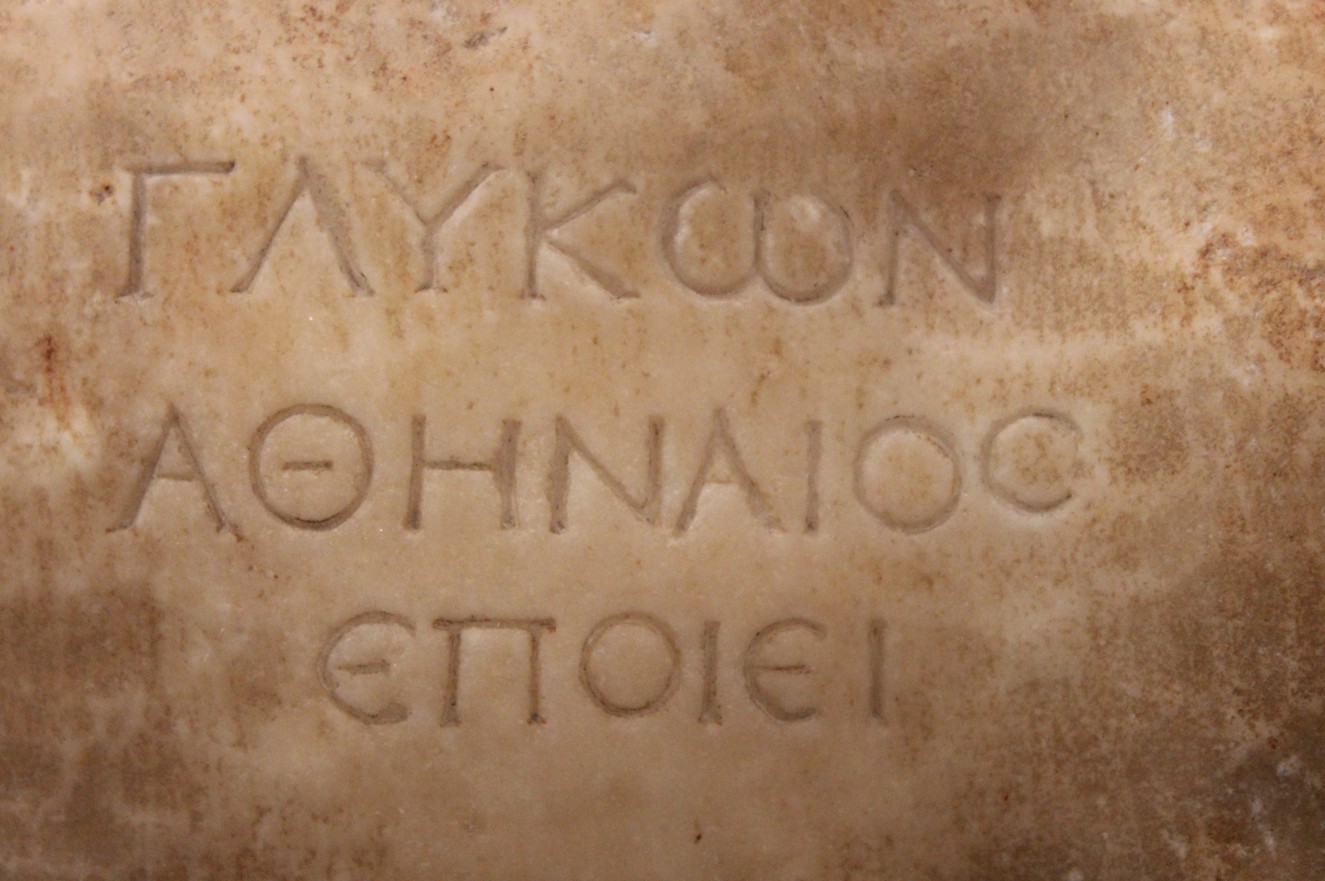
Poco sotto la clava l’artista volle lasciare la sua firma scalpellata nel marmo in greco: ΓΛΥΚΩΝ ΑΘΗΝΑΙΟΣ ΕΠΟΙΕΙ ovvero Glycon athenaios epoiei che tradotta in lingua corrent significa ‘Glicone ateniese fece‘.
La storia dell’Ecole Farnese
L’Ercole Farnese fu rinvenuto nel 1546 durante gli scavi condotti presso le Terme di Caracalla. Secondo la testimonianza di Antonio da Sangallo, l’opera era collocata nell’ambiente di passaggio tra il frigidarium
e la palestra nord-occidentale.
Fu ritrovata senza la testa, trovata e reintegrata solo nel 1563. Anche i polpacci erano mancanti ma fu affidato a Guglielmo della Porta il restauro integrativo. Diversi anni dopo furono ritrovate anche le gambe e quelle dell’artista cinquecentesco furono rimosse per collocare il situ quelle originali.

Napoleone rimase ammaliato da questo capolavoro tanto che per tre volte provò a organizzare una spedizione per portarlo nella nascente collezione del Musée Napoléon: il futuro Museo del Louvre.
Gli esperti sono concordi nel ritenere l’Ercole Farnese una replica di un originale in bronzo realizzato dallo scultore greco Lisippo nel IV secolo a.C. ad Atene.
Le Fatiche di Ercole
Il mito di Eracle o Ercole che dir si voglia, con le sue dodici fatiche, rappresenta non solo le sfide fisiche, ma anche la lotta contro le avversità e il superamento dei limiti umani.

Nella scultura si riflette un momento particolarmente significativo: il riposo dopo l’undicesima fatica che richiese ingegno e valore.
Questa scelta di rappresentare Eracle nel suo momento di pausa si discosta dalle comuni interpretazioni che mostrano l’eroe in azione, suggerendo una riflessione più profonda sulla natura dell’eroismo.

Per il momento il sempre vostro Michelangelo Buonarroti vi saluta dandovi appuntamento ai prossimi post e sui social.

Sculpture of the day: the Farnese Hercules by Glycone
The sculpture of the day that I want to talk to you about today is the so-called Farnese Hercules, known as Heracles to the Greeks, sculpted and signed by Glycone.
The colossal Heracles, son of Zeus and Alcmene, is magnificently represented in the sculpture belonging to the Archaeological Museum of Naples in a moment of rest that captures the attention for its impressive beauty and power.
Observing this magnificent work from a distance one feels tiny, such is its grandeur. The Greek hero holds in his right hand positioned behind his back the apples of the Hesperides, symbol of his labors and the conquests achieved.
The realism of the marble shaped by the sculptor is surprising, tangible in the muscle mass and physical strength of Hercules who holds his club, a distinctive attribute of his heroism but not only. The club that rests on the rock is functional for unloading the weights to the ground and balances the entire figure in an excellent way.
The contrast between the relaxed side of the figure and the tense one creates a visual dynamism that adds depth and life to the work. The anatomical details are rendered with extraordinary precision, reflecting an artistic approach that values the authentic representation of the human figure.
If you look carefully at the base of the work, on the right side, you will notice the presence of an unworked profile and two unnatural hollows. Some scholars hypothesize that another figure was originally included, probably the son of Heacles Telefolnfine.
Just below the club the artist wanted to leave his signature chiseled in the marble in Greek: ΓΛΥΚΩΝ ΑΘΗΝΑΙΟΣ ΕΠΟΙΕΙ or Glycon athenaios epoiei which translated into current language means ‘Glycon the Athenian made‘.
The history of the Ecole Farnese
The Farnese Hercules was discovered in 1546 during excavations at the Baths of Caracalla. According to Antonio da Sangallo, the work was located in the passageway between the frigidarium and the north-west gymnasium.
It was found without its head, found and reinstated only in 1563. The calves were also missing but the integrative restoration was entrusted to Guglielmo della Porta. Several years later the legs were also found and those of the sixteenth-century artist were removed to place the original ones in situ.
Napoleon was so enchanted by this masterpiece that he tried three times to organize an expedition to bring it to the nascent collection of the Musée Napoléon: the future Louvre Museum.
Experts agree that the Farnese Hercules is a replica of a bronze original made by the Greek sculptor Lysippos in the 4th century BC in Athens.
The Labors of Hercules
The myth of Heracles or Hercules, with his twelve labors, represents not only physical challenges, but also the fight against adversity and overcoming human limits.
The sculpture reflects a particularly significant moment: the rest after the eleventh labor that required ingenuity and courage. This choice to represent Heracles in his moment of pause differs from the common interpretations that show the hero in action, suggesting a deeper reflection on the nature of heroism.
For the moment, the always your Michelangelo Buonarroti bids you farewell, making an appointment with you in the next posts and on social media.

Sostienici – Support Us
Se questo blog ti piace e ti appassiona, puoi aiutarci a farlo crescere sempre più sostenendoci in modo concreto condividendo i post, seguendo le pagine social e con un contributo che ci aiuta ad andare avanti con il nostro lavoro di divulgazione. . ENGLISH: If you like and are passionate about this blog, you can help us make it grow more and more by supporting us in a concrete way by sharing posts, following social pages and with a contribution that helps us to move forward with our dissemination work.
10,00 €
Articoli

Condividi:


Questo sono io





sostienici

Sostienici – Support Us
Se questo blog ti piace e ti appassiona, puoi aiutarci a farlo crescere sempre più sostenendoci in modo concreto condividendo i post, seguendo le pagine social e con un contributo che ci aiuta ad andare avanti con il nostro lavoro di divulgazione. . ENGLISH: If you like and are passionate about this blog, you can help us make it grow more and more by supporting us in a concrete way by sharing posts, following social pages and with a contribution that helps us to move forward with our dissemination work.
€10,00


possente in ogni senso, una fisicità preparata alle difficoltà, una sorta di sfida aperta. Una maestria nel plasmare la materia e renderla carne pulsante, da ogni lato la si osservi c’è esaltazione anatomica, tipica nei greci. Non si può che desiderare di abbracciarne le fattezze per catturare un po’ di quella forza che anche metaforicamente abbiamo perso
"Mi piace"Piace a 1 persona
un’opera stupefacente… difficile separarsene fisicamente
"Mi piace"Piace a 1 persona
esattamente, cosi
"Mi piace"Piace a 1 persona