

La Scultura del giorno: il Toro Farnese
Sono tante le opere straordinarie custodite nel Museo Archeologico di Napoli e tra queste vale la pena annoverare il cosiddetto Toro Farnese, conosciuto anche come il Supplizio di Dirce, copia romana del celeberrimo gruppo scultoreo ellenistico risalente al I secolo a. C.
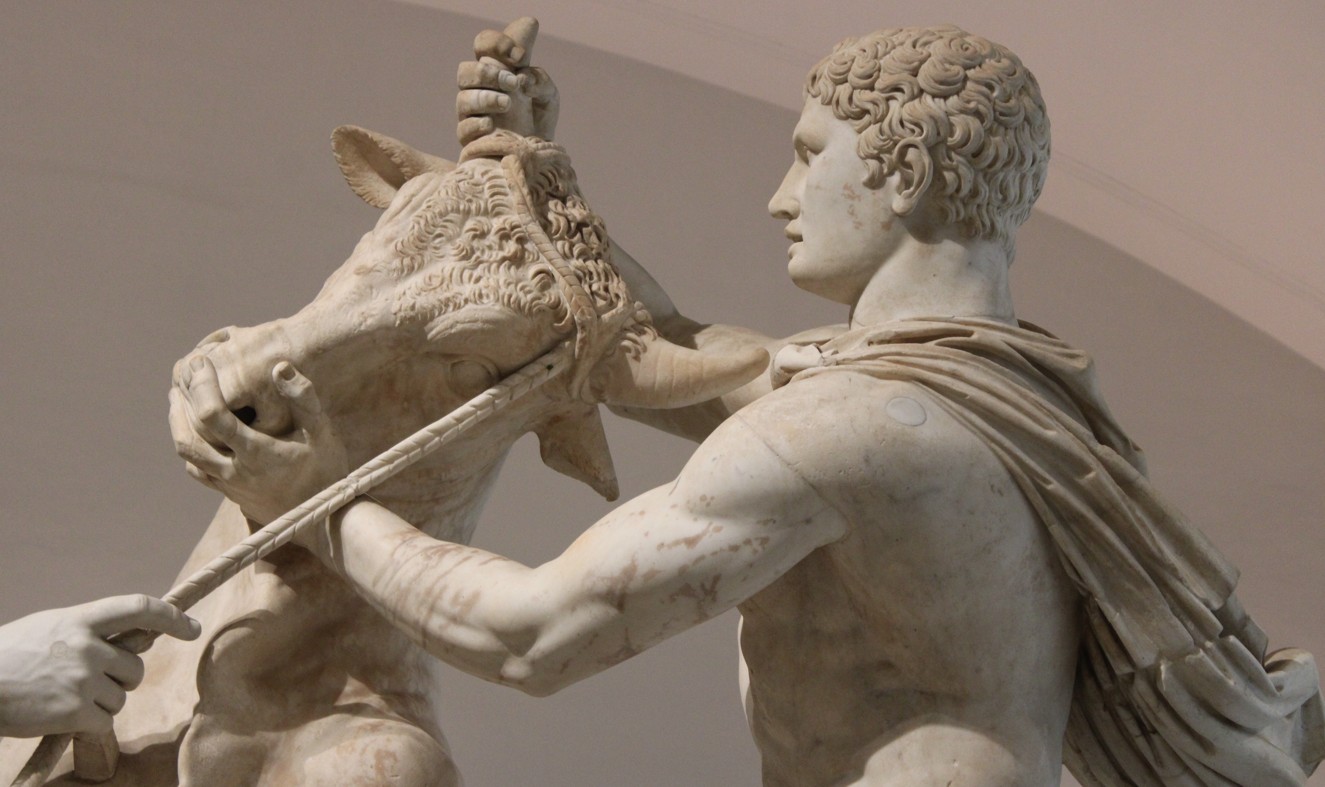
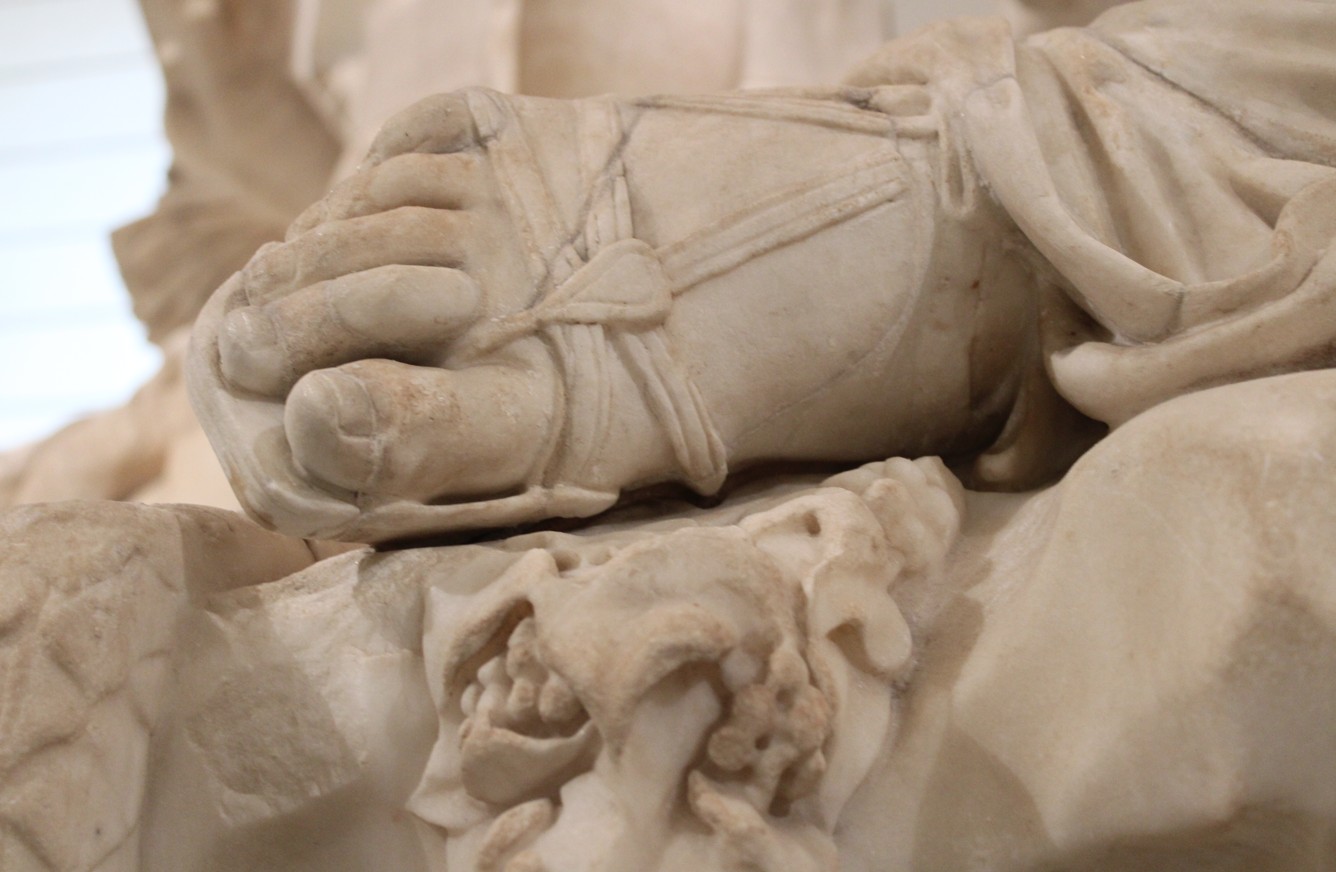
L’intera scena ruota attorno al toro che viene ritenuto per le corna da Anfitrione. Il fratello gemello Zeto intanto tiene la fune per legarla al collo della povera Dirce. Lei invece, con il seno scoperto, è semi distesa a terra che tenta di invocare un po’ di umanità in Anfitrione tenendosi stretta a una sua gamba.

Zeto si riconosce dalla spada che porta sul fianco sinistro mentre Anfione ha una lira appoggiata lì vicino, al tronco dell’albero.
Alla ricca e complessa composizione si aggiunge la figura femminile di Antiope, la madre dei gemelli abbigliata con un chitone stretto in vita e con la lancia tenuta con la mano sinistra. Assiste alla scena senza partecipare attivamente, quasi volesse controllare ogni movimento dei partecipanti senza apportare il suo aiuto né parteggiare per nessuno.
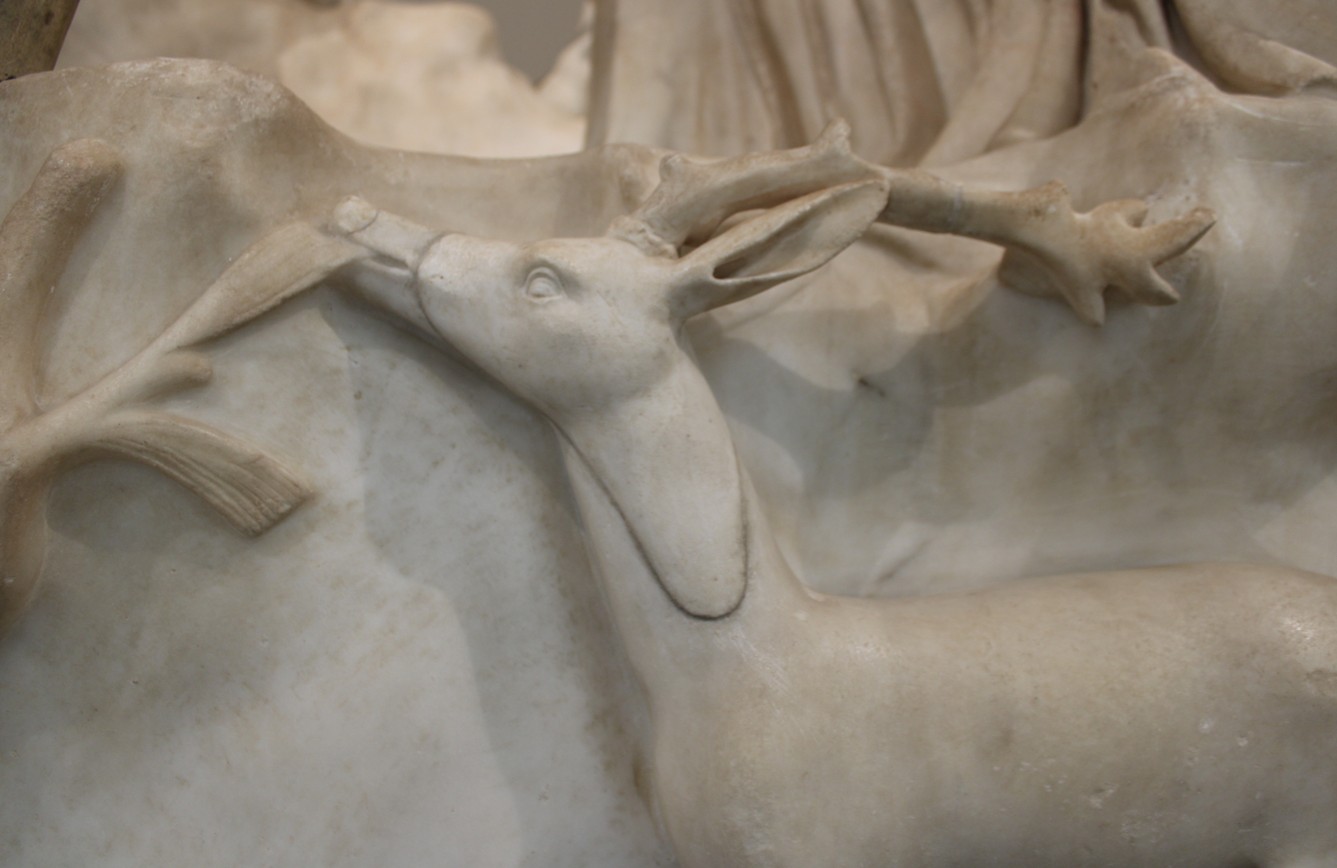
Nella zona a destra in basso, si vede il giovane pastorello con i capo coronato di edera, che sede vicino al cane ritto su tutte e quattro le zampe che mostra con il suo corpo la concitazione del momento. La base dell’intera opera è movimentata da una serie di animali selvatici, alberi e grotte. In particolare desta l’attenzione dell’osservatore il cervo che indisturbato mangia le foglie di una pianta.
La storia che narra il supplizio di Dirce ha luogo sul Monte Citerone, nel cuore della Boezia, durante il momento in cui si svolgono i pr6paerativi della festa dionisicaca.
Il mito di Antiope
Il mito di Antiope e Dirce è una storia tragica di gelosia, vendetta e giustizia brutale ed è caratterizzato da differenti varianti a seconda delle fonti. Antiope era una bellissima principessa, figlia di Nitteo, re di Tebe. Zeus, re degli dei, si innamorò di lei e, trasformandosi in satiro, la sedusse.
Quando Nitteo scoprì che Antiope era incinta, infuriato per la vergogna, la cacciò da Tebe. Antiope fuggì e successivamente diede alla luce due gemelli sul monte Citerone: Anfione e Zeto. In alcune versioni, abbandonò i bambini per la vergogna o per necessità e i gemelli furono trovati e allevati da un pastore.

Nitteo, in punto di morte, chiese a suo fratello Lico, che gli succedette al trono di Tebe, di vendicare il disonore di Antiope e di punirla. Lico mosse guerra contro Epopèo, re di Sicione, che aveva accolto e sposato Antiope, lo uccise e riportò Antiope a Tebe come prigioniera. Lico era sposato con Dirce, una donna crudele e gelosa che odiava profondamente Antiope. Dirce sottopose Antiope a terribili maltrattamenti e la tenne in schiavitù per molti anni.
Dopo anni di prigionia, Antiope riuscì a fuggire e raggiunse i suoi figli sul monte Citerone. Anfione e Zeto, ormai adulti, riconobbero la madre e giurarono vendetta contro Lico e Dirce per le sofferenze inflittele. Nella versione più nota del mito, i gemelli catturarono Dirce. La legarono a un toro furioso che la trascinò fino alla morte, dilaniandone il corpo. Uccisero anche Lico, anche se in alcune varianti Ermes interviene per ristabilire la pace, chiedendo che Lico lasciasse il regno ai due giovani.
Secondo alcune tradizioni, nel luogo dove il corpo di Dirce cadde, nacque una fonte che prese il suo nome.
Il gruppo scultoreo del Toro Farnese
Il grande gruppo scultoreo fu realizzato originariamente con un solo blocco di marmo e venne ritrovato nell’estate del 1545 all’interno delle Terme di Caracalla. Probabilmente, stando a quanto narrato nelle fonti, fu la prima grande opera rinvenuta in quel luogo, nell’area della palestra.
Quando venne ritrovata, l’opera mancava di numerose sue parti e quindi fu difficile comprendere quale fosse la scena raffigurata.
In un primo momento si pensò potesse narrare lo scontro di Ercole con il Toro Maratonio. Negli anni a seguire ebbe diverse interpretazioni ma grazie alla paziente opera di restauro condotta da Giacomo della Porta, ultimata poi da Giovan Battista Bianchi, si arrivò a comprendere si trattasse del Supplizio di Dirce.

L’opera fu sottoposta a un complesso lavoro di reintegro data anche la mancanza di un riferimento iconografico dettagliato.
Mancavano completamente le teste di Anfione e Zeto, realizzate dai restauratori ispirandosi ai ritratti di Caracalla ed era mancante il busto e il capo di Dirce.
E se fosse stata stata una fontana?
Probabilmente il gruppo del Toro Farnese era una fontana. Infatti, durante il restauro eseguito negli anni Novanta del Novecento, è stato rinvenuto un condotto tra i due tronchi che sostengono le sculture del Toro e di Anfitrione.
Dopo il lungo restauro, l’opera fu custodita all’interno di un capanno a Palazzo Farnese, a Roma. Quando nel 1783 le collezioni Farnesi erano passate ai Borboni, Ferdinando IV volle traslocare tutte le opere a Napoli per allestire il nascente Real Museo Borbonico.
Il Toro Farnese arrivò per mezzo di una feluca al porto di Mergellina e poi, via terra, raggiunse la Villa
Reale a Chiaia. Successivamente, dopo diverse vicissitudini, nel 1826 fu collocato stabilmente al Museo Archeologico di Napoli dove tutt’oggi si trova.

Per il momento il sempre vostro Michelangelo Buonarroti vi saluta dandovi appuntamento ai prossimi post e sui social.
Sculpture of the day: the Farnese Bull
There are many extraordinary works kept in the Archaeological Museum of Naples and among these it is worth mentioning the so-called Farnese Bull, also known as the Torment of Dirce, a Roman copy of the famous Hellenistic sculptural group dating back to the 1st century BC.
The entire scene revolves around the bull that is held by the horns by Amphitryon. Meanwhile, his twin brother Zeto holds the rope to tie it around the neck of poor Dirce. She, on the other hand, with her breasts uncovered, is half-lying on the ground trying to invoke a little humanity in Amphitryon by holding on tightly to one of his legs.
Zeto is recognizable by the sword he carries on his left hip while Amphion has a lyre resting nearby, on the trunk of the tree.
Added to the rich and complex composition is the female figure of Antiope, the mother of the twins dressed in a chiton tight at the waist and with the spear held in her left hand. He watches the scene without actively participating, almost as if he wanted to control every movement of the participants without providing his help or taking sides.
In the lower right area, you can see the young shepherd with his head crowned with ivy, who sits next to the dog standing on all fours and showing with his body the excitement of the moment. The base of the entire work is animated by a series of wild animals, trees and caves. In particular, the deer that undisturbed eats the leaves of a plant attracts the attention of the observer.
The story that tells the torture of Dirce takes place on Mount Cithaeron, in the heart of Boeotia, during the moment in which the preparations for the Dionysian festival are taking place.
The myth of Antiope
The myth of Antiope and Dirce is a tragic story of jealousy, revenge and brutal justice and is characterized by different variations depending on the sources. Antiope was a beautiful princess, daughter of Nycteus, king of Thebes. Zeus, king of the gods, fell in love with her and, transforming himself into a satyr, seduced her.
When Nycteus discovered that Antiope was pregnant, enraged by the shame, he drove her out of Thebes. Antiope fled and later gave birth to twins on Mount Cithaeron: Amphion and Zethus. In some versions, she abandoned the children out of shame or necessity and the twins were found and raised by a shepherd.
Nycteus, on his deathbed, asked his brother Lycus, who succeeded him to the throne of Thebes, to avenge Antiope’s dishonor and punish her. Lycus waged war against Epopeus, king of Sicyon, who had welcomed and married Antiope, killed him and brought Antiope back to Thebes as a prisoner. Lycus was married to Dirce, a cruel and jealous woman who deeply hated Antiope. Dirce subjected Antiope to terrible mistreatment and kept her in slavery for many years.
After years of captivity, Antiope managed to escape and join her children on Mount Cithaeron. Amphion and Zethus, now adults, recognized their mother and swore revenge on Lycus and Dirce for the suffering inflicted on her. In the best-known version of the myth, the twins captured Dirce. They tied her to a furious bull that dragged her to death, tearing her body to pieces. They also killed Lycus, although in some variants Hermes intervenes to restore peace, asking that Lycus leave the kingdom to the two young people.
According to some traditions, in the place where Dirce’s body fell, a spring was born that took her name.
The Farnese Bull sculpture group
The large sculpture group was originally made from a single block of marble and was found in the summer of 1545 inside the Baths of Caracalla. Probably, according to what is narrated in the sources, it was the first great work found in that place, in the area of the gymnasium.
When it was found, the work was missing many of its parts and therefore it was difficult to understand which scene was depicted. At first it was thought that it could narrate the clash of Hercules with the Marathonian Bull. In the years that followed it had different interpretations but thanks to the patient restoration work conducted by Giacomo della Porta, later completed by Giovan Battista Bianchi, it was understood that it was the Torment of Dirce.
The work was subjected to a complex restoration work also given the lack of a detailed iconographic reference.
The heads of Amphion and Zetus, created by the restorers inspired by the portraits of Caracalla, were completely missing and the bust and head of Dirce were missing.
What if it had been a fountain?
The Farnese Bull group was probably a fountain. In fact, during the restoration carried out in the 1990s, a conduit was found between the two trunks that support the sculptures of the Bull and Amphitryon.
After the long restoration, the work was kept inside a shed in Palazzo Farnese, in Rome. When the Farnese collections passed to the Bourbons in 1783, Ferdinand IV wanted to move all the works to Naples to set up the nascent Royal Bourbon Museum.
The Farnese Bull arrived by felucca at the port of Mergellina and then, by land, reached the Villa
Reale in Chiaia. Subsequently, after various vicissitudes, in 1826 it was permanently placed in the Archaeological Museum of Naples where it is still located today.
For the moment, yours truly Michelangelo Buonarroti bids you farewell, making an appointment to see you in the next posts and on social media.

Sostienici – Support Us
Se questo blog ti piace e ti appassiona, puoi aiutarci a farlo crescere sempre più sostenendoci in modo concreto condividendo i post, seguendo le pagine social e con un contributo che ci aiuta ad andare avanti con il nostro lavoro di divulgazione. . ENGLISH: If you like and are passionate about this blog, you can help us make it grow more and more by supporting us in a concrete way by sharing posts, following social pages and with a contribution that helps us to move forward with our dissemination work.
10,00 €
Condividi:


Questo sono io





sostienici

Sostienici – Support Us
Se questo blog ti piace e ti appassiona, puoi aiutarci a farlo crescere sempre più sostenendoci in modo concreto condividendo i post, seguendo le pagine social e con un contributo che ci aiuta ad andare avanti con il nostro lavoro di divulgazione. . ENGLISH: If you like and are passionate about this blog, you can help us make it grow more and more by supporting us in a concrete way by sharing posts, following social pages and with a contribution that helps us to move forward with our dissemination work.
€10,00


