

Il restauro del Volto Santo: le novità raccontate da Emanuela Daffra
Prosegue il lungo e complesso restauro del Volto Santo a Lucca, all’interno del laboratorio allestito all’interno del duomo di San Martino.
Durante gli ultimi mesi di lavoro e ricerche sono emerse importanti novità che nella mattinata di ieri sono state rese note dalla direttrice dell’Opificio delle Pietre Dure Emanuela Daffra.
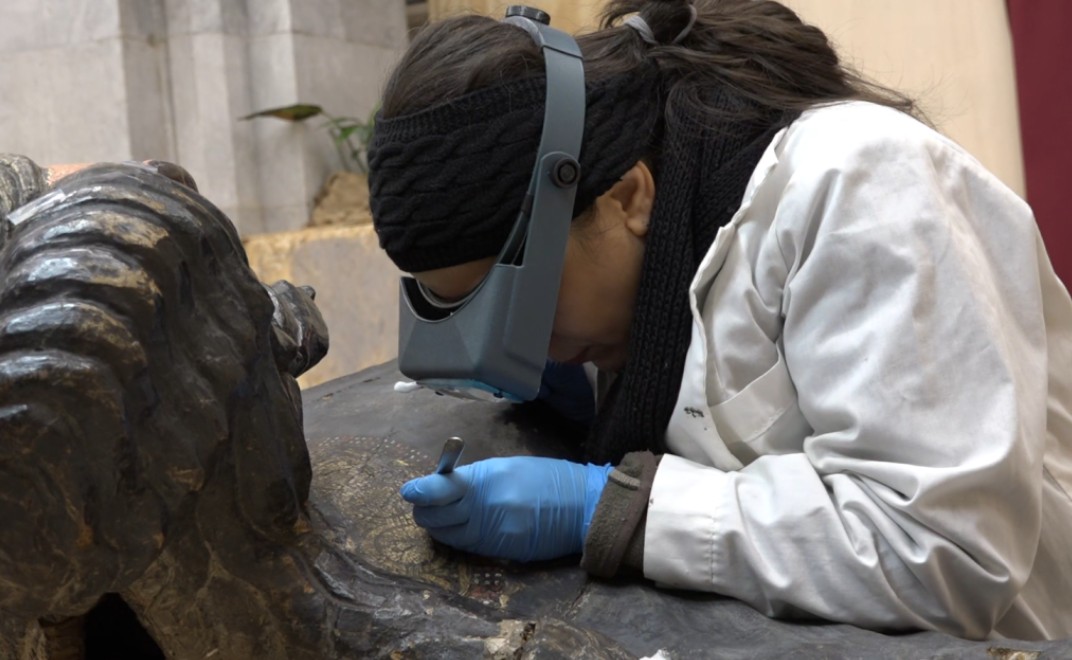
“Il Volto Santo non è soltanto una scultura ma è un’oggetto carico di valori immateriali per cui qualsiasi decisione è stata discussa avendo in mente entrambi gli aspetti: l’opera, in quanto fatta di colori, vetro, stoffe, ma anche il suo significato che la sua storia millenaria gli ha accumulato attorno – ha affermato la direttrice Emanuela Daffra – tutte le decisioni sono state prese facendoci guidare tutti assieme da quelle che erano le indicazioni che venivano dall’opera stessa e dalla sua storia. Le indagini e il lavoro dei restauratori hanno fatto molto presto capire una cosa che si immaginava.
L‘aspetto che aveva fino a due anni fa l’opera era frutto delle sovrapposizioni che aveva in numero dispari rispetto alle varie parti: la veste e la croce erano stati dipinti più volte rispetto agli incarnati.
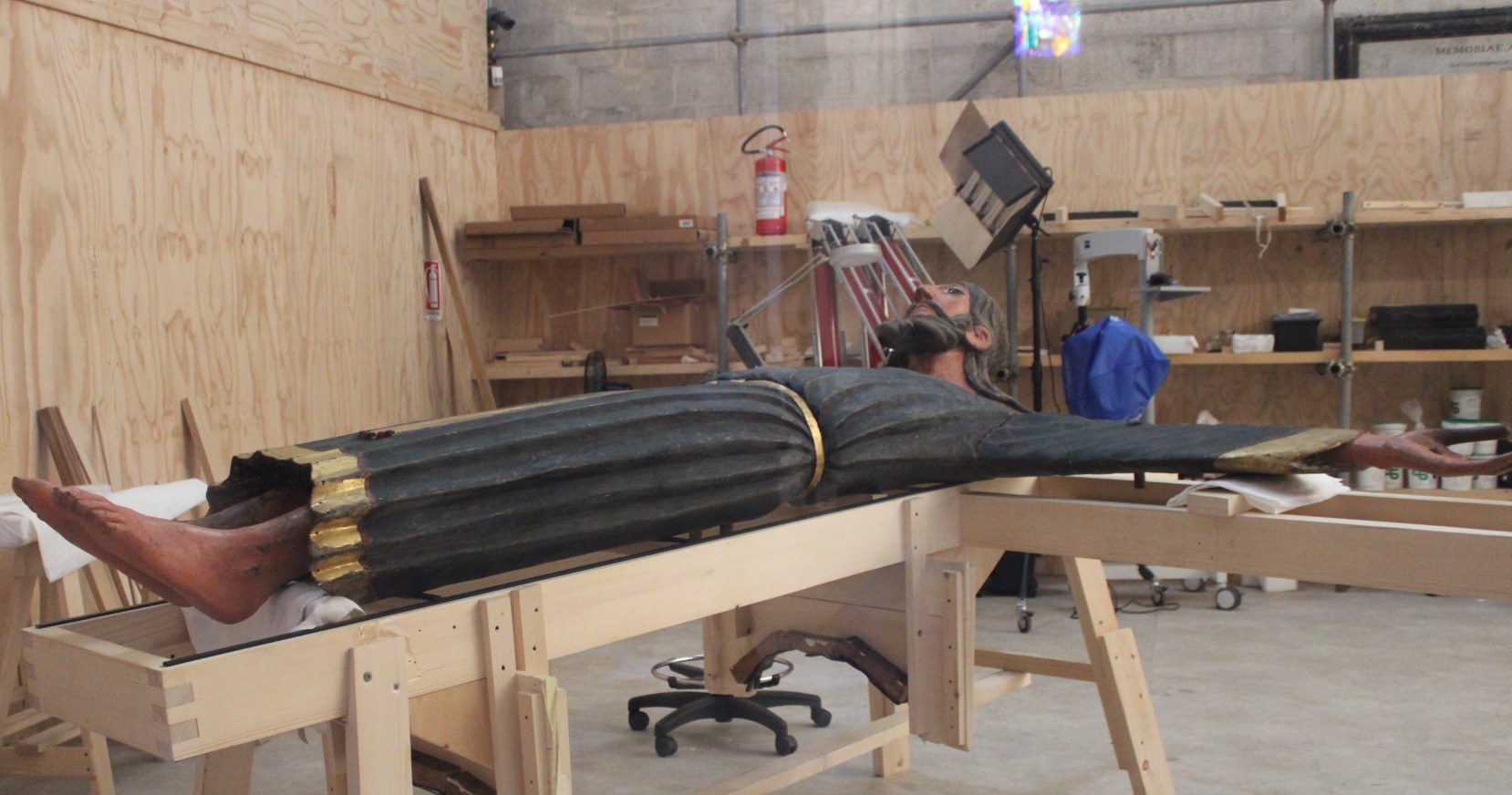
Abbiamo individuato tutte le varie fasi storiche ragionando sulla documentazione iconografica, grazie al cielo molto ricca, per individuare quale fosse l’assetto più antico e l’aspetto più antico e se fosse possibile e anche giusto recuperarlo.
E’ un’opera che ha numerose sovrapposizioni diverse e non omogenee. Avevamo l’obbligo di non creare un falso e restituire un aspetto che magari non fosse il più antico e nemmeno quello a cui eravamo abituati ma che in una certa fase della storia ebbe sicuramente, tenendo in conto anche un’altra cosa: la salute dei materiali di cui l’opera è composta.
C’è stato un grande lavoro sulla struttura lignea, sul modo di agganciare la struttura alla croce e sul modo che da ora in avanti verrà utilizzato per dotare l’immagine in occasione delle feste dei suoi ornamenti sacri in modo che la collana, la corona e l’abito siano appoggiati senza intervenire sulla materia appena restaurata.
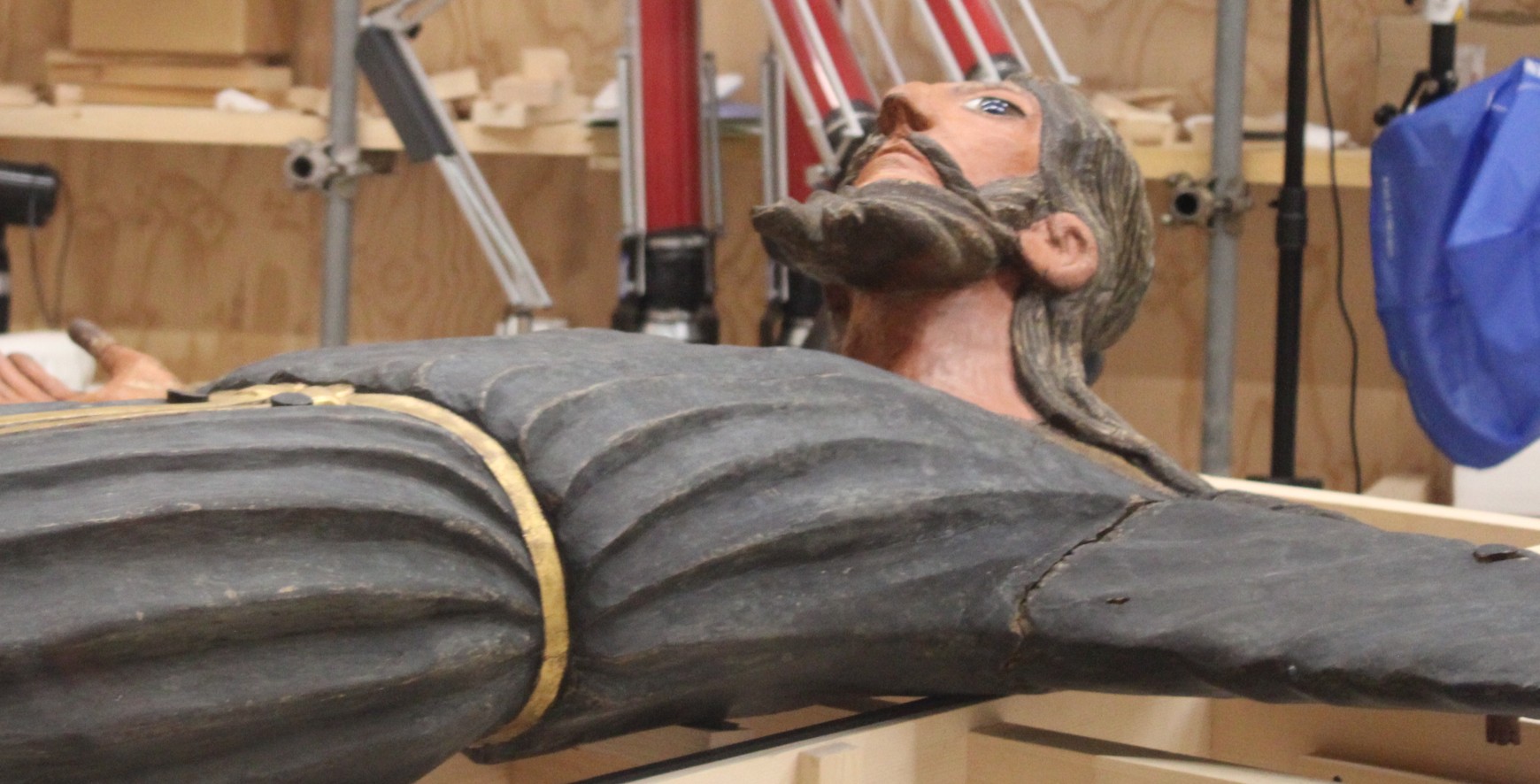
Si è recuperato quello che probabilmente è lo strato più antico della Croce che sarà la novità maggiore. Non sarà più dunque visibile una croce monocroma ma bensì policroma con cromie molto intense e vivaci. La Croce sarà dominata da una figura di straordinaria imponenza. Recuperare infatti il colore dell’incarnato di Cristo che era occultato da materiali che si erano alterati nel corso del tempo assieme alla recuperata lucentezza degli occhi, darà all’opera una forza e una presenza maggiore rispetto alla precedente”

Sebbene ancora non sia stata resa nota la data definitiva, nel mese di settembre, approssimativamente attorno al 14, il Volto Santo verrà restituito al culto dei fedeli.
Per il termine del restauro del Tempietto rinascimentale progettato dal Civitali sarà necessario attendere ancora un po’ di tempo in più.
Per il momento il sempre vostro Michelangelo Buonarroti vi saluta dandovi appuntamento ai prossimi post e sui social.
The restoration of the Holy Face: the news told by Emanuela Daffra
The long and complex restoration of the Holy Face in Lucca continues, inside the laboratory set up inside the cathedral of San Martino.
During the last months of work and research, important news has emerged that were made known yesterday by the director of the Opificio delle Pietre Dure Emanuela Daffra.
“The Holy Face is not only a sculpture but an object full of immaterial values, so any decision was discussed with both aspects in mind: the work, as it is made of colors, glass, fabrics, but also its meaning that its thousand-year history has accumulated around it – said director Emanuela Daffra – all decisions were taken by letting us all guide together by the indications that came from the work itself and its history. The investigations and the work of the restorers quickly made us understand something that was imagined.
The appearance that the work had up to two years ago was the result of the overlaps that it had in odd numbers compared to the various parts: the robe and the cross had been painted more times than the flesh tones.
We identified all the various historical phases by reasoning on the iconographic documentation, thank goodness very rich, to identify which was the oldest arrangement and the oldest aspect and whether it was possible and also right to recover it.
It is a work that has many different and non-homogeneous superimpositions. We had the obligation not to create a fake and to restore an aspect that perhaps was not the oldest and not even the one we were used to but that in a certain phase of history it certainly had, also taking into account another thing: the health of the materials the work is made of.
There was a lot of work on the wooden structure, on the way to attach the structure to the cross and on the way that from now on will be used to equip the image on the occasion of the celebrations with its sacred ornaments so that the necklace, the crown and the dress are supported without intervening on the newly restored material.
What is probably the oldest layer of the Cross has been recovered and will be the major novelty. Therefore, a monochrome cross will no longer be visible but rather a polychrome one with very intense and lively colors. The Cross will be dominated by a figure of extraordinary grandeur. In fact, recovering the color of Christ’s flesh that was hidden by materials that had altered over time together with the recovered brightness of the eyes, will give the work a greater strength and presence than the previous one”.
Although the definitive date has not yet been announced, in the month of September, approximately around the 14th, the Holy Face will be returned to the worship of the faithful.
For the completion of the restoration of the Renaissance Tempietto designed by Civitali it will be necessary to wait a little longer.
For the moment, your always Michelangelo Buonarroti bids you farewell, making an appointment with you in the next posts and on social media.

Sostienici – Support Us
Se questo blog ti piace e ti appassiona, puoi aiutarci a farlo crescere sempre più sostenendoci in modo concreto condividendo i post, seguendo le pagine social e con un contributo che ci aiuta ad andare avanti con il nostro lavoro di divulgazione. . ENGLISH: If you like and are passionate about this blog, you can help us make it grow more and more by supporting us in a concrete way by sharing posts, following social pages and with a contribution that helps us to move forward with our dissemination work.
10,00 €
Condividi:


Questo sono io





sostienici

Sostienici – Support Us
Se questo blog ti piace e ti appassiona, puoi aiutarci a farlo crescere sempre più sostenendoci in modo concreto condividendo i post, seguendo le pagine social e con un contributo che ci aiuta ad andare avanti con il nostro lavoro di divulgazione. . ENGLISH: If you like and are passionate about this blog, you can help us make it grow more and more by supporting us in a concrete way by sharing posts, following social pages and with a contribution that helps us to move forward with our dissemination work.
€10,00


