

Amor Sacro e Amor Profano: il capolavoro di Tiziano
Tra le opere più affascinanti di Tiziano vale la pena annoverare ‘Amor Sacro e Amor Profano’, dipinto a olio su tela realizzato tra il 1515 e il 1516 e custodito nella Sala di Psiche della Galleria Borghese, a Roma.
Probabilmente questo capolavoro fu commissionato da Niccolò Aurelio, Gran Cancelliere di Venezia. Il suo stemma personale appare infatti sulla fontana assieme a quello della consorte Laura Bagarotto.

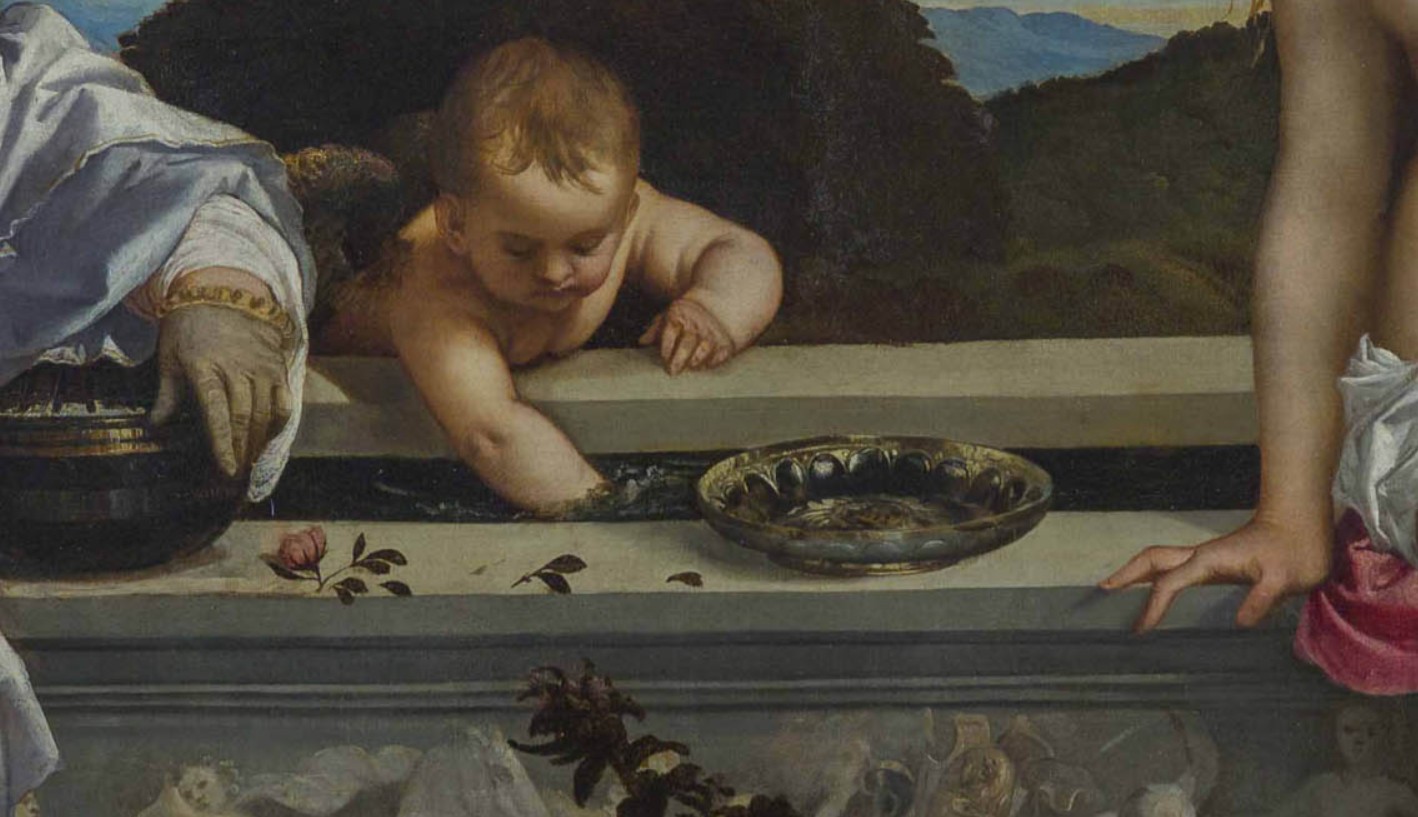
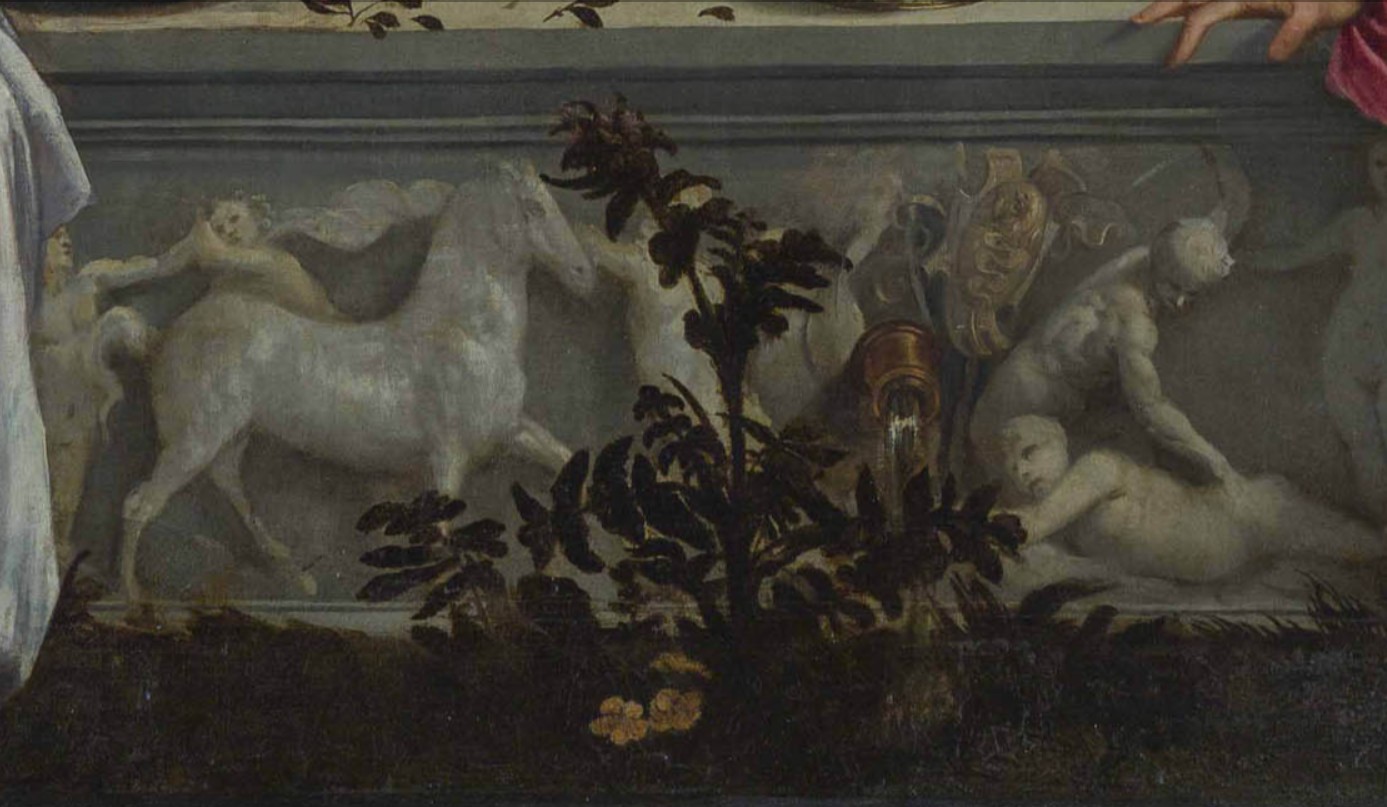
Tiziano dipinse due donne sedute ai lati di un sarcofago romano istoriato fatto divenire una fontana. In secondo piano si vede un putto alato, più prossimo alla donna abbigliata, che con la mano destra rimescola le acque.
Il tema centrale dell’opera è l’amore, quello sacro e quello passionale rappresentato dalle due donne ma anche da altri elementi che le circondano.

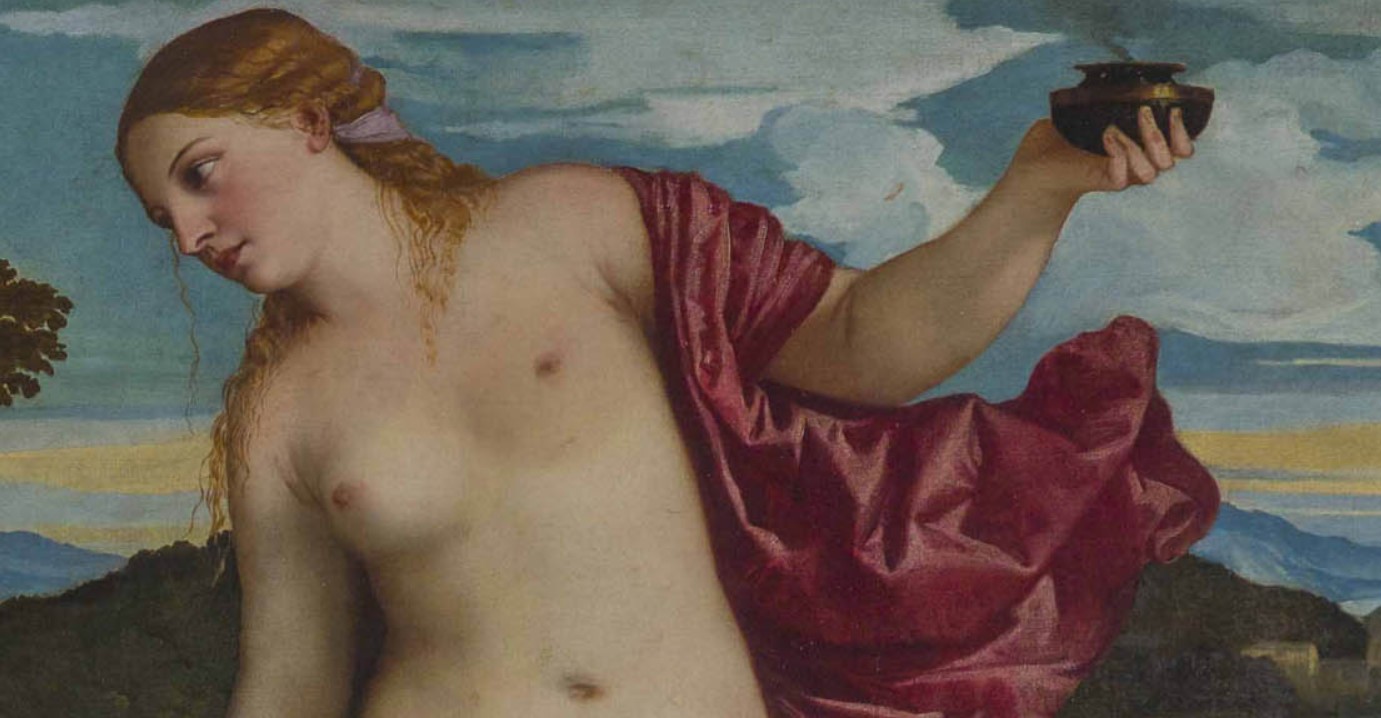
L’amore Sacro, al contrario di quanto si sarebbe portati a pensare oggi, è la figura femminile nuda slanciata verso l’alto che porta nella mano sinistra una lampada elevandola al cielo. La lampada è un attributo di Venere, la dea della bellezza.
L’altra donna è riccamente abbigliata come una sposa e raffigura l’amore passionale, è più ancorata al terreno, statica. Come se l’amore sacro elevasse verso il cielo mentre quello più carnale facesse rimanere la giovane ancorata a terra.
La dualità tra amor sacro e amor profano viene ripresa anche nello sfondo: sulla sinistra è ben evidente una veduta montana mentre a destra si vede un paesaggio lacustre.
Nel corso dei secoli molto studiosi hanno discusso sul significato di questo capolavoro e ancora continuano a farlo. Le due donne sono identiche: hanno il medesimo volto. La donna vestita guarda negli occhi lo spettatore.
Cupido che agita le acque potrebbe raffigurare il dio che riesce a mutare ogni cosa. Trasforma la morte in vita come potrebbe suggerire il sarcofago pieno di acqua.
Il prezioso dipinto ‘Amor Sacro e Amor Profano’ fu ceduto il 20 luglio del 1608 a Scipione Borghese dal cardinale Paolo Emilio Sfondrati assieme ad altri 71 dipinti e da allora appartiene alle prestigiose collezioni di Galleria Borghese.
Per il momento il sempre vostro Michelangelo Buonarroti vi saluta dandovi appuntamento ai prossimi post e sui social.

Painting of the Day: Sacred and Profane Love by Titian
Among Titian’s most fascinating works, it is worth mentioning ‘Sacred and Profane Love’, an oil painting on canvas made between 1515 and 1516 and kept in the Hall of Psyche of the Borghese Gallery in Rome.
This masterpiece was probably commissioned by Niccolò Aurelio, Grand Chancellor of Venice. His personal coat of arms appears on the fountain together with that of his wife Laura Bagarotto.
Titian painted two women sitting on the sides of a historiated Roman sarcophagus turned into a fountain. In the background you can see a winged putto, closer to the dressed woman, who stirs the water with his right hand.
The central theme of the work is love, sacred and passionate, represented by the two women but also by other elements that surround them. Sacred love, contrary to what one might think today, is the naked female figure slender upwards, carrying a lamp in her left hand, raising it to the sky. The lamp is an attribute of Venus, the goddess of beauty.
The other woman is richly dressed like a bride and represents passionate love, she is more grounded, static. As if sacred love elevates towards the sky while the more carnal love keeps the young woman anchored to the ground.
The duality between sacred and profane love is also reflected in the background: on the left a mountain view is clearly visible while on the right a lake landscape can be seen.
Over the centuries many scholars have discussed the meaning of this masterpiece and continue to do so. The two women are identical: they have the same face. The dressed woman looks the viewer in the eye.
Cupid stirring the waters could represent the god who can change everything. Transform death into life as the sarcophagus full of water might suggest.
The precious painting ‘Sacred and Profane Love’ was given to Scipione Borghese on July 20, 1608 by Cardinal Paolo Emilio Sfondrati together with 71 other paintings and since then it has belonged to the prestigious collections of the Galleria Borghese.
For the moment, yours ever Michelangelo Buonarroti bids you farewell, making an appointment with you in the next posts and on social media.

Sostienici – Support Us
Se questo blog ti piace e ti appassiona, puoi aiutarci a farlo crescere sempre più sostenendoci in modo concreto condividendo i post, seguendo le pagine social e con un contributo che ci aiuta ad andare avanti con il nostro lavoro di divulgazione. . ENGLISH: If you like and are passionate about this blog, you can help us make it grow more and more by supporting us in a concrete way by sharing posts, following social pages and with a contribution that helps us to move forward with our dissemination work.
10,00 €
Condividi:


Questo sono io





sostienici

Sostienici – Support Us
Se questo blog ti piace e ti appassiona, puoi aiutarci a farlo crescere sempre più sostenendoci in modo concreto condividendo i post, seguendo le pagine social e con un contributo che ci aiuta ad andare avanti con il nostro lavoro di divulgazione. . ENGLISH: If you like and are passionate about this blog, you can help us make it grow more and more by supporting us in a concrete way by sharing posts, following social pages and with a contribution that helps us to move forward with our dissemination work.
€10,00


