
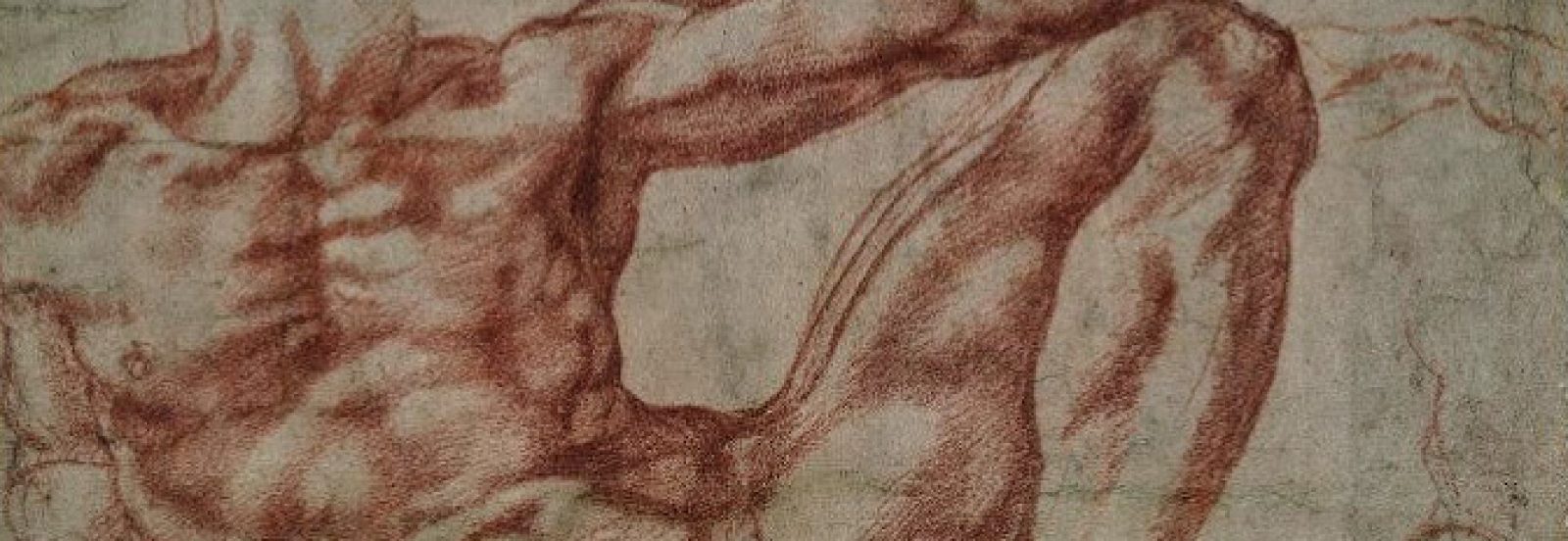
19 marzo: la rappresentazione di San Giuseppe nell’Arte
Il 19 marzo si celebra San Giuseppe, padre putativo di Gesù e sposo della Madonna nonché patrono di tutti i lavoratori. Sebbene nei quattro vangeli canonici non viene riportata alcuna parola proferita dal Santo, sappiamo che è l’uomo a cui il Signore rivela i suoi disegni durante il sonno.
Nel corso dei secoli San Giuseppe è stato raffigurato da tantissimi artisti e lo feci anch’io, dandogli un posto d’onore nella Sacra Famiglia, nota anche come il Tondo Doni.
In quel dipinto a tempera grassa su tavola volli dipingere il Santo assieme alla Madonna mentre gli passa i Figlio, o viceversa.
Una composizione innovativa che fece scuola sia per il dinamismo che per i colori cangianti che volli adoperare.

Un altro artista che si è cimentato con la raffigurazione di San Giuseppe è senza dubbio Giotto.
Adoro i volti di Giotto, così poco idealizzati e molto espressivi. Ho un vero e proprio debole per il modo con il quale riusciva a rendere le facce vive, addentro le loro vicende.
Osservate per esempio l’espressione di San Giuseppe che Giotto donò al San Giuseppe nell’Adorazione dei Magi, dolce, rassicurante e pieno di tenerezza.

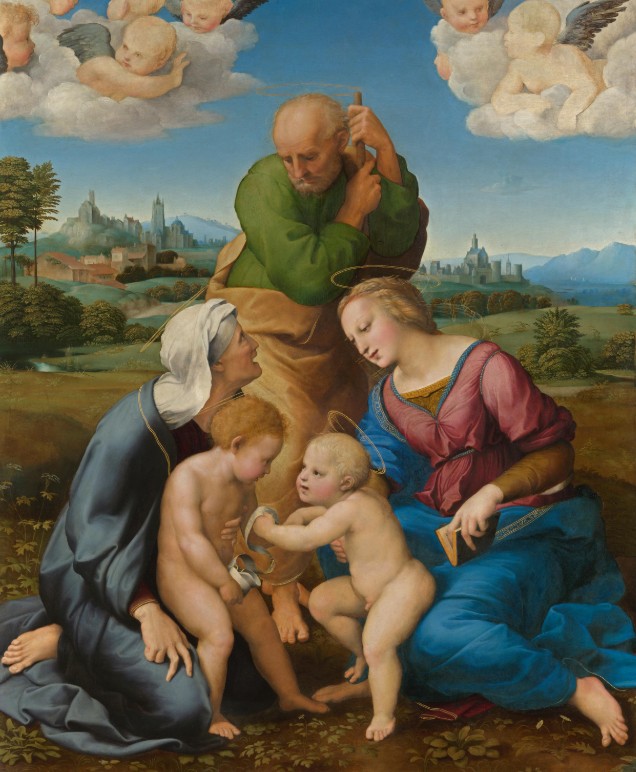
Raffaello dipinse un San Giuseppe preoccupato, che stando in piedi sovrasta le figure di Gesù bambino, San Giovannino e la Vergine.
Più che al significato teologico del Santo, Raffaello pone la sua figura in modo tale da equilibrare tutta la composizione. Lo mette infatti al vertice della piramide abbigliandolo di verde per richiamare l’ambientazione paesaggistica. In questo modo riesce a bilanciare la composizione e anche i toni dell’opera.
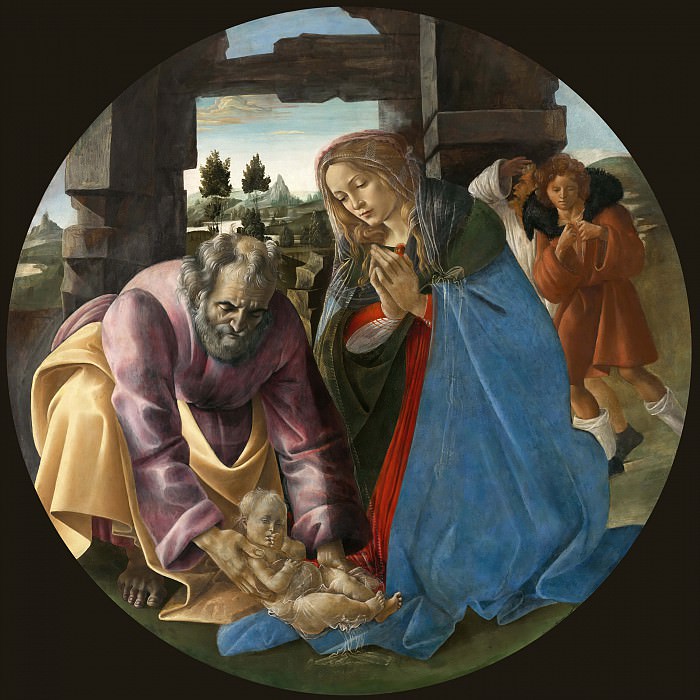
Molto interessante anche il San Giuseppe dipinto da Sandro Botticelli nella sua Natività, custodita nelle collezioni dell’Isabella Stewart Gardner Museum di Boston.
Un’opera di estrema delicatezza nella quale il babbo di Gesù gli rivolge uno sguardo pieno di dolcezza mentre delicatamente lo posa oppure lo solleva dal suo giaciglio, creato con la sovrapposizione dal mantello dei genitori stessi.
Caravaggio nella sua opera custodita nella Galleria Doria Pamphilij, propone San Giuseppe durante il Riposo dalla Fuga d’Egitto mentre guardando ammirato l’angelo che gli sta davanti, gli sorregge lo spartito.
Mentre Maria culla il Bambino in secondo piano, a rubarle la scena ci sono proprio San Giuseppe con l’angelo che suona il violino, caratterizzato da un’aria assorta.

San Giuseppe tiene in mano lo spartito che l’Angelo esegue. Cosa c’è scritto sopra? Si tratta del mottetto QUAM PULCHRA ES” composto del musicista franco-fiammingo Noel Bauldewijn basato sul “Cantico dei Cantici”.
Venne pubblicato per la prima volta nel 1519 ma stampato a Roma qualche anno dopo, nel 1526. La partitura del mottetto andò quasi subito perduta ma rimase intonsa la parte del soprano ed è proprio quella dipinta da Caravaggio nell’opera.
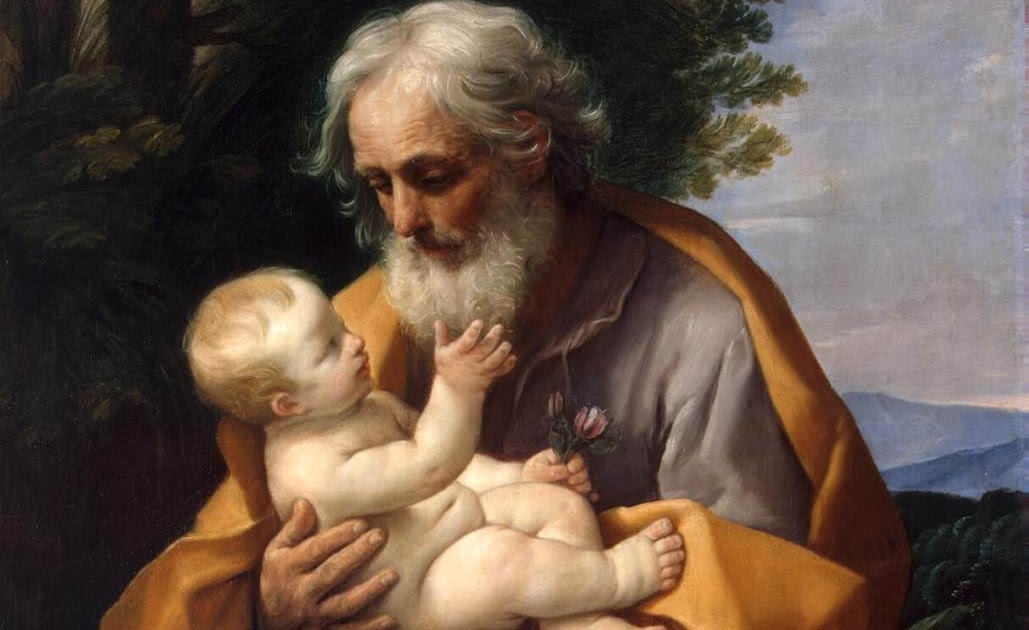
Un altro San Giuseppe che mi piace in modo particolare è quello dipinto assieme al Bambino da Guido Reni che si trova Museo dell’Hermitage, San Pietroburgo.
L’intensità di sguardi fa padre e Figlio, il modo in cui il pittore ha condotto i capelli e la barba ma anche la posa dei due protagonisti costituiscono un insieme mirabile.
Per il momento il sempre vostro Michelangelo Buonarroti vi saluta dandovi appuntamento ai prossimi post e sui social.
March 19: Saint Joseph in paintings
March 19 is the celebration of Saint Joseph, the putative father of Jesus and husband of the Madonna, as well as the patron saint of all workers. Although no words uttered by the Saint are reported in the four canonical gospels, we know that he is the man to whom the Lord reveals his plans during sleep.
Over the centuries, Saint Joseph has been depicted by many artists and I did it too, giving him a place of honor in the Holy Family, also known as the Doni Tondo.
In that tempera grassa painting on wood I wanted to paint the Saint together with the Madonna while she passes him her Son, or vice versa.
An innovative composition that made a school both for its dynamism and for the iridescent colors that I wanted to use.
Another artist who tried his hand at depicting Saint Joseph is undoubtedly Giotto.
I love Giotto’s faces, so little idealized and very expressive. I have a real weakness for the way he was able to make faces come alive, immersed in their stories.
For example, look at the expression of Saint Joseph that Giotto gave to Saint Joseph in the Adoration of the Magi, sweet, reassuring and full of tenderness.
Raphael painted a worried Saint Joseph, who, standing, towers over the figures of the baby Jesus, Saint John the Baptist and the Virgin.
Rather than the theological meaning of the Saint, Raphael places his figure in such a way as to balance the entire composition. In fact, he places him at the top of the pyramid, dressing him in green to recall the landscape setting. In this way he manages to balance the composition and also the tones of the work.
Also very interesting is the Saint Joseph painted by Sandro Botticelli in his Nativity, kept in the collections of the Isabella Stewart Gardner Museum in Boston.
A work of extreme delicacy in which Jesus’ father looks at him with a sweet look while delicately placing him or lifting him from his bed, created by overlapping the cloak of his parents themselves.
In his work kept in the Doria Pamphili Gallery, Caravaggio depicts Saint Joseph during the Rest from the Flight into Egypt while, looking in admiration at the angel in front of him, he holds the score for him.
While Mary cradles the Child in the background, stealing the scene are Saint Joseph with the angel playing the violin, characterized by an absorbed air.
Saint Joseph holds the score in his hand that the Angel is playing. What is written on it? This is the motet QUAM PULCHRA ES” composed by the Franco-Flemish musician Noel Bauldewijn based on the “Song of Songs”.
It was published for the first time in 1519 but printed in Rome a few years later, in 1526. The score of the motet was lost almost immediately but the soprano part remained intact and it is precisely the one painted by Caravaggio in the work.
Another Saint Joseph that I particularly like is the one painted together with the Child by Guido Reni which is in the Hermitage Museum, St. Petersburg.
The intensity of the looks between the father and the Son, the way the painter has managed the hair and beard but also the pose of the two protagonists constitute a wonderful whole.
For the moment, the always your Michelangelo Buonarroti bids you farewell, making an appointment with you in the next posts and on social media.

Sostienici – Support Us
Se questo blog ti piace e ti appassiona, puoi aiutarci a farlo crescere sempre più sostenendoci in modo concreto condividendo i post, seguendo le pagine social e con un contributo che ci aiuta ad andare avanti con il nostro lavoro di divulgazione. . ENGLISH: If you like and are passionate about this blog, you can help us make it grow more and more by supporting us in a concrete way by sharing posts, following social pages and with a contribution that helps us to move forward with our dissemination work.
10,00 €
Condividi:


Questo sono io





sostienici

Sostienici – Support Us
Se questo blog ti piace e ti appassiona, puoi aiutarci a farlo crescere sempre più sostenendoci in modo concreto condividendo i post, seguendo le pagine social e con un contributo che ci aiuta ad andare avanti con il nostro lavoro di divulgazione. . ENGLISH: If you like and are passionate about this blog, you can help us make it grow more and more by supporting us in a concrete way by sharing posts, following social pages and with a contribution that helps us to move forward with our dissemination work.
€10,00


