
La Pietà Vaticana e il Corpo di Cristo mostrato dalla Madre con la mano sinistra
“È un miracolo che un sasso, da principio senza forma nessuna, si sia mai ridotto a quella perfezione che la natura a fatica suol formare nella carne”, così scrisse il mio caro amico Giorgio Vasari nella seconda edizione delle Vite riferendosi alla prima Pietà che scolpii.
Il marmo, pietra fredda e dura, se lavorata da mani guidate da una mente eccelsa, può trasformarsi in qualcosa di sublime.

La Pietà Vaticana, ultimata alla vigilia del Giubileo, nel 1499, quando avevo 24 anni, fin da subito venne annoverata tra i capolavori dell’arte di ieri e del mio tempo. Per generazioni e generazioni divenne grande fonte di ispirazione per le sue forme quasi angeliche e per la sua iconografia.
Quella Vergine Maria vestita col Cristo Morto in braccio, mi fu commissionata proprio così come lo scrivo dal cardinale francese di Santa Sabina a Roma Jean Bilhères de Lagraulas.
Mai vide l’opera ultimata perché monna morte, avendo stabilito il suo tempo terreno scaduto, lo portò con sé prima che finissi di metter mano alla Pietà.
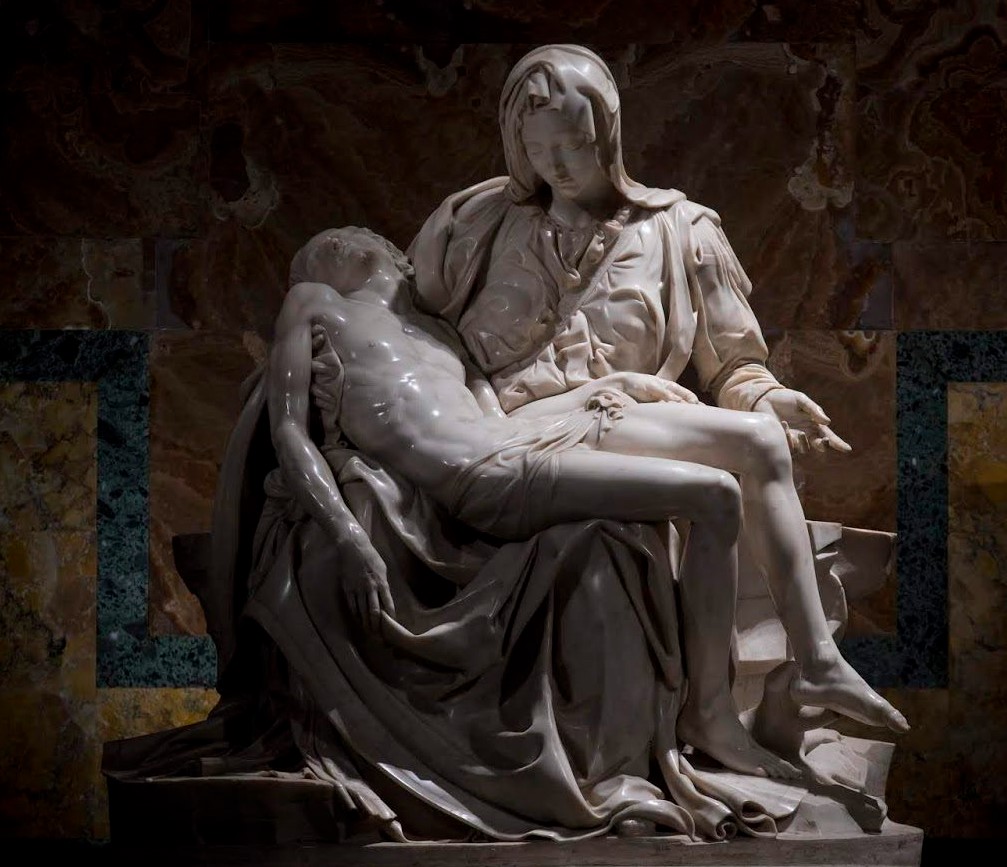
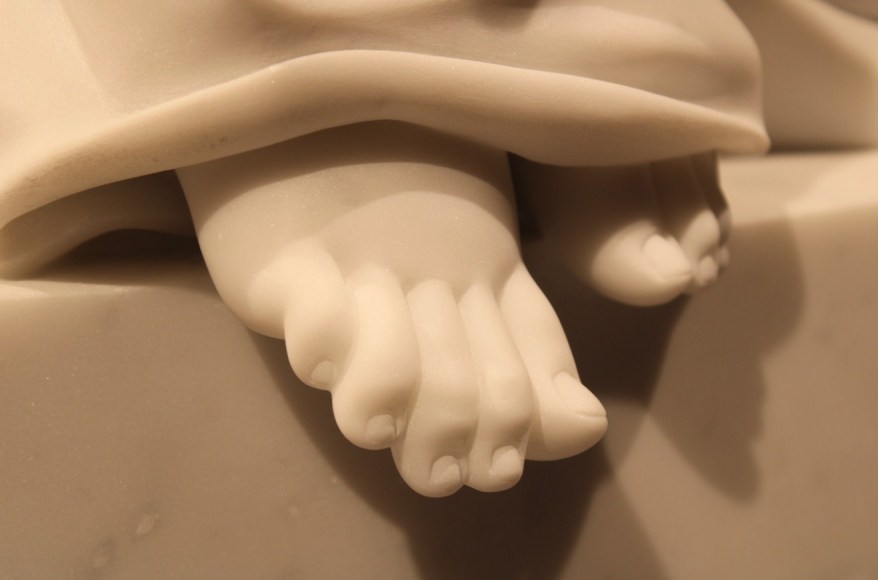
Lo stupefacente panneggio dell’abito della Vergine e quello del sudario, aggiunto per dare volume alla parte bassa di Nostra Signora con lo scopo di equilibrare la composizione, sono pezzi di bravura straordinaria.
Il corpo sotto l’abito non è celato ma assecondato nelle sue forme.
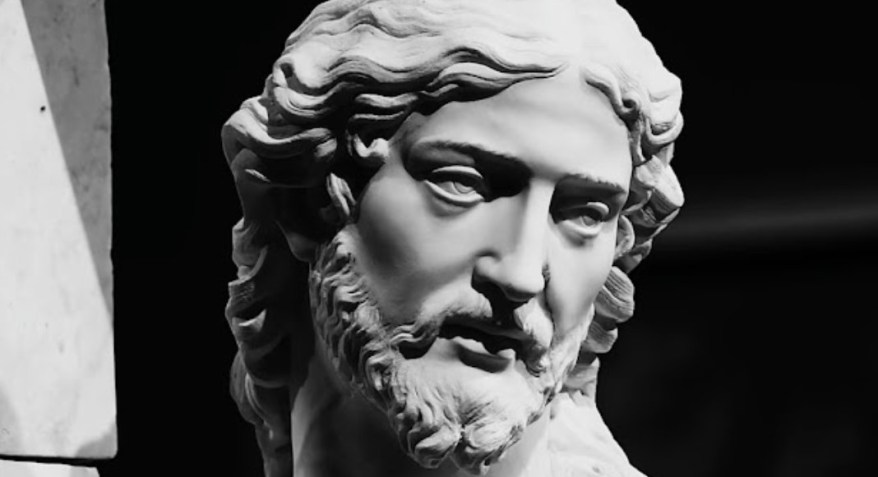
E che dire dei volti di Cristo e della Madonna? Somiglianti come fratelli più che come Madre e Figlio ma talmente belli da muovere a commozione.
Il garante di quell’opera fu il banchiere Jacopo Galli che mai aveva investito così tanto su un giovane talento come fece con me, esponendosi in prima persona senza alcuna remora: “Et io Jacobo Gallo prometto al reverendissimo Monsignore che lo dicto Michelangelo farà la dicta opera in fra un anno e sarà la più bella opera di marmo che sia oge in Roma e che maesto niuno la farìa megliore oge”. Così scriveva il Galli al cardinale francese Jean Bilhéres de Lagraulas.
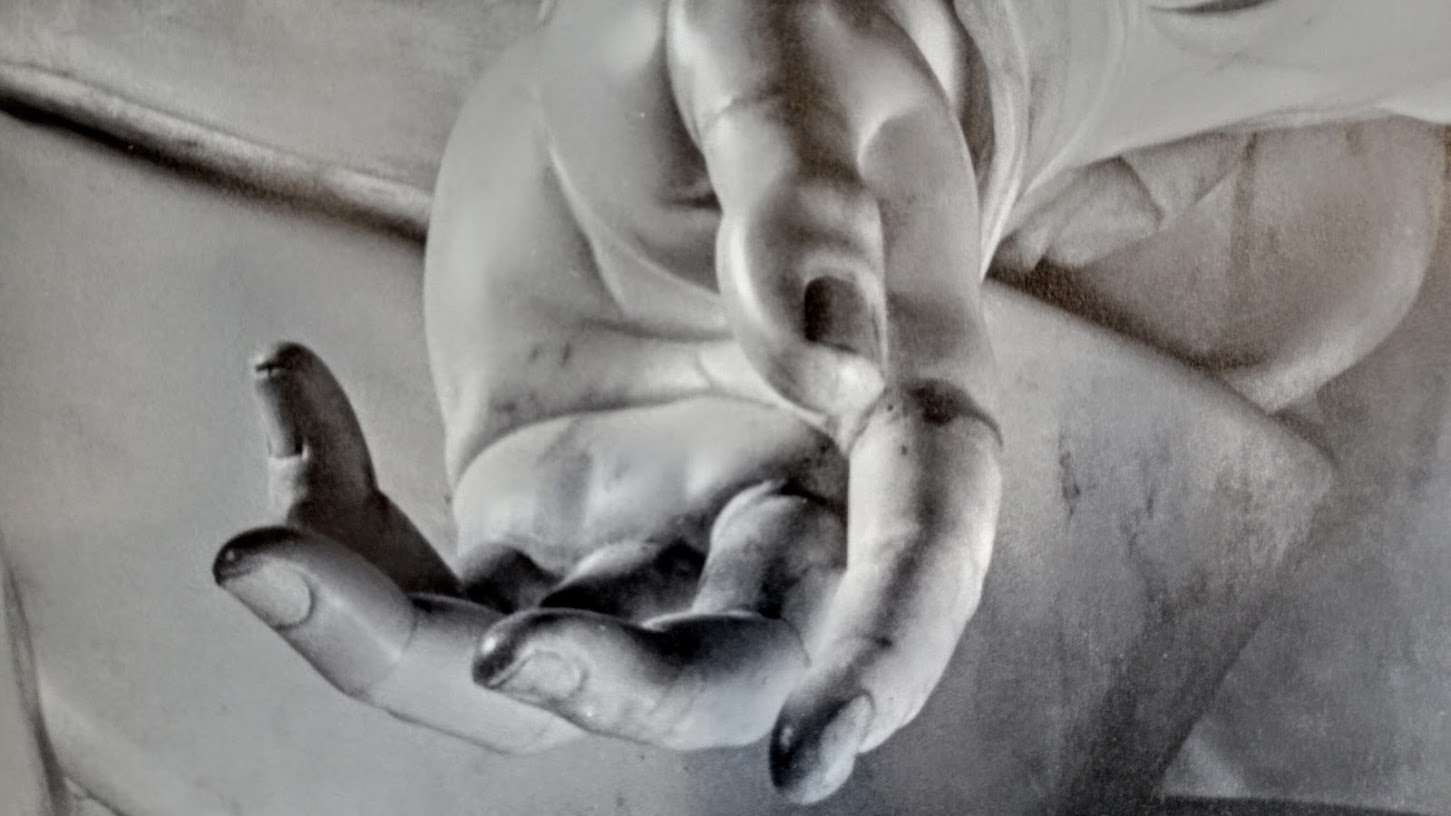
La Vergine Madre, “umile e alta più che creatura” come scrisse Dante, con quel gesto plateale della mano sinistra mostra al mondo il corpo di Gesù, che non osa toccare direttamente perché il Figlio, “generato, non creato”, è ora riunito al Padre ed è l’Ostia consacrata, ovvero il corpo sacrificato per la redenzione di tutti.
No è un caso che sia proprio con la mano sinistra che la Vergine sembri dire ‘Guardate cosa gli hanno fatto”. La sinistra è la parte del demonio e il martirio del Figlio non è certo cosa celeste.
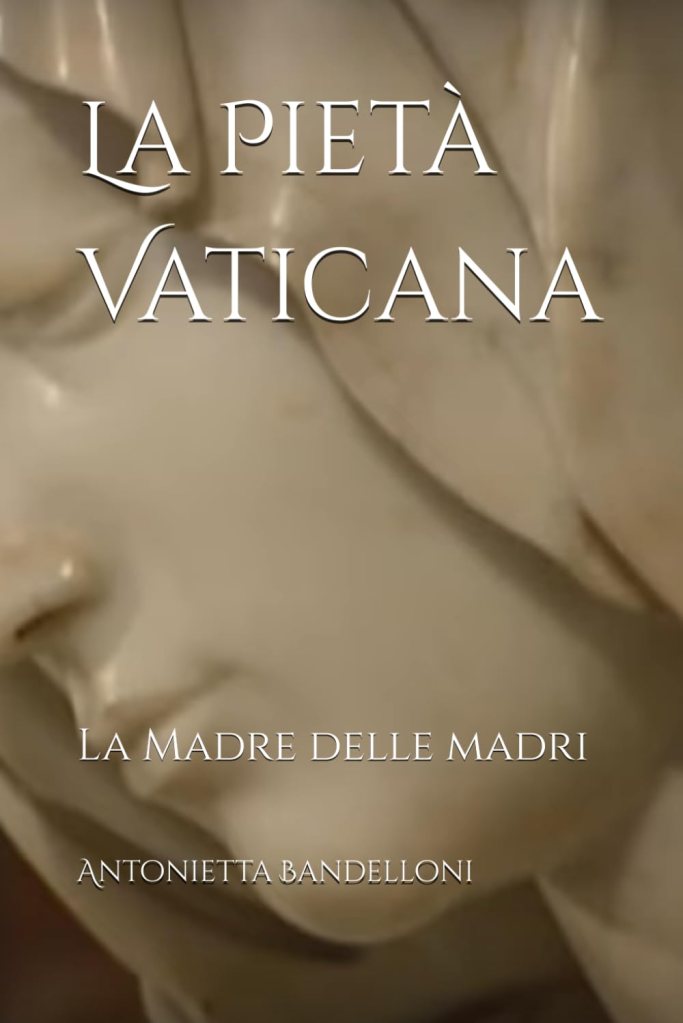
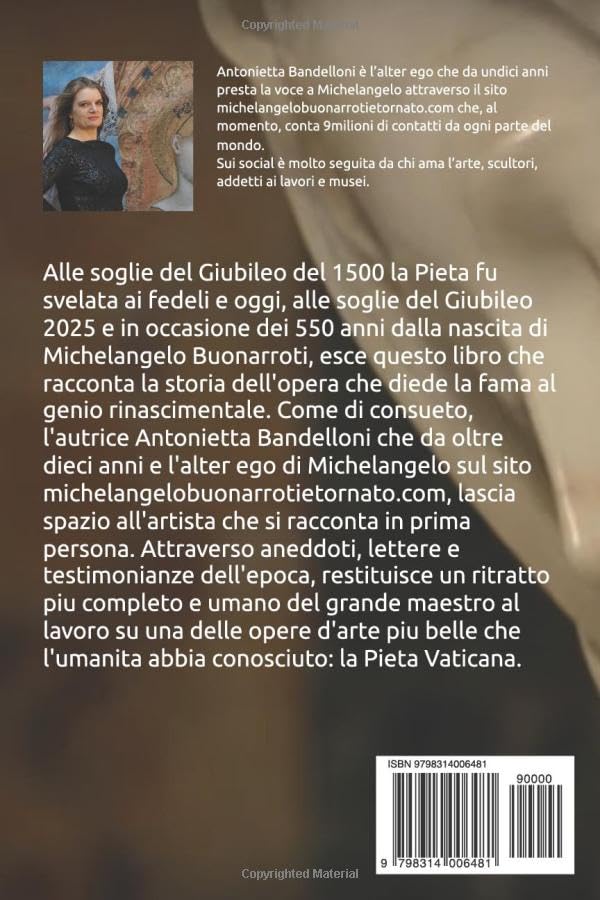
Vi ricordo che su tutte le piattaforme online trovate il mio nuovo libro ‘La Pietà Vaticana: la Madre delle madri’. Da qualche giorno è disponibile sia la versione cartacea che l’e-book anche su Amazon: cliccate QUA.
Per il momento il sempre vostro Michelangelo Buonarroti vi saluta dandovi appuntamento ai prossimi post e sui social.
The Vatican Pietà and the Body of Christ shown by the Mother with her left hand
“It is a miracle that a stone, originally without any form, has ever been reduced to that perfection that nature usually laboriously forms in the flesh”, wrote my dear friend Giorgio Vasari in the second edition of the Lives referring to the first Pietà I sculpted.
Marble, a cold and hard stone, if worked by hands guided by a sublime mind, can transform into something sublime.
The Vatican Pietà, completed on the eve of the Jubilee, in 1499, when I was 24 years old, was immediately counted among the masterpieces of the art of yesterday and of my time. For generations and generations it became a great source of inspiration for its almost angelic forms and for its iconography.
That Virgin Mary dressed with the Dead Christ in her arms, was commissioned to me exactly as I write it by the French Cardinal of Santa Sabina in Rome Jean Bilhères de Lagraulas.
He never saw the finished work because Monna Morte, having established that her earthly time was up, took him with her before I finished working on the Pietà.
The astonishing drapery of the Virgin’s dress and that of the shroud, added to give volume to the lower part of Our Lady with the aim of balancing the composition, are pieces of extraordinary skill.
The body under the dress is not hidden but supported in its forms. And what about the faces of Christ and the Madonna? Similar as brothers more than as Mother and Son but so beautiful as to move one to emotion.
The guarantor of that work was the banker Jacopo Galli who had never invested so much in a young talent as he did with me, exposing himself in first person without any hesitation: “And I Jacobo Gallo promise the most reverend Monsignor that the said Michelangelo will do the said work in a year and it will be the most beautiful work of marble that is today in Rome and that no master would do it better today”. This is what Galli wrote to the French cardinal Jean Bilhéres de Lagraulas.
The Virgin Mother, “humble and higher than any creature” as Dante wrote, with that theatrical gesture of her left hand shows the world the body of Jesus, which she does not dare to touch directly because the Son, “generated, not created”, is now reunited with the Father and is the consecrated Host, or the body sacrificed for the redemption of all.
It is no coincidence that it is with her left hand that the Virgin seems to say ‘Look what they did to him”. The left is the devil’s side and the martyrdom of the Son is certainly not a heavenly thing.
I remind you that on all online platforms you can find my new book ‘La Pietà Vaticana: la Madre delle madri’. For a few days now both the paper version and the e-book have been available on Amazon: click HERE.
For the moment, your ever Michelangelo Buonarroti bids you farewell, making an appointment with you in the next posts and on social media.

Sostienici – Support Us
Se questo blog ti piace e ti appassiona, puoi aiutarci a farlo crescere sempre più sostenendoci in modo concreto condividendo i post, seguendo le pagine social e con un contributo che ci aiuta ad andare avanti con il nostro lavoro di divulgazione. . ENGLISH: If you like and are passionate about this blog, you can help us make it grow more and more by supporting us in a concrete way by sharing posts, following social pages and with a contribution that helps us to move forward with our dissemination work.
10,00 €
Condividi:


Questo sono io





sostienici

Sostienici – Support Us
Se questo blog ti piace e ti appassiona, puoi aiutarci a farlo crescere sempre più sostenendoci in modo concreto condividendo i post, seguendo le pagine social e con un contributo che ci aiuta ad andare avanti con il nostro lavoro di divulgazione. . ENGLISH: If you like and are passionate about this blog, you can help us make it grow more and more by supporting us in a concrete way by sharing posts, following social pages and with a contribution that helps us to move forward with our dissemination work.
€10,00


