
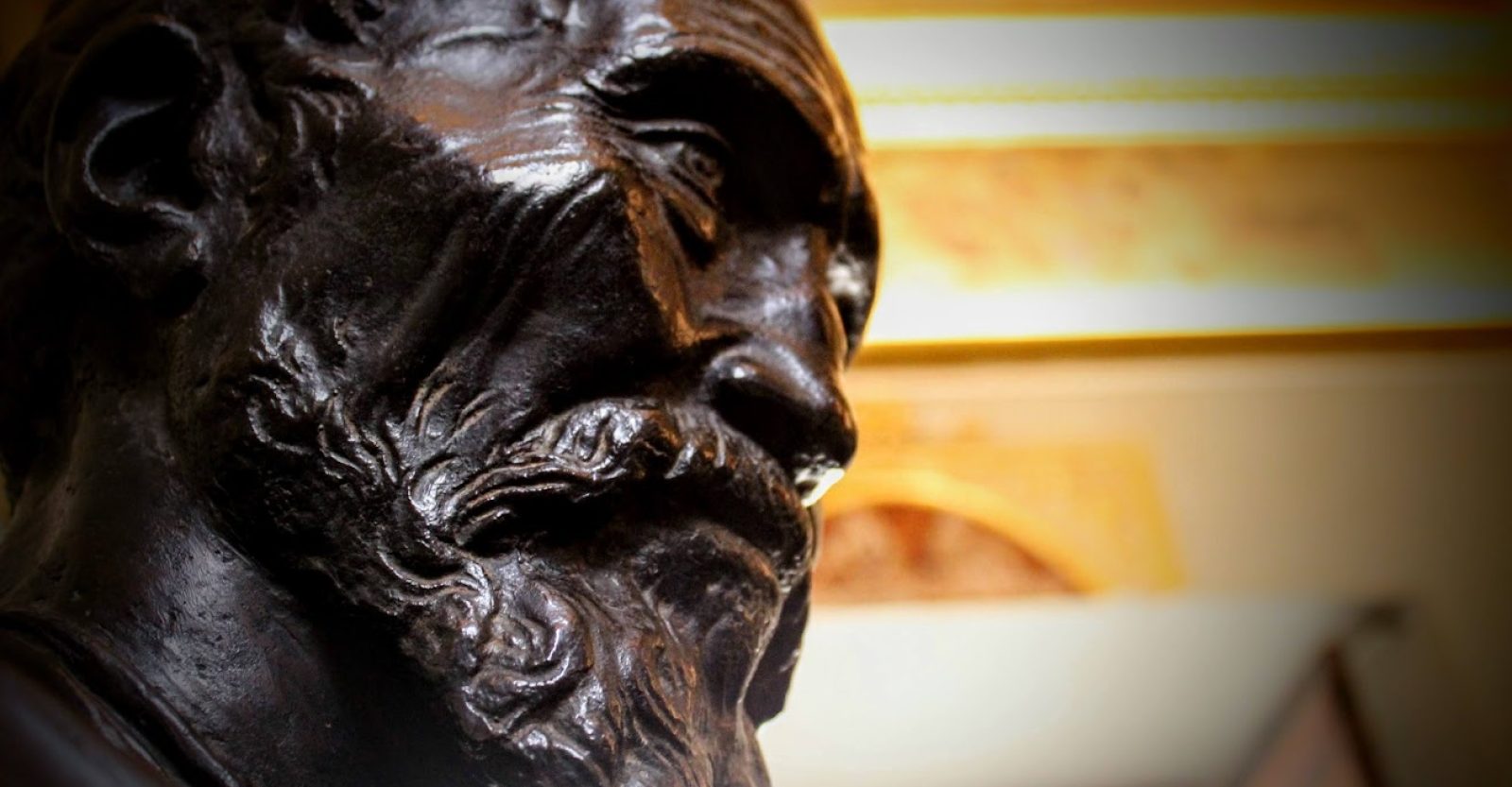
25 gennaio 1536: quando feci distruggere il lavoro di Sebastiano del Piombo
Tutto: Lo feci rimuovere tutto l’intonaco che, senza chiedermi nulla, Sebastiano del Piombo aveva fatto stendere sulla parete d’altare della Sistina. Era il 25 gennaio del 1536 e in fretta e furia la preparazione fu buttata a terra.
Non avevo nessuna intenzione di affrescare il Giudizio Universale a olio. Quello fu il momento in cui la nostra amicizia e il sodalizio artistico che stavamo portando avanti da tempo si interruppero bruscamente.
Sebastiano aveva convinto il pontefice papa Paolo III a fare come voleva lui, invaghito dell‘idea di un affresco fatto con pigmenti mischiati all’olio.
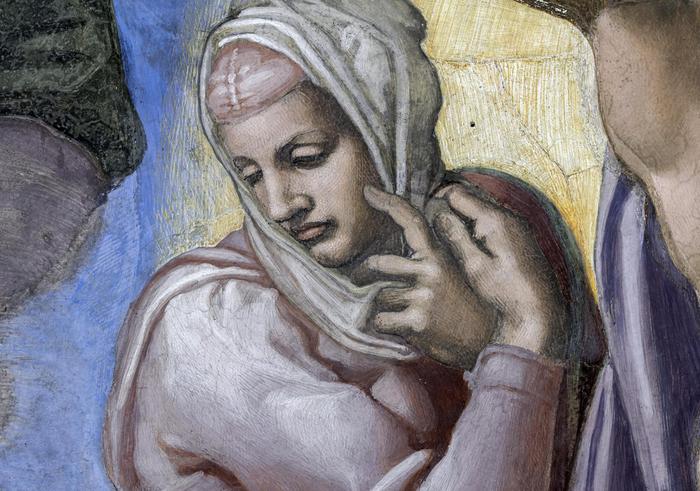
Una manciata di giorni dopo, il 13 febbraio dello stesso anno, pagai i mattoni ben cotti che mastro Giovanni Fachino aveva fornito per realizzare la contro parete.
Avevo in mente un progetto grandioso e per aumentarne l’imponenza, volli far costruire una contro parete in mattoni ben cotti e inclinata verso l’altare rispetto a quella già esistente.
“Fece dunque Michelagnolo fare, che non vi era prima, una scarpa di mattoni, ben murati e ben cotti, alla facciata di detta cappella, e volse che pendesse dalla sommità di sopra un mezzo braccio, perché né polvere né altra bruttura si potesse fermare sopra”, annotò il Vasari nelle Vite.
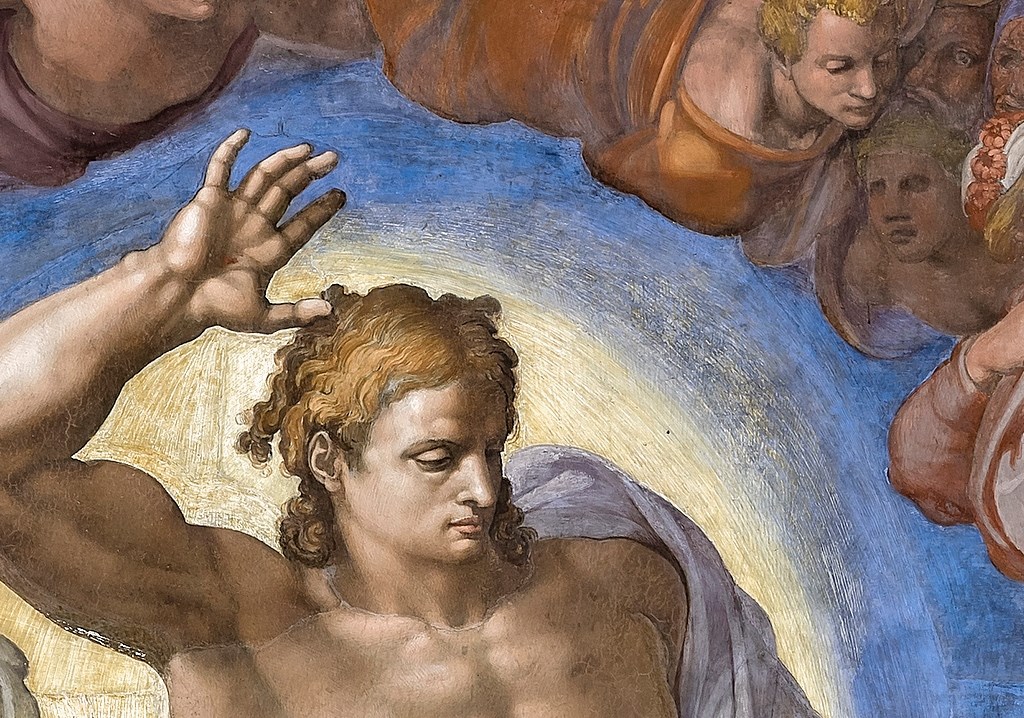
Nella parte più alta la contro parete si discosta da quella che si trova dietro di ben 24 centimetri. Lo stratagemma della contro parete non solo mi fu utile per aumentare l’effetto scenografico ma ha evitò perlomeno in parte il deposito di polveri e sporcizia.
La preparazione dell’arriccio e dell’intonaco
Vi siete mai chiesti come feci preparare l’arriccio per affrescarci poi sopra il Giudizio Universale?
Lo spessore dell’arriccio è di circa sette millimetri mentre solo quattro è spesso l’intonaco steso sopra. Addirittura nelle lunette dove poi affrescai gli angeli con gli strumenti della passione, l’arriccio è completamente assente.

La malta è formata da tre parti di pozzolana e una di calce ma nelle giornate relative alle figure, per ottenere una superficie più compatta, liscia e di tonalità più chiara, feci aggiungere anche una percentuale di sabbia. Inoltre, gli intonaci sono molto stretti e si vede bene questa caratteristica a luce radente.
Per il momento il sempre vostro Michelangelo Buonarroti vi saluta dandovi appuntamento ai prossimi post e sui social.
January 25, 1536: when I had Sebastiano del Piombo’s work destroyed
Everything: I had all the plaster removed that, without asking me, Sebastiano del Piombo had spread on the altar wall of the Sistine Chapel. It was January 25, 1536 and in a hurry the preparation was thrown to the ground.
I had no intention of frescoing the Last Judgement in oil. That was the moment when our friendship and the artistic partnership that we had been carrying on for some time came to an abrupt end.
Sebastiano had convinced the pontiff Pope Paul III to do as he wanted, infatuated with the idea of a fresco made with pigments mixed with oil.
A handful of days later, on February 13 of the same year, I paid for the well-fired bricks that master Giovanni Fachino had supplied to create the counter wall.
I had a grandiose project in mind and to increase its grandeur, I wanted to build a false wall in well-baked bricks and inclined towards the altar compared to the existing one.
“Michelangelo then had a scarp of well-baked and well-built bricks made, which had not been there before, on the facade of the said chapel, and he wanted it to hang from the top by half a braccio, so that neither dust nor other filth could settle on it”, Vasari noted in his Lives.
In the highest part, the false wall is 24 centimetres apart from the one behind it. The false wall stratagem was not only useful to me in increasing the scenographic effect but also avoided at least in part the deposit of dust and dirt.
The preparation of the arriccio and the plaster
Have you ever wondered how I had the arriccio prepared to then fresco the Last Judgement on it?
The thickness of the arriccio is about seven millimeters while the plaster spread over it is only four. Even in the lunettes where I later frescoed the angels with the instruments of the passion, the arriccio is completely absent.
The mortar is made up of three parts of pozzolana and one of lime but on the days relating to the figures, to obtain a more compact, smooth and lighter-toned surface, I also added a percentage of sand. Furthermore, the plasters are very narrow and this characteristic is clearly visible in grazing light.
For the moment, your ever Michelangelo Buonarroti bids you farewell, making an appointment with you in the next posts and on social media.

Sostienici – Support Us
Se questo blog ti piace e ti appassiona, puoi aiutarci a farlo crescere sempre più sostenendoci in modo concreto condividendo i post, seguendo le pagine social e con un contributo che ci aiuta ad andare avanti con il nostro lavoro di divulgazione. . ENGLISH: If you like and are passionate about this blog, you can help us make it grow more and more by supporting us in a concrete way by sharing posts, following social pages and with a contribution that helps us to move forward with our dissemination work.
10,00 €
Condividi:


Questo sono io





sostienici

Sostienici – Support Us
Se questo blog ti piace e ti appassiona, puoi aiutarci a farlo crescere sempre più sostenendoci in modo concreto condividendo i post, seguendo le pagine social e con un contributo che ci aiuta ad andare avanti con il nostro lavoro di divulgazione. . ENGLISH: If you like and are passionate about this blog, you can help us make it grow more and more by supporting us in a concrete way by sharing posts, following social pages and with a contribution that helps us to move forward with our dissemination work.
€10,00


