
Dedalo e Icaro: il capolavoro scultoreo di Giuseppe Franchi
La scultura del giorno che vi propongo oggi fu realizzata dallo scultore carrarese Giuseppe Franchi nel 1800 e ha come tema Dedalo che attacca le ali a Icaro.
Dedalo che aveva realizzato il celeberrimo labirinto di Creta, si trovò imprigionato lì dentro assieme al figlio Icaro. Per sfuggire dalla prigionia elaborò un piano a dir poco fantasioso.

Volle costruire delle ali per riuscire a volare al di sopra del labirinto e andarsene. Raccolse co una ad una le piume che gli uccelli avevano lasciato cadere e le assemblò con la cera d’api.
Con pazienza e perizia Dedalo realizzò due paia di ali: una per lui e una per il figlio.

Franchi scolpì proprio Dedalo intento a fissare con delle strisce di stoffa le ali sulla schiena di Icaro. Icaro con una mano tiene strette sul petto le stole e volge la testa guardandosi quelle appendici fatte di piume.
Il padre mostra un volto concentrato sul lavoro che sta realizzando mentre a terra rimangono le ali che poi avrebbe fissato alle sue di spalle.
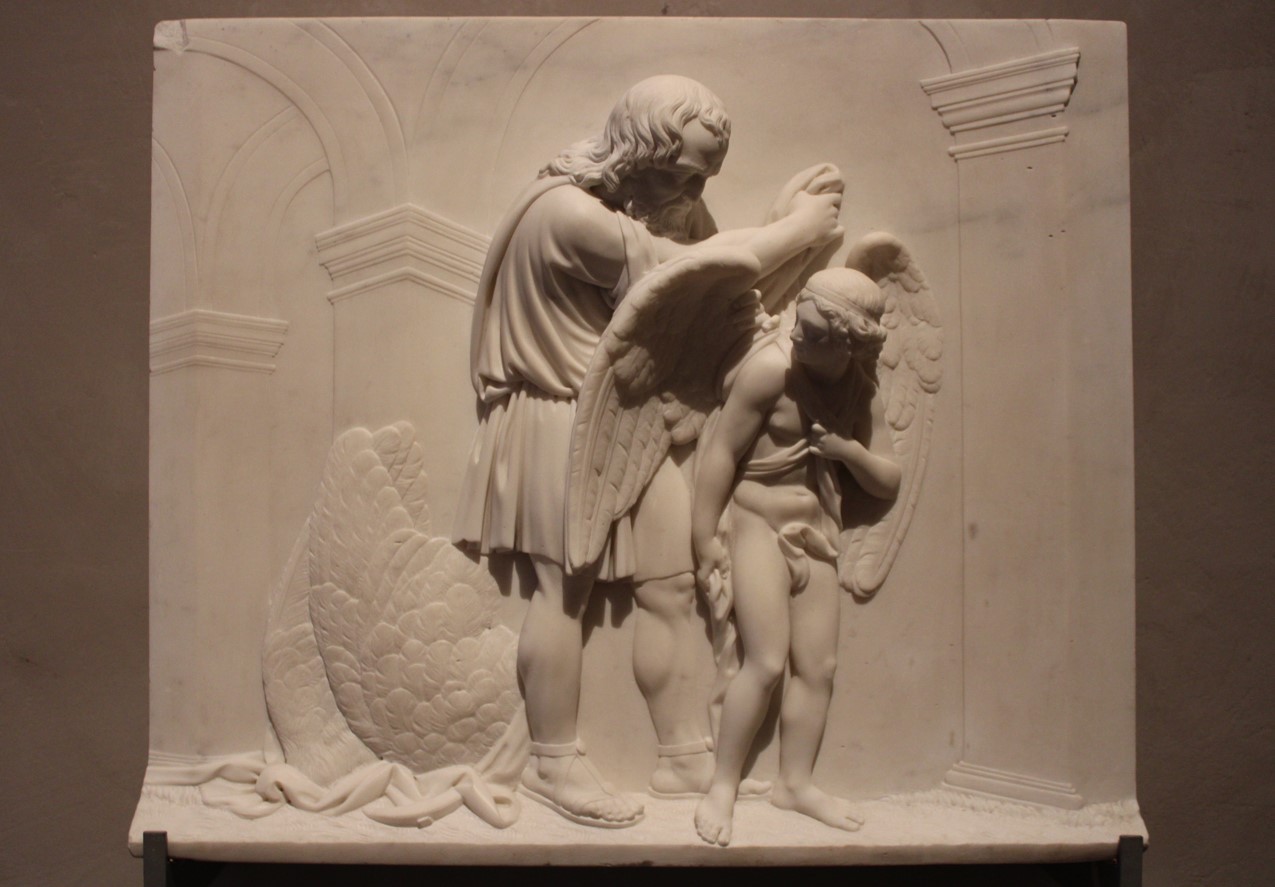
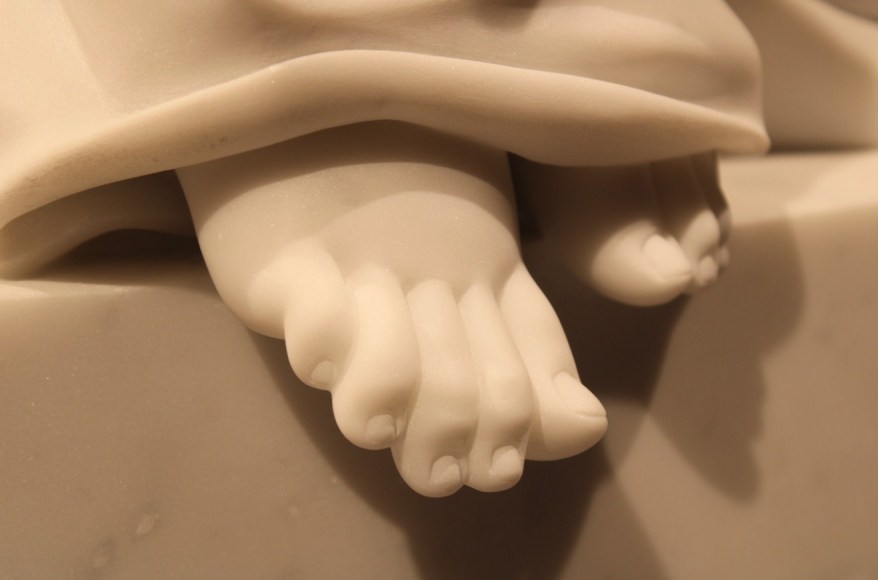
Il bassorilievo di Franchi è assai dettagliato. Osservate con quanta cura l’artista scolpì i sandali che calza Dedalo e le ali di piume che già indossa Icaro.
Sullo sfondo si vedono accennati una serie di colonne e archi che si susseguono, tutti uguali. Questa opera appartiene alle collezioni della Galleria di Arte Moderna di Milano.

Giuseppe Franchi ebbe modo di perfezionare la sua tecnica scultore appresa all’Accademia di Belle Arti di Carrara a Roma, sotto l’attenta guida di Wincklemann.
Visse a lungo a Milano dove divenne insegnante dell’Accademia di Brera fin dal 1776. Collaborò con l’architetto Piermarini e tra le sue opere milanesi più note vale la pena menzionare la facciata del Teatro alla Scala.
Per il momento il sempre vostro Michelangelo Buonarroti vi saluta dandovi appuntamento ai prossimi post e sui social.
Daedalus and Icarus: the sculptural masterpiece by Giuseppe Franchi
The sculpture of the day that I propose to you today was made by the sculptor Giuseppe Franchi from Carrara in 1800 and has as its theme Daedalus attaching the wings to Icarus.
Daedalus, who had created the famous labyrinth of Crete, found himself imprisoned there together with his son Icarus. To escape from prison he developed a plan that was nothing short of imaginative.
He wanted to build wings to be able to fly above the labyrinth and leave. He collected one by one the feathers that the birds had dropped and assembled them with beeswax.
With patience and skill Daedalus created two pairs of wings: one for himself and one for his son.
Franchi sculpted Daedalus intent on attaching the wings to Icarus’ back with strips of cloth. Icarus with one hand holds the stoles tightly to his chest and turns his head looking at those appendages made of feathers.
The father shows a face focused on the work he is doing while the wings that he would later fix behind him remain on the ground.
Franchi’s bas-relief is very detailed. Observe how carefully the artist sculpted the sandals that Daedalus wears and the feather wings that Icarus is already wearing.
In the background you can see a series of columns and arches that follow one another all the same. This work belongs to the collections of the Galleria di Arte Moderna in Milan.
Giuseppe Franchi had the opportunity to perfect his sculpting technique learned at the Academy of Fine Arts of Carrara in Rome, under the careful guidance of Wincklemann.
He lived for a long time in Milan where he became a teacher at the Brera Academy since 1776. He collaborated with the architect Piermarini and among his most famous Milanese works it is worth mentioning the facade of the Teatro alla Scala.
For the moment, the always your Michelangelo Buonarroti bids you farewell, making an appointment with you in the next posts and on social media.

Sostienici – Support Us
Se questo blog ti piace e ti appassiona, puoi aiutarci a farlo crescere sempre più sostenendoci in modo concreto condividendo i post, seguendo le pagine social e con un contributo che ci aiuta ad andare avanti con il nostro lavoro di divulgazione. . ENGLISH: If you like and are passionate about this blog, you can help us make it grow more and more by supporting us in a concrete way by sharing posts, following social pages and with a contribution that helps us to move forward with our dissemination work.
10,00 €
Articoli
Condividi:


Questo sono io





sostienici

Sostienici – Support Us
Se questo blog ti piace e ti appassiona, puoi aiutarci a farlo crescere sempre più sostenendoci in modo concreto condividendo i post, seguendo le pagine social e con un contributo che ci aiuta ad andare avanti con il nostro lavoro di divulgazione. . ENGLISH: If you like and are passionate about this blog, you can help us make it grow more and more by supporting us in a concrete way by sharing posts, following social pages and with a contribution that helps us to move forward with our dissemination work.
€10,00


