
Mucha assieme a Boldini in arrivo al Palazzo dei Diamanti
Ancora non è terminato questo 2024 ma già si parla delle grandi mostre della prossima primavera. Fra queste ci sarà quella allestita a Ferrara, al Palazzo dei Diamanti, che avrà come protagonista il fascino femminile dipinto da Alphonse Mucha e Giovanni Boldini.
Mucha nacque il 24 luglio del 1860 a Ivančice in Moravia, oggi Repubblica Ceca. Fin da piccino aveva mostrato un’inclinazione straordinaria per il disegno e la pittura. Nel 1878, dopo un breve periodo di apprendistato come decoratore a Vienna, si trasferì a Monaco di Baviera per frequentare l’Accademia di Belle Arti. Lì il suo stile subì una forte influenza dal movimento neo-rinascimentale tedesco.

Poliedrico e versatile, Alphonse Mucha, oltre che pittore, disegnatore e illustratore, fu anche fotografo, scenografo, progettista d’interni creatore di gioielli e packaging designer.
Le sue opere divennero icone dell’Art Nouveau: basti pensare alla stupenda Gismonda del 1894, alla serie de Le stagioni (1896), Job (1896), Fantasticheria (1897), Médée (1898).
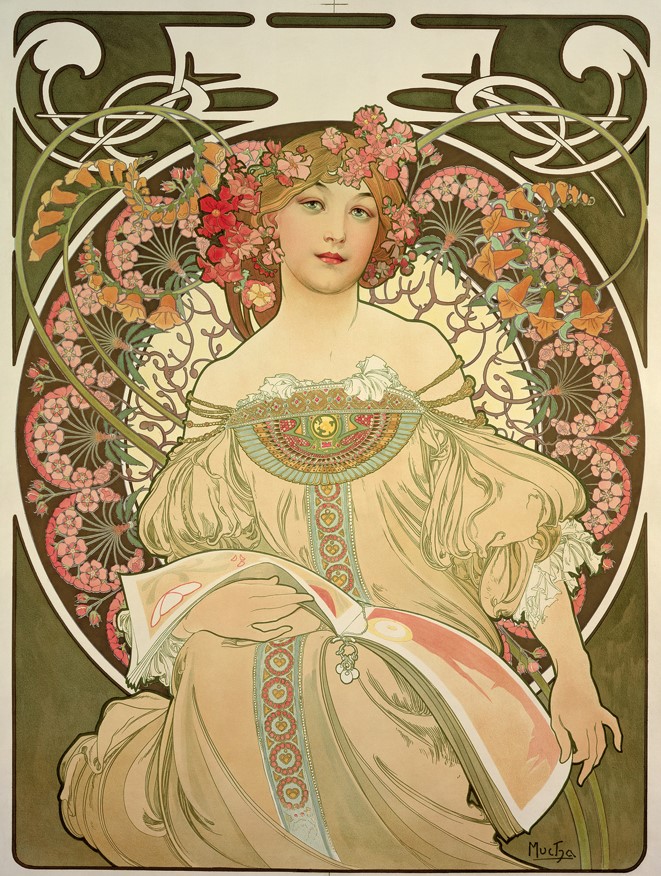
La grande mostra monografica, organizzata da Arthemisia e Fondazione Ferrara Arte in collaborazione con la Mucha Foundation e curata da Sarah e John Mucha, racconta la biografia, il percorso artistico e i molteplici aspetti della produzione di Mucha, il quale era fermamente convinto che la bellezza e la forza ispiratrice dell’arte potessero favorire il progresso dell’umanità e garantire la pace e l’unione dei popoli.
Le protagoniste delle opere di Mucha furono soprattutto donne così come donne furono per la maggior parte le figure dipinte da Giovanni Boldini (Ferrara, 1842 – Parigi, 1931) che, come l’artista ceco, risiedette stabilmente a Parigi, dove si affermò come ritrattista mondano, ricercatissimo da una facoltosa clientela internazionale.

Le sale dell’ala Tisi di Palazzo dei Diamanti ospiteranno una significativa selezione di dipinti, disegni e incisioni dedicati al tema del ritratto e della figura femminile provenienti dal Museo Giovanni Boldini, la più importante raccolta pubblica di opere del grande maestro ferrarese, che riaprirà nel rinnovato complesso ferrarese di Palazzo Massari nel 2026.
Accanto a capolavori come La signora in rosa (1916) e Fuoco d’artificio (c. 1890) saranno presentati studi di donne a figura intera e di singoli volti femminili che documentano il rapporto iperattivo dell’artista con la realtà circostante, nonché la sua abilità e prontezza nel registrare pose e attitudini che gli sarebbero poi serviti per conferire vitalità e dinamismo alle protagoniste dei suoi dipinti, contraddistinti da quella peculiare scrittura rapidissima e insieme controllata che rende inconfondibile, e unico, il suo stile.
Per il momento il sempre vostro Michelangelo Buonarroti vi saluta dandovi appuntamento ai prossimi post e sui social.

Mucha together with Boldini coming to Palazzo dei Diamanti
This 2024 has not yet ended but there is already talk of the great exhibitions of next year. Among these there will be the one set up in Ferrara, at Palazzo dei Diamanti, which will have as its protagonist the feminine charm painted by Alphonse Mucha and Giovanni Boldini.
Mucha was born on July 24, 1860 in Ivančice in Moravia, now the Czech Republic. From an early age he had shown an extraordinary inclination for drawing and painting. In 1878, after a brief period of apprenticeship as a decorator in Vienna, he moved to Munich to attend the Academy of Fine Arts. There his style was strongly influenced by the German neo-Renaissance movement.
Multifaceted and versatile, Alphonse Mucha, in addition to being a painter, designer and illustrator, was also a photographer, set designer, interior designer, creator of jewelry and packaging designer.
His works became icons of Art Nouveau: just think of the wonderful Gismonda of 1894, the series of The Seasons (1896), Job (1896), Reverie (1897), Médée (1898).
The large monographic exhibition, organized by Arthemisia and Fondazione Ferrara Arte in collaboration with the Mucha Foundation and curated by Sarah and John Mucha, tells the biography, the artistic path and the many aspects of the production of Mucha, who was firmly convinced that the beauty and the inspiring power of art could favor the progress of humanity and guarantee peace and the union of peoples.
The protagonists of Mucha’s works were mostly women, just as women were mostly the figures painted by Giovanni Boldini (Ferrara, 1842 – Paris, 1931) who, like the Czech artist, lived permanently in Paris, where he established himself as a worldly portraitist, highly sought after by a wealthy international clientele.
The rooms of the Tisi wing of Palazzo dei Diamanti will host a significant selection of paintings, drawings and engravings dedicated to the theme of the portrait and the female figure from the Giovanni Boldini Museum, the most important public collection of works by the great master from Ferrara, which will reopen in the renovated Ferrarese complex of Palazzo Massari in 2026.
Alongside masterpieces such as The Lady in Pink (1916) and Fireworks (c. 1890), full-length studies of women and individual female faces will be presented, documenting the artist’s hyperactive relationship with the surrounding reality, as well as his ability and readiness to record poses and attitudes that would later serve him to give vitality and dynamism to the protagonists of his paintings, characterized by that peculiar, extremely rapid and at the same time controlled writing that makes his style unmistakable and unique.
For the moment, yours truly, Michelangelo Buonarroti bids you farewell, making an appointment to see you in the next posts and on social media.

Sostienici – Support Us
Se questo blog ti piace e ti appassiona, puoi aiutarci a farlo crescere sempre più sostenendoci in modo concreto condividendo i post, seguendo le pagine social e con un contributo che ci aiuta ad andare avanti con il nostro lavoro di divulgazione. . ENGLISH: If you like and are passionate about this blog, you can help us make it grow more and more by supporting us in a concrete way by sharing posts, following social pages and with a contribution that helps us to move forward with our dissemination work.
10,00 €
Articoli
Condividi:


Questo sono io





sostienici

Sostienici – Support Us
Se questo blog ti piace e ti appassiona, puoi aiutarci a farlo crescere sempre più sostenendoci in modo concreto condividendo i post, seguendo le pagine social e con un contributo che ci aiuta ad andare avanti con il nostro lavoro di divulgazione. . ENGLISH: If you like and are passionate about this blog, you can help us make it grow more and more by supporting us in a concrete way by sharing posts, following social pages and with a contribution that helps us to move forward with our dissemination work.
€10,00


