

La Testa di Guerriero, con ali di pipistrello
Tra i tanti disegni appartenenti all’archivio di Casa Buonarroti, ce n’è uno assai singolare, di piccolissime dimensioni.
Si tratta di una testa crestata che tracciai su un foglietto quadrato di soli sette centimetri e mezzo per lato.
Il soggetto studiato riferibile al periodo 1503-1504, secondo quanto sostenuto da Tolnay, è una “Testa di guerriero vista di profilo con copricapo fantasioso composto da una pelliccia dalla quale emergono ali di pipistrello“

Non vi sembri così inusuale la scelta di appore delle ali di pipistrello su un copricapo. A fine Quattrocento, soprattutto in ambito fiorentino, erano accessori caratteristici spesso aggiunti agli elmi fantasiosi.
Per quanto riguarda la bordura di pelliccia, osservate quanto poco mi bastò per rendere l’idea del soffice pelo: giusto qualche breve linea curva tracciata a inchiostro sulla carta per creare quell’effetto inconfondibile di morbidezza.
Il Thode ha saputo vedere in questo studio per uno dei personaggi da disegnare poi nel cartone della Battaglia di Cascina. Osservando la copia parziale di Aristotile da Sangallo giunta fino ai vostri tempi, di elmi se ne vedono due ma non è da escludere ce ne fossero altri nell’intera composizione.
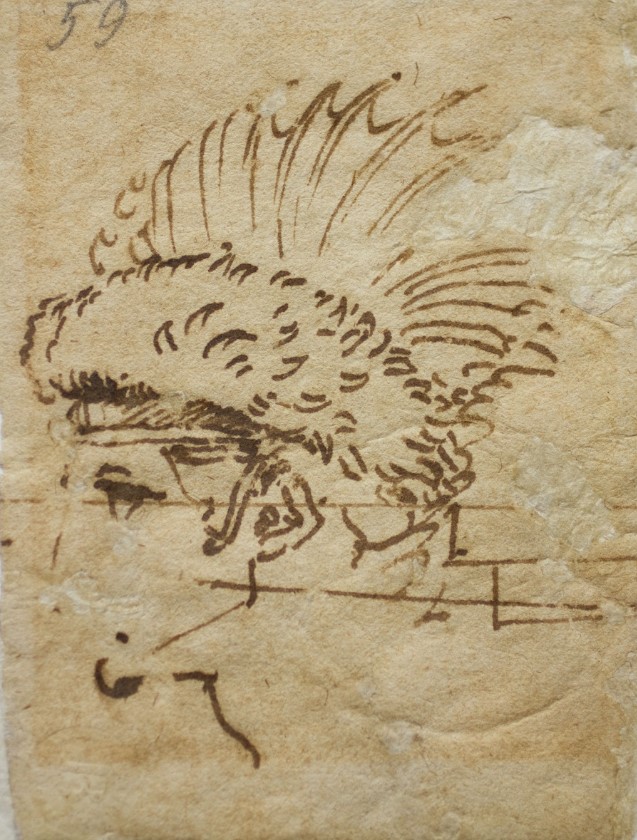
Quello che è certo è che copricapi ed elmi strani non sono mancati nella mia produzione artistica: basti pensare per esempio a quello di Zenobia o a quello sfoggiato da Lorenzo de’ Medici duca D’Urbino nella Sagrestia Nuova.
Per il momento il sempre vostro Michelangelo Buonarroti vi saluta dandovi appuntamento ai prossimi post e sui social.
The Head of a Warrior, with Bat Wings
Among the many drawings belonging to the Casa Buonarroti archive, there is a very singular one, of very small dimensions.
It is a crested head that I traced on a square sheet of paper measuring only seven and a half centimetres per side. The subject studied, which can be dated to the period 1503-1504, according to Tolnay, is a “Head of a warrior seen in profile with a fanciful headdress composed of a fur from which bat wings emerge“
The choice to place bat wings on a headdress may not seem so unusual to you. At the end of the fifteenth century, especially in Florence, they were characteristic accessories often added to fanciful helmets. As for the fur trim, notice how little it took me to convey the idea of the soft fur: just a few short curved lines traced in ink on the paper to create that unmistakable effect of softness.
Thode was able to see in this study one of the characters to be drawn in the cartoon of the Battle of Cascina. Observing the partial copy of that cartoon made by Aristotile da Sangallo that has survived to your time, two helmets can be seen but it cannot be ruled out that there were others in the entire composition.
What is certain is that strange headdresses and helmets have not been lacking in my artistic production: just think for example of that of Zenobia or that worn by Lorenzo de’ Medici Duke of Urbino in the New Sacristy.
For the moment, yours truly Michelangelo Buonarroti bids you farewell and gives you an appointment for the next posts and on social media.

Sostienici – Support Us
Se questo blog ti piace e ti appassiona, puoi aiutarci a farlo crescere sempre più sostenendoci in modo concreto condividendo i post, seguendo le pagine social e con un contributo che ci aiuta ad andare avanti con il nostro lavoro di divulgazione. . ENGLISH: If you like and are passionate about this blog, you can help us make it grow more and more by supporting us in a concrete way by sharing posts, following social pages and with a contribution that helps us to move forward with our dissemination work.
10,00 €
-
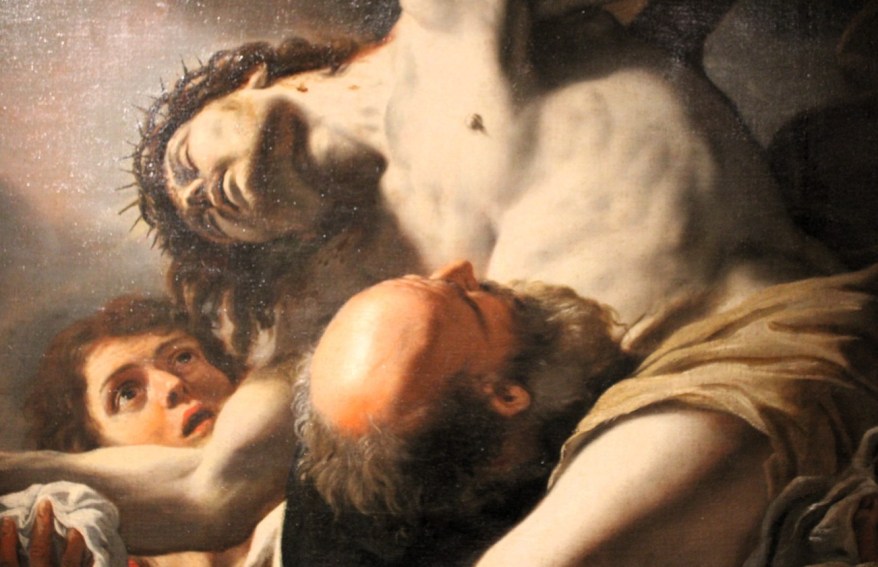
La Deposizione dalla Croce di Mattia Preti: il dramma diventa luce
🇮🇹Mattia Preti dipinse La Deposizione dalla Croce nel pieno della maturità riuscendo a trasformare il dramma sacro in qualcosa di profondamente umano… 🇬🇧Mattia Preti painted The Deposition from the Cross at the height of his maturity, managing to transform the sacred drama into something profoundly human…
-
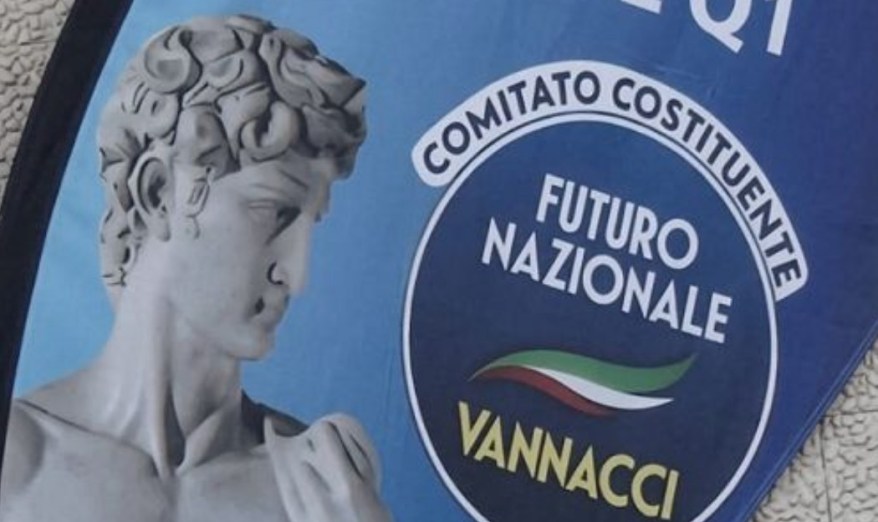
Il mio David utilizzato per propaganda politica
🇮🇹Il David finisce su manifesti politici senza autorizzazione. La Galleria dell’Accademia interviene sulla questione asserendo di non aver dato alcuna autorizzazione… 🇬🇧The David ends up on political posters without authorization. The Accademia Gallery intervenes on the issue, claiming it did not give any authorization..
-
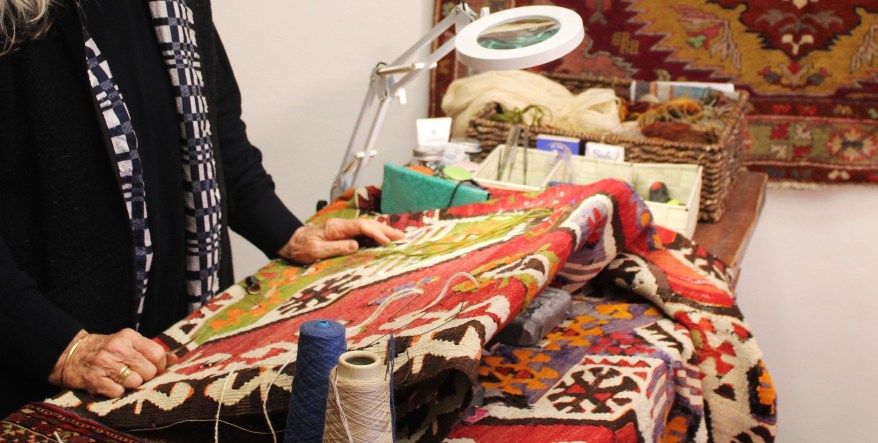
Restauro tappeti d’arte a Pietrasanta: tradizione e segreti di un laboratorio centenario
🇮🇹Il fascino dei tappeti d’arte prende vita a Pietrasanta. Venite con me nel laboratorio di “Restauro Tappeti d’Arte” di Orna Bachar e Benedetto Bumaguin, dove ogni tappeto antico è una vera opera d’arte… 🇬🇧The charm of artistic carpets comes to life in Pietrasanta. Come with me to Orna Bachar and Benedetto Bumaguin’s “Artistic Carpet Restoration”…
Condividi:


Questo sono io





sostienici

Sostienici – Support Us
Se questo blog ti piace e ti appassiona, puoi aiutarci a farlo crescere sempre più sostenendoci in modo concreto condividendo i post, seguendo le pagine social e con un contributo che ci aiuta ad andare avanti con il nostro lavoro di divulgazione. . ENGLISH: If you like and are passionate about this blog, you can help us make it grow more and more by supporting us in a concrete way by sharing posts, following social pages and with a contribution that helps us to move forward with our dissemination work.
€10,00


