
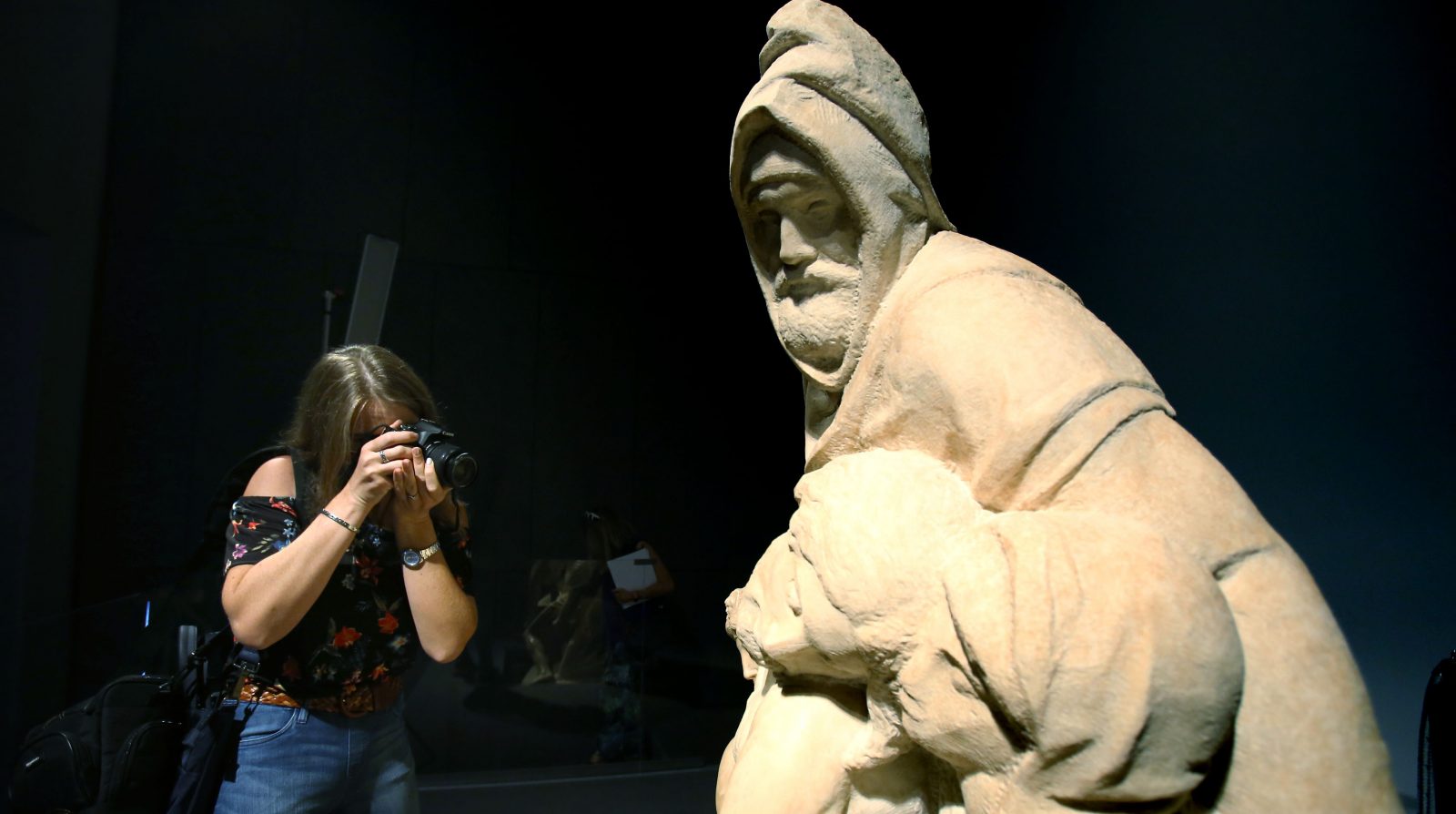
Pietà Vaticana: i versi che gli dedicò Giovan Battista Marino
Il poeta Giovan Battista Marino, considerato il massimo esponente della poesia barocca italiana, ebbe parole di riguardo per la Pietà Vaticana.
Nato nel 1569 a Napoli, arrivò a Roma per la prima volta nel 1600 e, recandosi in visita nella Basilica di San Pietro, rimase affascinato dalla Pietà che avevo scolpito un secolo prima.
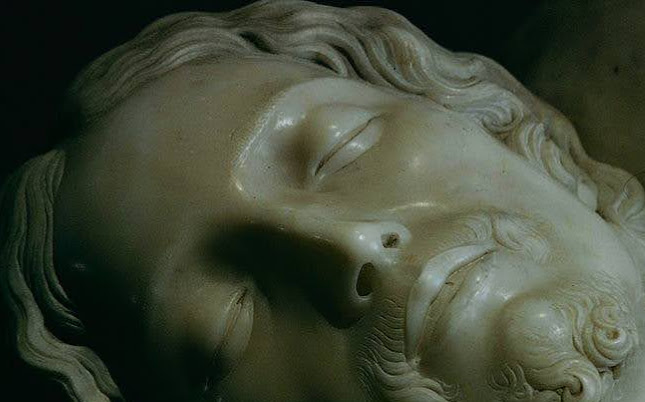
Ricordando le sue fattezze, durante il soggiorno parigino volle dedicarle un madrigale che sintetizzasse il suo significato più terreno che celeste.
Se è vero che la Madre delle madri tiene fra le braccia il corpo di Cristo privo di vita, è altrettanto vero che potrebbe essere una madre qualsiasi che sostiene il figlio ucciso da malattie come la peste, guerre, carestie e calamità di altro tipo.
Morir da vecchi a quei tempi non era la norma, anzi, e troppe erano le madri che piangevano i figli troppo presto scomparsi.
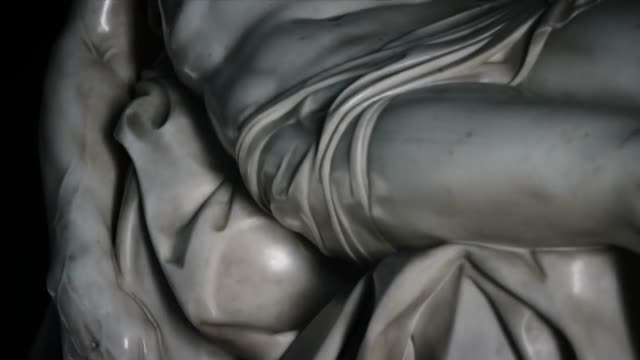
Sasso non è costei,
che l’estinto figliuol, freddo quel ghiaccio,
sostien pietosa in braccio.
Sasso più tosto sei
Tu, che non piagni ala pietà di lei.
Anzi, sei più che sasso,
chè suole anco da’ sassi il pianto uscire,
e i sassi si spezzaro al suo morire.
Per il momento il sempre vostro Michelangelo Buonarroti vi saluta dandovi appuntamento ai prossimi post e sui social.
Vatican Pietà: the verses dedicated to him by Giovan Battista Marino
The poet Giovan Battista Marino, considered the greatest exponent of Italian baroque poetry, had words of respect for the Vatican Pietà.
Born in 1569 in Naples, he arrived in Rome for the first time in 1600 and when visiting St. Peter’s Basilica, he was fascinated by the Pietà that I had sculpted a century earlier.
Remembering her features, during her stay in Paris he wanted to dedicate a madrigal to her that summarized her more earthly than heavenly meaning. If it is true that the Mother of mothers holds the lifeless body of Christ in her arms, it is equally true that it could be any mother who supports her child killed by diseases such as the plague, wars, famines and other calamities.
Sasso is not this one,
that the extinct son, that ice cold,
she supports me pitifully in her arms.
The tougher stone you are
You, who don’t cry for her pity.
Indeed, you are more than a stone,
because tears also usually come from stones,
and the stones broke when she died.
For the moment, your always Michelangelo Buonarroti greets you and will meet you in the next posts and on social media.

Sostienici – Support Us
Se questo blog ti piace e ti appassiona, puoi aiutarci a farlo crescere sempre più sostenendoci in modo concreto condividendo i post, seguendo le pagine social e con un contributo che ci aiuta ad andare avanti con il nostro lavoro di divulgazione. . ENGLISH: If you like and are passionate about this blog, you can help us make it grow more and more by supporting us in a concrete way by sharing posts, following social pages and with a contribution that helps us to move forward with our dissemination work.
10,00 €
-
La Pietà di Tincolini: a Pontedera l’arte torna a fare domande scomode
🇮🇹“Pietà”, la scultura di Filippo Tincolini, insieme alle parole di Federico Quaranta e Andrea Pezzi, non è stato solo uno spettacolo. È stata una domanda lanciata in faccia al pubblico, impossibile da evitare: siamo ancora capaci di provare pietà? 🇬🇧 “Pietà,” Filippo Tincolini’s sculpture, along with the words of Federico Quaranta and Andrea Pezzi, wasn’t…
-
Ai Musei Vaticani i fasti barocchi di Urbano VIII: in mostra gli arazzi della manifattura Barberini
🇮🇹A quattro secoli dalla consacrazione della Basilica di San Pietro, i Musei Vaticani dedicano una mostra all’Arazzeria Barberini, simbolo di una cultura visiva capace di fondere magnificenza estetica e affermazione politica… 🇬🇧Four centuries after the consecration of St. Peter’s Basilica, the Vatican Museums are dedicating an exhibition to the Barberini Tapestry Factory, a symbol of…
-
Le Opere della Pasqua: come la Resurrezione ha ispirato Arte e Cultura
🇮🇹La Pasqua, oltre ad essere una ricorrenza religiosa è un momento in cui la storia, l’arte e la spiritualità si intrecciano per raccontare il fulcro della fede cristiana: la resurrezione di Cristo. .. 🇬🇧Easter, beyond being a religious holiday, is a moment when history, art, and spirituality intertwine to recount the core of the Christian…
Condividi:


Questo sono io





sostienici

Sostienici - Support Us
Se questo blog ti piace e ti appassiona, puoi aiutarci a farlo crescere sempre più sostenendoci in modo concreto condividendo i post, seguendo le pagine social e con un contributo che ci aiuta ad andare avanti con il nostro lavoro di divulgazione. . ENGLISH: If you like and are passionate about this blog, you can help us make it grow more and more by supporting us in a concrete way by sharing posts, following social pages and with a contribution that helps us to move forward with our dissemination work.
€10,00


