
Il dipinto del giorno: Sidonia von Bork del pittore preraraffaellita Burne-Jones
Il dipinto del giorno che vi propongo oggi è Sidonia von Bork dipinta nel 1860 dal pittore preraffaellita Edward Burne-Jones, della Tate Gallery ma esposta fino al 30 giugno alla mostra ‘Preraffaelliti, Rinascimento moderno’ in corso a Forlì.
E’ una delle prime opere che Burne-Jones realizzò ad acquerello e gouache su carta. Il centro della scena è dominato dalla protagonista del romanzo scritto da Wilhelm Meinhold che fu pubblicato prima in tedesco e poi, nel 1848, tradotto in inglese dalla madre di Oscar Wilde.
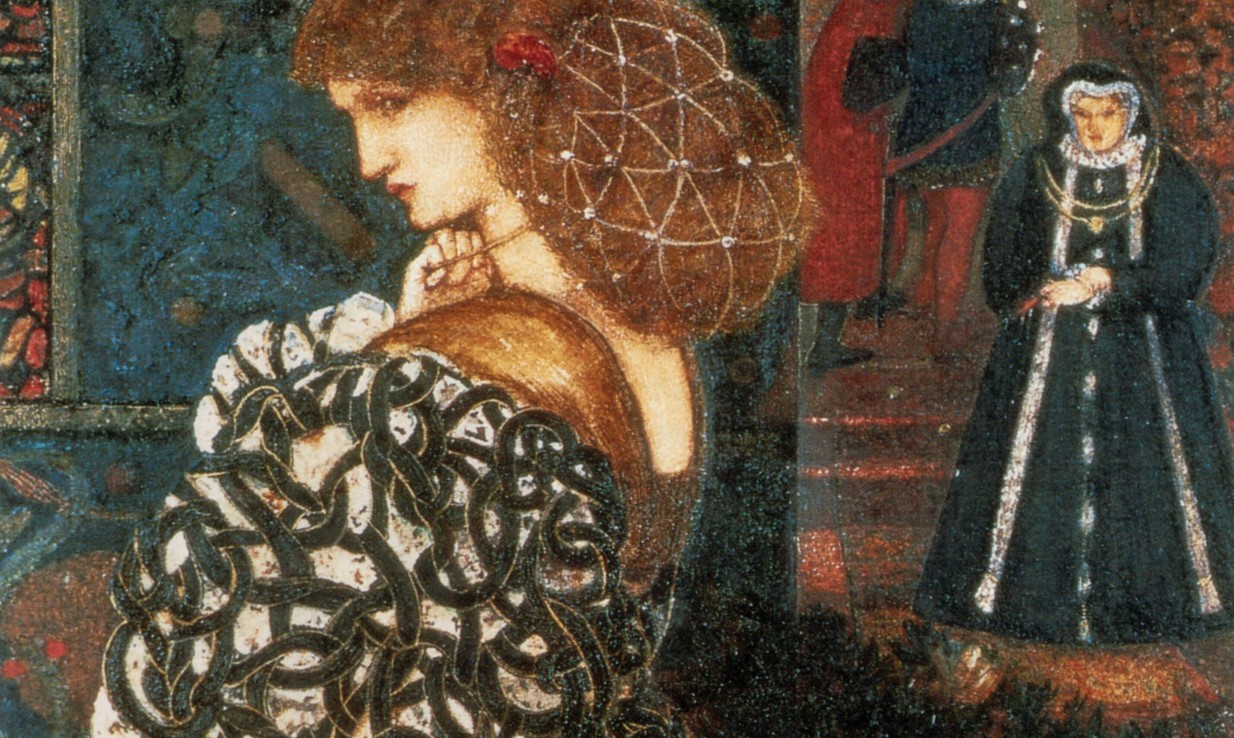
Il romanzo fu ispirato dalla vicenda storica dell’avvenente nobildonna Sidonia von Bork, accusata di aver sottoposto tutti gli uomini che seduceva a indicibili torture. Fu condannata a morte per stregoneria.
Fu la modella Fanny Cornforth, particolarmente apprezzata dal circolo dei preraffaelliti, a posare per Edward Burne-Jones assumendo le sembianze della crudele nobildonna. L’artista volel dipingerla mentre guarda lo spettatore con un sguardo a metà fra l’intrigante e il sospettoso.

Per mostrare la personalità della donna, l’artista adopera il sontuoso abito, con una fantasia tortuosa quanto poteva essere la sua mente. Un abito tipicamente Rinascimentale che con quei motivi intrecciati riporta alla mente un covo di serpi.

Per dar corpo a quell’abito, l’artista si rifece liberamente al ritratto che Giulio Romano fece di Margherita Paleologo, nel 1513, durante il suo soggiorno a Mantova, ospite della corte del marchese Federico II Gonzaga.
Quel dipinto rinascimentale, custodito nelle collezioni d Hampton Court, l’artista preraffaellita Burne-Jones ebbe modo di vederlo dopo che la regina Vittoria volle aprire al pubblico nel 1839 circa e ne rimase affascinato.

Come accennato prima, se volete vedere questo capolavoro, fino al 30 giugno lo potete ammirare alla mostra allestita presso i Musei di San Domenico di Forlì dal titolo ‘Preraffaelliti, Rinascimento moderno’.
Per il momento il sempre vostro michelangelo Buonarroti vi saluta dandovi appuntamento ai prossimi post e sui social.


Painting of the day: Sidonia von Bork by the pre-Raphaelite painter Burne-Jones
The painting of the day that I propose to you today is Sidonia von Bork painted in 1860 by the Pre-Raphaelite painter Edward Burne-Jones, from the Tate Gallery but on display until June 30th at the exhibition ‘Pre-Raphaelites, Modern Renaissance’ currently underway in Forlì.
It is one of the first works that Burne-Jones created in watercolor and gouache on paper. The center of the scene is dominated by the protagonist of the novel written by Wilhelm Meinhold which was first published in German and then, in 1848, translated into English by Oscar Wilde’s mother.
The novel was inspired by the historical story of the attractive noblewoman Sidonia von Bork, accused of having subjected all the men she seduced to unspeakable torture. She was sentenced to death for witchcraft.
It was the model Fanny Cornforth, particularly appreciated by the Pre-Raphaelite circle, who posed for Edward Burne-Jones taking on the appearance of the cruel noblewoman. The artist wanted to paint her while she looks at the viewer with a look halfway between intriguing and suspicious.
To show the woman’s personality, the artist uses her sumptuous dress, with an imagination as tortuous as her mind could be. A typically Renaissance dress which, with those intertwined motifs, brings to mind a den of snakes.
To give substance to that dress, the artist freely referred to the portrait that Giulio Romano made of Margherita Paleologo, in 1513, during her stay in Mantua, a guest of the court of the Marquis Federico II Gonzaga.
The Pre-Raphaelite artist Burne-Jones had the opportunity to see that Renaissance painting, kept in the Hampton Court collections, after Queen Victoria wanted to open it to the public in around 1839 and was fascinated by it.
As mentioned before, if you want to see this masterpiece, until June 30th you can admire it at the exhibition set up at the Museums of San Domenico in Forlì entitled ‘Pre-Raphaelites, Modern Renaissance’.
For the moment, your always Michelangelo Buonarroti greets you and will meet you in the next posts and on social media.

Sostienici – Support Us
Se questo blog ti piace e ti appassiona, puoi aiutarci a farlo crescere sempre più sostenendoci in modo concreto condividendo i post, seguendo le pagine social e con un contributo che ci aiuta ad andare avanti con il nostro lavoro di divulgazione. . ENGLISH: If you like and are passionate about this blog, you can help us make it grow more and more by supporting us in a concrete way by sharing posts, following social pages and with a contribution that helps us to move forward with our dissemination work.
8,00 €
-
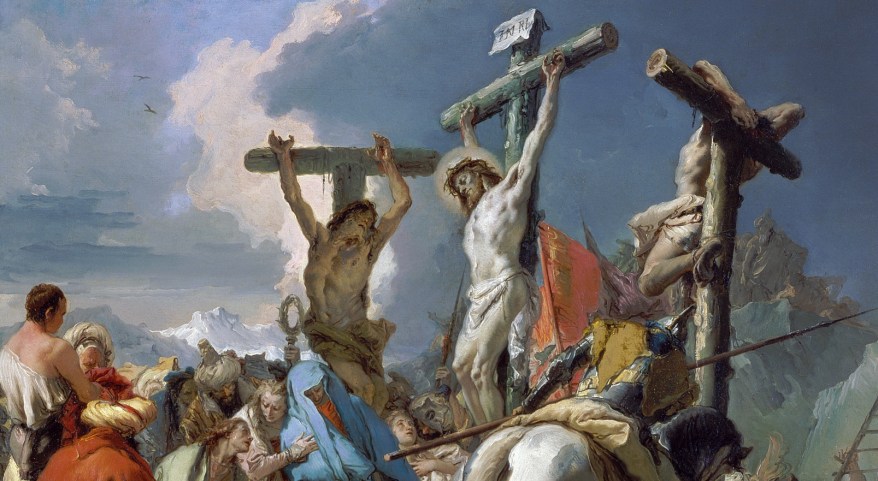
Venerdì Santo: la Crocifissione secondo Tiepolo
🇮🇹Nel giorno del Venerdì Santo, c’è un’opera che riesce ancora a scuotere lo sguardo. La Crocifissione di Giambattista Tiepolo non è come le altre: niente simmetrie perfette, niente distanza. Qui si entra dentro la scena, da un punto di vista obliquo, tra movimento, tensione e umanità… 🇬🇧On Good Friday, there’s a work that still manages…
-
Festival La Versiliana 2026: tra musica, teatro e grandi narrazioni
Dal 17 luglio al 23 agosto 2026, la pineta di Marina di Pietrasanta ospiterà la 47ª edizione del Festival La Versiliana. Una kermesse aperta a tutti nella quale linguaggi diversi dialogano tra loro in un equilibrio tra tradizione e contemporaneità.
-
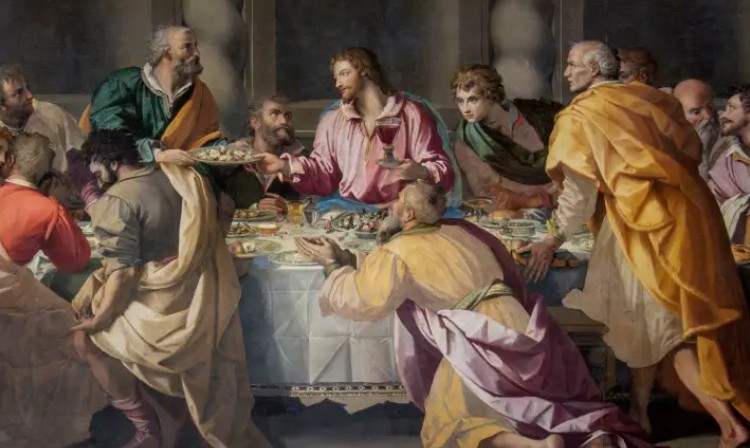
Giovedì Santo: l’Ultima Cena di Allori che pochi conoscono a Firenze
🇮🇹Nel cuore di Museo di Santa Maria Novella, a Firenze, si conserva una delle interpretazioni più affascinanti e meno note dell’Ultima Cena: quella realizzata da Alessandro Allori nel 1584… 🇬🇧In the heart of the Santa Maria Novella Museum in Florence, one of the most fascinating and least-known interpretations of the Last Supper is preserved: the…
Condividi:


Questo sono io





sostienici

Sostienici - Support Us
Se questo blog ti piace e ti appassiona, puoi aiutarci a farlo crescere sempre più sostenendoci in modo concreto condividendo i post, seguendo le pagine social e con un contributo che ci aiuta ad andare avanti con il nostro lavoro di divulgazione. . ENGLISH: If you like and are passionate about this blog, you can help us make it grow more and more by supporting us in a concrete way by sharing posts, following social pages and with a contribution that helps us to move forward with our dissemination work.
€10,00


