
La Scultura del giorno: l’Allegria di Crawford
La scultura del giorno che vi propongo oggi è l’Allegria, scolpita dall’artista americano Thomas Crawford nel 1843.
Fu il newyorkese Herny Hicks a commissionare nel 1842 una scultura a Crawford quando ebbe modo di visitare il suo studio romano. Non volle specificare alcun soggetto, preferendo fosse lo stesso scultore a sceglierne uno.
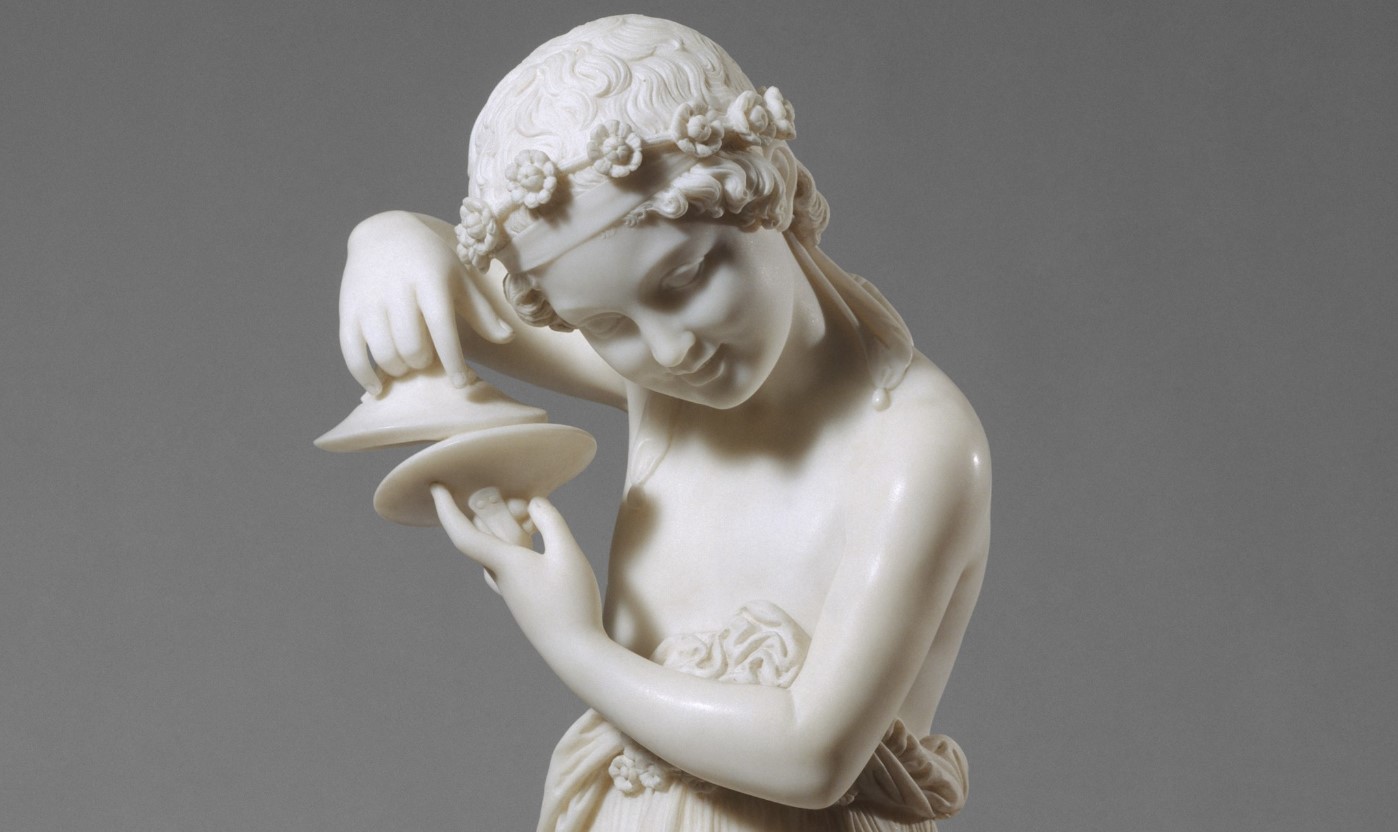
Crowford, seguendo i gusti e le mode dell’epoca, scelse dunque di scolpire nel marmo un giovane spensierato che avrebbe sicuramente soddisfatto le aspettative del proprio mecenate.
Nell’Ottocento infatti erano molto in voga le opere che riproducevano bambini giocosi.
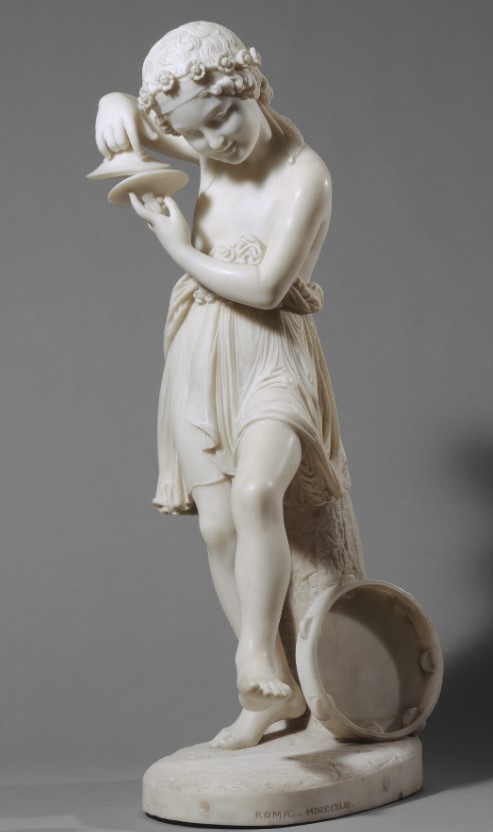
Lo stesso Crawford volle descrivere la sua opera come “un ragazzo di sette o otto anni, che balla con grande gioia e tintinna un paio di piatti, la cui musica sembra divertirlo estremamente”.
Lo scultore, così come gli artisti a lui contemporanei, amava intraprendere vere e proprie sfide dal punto di vista tecnico. Osservate la gamba sinistra sollevata del ragazzino: un eccellente brano di virtuosismo.
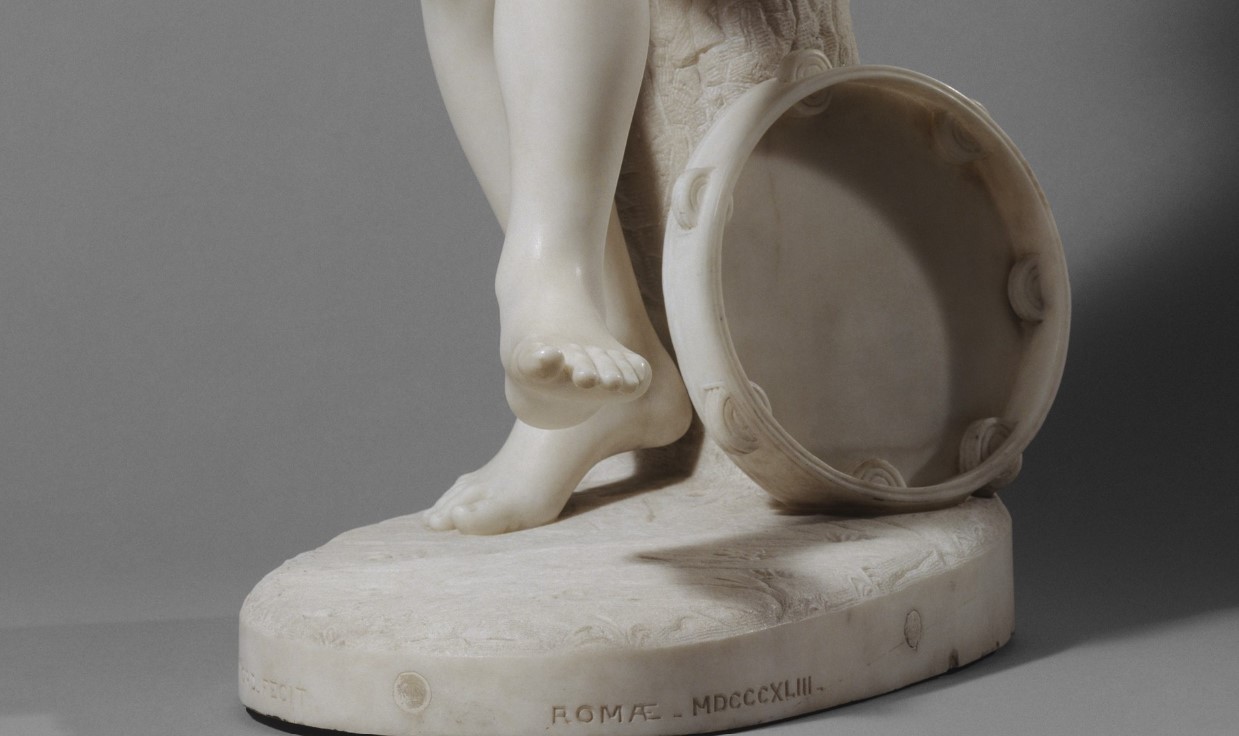
La scultura dell’Allegria di Crawford è entrata a far parte delle collezioni del Metropolitan di New York grazie al lascito di Annette WW Hicks-Lord del 1896.
Per il momento il sempre vostro Michelangelo Buonarroti vi saluta dandovi appuntamento ai prossimi post e sui social.
Sculpture of the day: Crawford’s Allegria
The sculpture of the day that I propose to you today is Allegria, sculpted by the American artist Thomas Crawford in 1843.
It was the New Yorker Herny Hicks who commissioned a sculpture from Crawford in 1842 when he had the opportunity to visit his Roman studio. He did not want to specify any subject, preferring for the sculptor himself to choose one.
Crowford, following the tastes and fashions of the time, therefore chose to sculpt in marble a carefree young man who would certainly satisfy the expectations of his patron.
In fact, in the 19th century, works depicting playful children were very popular.
Crawford himself wanted to describe his work as “a boy of seven or eight, dancing with great joy and clanking a couple of cymbals, whose music seems to amuse him extremely”.
The sculptor, like his contemporary artists, loved to challenge themselves from a technical point of view. Observe the boy’s raised left leg: an excellent piece of virtuosity.
Crawford’s Allegria sculpture became part of the collections of the Metropolitan in New York thanks to the bequest of Annette WW Hicks-Lord in 1896.
For the moment, your always Michelangelo Buonarroti greets you and will meet you in the next posts and on social media.

Sostienici – Support Us
Se questo blog ti piace e ti appassiona, puoi aiutarci a farlo crescere sempre più sostenendoci in modo concreto condividendo i post, seguendo le pagine social e con un contributo che ci aiuta ad andare avanti con il nostro lavoro di divulgazione. . ENGLISH: If you like and are passionate about this blog, you can help us make it grow more and more by supporting us in a concrete way by sharing posts, following social pages and with a contribution that helps us to move forward with our dissemination work.
8,00 €
-
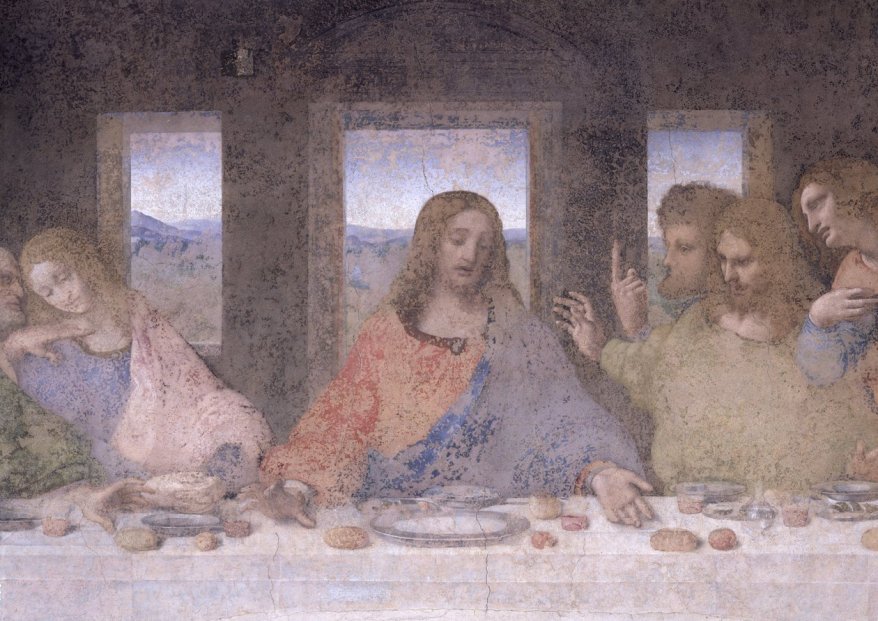
Cenacolo di Leonardo: i dettagli che raccontano il tradimento
🇮🇹Nel Cenacolo di Leonardo da Vinci, custodito a Santa Maria delle Grazie, Cristo annuncia il tradimento e il tempo si ferma… 🇬🇧In Leonardo da Vinci’s Last Supper, housed in Santa Maria delle Grazie, Christ announces the betrayal and time stands still…
-
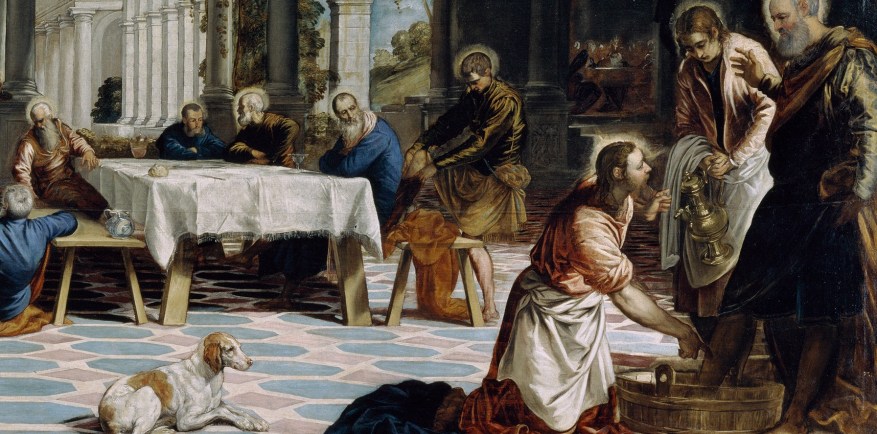
La Lavanda dei Piedi di Tintoretto: Il Capolavoro Veneziano al Prado
🇮🇹Tra i capolavori più affascinanti del Rinascimento veneziano, “La Lavanda dei Piedi” di Jacopo Tintoretto rappresenta un perfetto equilibrio tra spiritualità, innovazione compositiva e straordinaria forza narrativa… 🇬🇧Among the most fascinating masterpieces of the Venetian Renaissance, Jacopo Tintoretto’s “The Washing of the Feet” represents a perfect balance between spirituality, compositional innovation, and extraordinary narrative force…
-
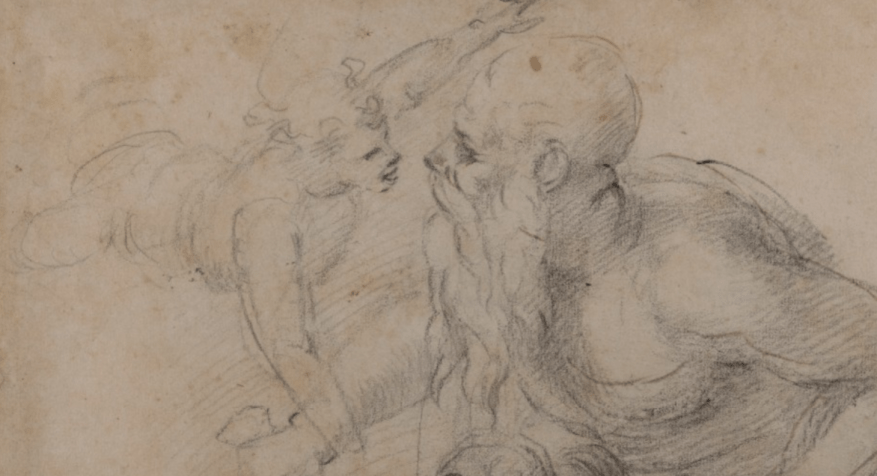
Il Sacrificio di Isacco e quel momento tra la vita e la morte
🇮🇹Oggi voglio raccontarvi alcuni dettagli sul mio disegno del Sacrificio di Isacco, conservato oggi a Casa Buonarroti. Su quel foglio volli tracciare il momento preciso in cui la paura fa spazio al miracolo… 🇬🇧Today I want to tell you some details about my drawing of the Sacrifice of Isaac, now preserved at Casa Buonarroti. On…
Condividi:


Questo sono io





sostienici

Sostienici - Support Us
Se questo blog ti piace e ti appassiona, puoi aiutarci a farlo crescere sempre più sostenendoci in modo concreto condividendo i post, seguendo le pagine social e con un contributo che ci aiuta ad andare avanti con il nostro lavoro di divulgazione. . ENGLISH: If you like and are passionate about this blog, you can help us make it grow more and more by supporting us in a concrete way by sharing posts, following social pages and with a contribution that helps us to move forward with our dissemination work.
€10,00


