

Zenobia, il volto della regina di Palmira
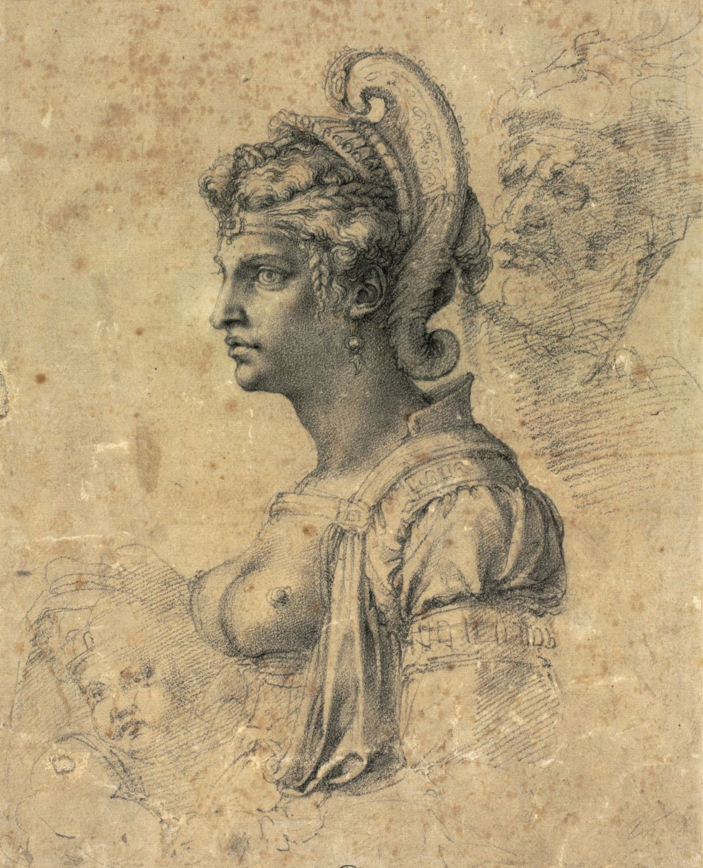
Il disegno del busto di Zenobia, con quell’elaborato copricapo e il seno scoperto, lo realizzai per regalarlo a Gherardo Perini nel 1525 e oggi è custodito all’interno della collezione degli Uffizi.
Francesco dei Medici poi lo acquistò dal Perini e successivamente entrò a far parte delle Collezioni Granducali.

C’è da dire che l’interpretazione del soggetto che raffigurai non trova tutti gli esperti d’accordo nel riconoscerci Zenobia.
Nell’inventario di Giulio Clovio l’opera veniva citata come il Combattimento di Venere e Marte: un’interpretazione sostenuta anche dal Wilde e da Goldscheider. Ma se invece di una Venere addirittura fosse una Athena considerando l’elmo che sfoggia?
Il nome di Zenobia fu dato al disegno in modo assai arbitrario ma fatto sta che oggi questa figura viene identificata con quel nome lì, giusto o sbagliato che sia.
Se vi state chiedendo chi fosse Zenobia ve lo racconto io.
La storiografia racconta fosse la prima e l’ultima Regina di Palmira che regnò dal 267 al 272 d.C e dichiarò l’indipendenza dello Stato dal controllo di Roma.
Era una donna oltre che potente molto affascinante, colta,intelligente e impavida. La sua corte ubicata al crocevia di importanti rotte commerciali fr Occidente e Oriente, era frequentata da intellettuali che arrivavano da tutto l’impero. All’interno di Palmira convivevano greci, persiani, romani, ebrei e siriani.
Con la sua astuzia Zenobia fondò il proprio Stato riuscendo a tenere a freno le armate di Roma fino a quando l’imperatore Aureliano, la sconfisse. Era il 272 d.C. e, secondo quanto viene narrato, Zenobia fu fatta prigioniera e condotta in una villa a Tivoli dove trascorse il resto della vita.
Per salire al trono di Palmira, Zenobia aveva messo in atto un piano terribile. Aveva sposato Settimo Odernato, il governatore di Palmira e da lui ebbe due figli ma però, l’erede al trono, era Erodiano, avuto dal consorte dalla prima moglie.
Zenobia fece uccidere da un parente sia il marito che il figliastro per ottenere la corona.

Nel disegni di Zenobia che realizzai volli mettere in evidenza la sensualità di Zenobia senza tralasciare lo sguardo attento e vivace, sinonimo di intelligenza sopraffina.
Per il momento il vostro Michelangelo Buonarroti vi saluta dandovi appuntamento ai prossimi post e sui social.
Zenobia, the face of the queen of Palmyra
I created the drawing of the bust of Zenobia, with that elaborate headdress and exposed breasts, as a gift to Gherardo Perini in 1525 and today it is kept in the Uffizi collection.
Francesco dei Medici then purchased it from Perini and it subsequently became part of the Grand Ducal Collections.
It must be said that the interpretation of the subject I depicted does not find all experts agreeing in recognizing us as Zenobia.
In Giulio Clovio’s inventory the work was cited as the Combat of Venus and Mars: an interpretation also supported by Wilde and Goldscheider. But what if instead of a Venus it was actually an Athena considering the helmet she sports?
The name Zenobia was given to the drawing in a very arbitrary way but the fact is that today this figure is identified with that name, right or wrong.
If you’re wondering who Zenobia was, I’ll tell you.
Historiography says she was the first and last Queen of Palmyra who reigned from 267 to 272 AD and declared the independence of the State from the control of Rome.
She was a very charming, cultured, intelligent and fearless woman as well as powerful. Her court, located at the crossroads of important trade routes between the West and the East, was frequented by intellectuals who came from all over the empire. Greeks, Persians, Romans, Jews and Syrians coexisted within Palmyra.
With her cunning, Zenobia founded her own state, managing to hold off the armies of Rome until the emperor Aurelian defeated her. It was 272 AD. and, according to what is narrated, Zenobia was taken prisoner and taken to a villa in Tivoli where she spent the rest of her life.
To ascend the throne of Palmyra, Zenobia had implemented a terrible plan. She had married Settimo Odernato, the governor of Palmyra and with him she had two children but, however, the heir to the throne was Herodian, the first she had with her husband from her first wife.
Zenobia had a relative kill both her husband and her stepson to obtain the crown.
In the drawings of Zenobia that I created I wanted to highlight Zenobia’s sensuality without neglecting her attentive and lively gaze, synonymous with supreme intelligence.
For the moment, your Michelangelo Buonarroti greets you and will meet you in future posts and on social media.

Sostienici – Support Us
Se questo blog ti piace e ti appassiona, puoi aiutarci a farlo crescere sempre più sostenendoci in modo concreto condividendo i post, seguendo le pagine social e con un contributo che ci aiuta ad andare avanti con il nostro lavoro di divulgazione. . ENGLISH: If you like and are passionate about this blog, you can help us make it grow more and more by supporting us in a concrete way by sharing posts, following social pages and with a contribution that helps us to move forward with our dissemination work.
8,00 €
-
Il mio primo soggiorno a Bologna e l’incontro con Giovan Francesco Aldrovandi
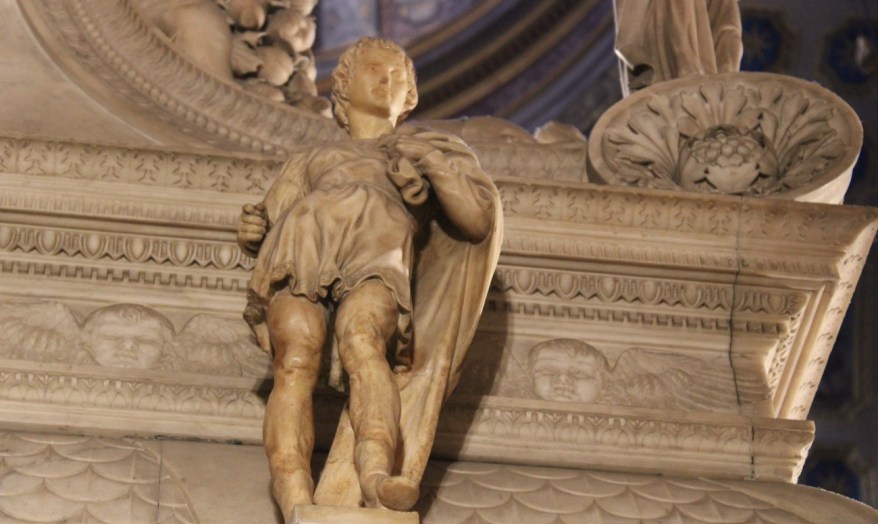
🇮🇹Fuggii da Firenze a soli 19 anni. Senza certezze, senza protezioni. Solo con il mio talento. A Bologna trovai rifugio nella casa di Giovan Francesco Aldrovandi… 🇬🇧I fled Florence at just 19. Without certainties, without protection. Only with my talent. In Bologna, I found refuge in the home of Giovan Francesco Aldrovandi…
-
11 aprile 1514: muore Donato Bramante, il genio della scala elicoidale
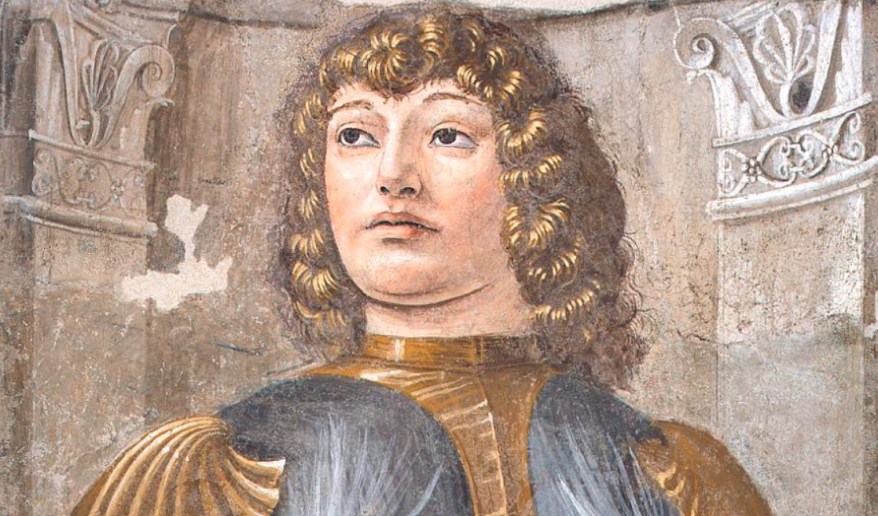
🇮🇹Era l’11 aprile 1514 quando Donato Bramante morì a Roma. La sua scomparsa non cancellò però le tensioni, le rivalità e i giudizi contrastanti che avevano accompagnato tutta la sua carriera… 🇬🇧It was April 11, 1514, when Donato Bramante died in Rome. His passing, however, did not erase the tensions, rivalries, and conflicting opinions that…
-
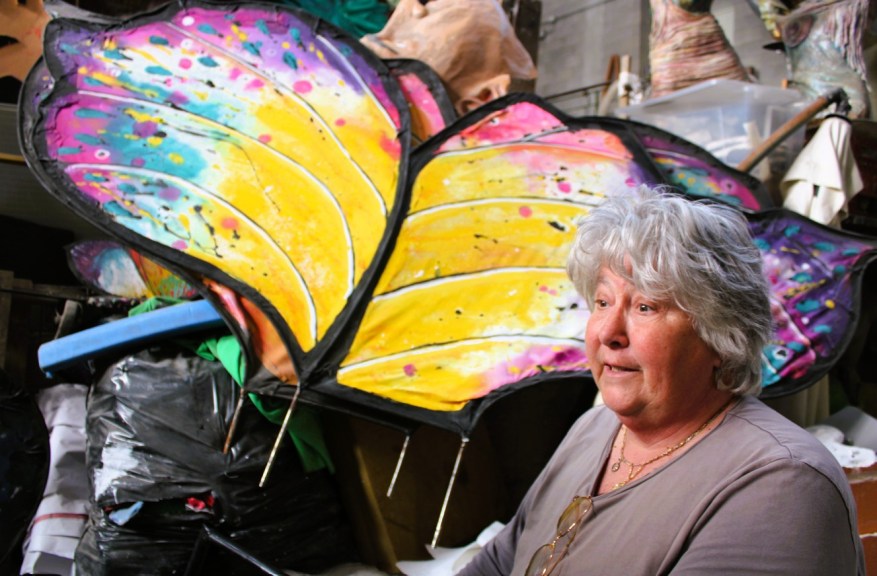
Dentro l’hangar 12 del Carnevale di Viareggio: dove la cartapesta prende vita con Marzia Etna
🇮🇹Ho incontrato Marzia Etna, maestra carrista da 40 anni: mentre racconta, le brillano gli occhi. E capisci subito una cosa: questo non è solo un lavoro, è vita tra carta a calco, ferro e sogni… 🇬🇧I met Marzia Etna, a master float builder for 40 years: her eyes sparkle as she talks. And you immediately…
Condividi:


Questo sono io





sostienici

Sostienici – Support Us
Se questo blog ti piace e ti appassiona, puoi aiutarci a farlo crescere sempre più sostenendoci in modo concreto condividendo i post, seguendo le pagine social e con un contributo che ci aiuta ad andare avanti con il nostro lavoro di divulgazione. . ENGLISH: If you like and are passionate about this blog, you can help us make it grow more and more by supporting us in a concrete way by sharing posts, following social pages and with a contribution that helps us to move forward with our dissemination work.
€10,00


1 commento »