

Le Opere del Natale: l’Adorazione dei Pastori di Van der Goes del 1478 e le ali di pappagallo americano
L’opera del Natale che vi propongo oggi è l’Adorazione dei Pastori di Hugo Van der Goes appartenente al cosiddetto trittico Portinari.
L’opera fu commissionata al pittore fiammingo dal banchiere fiorentino Tommaso Portinari che al tempo dirigeva la filiale fiorentina del banco dei Medici.
L’opera fu dipinta nelle Fiandre e poi trasportata su un bastimento fino a Pisa, dove cominciò a risalire l’Arno fino a giungere in quel di Firenze nel maggio del 1483.
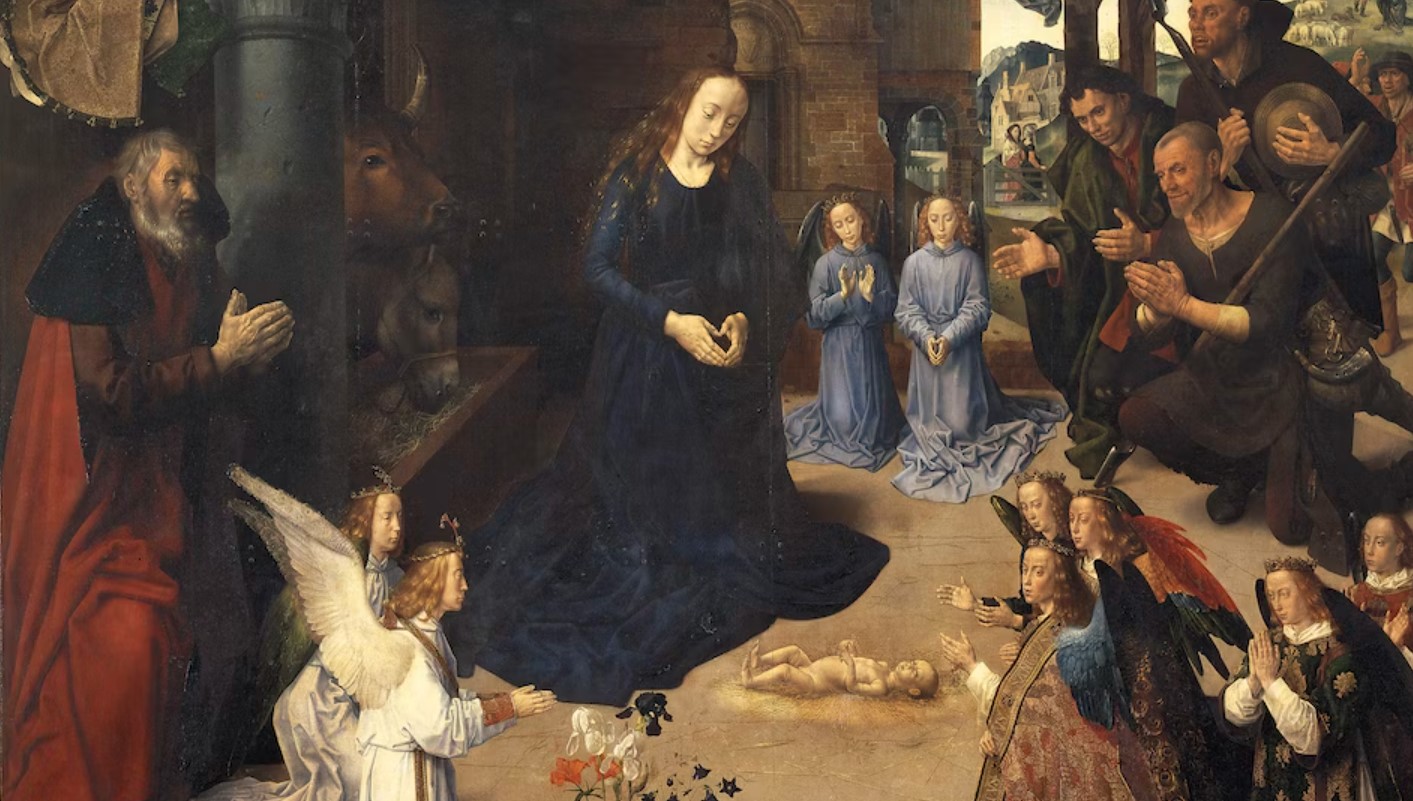
Il trittico raffigurante l’Adorazione dei pastori con angeli e i santi Tommaso, Antonio abate, Margherita, Maria Maddalena e la famiglia Portinari, fu collocato nella chiesa di Sant’Egidio dell’Ospedale di Santa Maria Nuova.
Nel pannello centrale è ben visibile un edificio tipicamente nordico. Un gruppo di pastori dalle sembianze molto realistiche si inginocchiano per adorare il Bambino che irradia luce.
Dalla parte opposta del gruppo di pastori c’è la Madonna ammantata in un abito blu che osserva il Figlio mentre San Giuseppe è in posizione più defilata.

Gli angeli a destra e a sinistra completano la scena.
Osservate con attenzione le loro ali: sono tutte ali di uccelli reali. In particolare un angelo del gruppo di destra porta ali di ara macao: un grande pappagallo originario delle foreste sempreverdi dell’America centrale e meridionale.
La faccenda è assai curiosa dato che Hugo Van der Goes dipinse l’opera nel 1478 e Cristoforo COlombo ancora doveva a sua insaputa (o forse no?) alla scoperta delle Americhe.

Mirabile anche la natura morta presente in primo piano non priva di simbologie ben precise. L’iris bianco infatti allude alla purezza mentre il lilium rosso al sangue che verserà Cristo.
Mentre l’aquilegia viola è l’allegoria del dolore della Madonna durante la Passione, i garofani sono il simbolo della Trinità divina. Il fascio di grano dietro i vasi contenenti i fiori freschi alludono alla farina con la quale poi verrà fatto il pane spezzato e condiviso il giorno dell’ultima cena: il corpo di Cristo.

L’opera del pannello centrale prosegue in quelli laterali con la raffigurazione dei membri della famiglia Portinari raccolti in preghiera, assieme ai santi protettori. A proposito, se volete vedere con i vostri occhi questo capolavoro non vi rimane altro da fare che andare alla Galleria degli Uffizi, a Firenze.
Per il momento il vostro Michelangelo Buonarroti vi saluta dandovi appuntamento ai prossimi post e sui social.

The Works of Christmas: Van der Goes’ Adoration of the Shepherds from 1478 and the American parrot wings
The Christmas work that I propose to you today is the Adoration of the Shepherds by Hugo Van der Goes belonging to the so-called Portinari triptych.
The work was commissioned to the Flemish painter by the Florentine banker Tommaso Portinari who at the time managed the Florentine branch of the Medici bank. The work was painted in Flanders and then transported on a ship to Pisa, where it began to travel up the Arno until reaching Florence in May 1483.
The triptych depicting the Adoration of the Shepherds with angels and the saints Thomas, Anthony the Abbot, Margaret, Mary Magdalene and the Portinari family, was placed in the church of Sant’Egidio of the Santa Maria Nuova Hospital
In the central panel a typically Nordic building is clearly visible. A group of shepherds with very realistic features kneel to adore the Child who radiates light.
On the opposite side of the group of Shepherds there is the Madonna cloaked in a blue dress observing her Son while Saint Joseph is in a more secluded position.
The angels on the right and left complete the scene.
Look carefully at their wings: they are all real bird wings. In particular, an angel from the right group wears the wings of a macaw macaw: a large parrot native to the evergreen forests of Central and South America.
The matter is very curious given that Hugo Van der Goes painted the work in 1478 and Cristoforo Colombo still owed, without his knowledge (or maybe not?) the discovery of the Americas.
The still life present in the foreground is also admirable, not without very specific symbols. The white iris in fact alludes to purity while the red lily to the blood that Christ will shed.
While the purple columbine is the allegory of the pain of the Madonna during the Passion, the carnations are the symbol of the divine Trinity.
The work of the central panel continues in the lateral ones with the depiction of the members of the Portinari family gathered in prayer, together with the patron saints
For the moment, your Michelangelo Buonarroti greets you and will meet you in future posts and on social media.

Sostienici – Support Us
Se questo blog ti piace e ti appassiona, puoi aiutarci a farlo crescere sempre più sostenendoci in modo concreto condividendo i post, seguendo le pagine social e con un contributo che ci aiuta ad andare avanti con il nostro lavoro di divulgazione. . ENGLISH: If you like and are passionate about this blog, you can help us make it grow more and more by supporting us in a concrete way by sharing posts, following social pages and with a contribution that helps us to move forward with our dissemination work.
8,00 €
-
Ai Musei Vaticani i fasti barocchi di Urbano VIII: in mostra gli arazzi della manifattura Barberini
🇮🇹A quattro secoli dalla consacrazione della Basilica di San Pietro, i Musei Vaticani dedicano una mostra all’Arazzeria Barberini, simbolo di una cultura visiva capace di fondere magnificenza estetica e affermazione politica… 🇬🇧Four centuries after the consecration of St. Peter’s Basilica, the Vatican Museums are dedicating an exhibition to the Barberini Tapestry Factory, a symbol of…
-
Le Opere della Pasqua: come la Resurrezione ha ispirato Arte e Cultura
🇮🇹La Pasqua, oltre ad essere una ricorrenza religiosa è un momento in cui la storia, l’arte e la spiritualità si intrecciano per raccontare il fulcro della fede cristiana: la resurrezione di Cristo. .. 🇬🇧Easter, beyond being a religious holiday, is a moment when history, art, and spirituality intertwine to recount the core of the Christian…
-
La Deposizione del Pontormo: il capolavoro dell’artista
🇮🇹Ti coinvolge. Ti mette a disagio. Ti costringe a sentire. E’ la Deposizione dalla Croce, dipinta da Jacopo Pontormo tra il 1525 e il 1528 per la Cappella Capponi… 🇬🇧It draws you in. It makes you uncomfortable. It forces you to feel. It’s the Deposition from the Cross, painted by Jacopo Pontormo between 1525 and…
Condividi:


Questo sono io





sostienici

Sostienici – Support Us
Se questo blog ti piace e ti appassiona, puoi aiutarci a farlo crescere sempre più sostenendoci in modo concreto condividendo i post, seguendo le pagine social e con un contributo che ci aiuta ad andare avanti con il nostro lavoro di divulgazione. . ENGLISH: If you like and are passionate about this blog, you can help us make it grow more and more by supporting us in a concrete way by sharing posts, following social pages and with a contribution that helps us to move forward with our dissemination work.
€10,00


