
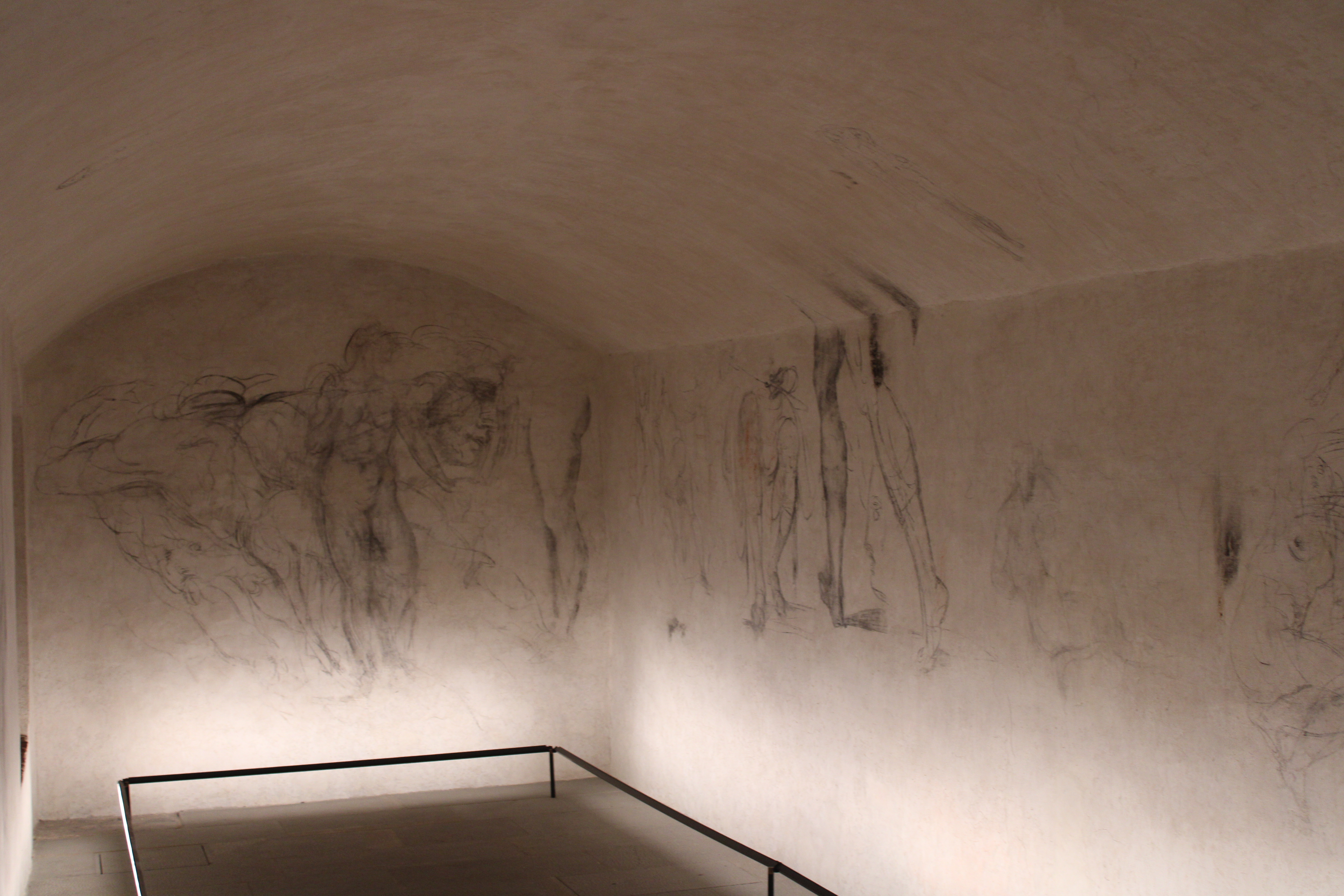
Stanza Segreta: chi rappresenta la figura femminile in piedi?
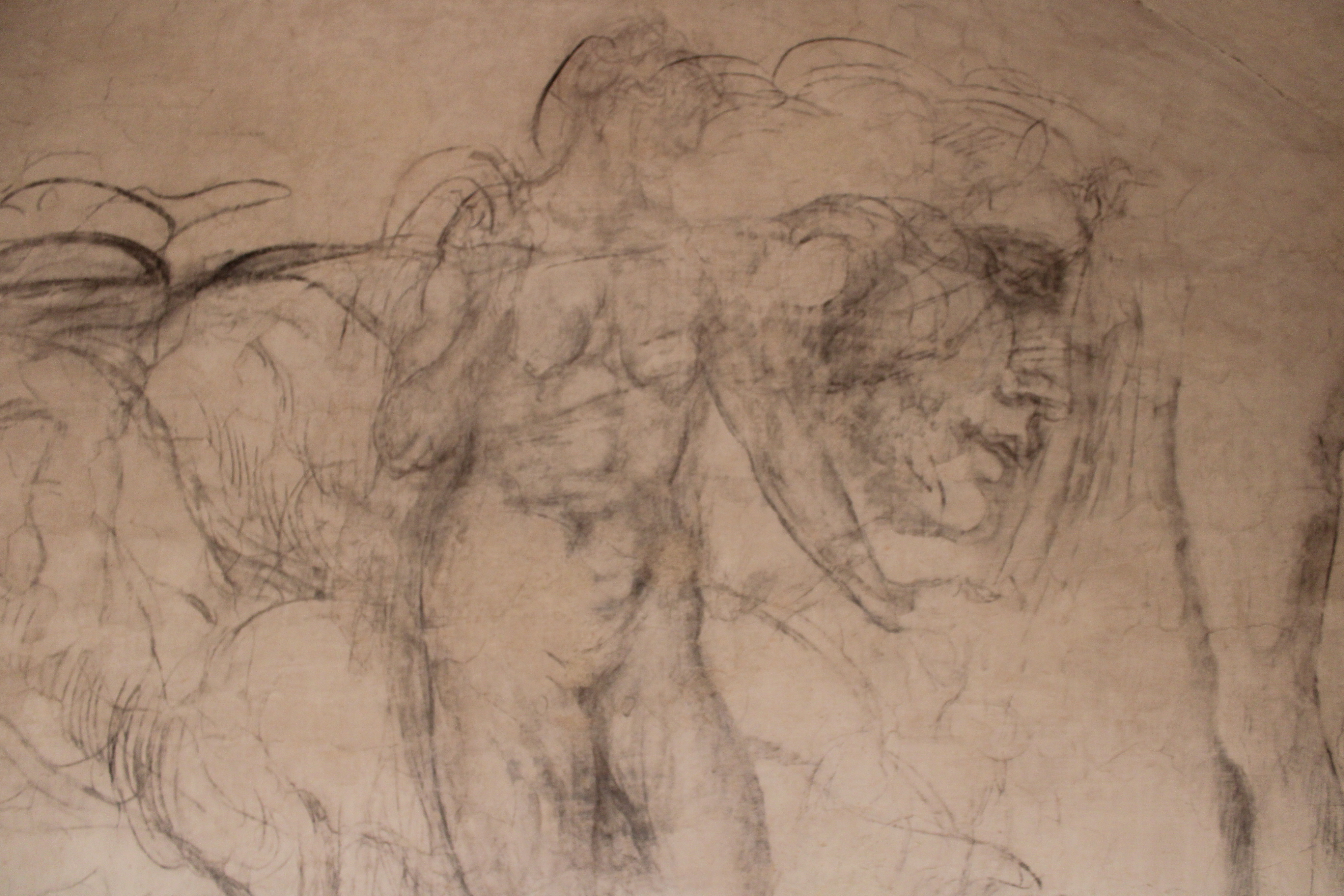
Chi raffigura la donna in piedi che tracciai a carbone sulla parete di fondo delle Stanza Segreta? Se lo sono chiesti in molti fino al momento: vi propongo alcune delle ipotesi fatte in merito.
In un primo momento Paolo dal Poggetto ipotizzò si potesse trattare di una Diana facendo forza su un oggetto non molto chiaro che la donna sembra avere nella mano destra, appoggiato sulla spalla.
Quell’oggetto appena accennato poteva infatti sembrare un arco, attributo riconducibile alla dea della caccia.

In un secondo momento, dato che non sono noti altri progetti miei relativi a un simile soggetto, lo stesso Dal Poggetto pensò piuttosto a una Leda stante.
In quel momento stavo infatti pensando alla composizione per un dipinto di una Leda col Cigno per il duca di Ferrara Alfonso I d’Este e non è da escludere avessi cominciato a pensare a una figura in piedi per poi arrivare a una composizione totalmente diversa.
Non era così raro che la Leda venisse raffigurata in piedi e non distesa come poi la feci io. Basta pensare a quella ideata da Leonardo da Vinci qualche anno prima, nel 1515.
Invece, secondo il Parronchi, avrebbe potuto essere la personificazione della Terra, una delle sculture che avrei poi fatto eseguire al Tribolo da collocare nelle nicchie ai lati dei Capitani della Sagrestia Nuova.
Ora dovete sapere che esisteva un mio disegno dettagliato dell’allegoria della Terra custodito agli Uffizi ma che purtroppo andò distrutto nell’incendio nel 1762. Oggi di quel disegno perduto esiste però una copia di Tommaso Arrighetti.
Come vedete sono diverse le ipotesi possibili.
Per il momento il vostro michelangelo Buonarroti vi saluta dandovi appuntamento ai prossimi post e sui social.

Secret Room: who does the standing female figure represent?
Who does the standing woman that I traced in charcoal on the back wall of the Secret Room represent? Many have wondered this up until now: I propose some of the hypotheses made in this regard.
At first Paolo dal Poggetto hypothesized that it could be a Diana by pushing on a not very clear object that the woman seems to have in her right hand, resting on her shoulder.
That object just mentioned could in fact appear to be a bow, an attribute attributable to the goddess of hunting.
At a later stage, given that no other projects of mine relating to a similar subject are currently known, Dal Poggetto himself instead thought of a standing Leda.
At that moment I was in fact thinking about the composition for a painting of Leda with the Swan for the Duke of Ferrara Alfonso I d’Este and it cannot be ruled out that I started thinking about a standing figure and then arrived at a totally different composition.
It was not so rare for Leda to be depicted standing and not lying down as I later did. Just think of the one created by Leonardo da Vinci a few years earlier, in 1515.
Instead, according to Parronchi, she could have been the personification of the Earth, one of the sculptures that I would then have Tribolo make to place in the niches on the sides of the Captains of the New Sacristy.
Now you should know that there was a detailed drawing of mine of the allegory of the Earth kept in the Uffizi but which unfortunately was destroyed in the fire in 1762. Today, however, there is a copy of that lost drawing by Tommaso Arrighetti.
As you can see, there are several possible hypotheses.
For the moment, your Michelangelo Buonarroti greets you and will meet you in future posts and on social media.

Sostienici – Support Us
Se questo blog ti piace e ti appassiona, puoi aiutarci a farlo crescere sempre più sostenendoci in modo concreto condividendo i post, seguendo le pagine social e con un contributo che ci aiuta ad andare avanti con il nostro lavoro di divulgazione. . ENGLISH: If you like and are passionate about this blog, you can help us make it grow more and more by supporting us in a concrete way by sharing posts, following social pages and with a contribution that helps us to move forward with our dissemination work.
8,00 €
-
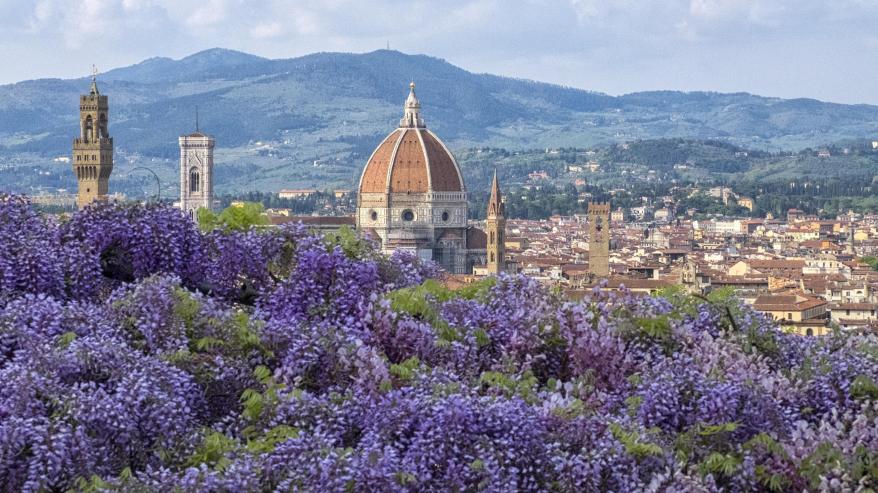
Sotto un cielo di glicine: la magia di Villa Bardini
🇮🇹Per pochi giorni all’anno, il pergolato di Villa Bardini si trasforma in un tunnel lilla lungo 70 metri, dove profumo e bellezza si intrecciano sopra una delle viste più romantiche di Firenze… 🇬🇧For a few days a year, the pergola of Villa Bardini transforms into a 70-meter-long lilac tunnel, where scent and beauty intertwine above…
-
Come se la giustizia negata in vita possa compiersi altrove
🇮🇹Se davvero l’anima, una volta sciolta dal corpo, ritorna sulla terra per vivere ancora, così mi domando, quale sorte attende chi oggi appare tanto bella ai miei occhi, ma così crudele nel cuore? 🇬🇧If the soul, once freed from the body, truly returns to earth to live again, I ask myself, what fate awaits the…
-
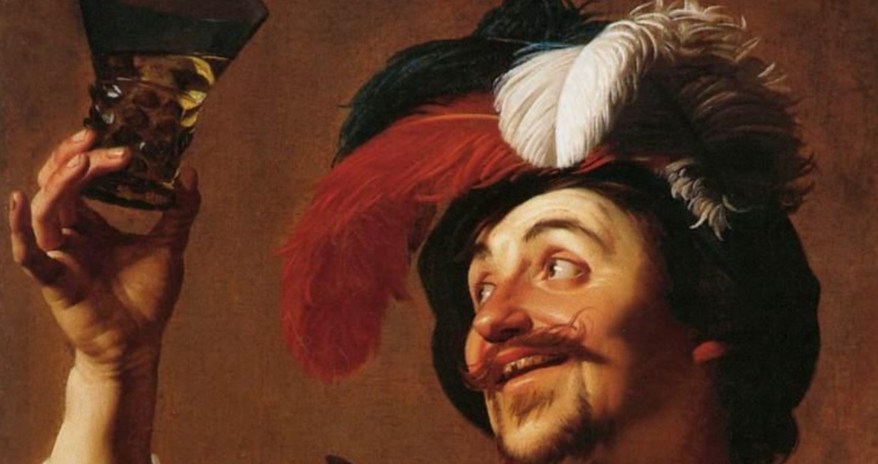
Quel sorriso del violinista felice di Gerrit van Honthorst
🇮🇹Un brindisi, un sorriso, una luce che taglia il buio. Conoscete il dipinto del violinista felice con un bicchiere di vino (1624) di Gerrit van Honthorst?… 🇬🇧A toast, a smile, a light that cuts through the darkness. Are you familiar with the painting of the Happy Violinist with a Glass of Wine (1624) by Gerrit…
Condividi:


Questo sono io





sostienici

Sostienici – Support Us
Se questo blog ti piace e ti appassiona, puoi aiutarci a farlo crescere sempre più sostenendoci in modo concreto condividendo i post, seguendo le pagine social e con un contributo che ci aiuta ad andare avanti con il nostro lavoro di divulgazione. . ENGLISH: If you like and are passionate about this blog, you can help us make it grow more and more by supporting us in a concrete way by sharing posts, following social pages and with a contribution that helps us to move forward with our dissemination work.
€10,00


1 commento »