
Il Museo Galilei si arricchisce con importanti acquisizioni: il globo di De Jode e l’astrolabio di carta
Questa mattina presso il Museo Galilei di Firenze sono state presentate le acquisizioni di due preziosi quanto rari strumenti scientifici: il globo terrestre di Cornelis De Jode, rarissimo esemplare della cartografia storica del 1594 realizzato ad Anversa e l’astrolabio di carta, datato 1668, forse proveniente dalla Francia settentrionale.

I due rari strumenti scientifici presentati hanno un elevato interesse storico e culturale e sono stati recentemente acquistati dal Ministero della Cultura li ha recentemente acquistati per essere destinati alla Direzione Regionale dei Musei della Toscana che li ha depositati presso il Museo Galileo.
Il Museo stesso ha fornito la consulenza scientifica che ne ha attestato il grande valore come documenti storico-scientifici.

I due strumenti da oggi sono esposti in una vetrina a loro dedicata che possa valorizzarli al meglio, ubicata nella sala appena rinnovata del piano terreno, assieme al telescopio riflettore gregoriano di Le Bas jr. del 1720 circa, un altro oggetto acquistato dal Ministero della Cultura nel 2022.
Il globo terrestre di Cornelis de Jode
Il globo terrestre di Cornelis De Jode è stato datato attorno al 1594 e proviene da Anversa. Era comparso sul mercato nel 2016 e quindi vincolato, il suo acquisto è stato perfezionato dal Ministero della Cultura nel novembre del 2022, per la cifra di € 385,568.
E’ senza dubbio un oggetto rarissimo e di grande valore nel campo della cartografia storica: si tratta dell’unico esemplare sopravvissuto oggi noto della produzione del cartografo e stampatore fiammingo Cornelis De Jode (1568-1600 circa), finora testimoniata esclusivamente da una serie di fusi cartografici conservata alla Bibliothèque nationale de France a Parigi.
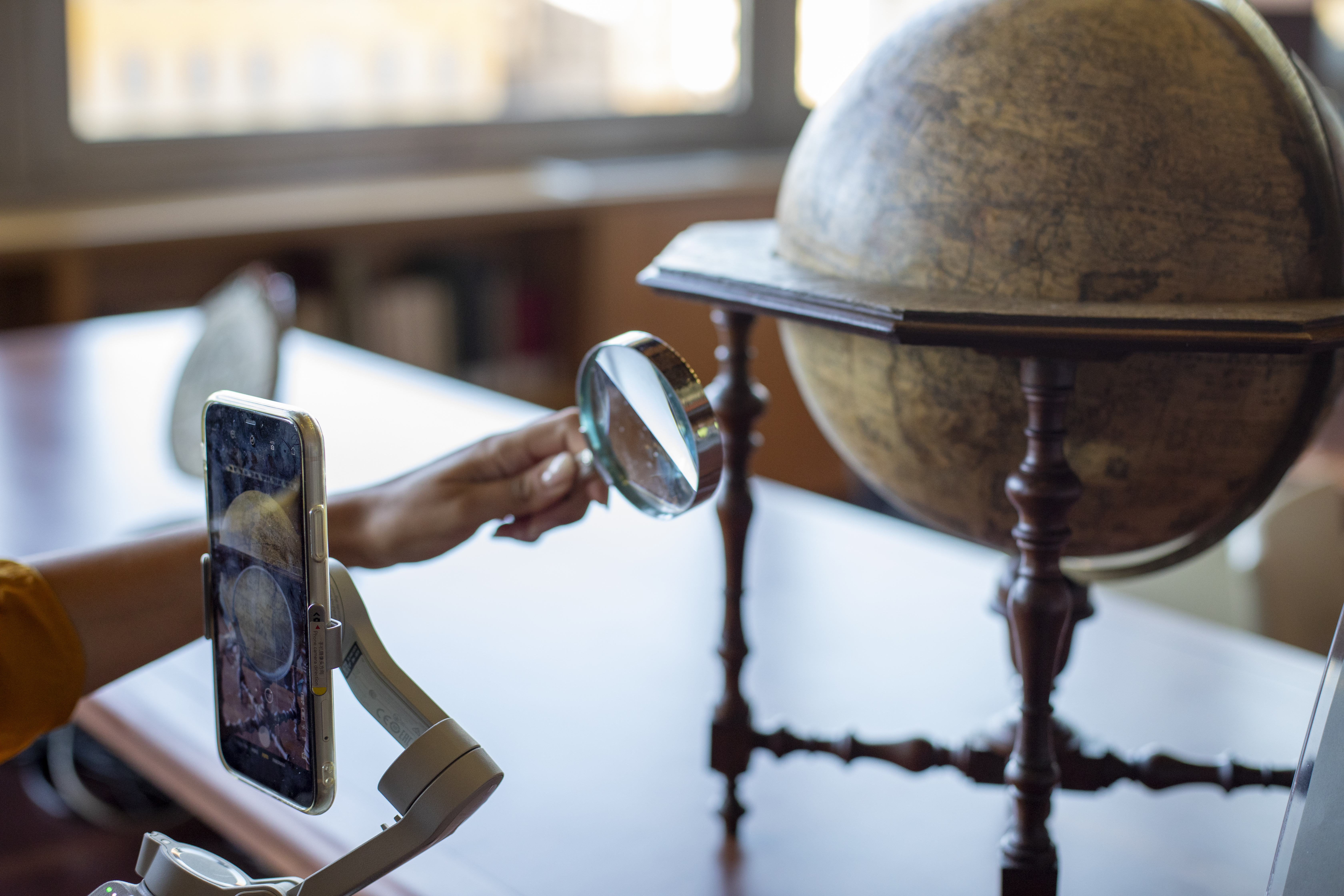
Il globo era in condizioni di conservazione critiche con evidenti segni di degrado come le lacune nella superficie cartacea. Dopo accurate indagini diagnostiche, è stato sottoposto a un delicato e complesso intervento di pulitura e restauro, finanziato dalla fondazione Friends of Florence.
L’intervento è stato eseguito materialmente dall’Officina del Restauro di Firenze sotto la direzione di Stefano Casciu e la collaborazione della Funzionaria restauratrice della Direzione regionale musei Lucia Nucci, e con l’ulteriore supervisione – per gli aspetti storico-scientifici – di Giorgio Strano, Responsabile delle collezioni del Museo Galileo.

L’astrolabio piano manoscritto
L’astrolabio piano manoscritto è invece di manifattura francese ed è stato realizzati in carta e legno ed è completo della propria custodia originale.
L’orologio solare sul retro dello strumento riporta la latitudine di 49°30’, il che suggerisce un contesto d’uso per l’estremo nord della Francia o, più probabilmente, per la Baviera (Norimberga, a 49°27’ N, era ben nota per la costruzione di strumenti).
La data 1668 è compatibile con la grafia delle iscrizioni. La cura scientifica della realizzazione è elevata, le scale graduate sono tracciate con grande precisione.

La data dell’equinozio di primavera è idealmente fissata al 21 marzo, il che riporta a un ambito cattolico, compatibile tanto con il nord delle Francia che con la Baviera (all’interno della quale l’enclave di Norimberga faceva eccezione: il calendario gregoriano vi fu ufficialmente adottato nel 1699).
E’ anche questo strumento di rilevante interesse storico-scientifico ed estremamente raro: esistono pochissimi astrolabi piani manoscritti su carta o cartoncino anteriori al XVIII secolo. Il Museo Galileo, per esempio, ne possiede solo pochi frammenti databili al XVII secolo.
Per il momento il vostro michelangelo Buonarroti vi saluta dandovi appuntamento ai prossimi post e sui social.
The Galilei Museum is enriched with important acquisitions: the globe by De Jode and the paper astrolabe
This morning at the Galilei Museum in Florence two precious and rare scientific instruments were presented: the terrestrial globe by Cornelis De Jode, a very rare example of the historical cartography of 1594 made in Antwerp and the paper astrolabe, dated 1668, perhaps from France northern.
The two rare scientific instruments presented have a high historical and cultural interest and were recently purchased by the Ministry of Culture, which recently acquired them to be sent to the Regional Directorate of Museums of Tuscany which deposited them at the Museo Galileo.
The Museum itself provided the scientific advice which attested to its great value as historical-scientific documents.
From today, the two instruments are displayed in a showcase dedicated to them that can make the most of them, located in the newly renovated room on the ground floor, together with the Gregorian reflecting telescope of Le Bas jr. from about 1720, another object purchased by the Ministry of Culture in 2022.
The terrestrial globe by Cornelis de Jode
Cornelis De Jode’s terrestrial globe has been dated to around 1594 and comes from Antwerp. It had appeared on the market in 2016 and was therefore restricted, its purchase was finalized by the Ministry of Culture in November 2022, for the sum of €385,568.
It is undoubtedly a very rare object of great value in the field of historical cartography: it is the only example known to have survived today from the production of the Flemish cartographer and printer Cornelis De Jode (about 1568-1600), up to now witnessed exclusively by a series of cartographic zones conserved at the Bibliothèque nationale de France in Paris.
The globe was in critical condition with obvious signs of degradation such as gaps in the paper surface. After accurate diagnostic investigations, it underwent a delicate and complex cleaning and restoration operation, financed by the Friends of Florence foundation.
The intervention was physically carried out by the Florence Restoration Workshop under the direction of Stefano Casciu and the collaboration of the restorer of the Regional Museum Directorate Lucia Nucci, and with the further supervision – for the historical-scientific aspects – of Giorgio Strano , Head of the collections of the Museo Galileo.
The handwritten plan astrolabe
The handwritten flat astrolabe is instead of French manufacture and was made of paper and wood and is complete with its original case.
The sundial on the back of the instrument shows the latitude of 49°30′, which suggests a context of use for the extreme north of France or, more probably, for Bavaria (Nuremberg, at 49°27′ N, was well known for instrument making).
The date 1668 is compatible with the handwriting of the inscriptions. The scientific care of the realization is high, the graduated scales are traced with great precision.
The date of the vernal equinox is ideally set at March 21, which brings us back to a Catholic context, compatible both with the north of France and with Bavaria (within which the Nuremberg enclave was an exception: the Gregorian calendar was officially adopted there in 1699).
This instrument is also of significant historical-scientific interest and extremely rare: there are very few handwritten flat astrolabes on paper or cardboard prior to the 18th century. The Museo Galileo, for example, has only a few fragments dating back to the 17th century.
For the moment, your Michelangelo Buonarroti greets you by making an appointment for the next posts and on social media.

Sostienici – Support U
Se questo blog ti piace e ti appassiona, puoi aiutarci a farlo crescere sempre più sostenendoci in modo concreto condividendo i post, seguendo le pagine social e con un contributo che ci aiuta ad andare avanti con il nostro lavoro di divulgazione. . ENGLISH: If you like and are passionate about this blog, you can help us make it grow more and more by supporting us in a concrete way by sharing posts, following social pages and with a contribution that helps us to move forward with our dissemination work.
8,00 €
-
Giovedì Santo: l’Ultima Cena di Allori che pochi conoscono a Firenze
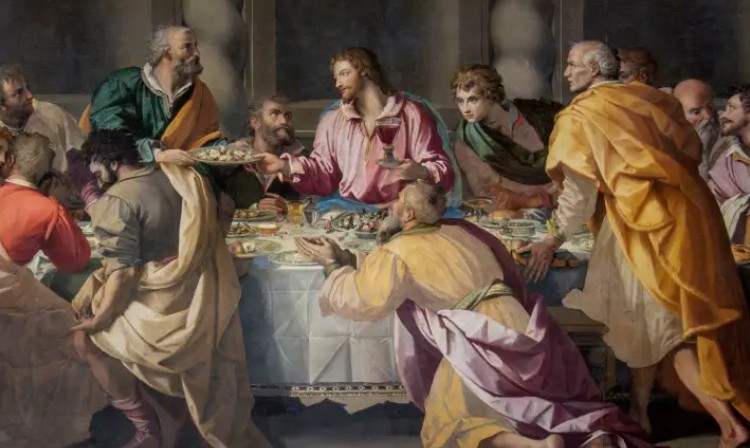
🇮🇹Nel cuore di Museo di Santa Maria Novella, a Firenze, si conserva una delle interpretazioni più affascinanti e meno note dell’Ultima Cena: quella realizzata da Alessandro Allori nel 1584… 🇬🇧In the heart of the Santa Maria Novella Museum in Florence, one of the most fascinating and least-known interpretations of the Last Supper is preserved: the…
-
Cenacolo di Leonardo: i dettagli che raccontano il tradimento
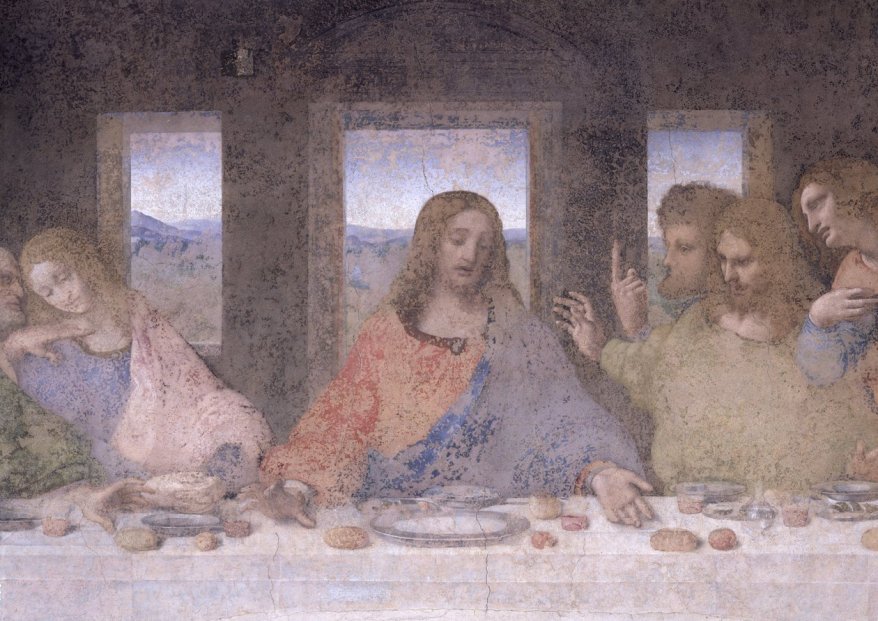
🇮🇹Nel Cenacolo di Leonardo da Vinci, custodito a Santa Maria delle Grazie, Cristo annuncia il tradimento e il tempo si ferma… 🇬🇧In Leonardo da Vinci’s Last Supper, housed in Santa Maria delle Grazie, Christ announces the betrayal and time stands still…
-
La Lavanda dei Piedi di Tintoretto: Il Capolavoro Veneziano al Prado
🇮🇹Tra i capolavori più affascinanti del Rinascimento veneziano, “La Lavanda dei Piedi” di Jacopo Tintoretto rappresenta un perfetto equilibrio tra spiritualità, innovazione compositiva e straordinaria forza narrativa… 🇬🇧Among the most fascinating masterpieces of the Venetian Renaissance, Jacopo Tintoretto’s “The Washing of the Feet” represents a perfect balance between spirituality, compositional innovation, and extraordinary narrative force…
Condividi:


Questo sono io





sostienici

Sostienici – Support Us
Se questo blog ti piace e ti appassiona, puoi aiutarci a farlo crescere sempre più sostenendoci in modo concreto condividendo i post, seguendo le pagine social e con un contributo che ci aiuta ad andare avanti con il nostro lavoro di divulgazione. . ENGLISH: If you like and are passionate about this blog, you can help us make it grow more and more by supporting us in a concrete way by sharing posts, following social pages and with a contribution that helps us to move forward with our dissemination work.
€10,00


