
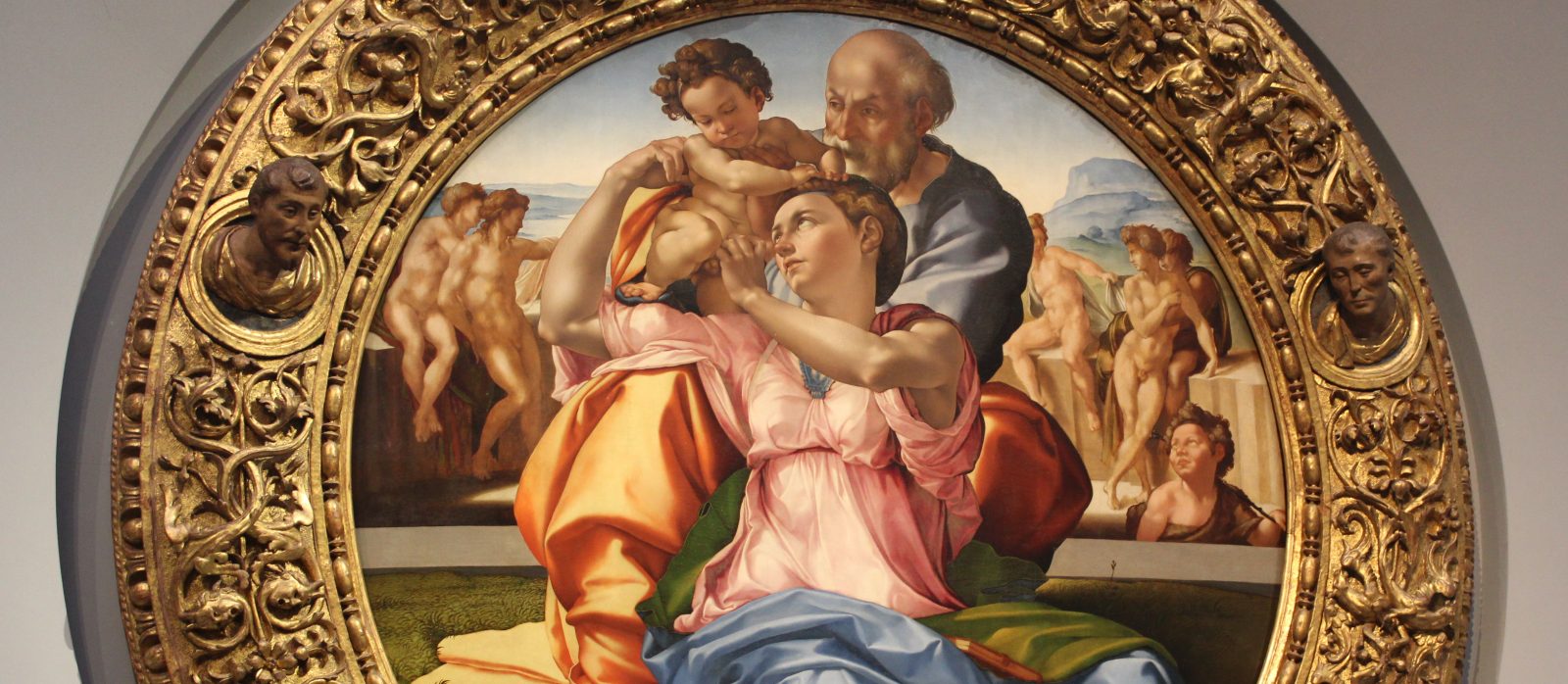
Minosse alla bocca dell’Inferno studiato dal Figino
Fra le figure più emblematiche del Giudizio Universale c’è senza dubbioil grande Minosse, la figura che se ne sta dritta dinanzi alla bocca dell’Inferno che come memoria dantesca ricorda, ascolta i peccati commessi dalle anime perdute.
Nulla è possibile nascondere al giudice infernale. Dopo aver ascoltato i peccati di ciascuno, comunica il girone di destinazione arrotolando la sua coda da serpe tante in tante spire quanti sono i cerchi dei dannati che l’anima perduta dovr raggiungere.

Il pittore Ambrogio Figino che a lungo studiò le figure del mio Giudizio, rimase colpito in modo particolare proprio dal giudice con le orecchie da asino.
Era arrivato a Roma sul finire degli anni Ottanta del Cinquecento e io ero morto da tempo. Non ebbi mai l’occasione di conoscerlo di persona. In compenso lui invece mostrò di apprezzare parecchio i miei affreschi e si dedicò a lungo al loro studio.
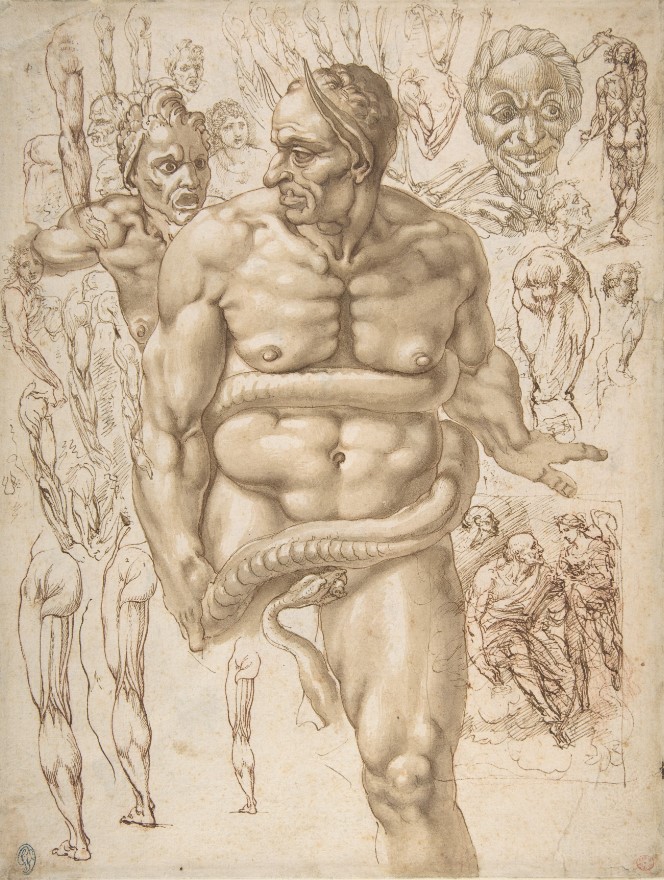
In un mirabile disegno appartenente alle collezioni del Metropolitan Museum di New York è possibile apprezzare quanto fosse stato dettagliato lo studio che fece sulla figura del Minosse.
Ora dovete sapere che l’aspetto del demone è lo stesso che aveva Biagio da Cesena, il supponente maestro cerimoniere al seguito di Papa Paolo III Farnese.
Quando nel 1540 i ponteggi dinnanzi al Giudizio Universale vennero rimossi temporaneamente, Biagio venne a criticare le mie pitture. L’opera non era ancora conclusa ma già era a buon punto. Iniziò a parlare fitto fitto col papa pensando che non lo potessi udire. Pensò male però.

Voleva dar da intendere a Paolo III che quelle nudità erano poco consone a un luogo sacro.
Appena tutti e due se ne andarono, iniziai a meditare sul dipinto del Minosse, immaginandolo con un serpente che mentre lo avvolge con le spire gli addenta il pisello.
Posizionato sopra la porta d’uscita della Cappella Sistina, tutti sarebbero stati obbligati a vederlo.
Ma non solo. Non gli feci fatto questo grazioso omaggio solo perché criticò le nudità di Santi e dannati, ma anche perché quell’uomo era un sodomita violento e addirittura uccise un ragazzo per soddisfare le sue perversioni.

Per il momento il vostro Michelangelo Buonarroti vi saluta dandovi appuntamento ai prossimi post e sui social.

Minos at the mouth of Hell studied by Figino
Among the most emblematic figures of the Last Judgment there is undoubtedly the great Minos, the figure who stands upright in front of the mouth of Hell which, as a Dantesque memory, recalls and listens to the sins committed by lost souls.
Nothing can be hidden from the infernal judge. After having listened to the sins of each one, he communicates the destination circle by coiling his serpent’s tail in as many coils as there are circles of the damned that the lost soul will have to reach.
The painter Ambrogio Figino, who studied the figures of my Judgment for a long time, was particularly struck by the judge with the donkey’s ears.
He had arrived in Rome in the late 1580s and I had long since died. I never had the opportunity to meet him in person. On the other hand, he showed that he greatly appreciated my frescoes and devoted himself to their study for a long time.
In an admirable drawing belonging to the collections of the Metropolitan Museum of New York it is possible to appreciate how detailed the study he made on the figure of Minos was.
Now you must know that the appearance of the demon is the same as that of Biagio da Cesena, the opinionated master of ceremonies following Pope Paul III Farnese.
When in 1540 the scaffolding in front of the Last Judgment was temporarily removed, Biagio came to criticize my paintings. The work was not finished yet but it was already well under way. He began to talk to the pope intently, thinking I couldn’t hear him. He thought wrong though.
He wanted to make Paul III understand that those nudities were not very suitable for a sacred place.
As soon as both of them left, I began to meditate on the painting of Minos, imagining it with a snake that as it wraps its coils bites into his pea.
Positioned above the exit door of the Sistine Chapel, everyone would be bound to see it.
But not only. I didn’t pay him this gracious homage only because he criticized the nakedness of the Saints and the damned, but also because that man was a violent sodomite and even killed a boy to satisfy his perversions.
For the moment, your Michelangelo Buonarroti greets you by making an appointment for the next posts and on social media.

Sostienici – Support Us
Se questo blog ti piace e ti appassiona, puoi aiutarci a farlo crescere sempre più sostenendoci in modo concreto condividendo i post, seguendo le pagine social e con un contributo che ci aiuta ad andare avanti con il nostro lavoro di divulgazione. . ENGLISH: If you like and are passionate about this blog, you can help us make it grow more and more by supporting us in a concrete way by sharing posts, following social pages and with a contribution that helps us to move forward with our dissemination work.
10,00 €
-
Festival Puccini 2026: Jackie Chan firma la Turandot a Torre del Lago
🇮🇹🎭✨ Festival Puccini 2026 Dalla rivoluzionaria Turandot firmata da Jackie Chan ai grandi ritorni di Tosca, La bohème e Madama Butterfly, fino a gala imperdibili con Jonas Kaufmann e Plácido Domingo…. 🇬🇧🎭✨ Puccini Festival 2026 From Jackie Chan’s revolutionary Turandot to the grand returns of Tosca, La Bohème, and Madama Butterfly, to unmissable galas with…
-
I simboli della Pasqua nell’arte: significati nascosti tra fede, rinascita e bellezza
🇮🇹Con la Pasqua che si sta approssimando, voglio proporvi alcune particolarità collegate ai simboli che l’arte cristiana ha tramandato nei secoli, trasformando immagini apparentemente semplici in racconti di fede, morte e rinascita… 🇬🇧With Easter approaching, I want to share some insights into the symbols that Christian art has handed down over the centuries, transforming seemingly…
-
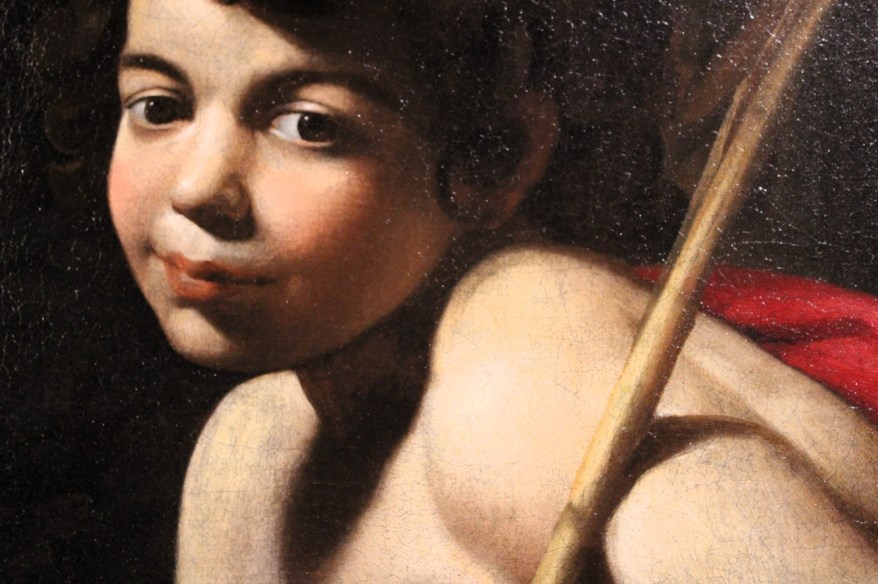
Pittura a Napoli dopo Caravaggio: a Forte dei Marmi il Seicento napoletano
🇮🇹 Il Seicento napoletano arriva in Toscana. Dal 27 marzo al 27 settembre 2026, il Forte Pietro Leopoldo I ospita ‘Pittura a Napoli dopo Caravaggio. Il Seicento nella collezione della Fondazione De Vito’, una mostra unica che racconta la rivoluzione della luce e del naturalismo caravaggesco… 🇬🇧 Seventeenth-century Neapolitan art comes to Tuscany. From March…
Condividi:


Questo sono io





sostienici

Sostienici – Support Us
Se questo blog ti piace e ti appassiona, puoi aiutarci a farlo crescere sempre più sostenendoci in modo concreto condividendo i post, seguendo le pagine social e con un contributo che ci aiuta ad andare avanti con il nostro lavoro di divulgazione. . ENGLISH: If you like and are passionate about this blog, you can help us make it grow more and more by supporting us in a concrete way by sharing posts, following social pages and with a contribution that helps us to move forward with our dissemination work.
€10,00


