

La Scultura del giorno: la Danzatrice con i cembali di Canova
La scultura del giorno che vi propongo oggi è la Danzatrice con i cembali di Canova, scolpita dall’artista di Possagno fra il 1809 e il 1812.
La danza è senza dubbio grazia e bellezza in movimento e, proprio per queste sue peculiarità, divenne durante il Neoclassicismo grande fonte di ispirazione per gli artisti.
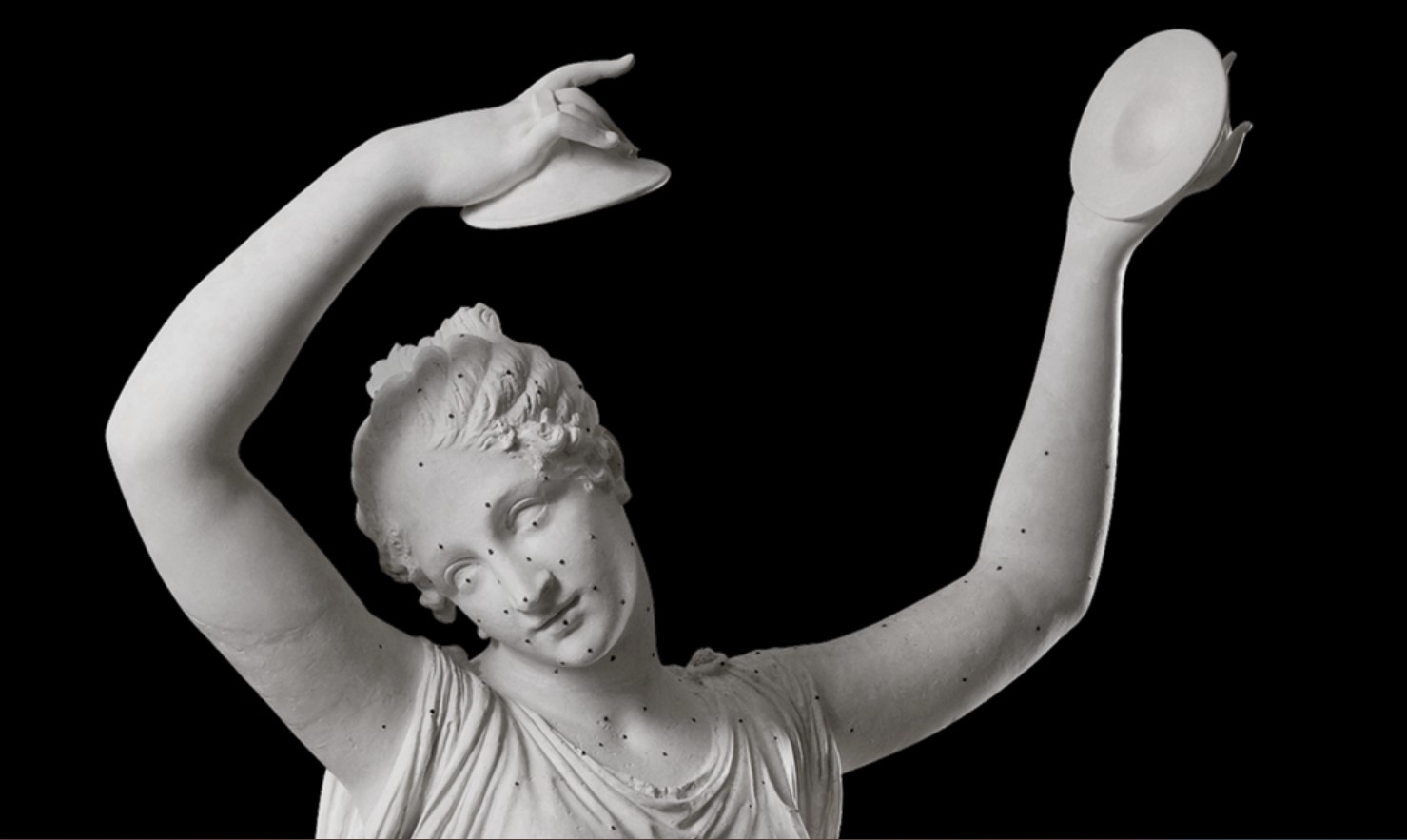
Sono diverse le sculture e le pitture danzanti scolpite da Canova, interessato al loro movimento e a quei panneggi che sembrano mossi dal vento.
Sembra quasi che Canova scolpendo le danzatrici le liberi del peso del corpo. Basta pensare alla Danzatrice con le mani sui fianchi, a quella con il dito al mento e proprio a quella con i cembali per avere ben chiaro quanto all’artista stesse a cuore la raffinatezza dei movimenti e la loro resa nel marmo.
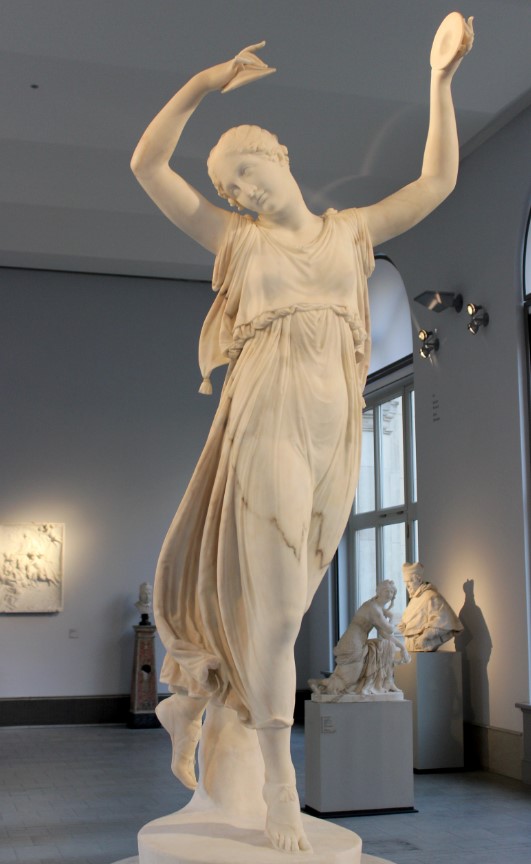
Canova scolpisce la Danzatrice con i cembali mentre esegue un passo di danza leggiadro ed etereo. Ha i sandali allacciati ed è fissata nel tempo per sempre mentre permane sulla punta del piede.
Tutta la figura è slanciata verso l’alto e con le braccia levate tiene i cembali che sta suonando. Sembra quasi che reclini i capo per ascoltare il suono emesso.
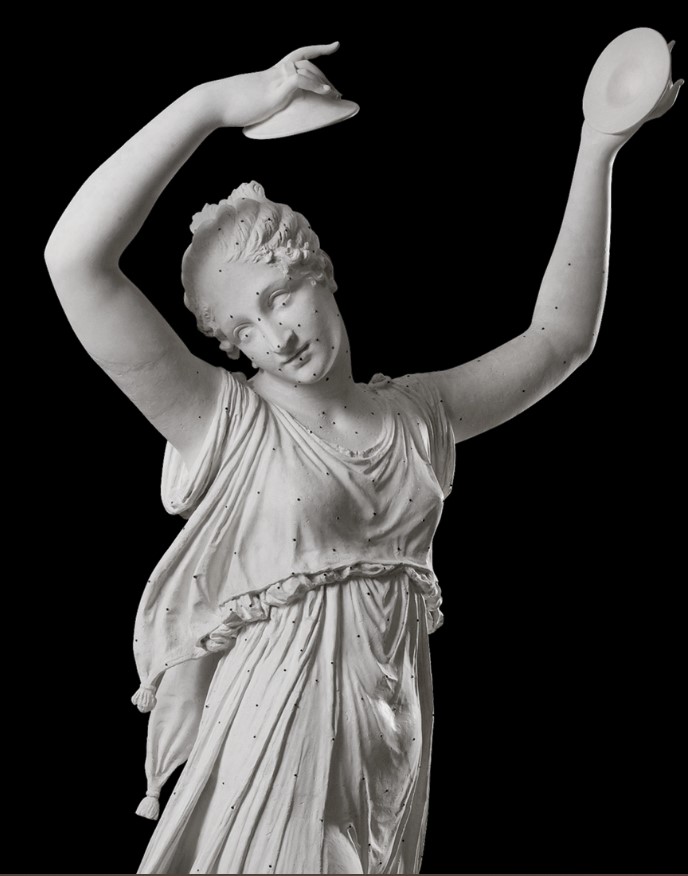
Canova dopo aver realizzato il modello in gesso, lo traspose in marmo fra il 1809 e il 1812 su commissione dell’ambasciatore russo Andrei Razumovskij, un grande intenditore di musica e di opere d’arte.
Mentre il gesso appartiene oggi al Museo Gypsoteca di Possagno, l’opera in marmo è custodita presso il Bode Museum di Berlino.
Per il momento il vostro Michelangelo Buonarroti vi saluta dandovi appuntamento ai prossimi post e sui social.

Sculpture of the day: the Dancer with the cymbals by Canova
The sculpture of the day that I am proposing to you today is the Dancer with cymbals by Canova, created by the artist from Possagno in
Dance is undoubtedly grace and beauty in movement and precisely because of these peculiarities it became a great source of inspiration for artists during Neoclassicism.
There are several dancing sculptures and paintings sculpted by Canova, interested in their movement and in those drapery that seem moved by the wind.
It almost seems that Canova, sculpting the dancers, frees them from the weight of the body. Just think of the Dancer with her hands on her hips, the one with her finger on her chin and the one with the cymbals to clearly understand how much the artist cared about the refinement of the movements and their rendering in marble.
Canova sculpts the Dancer with cymbals as she performs a graceful and ethereal dance step. She has her sandals strapped on and is frozen in time forever as she stands on her toes.
The whole figure is thrown upwards and with raised arms she holds the cymbals that she is playing. It almost seems that she tilts her head to listen to the sound emitted.
Canova, after making the plaster model, transposed it into marble between 1809 and 1812 on commission from the Russian ambassador Andrei Razumovsky, a great connoisseur of music and works of art. While the plaster belongs today to the GYpsoteca Museum in Possagno, the marble work is kept in the Bode Museum in Berlin.
For the moment, your Michelangelo Buonarroti greets you by making an appointment for the next posts and on social media.

Sostienici – Support Us
Se questo blog ti piace e ti appassiona, puoi aiutarci a farlo crescere sempre più sostenendoci in modo concreto condividendo i post, seguendo le pagine social e con un contributo che ci aiuta ad andare avanti con il nostro lavoro di divulgazione. . ENGLISH: If you like and are passionate about this blog, you can help us make it grow more and more by supporting us in a concrete way by sharing posts, following social pages and with a contribution that helps us to move forward with our dissemination work.
8,00 €
-
Venerdì Santo: gli “Ecce Homo” più intensi della storia dell’arte
🇮🇹Ecce Homo. Da Antonello da Messina a Tintoretto, fino al sorprendente capolavoro di Antonio Ciseri, questo soggetto ha attraversato i secoli raccontando dolore, umanità e coscienza… 🇬🇧Ecce Homo. From Antonello da Messina to Tintoretto, to Antonio Ciseri’s astonishing masterpiece, this subject has spanned the centuries, recounting pain, humanity, and conscience…
-
Attacco hacker agli Uffizi: rubati dati sensibili, mappe e codici di sicurezza
🇮🇹Attacco hacker alle Gallerie degli Uffizi: rubati dati sensibili, mappe e sistemi di sicurezza. A rischio opere, archivi e cybersicurezza del patrimonio artistico… 🇬🇧Hacker attack on the Uffizi Galleries: sensitive data, maps, and security systems stolen. Works of art, archives, and the cybersecurity of the artistic heritage are at risk…
-
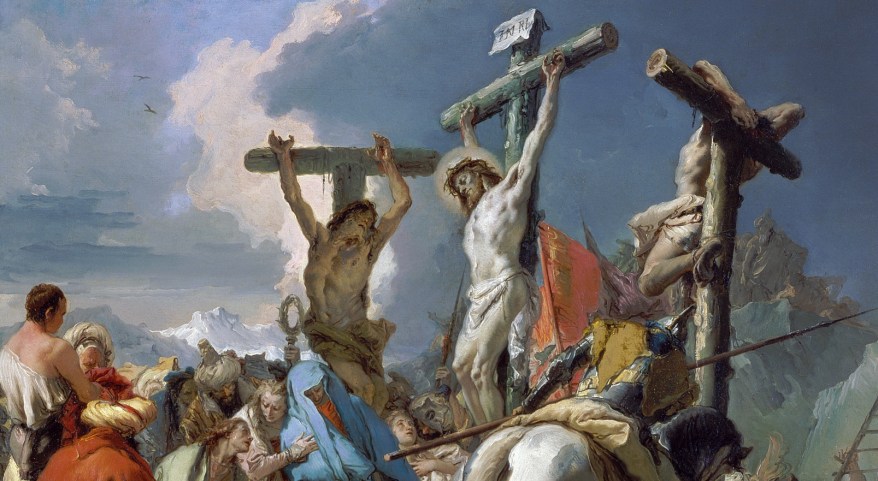
Venerdì Santo: la Crocifissione secondo Tiepolo
🇮🇹Nel giorno del Venerdì Santo, c’è un’opera che riesce ancora a scuotere lo sguardo. La Crocifissione di Giambattista Tiepolo non è come le altre: niente simmetrie perfette, niente distanza. Qui si entra dentro la scena, da un punto di vista obliquo, tra movimento, tensione e umanità… 🇬🇧On Good Friday, there’s a work that still manages…
Condividi:


Questo sono io





sostienici

Sostienici – Support Us
Se questo blog ti piace e ti appassiona, puoi aiutarci a farlo crescere sempre più sostenendoci in modo concreto condividendo i post, seguendo le pagine social e con un contributo che ci aiuta ad andare avanti con il nostro lavoro di divulgazione. . ENGLISH: If you like and are passionate about this blog, you can help us make it grow more and more by supporting us in a concrete way by sharing posts, following social pages and with a contribution that helps us to move forward with our dissemination work.
€10,00


