
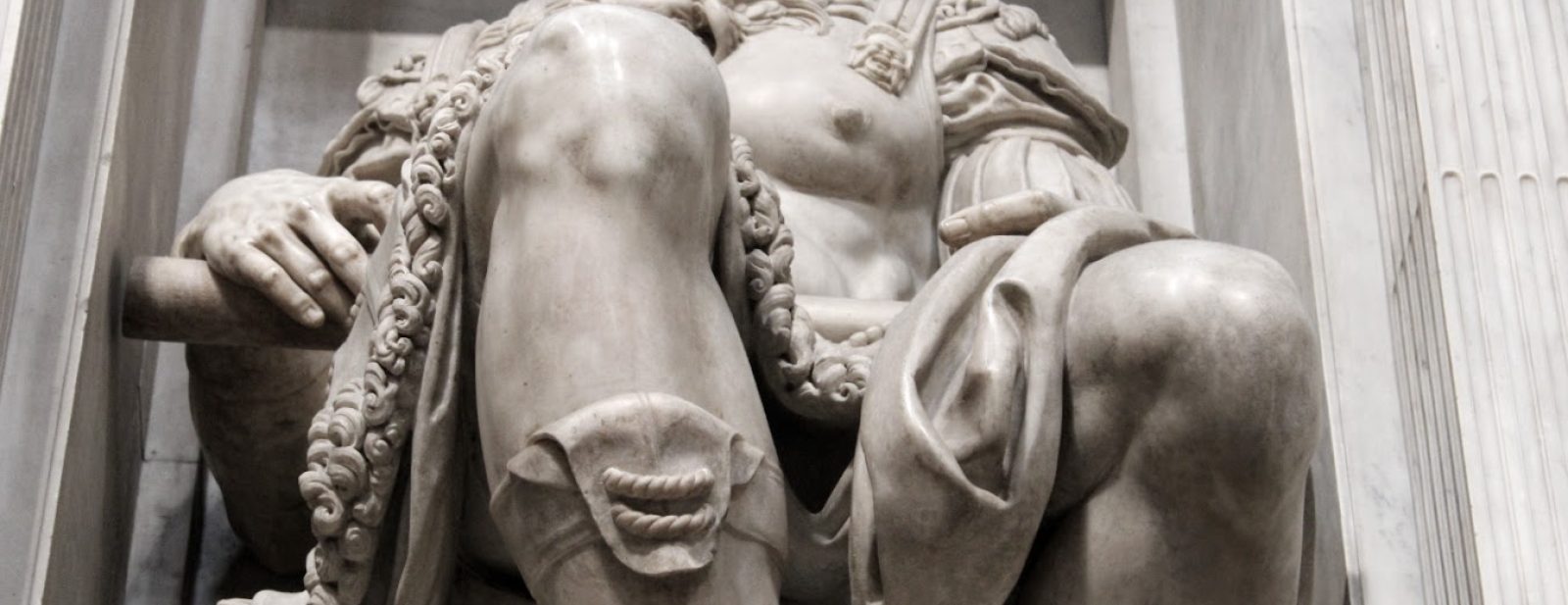
La Scultura del giorno: l’Arcangelo Michele trionfante del Tadolini
La scultura del giorno che vi propongo oggi è l’Arcangelo Michele trionfante scolpito da Scipione Tadolini, ubicato nel cuore del Gasson Hall, l’edificio gotico più rappresentativo del Boston College.
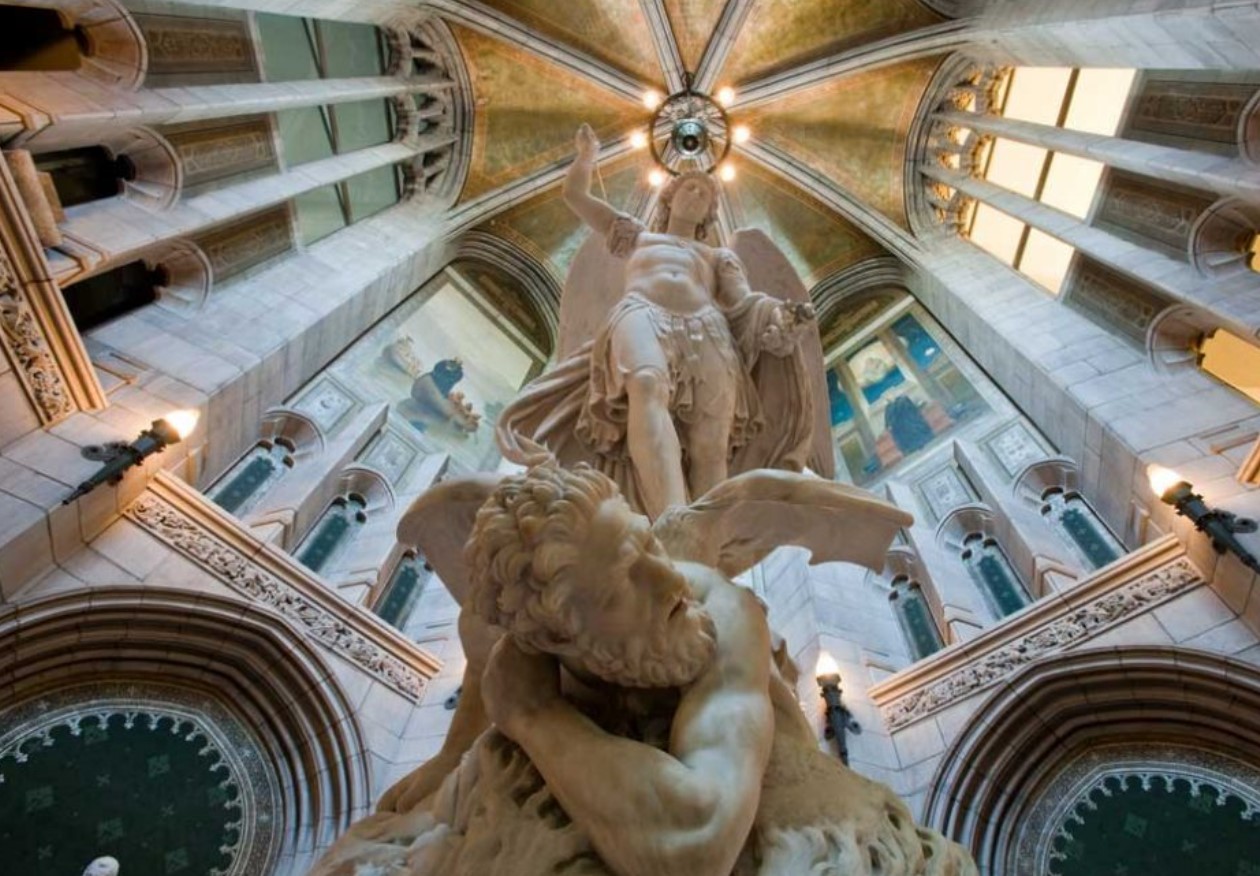
Al centro di una sala a pianta rotondeggiante, adornata con dipinti a olio, si eleva l’imponente scultura plasmata dal Tadolini nel 1869: è il San Michele che trionfa nella lotta contro il demonio.
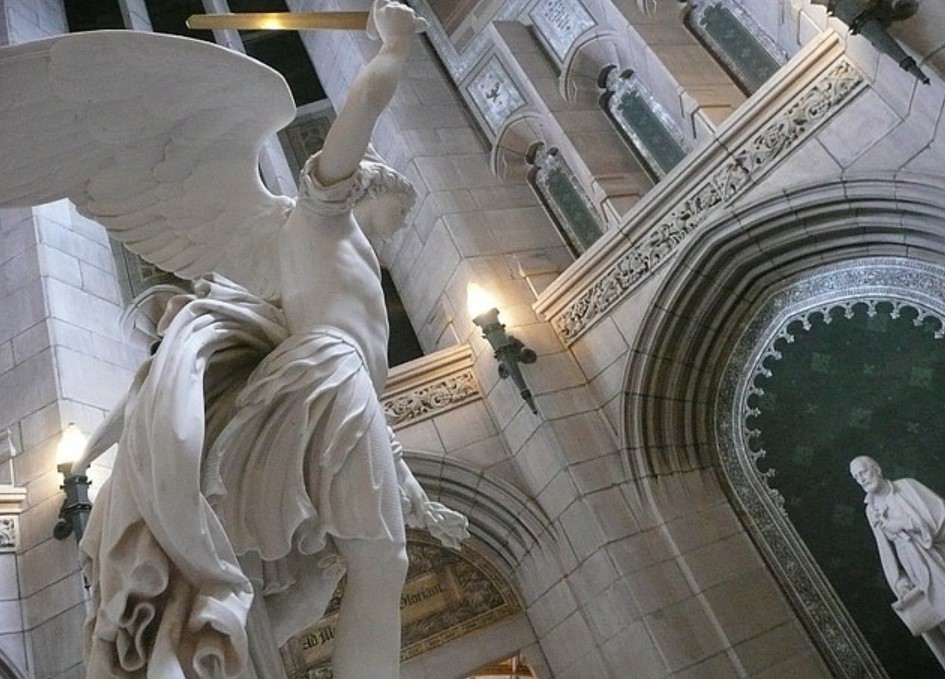
Innalza verso il cielo la spada di ottone per dare il colpo finale al diavolo e spedirlo dritto negli inferi. La scena è in evoluzione e quadrando le due figure se ne percepisce tutta la tensione.

L’iconografia di San Michele che lotta col demonio è una costante nella statuaria cattolica.
Il demonio oppresso da peso figurato e reale dell’arcangelo volta il capo indietro e tenta di alzarsi, non dandosi ancora per vinto. Ha il punto sinistro serrato e adopera l’altra mano per tenere stabile la sua posizione.
Tadolini con questa potente opera porta direttamente dentro il conflitto gli spettatori. Il corpetto della corazza dell’Arcangelo e il suo gonnellini fatto da frange di pelle scompigliate dal movimento, la resa del suo manto e delle ali e altri particolari hanno una resa eccellente.

Scipione Tadolini nacque nel 1822 da Serafina Passamonti, pittrice di miniature, e Adamo Tadolini, celebre scultore e assistente prediletto del Canova. Fratello dello scultore Tito Tadolini e a sua volta padre dello scultore Giulio Tadolini, le sue opere divennero particolarmente apprezzate per quel suo personale modo di reinterpretare in forma romantica la tradizione neoclassica.
Scipione si formò presso l’Accademia di Roma e una delle sue opere di maggior successo fu la Schiava Greca.
Fu Gardner Brewer a commissionare l’Arcangelo Michele vittorioso al Tadolini. Brewner era uno dei mercanti più ricchi di Boston che doveva la sua fortuna alle distillerie e al commercio di frutta secca.
Nel 1865 contattò lo scultore chiedendogli di trasporre nel marmo l’idea che aveva di San Michele che sconfigge il demonio per una cifra di 28mila dollari ma non solo. Insistette a lungo affinché il Tadolini accompagnasse la scultura ultimata nel viaggio verso l’America.
L’artista impiegò quattro anni per terminare l’opera. Non smise mai di lavorarci ma i tempi di esecuzione si dilatarono perché era un grande perfezionista.
Finalmente 1869 il Tadolini terminò il suo capolavoro e lo accompagnò attraverso l’Atlantico per raggiungere Boston. Il mecenate Brewer fece installare l’Arcangelo Michele nella grande sala della sua Beacon Street Home.
Cinque anni dopo Brewer morì e l’opera finì nelle mani di un mercante d’arte. Rimase in deposito a lungo fino a quando, nel 1909, un anonimo benefattore la acquistò per donarla al Boston College in onore di Charles Lane, prefetto della Chiesa dell’Immacolata Concezione e ministro della Boston College High School.

La preziosa acquisizione fu annunciata nell’aprile 1909 e la statua arrivò al Boston College poco dopo.
Per il momento il votro Michelangelo Buonarroti vi saluta dandovi appuntamento ai prosimi posst e sui social.

Sculpture of the day: Archangel Michael triumphant by Tadolini
The sculpture of the day that I propose to you today is the triumphant Archangel Michael sculpted by Scipione Tadolini, located in the heart of Gasson Hall, the most representative Gothic building of Boston College.
At the center of a room with a rounded plan, adorned with oil paintings, stands the imposing sculpture created by Tadolini in 1869: it is San Michele who triumphs in the fight against the devil.
He raises his brass sword to the sky to deal the final blow to the devil and send him straight to the underworld. The scene is evolving and squaring the two figures one perceives all the tension.
The iconography of St. Michael fighting the devil is a constant in Catholic statuary.
The devil oppressed by the archangel’s figurative and real weight turns his head back and tries to get up, still not giving up. He has a tight left point and uses his other hand to stabilize his position.
Tadolini with this powerful work takes the spectators directly into the conflict. The bodice of the Archangel’s armor and his skirt made from leather fringes messed up by the movement, the rendering of his mantle and wings and other details have an excellent rendering.
Scipione Tadolini was born in 1822 to Serafina Passamonti, a painter of miniatures, and Adamo Tadolini, a famous sculptor and Canova’s favorite assistant. Brother of the sculptor Tadolini and in turn father of the sculptor Giulio Tadolini, his works became particularly appreciated for his personal way of reinterpreting the neoclassical tradition in a romantic way.
Scipio was educated at the Academy of Rome and one of his most successful operas was Schiava Greca.
It was Gardner Brewer who commissioned the Victorious Archangel Michael from Tadolini. Brewner was one of Boston’s wealthiest merchants who owed his fortune to distilleries and the dried fruit trade.
In 1865 he contacted the sculptor asking him to transpose into marble the idea he had of San Michele defeating the devil for a sum of 28 thousand dollars but not only. He insisted for a long time that Tadolini accompany the completed sculpture on its journey to America.
It took the artist four years to finish the work. He never stopped working on it but the execution times expanded because he was a great perfectionist.
Finally 1869 Tadolini finished his masterpiece and accompanied him across the Atlantic to reach Boston. The patron Brewer had the Archangel Michael installed in the great hall of his Beacon Street Home.
Five years later Brewer died and the work ended up in the hands of an art dealer. It remained in storage for a long time until, in 1909, an anonymous benefactor bought it to donate it to the Boston COllege in honor of Charles Lane, prefect of the Church of the Immaculate Conception and minister of Boston College High School.
The prized acquisition was announced in April 1909, and the statue arrived at Boston College shortly thereafter.
For the moment, your Michelangelo Buonarroti greets you by making an appointment at the next posts and on social networks.

Sostienici – Support Us
Se questo blog ti piace e ti appassiona, puoi aiutarci a farlo crescere sempre più sostenendoci in modo concreto condividendo i post, seguendo le pagine social e con un contributo che ci aiuta ad andare avanti con il nostro lavoro di divulgazione. . ENGLISH: If you like and are passionate about this blog, you can help us make it grow more and more by supporting us in a concrete way by sharing posts, following social pages and with a contribution that helps us to move forward with our dissemination work.
8,00 €
-
Restauro tappeti d’arte a Pietrasanta: tradizione e segreti di un laboratorio centenario
🇮🇹Il fascino dei tappeti d’arte prende vita a Pietrasanta. Venite con me nel laboratorio di “Restauro Tappeti d’Arte” di Orna Bachar e Benedetto Bumaguin, dove ogni tappeto antico è una vera opera d’arte… 🇬🇧The charm of artistic carpets comes to life in Pietrasanta. Come with me to Orna Bachar and Benedetto Bumaguin’s “Artistic Carpet Restoration”…
-
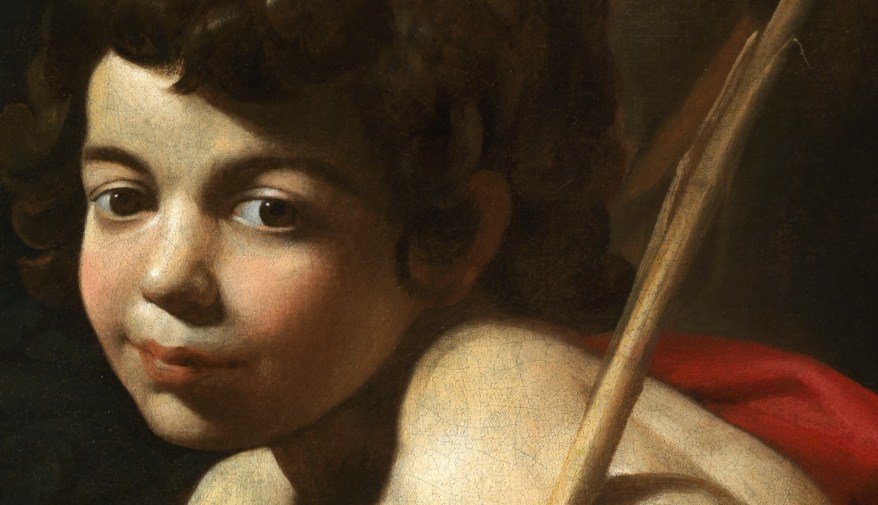
Battistello Caracciolo e il suo San Giovannino: il capolavoro che rivela l’eredità di Caravaggio
🇮🇹Per anni attribuito al Caravaggio, il San Giovannino del Caracciolo rivela invece la sensibilità unica di Battistello: un equilibrio perfetto tra realismo e dolcezza, tra inquietudine e grazia… 🇬🇧For years attributed to Caravaggio, Caracciolo’s Saint John the Baptist instead reveals Battistello’s unique sensitivity: a perfect balance between realism and sweetness, between restlessness and grace…
-
La fine dell’originalità: perché oggi tutta l’arte sembra già vista
🇮🇹La sensazione è sempre la stessa: guardiamo un quadro, una scultura o un’installazione e pensiamo “L’ho già visto da qualche parte”. Ma è davvero la fine dell’originalità? … 🇬🇧The feeling is always the same: we look at a painting, a sculpture, or an installation and think, “I’ve seen this before.” But is this really the…
Condividi:


Questo sono io





sostienici

Sostienici – Support Us
Se questo blog ti piace e ti appassiona, puoi aiutarci a farlo crescere sempre più sostenendoci in modo concreto condividendo i post, seguendo le pagine social e con un contributo che ci aiuta ad andare avanti con il nostro lavoro di divulgazione. . ENGLISH: If you like and are passionate about this blog, you can help us make it grow more and more by supporting us in a concrete way by sharing posts, following social pages and with a contribution that helps us to move forward with our dissemination work.
€10,00


